No portrait yet
Nipmuc Erotic
Central Massachusetts, extending into northeastern Connecticut and northwestern Rhode Island, United States.
Nipmuc, an Eastern Algonquian language recorded by the French as Loup (Algic family); now dormant, with English in daily use and reclamation work underway.
Traditional Algonquian practice, then Protestant Christianity by way of the seventeenth century praying towns; today mainly Christian alongside revived ceremonial practice.
Eastern Algonquian peoples of the Northeastern Woodlands; bands include Hassanamisco, Chaubunagungamaug at Webster, Quaboag, Wabaquasset, and Quinsigamond.
About Nipmuc People
The Nipmuc are the inland people of southern New England, and in a region where nearly every other nation is known by a stretch of coast, that is most of the distinction. Their country, Nippenet, "the freshwater pond place," runs across the upland middle of Massachusetts and over the lines into northeastern Connecticut and northwestern Rhode Island. No ocean, no harbor: ponds, swamps, and the headwaters of river systems that drain away in different directions. It made them neighbors to everyone and coastal to nobody, and wampum reached them by trade rather than off their own beaches. Their language was Eastern Algonquian, close enough to Massachusett and Narragansett for ordinary conversation, and it survives mostly in a French colonial vocabulary of what the French called the Loup tongue, and in the place names central Massachusetts still says without translating: Quinsigamond, Wachusett, Quaboag, Manchaug, Chaubunagungamaug.
Nipmuc country took the missionary push before it took the war. Most of John Eliot's new praying towns of the 1670s were Nipmuc: Hassanamesit, Magunkaquog, Chabanakongkomun, Pakachoog. A Hassanamesit man named Wowaus, known to the English as James Printer, set type for Eliot's Algonquian Bible at Cambridge. Then came King Philip's War, and Nipmuc fighters were at the center of it, at Brookfield and at Lancaster, where Mary Rowlandson was taken captive and marched through this country. Printer helped negotiate her ransom and afterward went back to the print shop. Christian Native people, Nipmuc among them, were interned on Deer Island in Boston Harbor through the winter of 1675 and died there in numbers; that island remains the sharpest thing in Nipmuc memory. What followed was two centuries of guardianship, forced land sales, and the paperwork of erasure. What did not follow was disappearance. The Hassanamisco Reservation in Grafton, a few acres held continuously by the same family line since the 1720s, is among the oldest Indian land in the state, and the small museum standing on it was kept for years by Zara Cisco Brough. Massachusetts acknowledges two bands, Hassanamisco and Chaubunagungamaug at Webster. Federal recognition is another matter: a favorable proposed finding in 2001 was reversed by a negative final determination in 2004, on questions about whether the community had held together as a political body through the nineteenth century. Answering that has taken up a great deal of Nipmuc time since.
Related ethnic groups
Groups that share Nipmuc's homeland, region, language, or religious tradition. These are likely candidates for comparative phenotype reference.
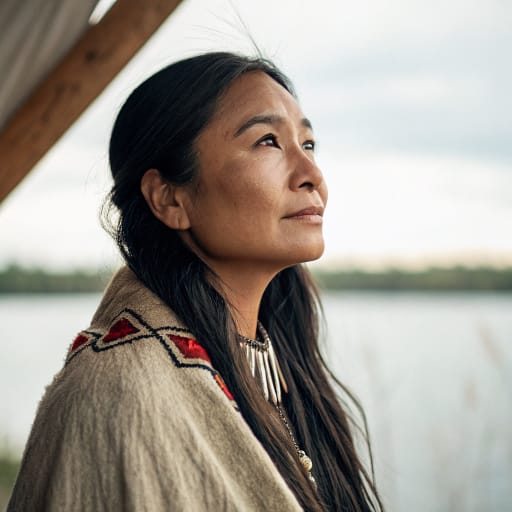
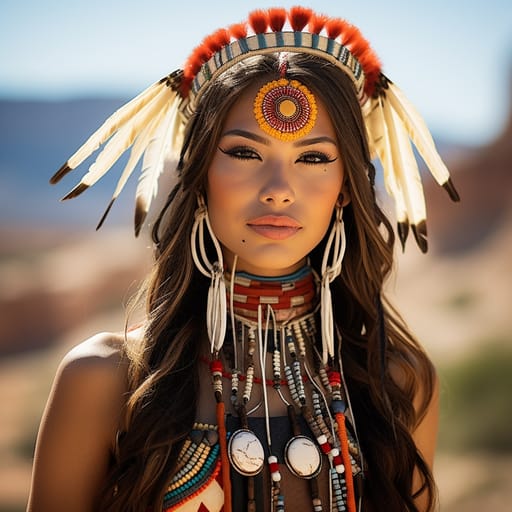
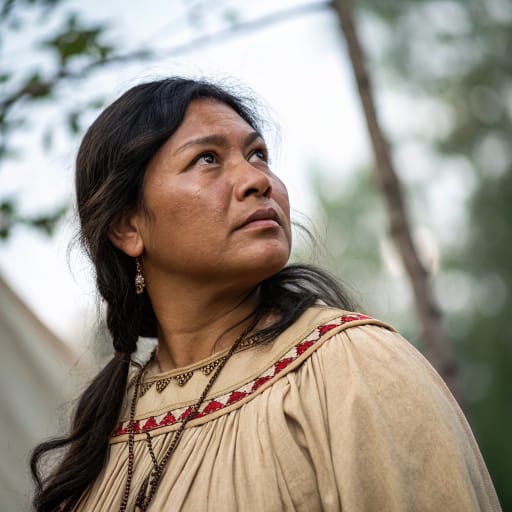
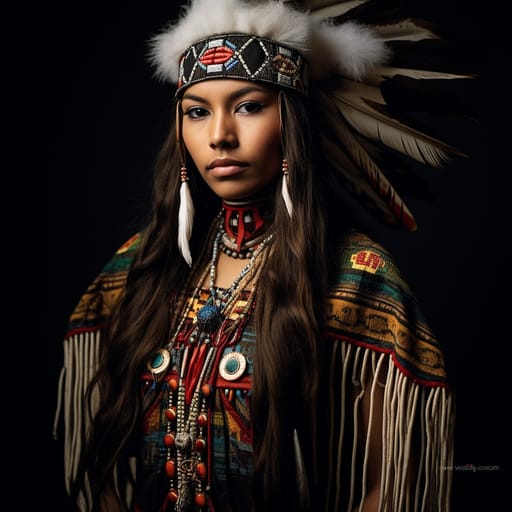
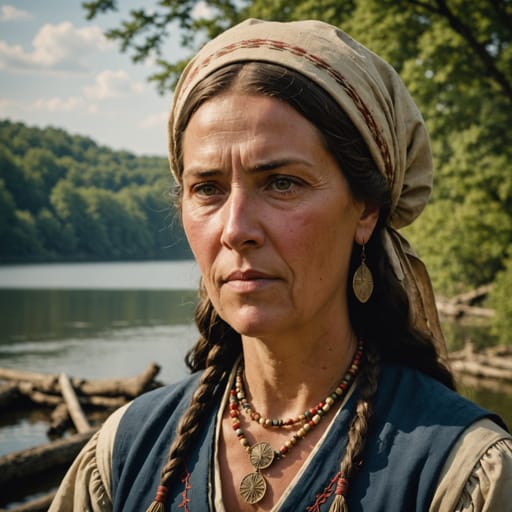
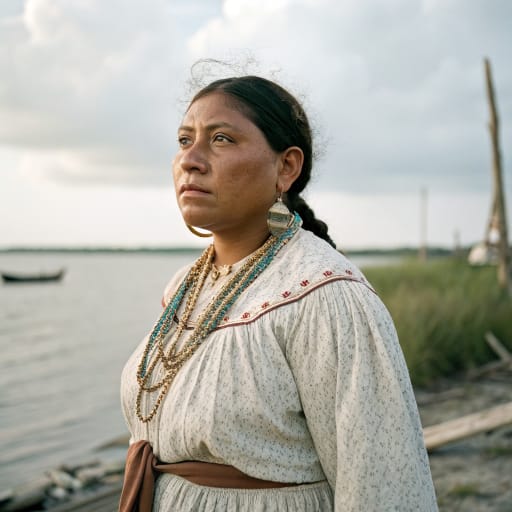
Typical Nipmuc Phenotypes
Reference for AI generation: hair, eyes, skin, facial structure, build
Nipmuc Body & Anatomy Reference
Indigenous Northern American / Algonquian-Iroquoian phenotype: anatomy reference for AI nude generation
Nipmuc Boobs & Breasts
Nipmuc tits and boobs run medium cup, moderate projection, the classic Indigenous Northern American / Algonquian-Iroquoian bust profile. Nipmuc nipples and areolas show medium-brown areolar pigmentation against the copper-to-medium-brown skin tone, with areolar diameter typically in the 30-44mm range and forward-set positioning rather than the smaller East Asian bust. Nipmuc breasts trend full and moderate projection, a function of the mesomorph, broader frame in northern Indigenous populations body habitus and the mean adult female BMI 25-28. For anatomically accurate AI-generated Nipmuc nudes the render preserves the medium cup, moderate projection shape, 30-44mm areolas with medium-brown pigmentation, and the torso proportions of the Indigenous Northern American / Algonquian-Iroquoian phenotype.
Nipmuc Ass & Hips
Nipmuc hips and butt usually read as medium, moderate-to-full projection. The skeletal base is medium iliac crests, the Indigenous Northern American / Algonquian-Iroquoian pattern. Set against the slim East Asian narrow-hip profile, the difference is easy to see, and the hip-to-waist ratio is often what identifies Nipmuc women in photos.
Nipmuc Vagina & Pussy
Expect medium-brown labial pigmentation on Nipmuc women, in keeping with Indigenous Northern American / Algonquian-Iroquoian ancestry. The pubic hair is straight medium-coarse texture. Coloring should run evenly from the copper to medium-brown skin of the thighs to the labia, and Nipmuc nude imagery should keep the hair's straight medium-coarse texture.
Nipmuc Dicks & Penis
Nipmuc dick and penile anatomy in adult AI generation should anchor on the regional reference data: regional mean ~13cm erect, moderate girth, and medium-brown shaft pigmentation. The Nipmuc cock profile reflects the Indigenous Northern American / Algonquian-Iroquoian population's anthropometric measurements. The shaft pigmentation should track the surrounding copper to medium-brown skin tone, and the pubic hair should keep its straight medium-coarse texture in the typical inverted-V escutcheon.
Nipmuc Body, Curves & Build
Nipmuc body type: mesomorph, broader frame in northern Indigenous populations, with mean adult female BMI 25-28. This is the typical Indigenous Northern American / Algonquian-Iroquoian build. Height range, shoulder-to-hip ratio and fat distribution all follow from it, which is what an accurate Nipmuc nude body should show.
Nipmuc Skin Tone & Hair Texture
Nipmuc skin tone falls in the copper to medium-brown (Fitzpatrick III-V) band, the surface signal most often miscalibrated by generic AI nude generators. Nipmuc hair texture is typically straight 1A, dark-brown to black, often thick and dense, characteristic of the Indigenous Northern American / Algonquian-Iroquoian phenotype. In Nipmuc nude renders the skin should hold that band consistently across the body.
Explore phenotype categories
Structured taxonomy with peer-reviewed scales · 22 anatomical categories
Erotic Poses & Sex Positions
From the pose catalog: 219 named positions with reference skeletons
Frequently asked questions about Nipmuc people
Where is the Nipmuc homeland?
The Nipmuc homeland is Central Massachusetts, extending into northeastern Connecticut and northwestern Rhode Island, United States. in North America.
What language do Nipmuc people speak?
Nipmuc people primarily speak Nipmuc, an Eastern Algonquian language recorded by the French as Loup (Algic family); now dormant, with English in daily use and reclamation work underway..
What religion do Nipmuc people practice?
The predominant religion among Nipmuc people is Traditional Algonquian practice, then Protestant Christianity by way of the seventeenth century praying towns; today mainly Christian alongside revived ceremonial practice..






Make your own Nipmuc images
Five a day, free, no credits to buy. The studio starts from this group's phenotype data, so you can set body type, pose and style and keep the traits accurate.
Start with Nipmuc