No portrait yet
Nanticoke Erotic
The Delmarva Peninsula: the lower Eastern Shore of Maryland along the Nanticoke River and Sussex County, Delaware, with descendant communities in southern New Jersey, Ontario and Oklahoma.
English today. Nanticoke (Eastern Algonquian, Algic) has had no speakers since the 1800s and survives only in colonial word lists.
Predominantly Protestant Christian, with Methodist congregations founded by and for the community.
Eastern Algonquian, closely tied to the Lenape and the Piscataway. Present-day communities include the Nanticoke Indian Association in Delaware, the Nanticoke Lenni-Lenape Tribal Nation in New Jersey, and descendants living among the Lenape in Ontario and
About Nanticoke People
The Nanticoke took their name from the water. Nentego, the word behind the English spelling, points at the tidewater country of the Delmarva Peninsula: the brackish reach where the Nanticoke River widens into Chesapeake marsh, and the cypress swamps and shallow bays on the Atlantic side of the same neck of land. Before English settlement they were the dominant people of that middle ground, and they made their living from it in a way their neighbors respected. John Smith, mapping the river in 1608, singled them out as the best traders on the bay, dealers in the strung shell beads that served the region as currency. Wealth on the Chesapeake moved through their hands.
Their language belonged to the Eastern Algonquian family, close kin to Lenape and to the speech of the Piscataway across the bay, and it is gone now, preserved only in word lists that curious colonists wrote down in the eighteenth century. What is not gone is the community. The Nanticoke story after contact is one of pressure and division: treaties with Maryland in the 1600s, reservations at Chicone and Broad Creek that were steadily whittled away, and then, through the mid-1700s, a long migration north up the Susquehanna under Iroquois protection, into Pennsylvania and New York and eventually to Ontario and Oklahoma, where descendants live among the Lenape today. Those who left did something remarkable on the way out: they dug up their dead and carried them. Secondary burial was old practice here. Bodies were laid up until the flesh was gone, the bones cleaned and bundled and kept, and when the living moved, the ancestors moved with them.
Families who stayed on the peninsula spent the next two centuries being argued about. Delaware's racial law recognized two categories and the Nanticoke fit neither, so their status was litigated, legislated, and fought over in schoolhouses. An 1881 act finally granted them their own school district, and an association incorporated in the 1920s to hold the line. They remain state recognized in Delaware and not federally recognized, a distinction that still shapes what they can and cannot do. The center of the community is Millsboro, in Sussex County, where the old Indian school now houses a museum and the September powwow draws people back from every place the family scattered to. A related and separately recognized community, the Nanticoke Lenni-Lenape, sits across the bay in southern New Jersey.
Related ethnic groups
Groups that share Nanticoke's homeland, region, language, or religious tradition. These are likely candidates for comparative phenotype reference.
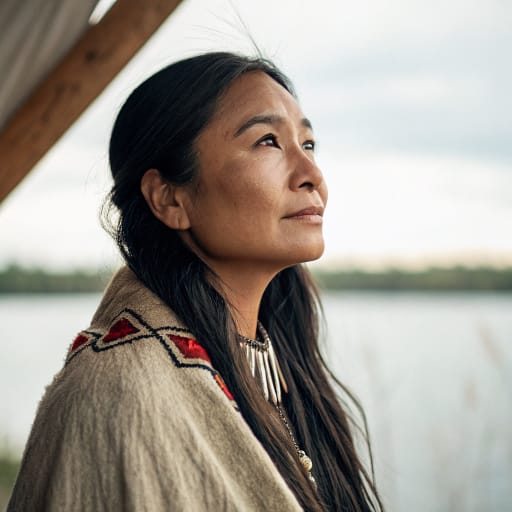
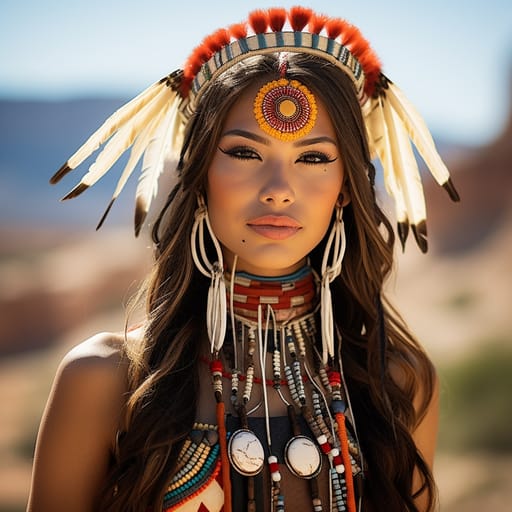
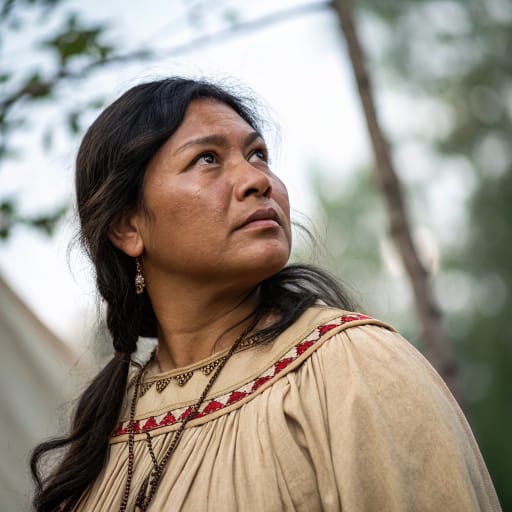
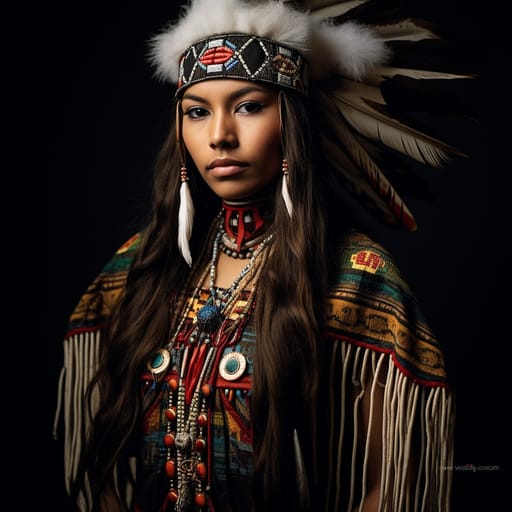
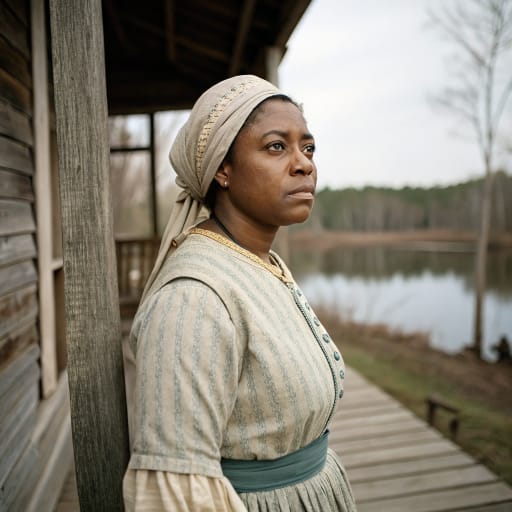
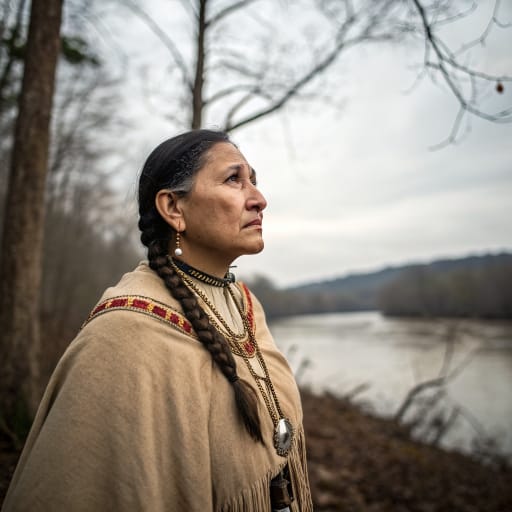
Typical Nanticoke Phenotypes
Reference for AI generation: hair, eyes, skin, facial structure, build
Nanticoke Body & Anatomy Reference
Indigenous Northern American / Algonquian-Iroquoian phenotype: anatomy reference for AI nude generation
Nanticoke Boobs & Breasts
Nanticoke tits and boobs run medium cup, moderate projection, the classic Indigenous Northern American / Algonquian-Iroquoian bust profile. Nanticoke nipples and areolas show medium-brown areolar pigmentation against the copper-to-medium-brown skin tone, with areolar diameter typically in the 30-44mm range and forward-set positioning rather than the smaller East Asian bust. Nanticoke breasts trend full and moderate projection, a function of the mesomorph, broader frame in northern Indigenous populations body habitus and the mean adult female BMI 25-28. For anatomically accurate AI-generated Nanticoke nudes the render preserves the medium cup, moderate projection shape, 30-44mm areolas with medium-brown pigmentation, and the torso proportions of the Indigenous Northern American / Algonquian-Iroquoian phenotype.
Nanticoke Ass & Hips
Nanticoke hips and butt usually read as medium, moderate-to-full projection. The skeletal base is medium iliac crests, the Indigenous Northern American / Algonquian-Iroquoian pattern. Set against the slim East Asian narrow-hip profile, the difference is easy to see, and the hip-to-waist ratio is often what identifies Nanticoke women in photos.
Nanticoke Vagina & Pussy
Expect medium-brown labial pigmentation on Nanticoke women, in keeping with Indigenous Northern American / Algonquian-Iroquoian ancestry. The pubic hair is straight medium-coarse texture. Coloring should run evenly from the copper to medium-brown skin of the thighs to the labia, and Nanticoke nude imagery should keep the hair's straight medium-coarse texture.
Nanticoke Dicks & Penis
Nanticoke dick and penile anatomy in adult AI generation should anchor on the regional reference data: regional mean ~13cm erect, moderate girth, and medium-brown shaft pigmentation. The Nanticoke cock profile reflects the Indigenous Northern American / Algonquian-Iroquoian population's anthropometric measurements. The shaft pigmentation should track the surrounding copper to medium-brown skin tone, and the pubic hair should keep its straight medium-coarse texture in the typical inverted-V escutcheon.
Nanticoke Body, Curves & Build
Nanticoke body type: mesomorph, broader frame in northern Indigenous populations, with mean adult female BMI 25-28. This is the typical Indigenous Northern American / Algonquian-Iroquoian build. Height range, shoulder-to-hip ratio and fat distribution all follow from it, which is what an accurate Nanticoke nude body should show.
Nanticoke Skin Tone & Hair Texture
Nanticoke skin tone falls in the copper to medium-brown (Fitzpatrick III-V) band, the surface signal most often miscalibrated by generic AI nude generators. Nanticoke hair texture is typically straight 1A, dark-brown to black, often thick and dense, characteristic of the Indigenous Northern American / Algonquian-Iroquoian phenotype. In Nanticoke nude renders the skin should hold that band consistently across the body.
Explore phenotype categories
Structured taxonomy with peer-reviewed scales · 22 anatomical categories
Erotic Poses & Sex Positions
From the pose catalog: 219 named positions with reference skeletons
Frequently asked questions about Nanticoke people
Where is the Nanticoke homeland?
The Nanticoke homeland is The Delmarva Peninsula: the lower Eastern Shore of Maryland along the Nanticoke River and Sussex County, Delaware, with descendant communities in southern New Jersey, Ontario and Oklahoma. in North America.
What language do Nanticoke people speak?
Nanticoke people primarily speak English today. Nanticoke (Eastern Algonquian, Algic) has had no speakers since the 1800s and survives only in colonial word lists..
What religion do Nanticoke people practice?
The predominant religion among Nanticoke people is Predominantly Protestant Christian, with Methodist congregations founded by and for the community..






Make your own Nanticoke images
Five a day, free, no credits to buy. The studio starts from this group's phenotype data, so you can set body type, pose and style and keep the traits accurate.
Start with Nanticoke