Help us get this right
Does this portrait look right for Congaree?
Nobody has judged this one yet. You would be the first.
Congaree Erotic
Middle Congaree and upper Santee river valleys in central South Carolina, around present-day Columbia, United States
Congaree (almost entirely unrecorded; presumed Siouan, probably Catawban)
Traditional Southeastern Native American beliefs, largely unrecorded
Eastern Siouan peoples of the Carolinas; survivors absorbed into the Catawba Nation after the Yamasee War
About Congaree People
The Congaree were a small Native American people who lived along the river that still carries their name in central South Carolina, around present-day Columbia, until the early 1700s. War, disease and enslavement ended them as a separate nation. Survivors joined the Catawba, whose descendants still live near Rock Hill. The Congaree were defined by where they lived. They held the middle of the Santee river system, where the Broad and Saluda join to form the Congaree, which then meets the Wateree to become the Santee. That country of floodplain forest, canebrake and rich bottomland was the natural route between the coast and the Piedmont, so their towns sat on a path everyone used.
Very little of their language survives. Linguists usually group them with the eastern Siouan peoples of the Carolinas, probably close to Catawba, mostly because of where they lived and who they lived near. Outsiders wrote down almost nothing about their religious life before the people who practiced it were gone.
The closest thing to an eyewitness portrait comes from the English explorer John Lawson, who passed through their town in early 1701. He found a people badly reduced by the smallpox that had torn through the Carolina tribes a few years before. By then the Congaree were tied into the Charles Town trade, swapping deerskins for cloth, guns and metal goods. That same trade also dealt in Native captives sold as slaves. Debt, abuse by traders and slave raiding drove many of the region's peoples to revolt in the Yamasee War of 1715. The Congaree fought the colony and lost badly: many were killed, and many captives were sold into slavery in the West Indies.
In 1718, after the fighting, South Carolina built Fort Congaree, a trading post near their old town. The last Congaree moved north to join the Catawba and stopped being counted as a separate people. Their name outlasted them. It stays on the river and on Congaree National Park, which protects the largest stretch of old-growth bottomland hardwood forest left in the southeastern United States, along the same river where they once lived.
Related ethnic groups
Groups that share Congaree's homeland, region, language, or religious tradition. These are likely candidates for comparative phenotype reference.
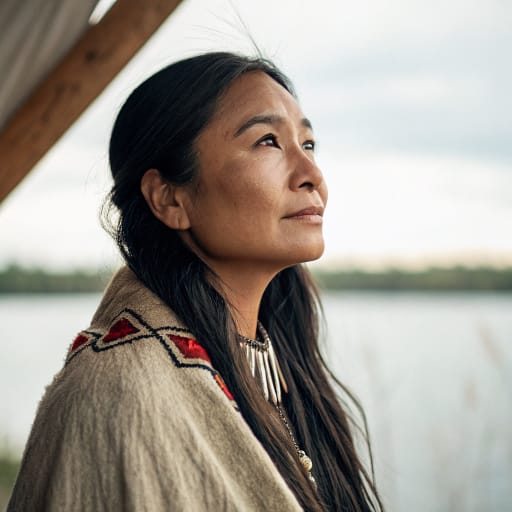
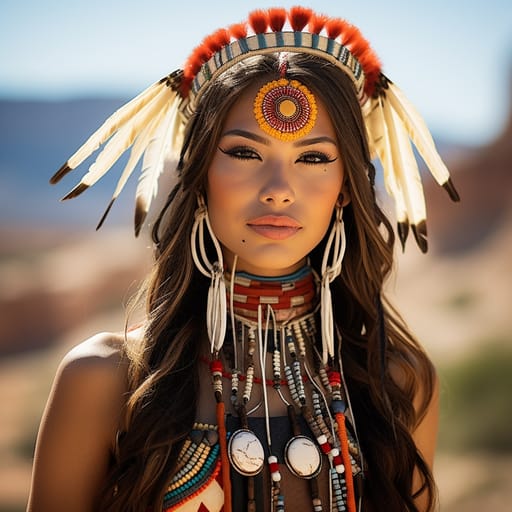
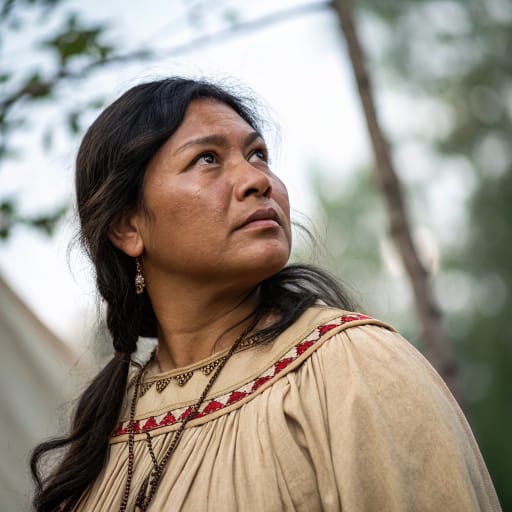
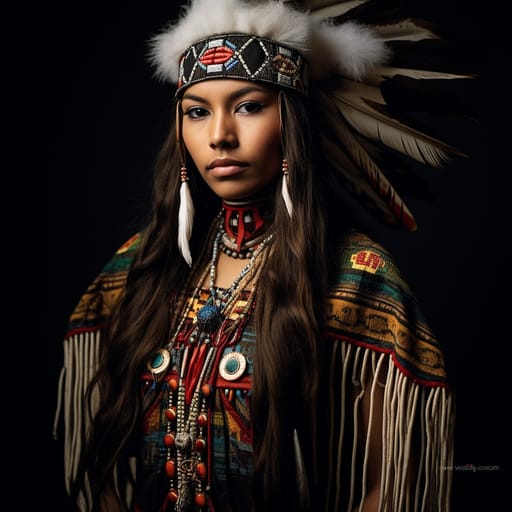
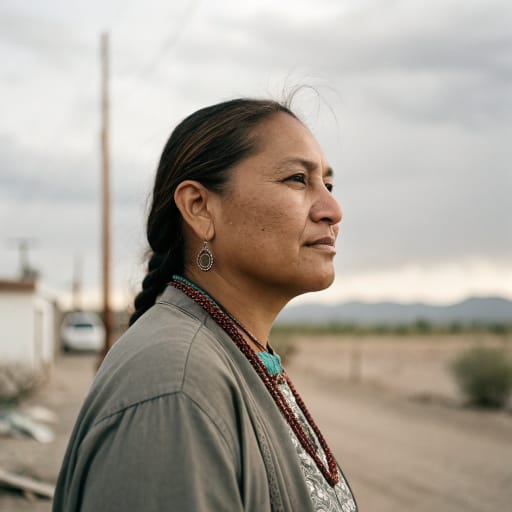
Typical Congaree Phenotypes
Reference for AI generation: hair, eyes, skin, facial structure, build
Congaree Body & Anatomy Reference
Per-feature anatomical profile for AI nude generation: Indigenous Northern American / Algonquian-Iroquoian phenotype
Congaree Boobs & Breasts
Congaree boobs follow the Indigenous Northern American / Algonquian-Iroquoian profile: medium cup, moderate projection. Areolar diameter is usually 30-44mm, and the coloring is medium-brown areolar pigmentation against the copper-to-medium-brown skin tone. Breast shape tracks body composition (mesomorph, broader frame in northern Indigenous populations, mean adult female BMI 25-28), so Congaree breasts tend to be full and moderate projection. Expect a forward-set shape, not the smaller East Asian bust.
Congaree Ass & Hips
Congaree ass and hip morphology presents as medium, moderate-to-full projection, distinctly different from the slim East Asian narrow-hip profile. The Congaree pelvic profile shows medium iliac crests, anchored in the Indigenous Northern American / Algonquian-Iroquoian skeletal pattern. Congaree butt shots in adult AI imagery should render the medium, moderate-to-full projection silhouette with the overall build (mesomorph, broader frame in northern Indigenous populations) and the fat distribution typical of the Indigenous Northern American / Algonquian-Iroquoian phenotype.
Congaree Vagina & Pussy
Congaree pussy anatomy typically shows medium-brown labial pigmentation. Pubic hair is usually straight medium-coarse texture. In AI-generated Congaree nudes, labial color should blend into the copper to medium-brown skin with a gradual transition, and the hair should keep its straight medium-coarse texture.
Congaree Dicks & Penis
Penis reference for Congaree men: regional mean ~13cm erect, moderate girth. Coloring: medium-brown shaft pigmentation. An accurate Congaree cock in AI imagery matches the surrounding copper to medium-brown skin rather than a generic porn default. Circumcision depends on religion and custom, not ancestry.
Congaree Body, Curves & Build
The Congaree figure is generally mesomorph, broader frame in northern Indigenous populations, with mean adult female BMI 25-28, characteristic of Indigenous Northern American / Algonquian-Iroquoian ancestry. AI image tools tend to flatten regional body types into a few stock shapes; here the Congaree build is kept as its own reference.
Congaree Skin Tone & Hair Texture
Skin: copper to medium-brown (Fitzpatrick III-V). Hair: straight 1A, dark-brown to black, often thick and dense. Both are typical of Indigenous Northern American / Algonquian-Iroquoian ancestry. The most common mistake in AI nudes of Congaree women is a body rendered lighter than the face.
Explore phenotype categories
Structured taxonomy with peer-reviewed scales · 22 anatomical categories
Erotic Poses & Sex Positions
From the pose catalog: 219 named positions with reference skeletons
Frequently asked questions about Congaree people
Where is the Congaree homeland?
The Congaree homeland is Middle Congaree and upper Santee river valleys in central South Carolina, around present-day Columbia, United States in North America.
What language do Congaree people speak?
Congaree people primarily speak Congaree (almost entirely unrecorded; presumed Siouan, probably Catawban).
What religion do Congaree people practice?
The predominant religion among Congaree people is Traditional Southeastern Native American beliefs, largely unrecorded.






Make your own Congaree images
Five a day, free, no credits to buy. The studio starts from this group's phenotype data, so you can set body type, pose and style and keep the traits accurate.
Start with Congaree