No portrait yet
Morokodo Erotic
Western Equatoria, South Sudan
Morokodo (Central Sudanic, Bongo-Bagirmi branch); Juba Arabic and English as wider languages
Mostly Christian, with some traditional religious practice
Bongo-Bagirmi-speaking Central Sudanic peoples; closest in language to the Beli and Jur Modo
About Morokodo People
The Morokodo are a small farming people of Western Equatoria in South Sudan, and what most clearly sets them apart is their language. Morokodo belongs to the Bongo-Bagirmi branch of the Central Sudanic family, a line of languages that stretches west through the Central African Republic into Chad. In this corner of South Sudan the branch survives as a handful of small, closely related languages, and Morokodo's nearest relatives are Beli and Jur Modo. The Moru-Madi languages spoken elsewhere in Equatoria are Central Sudanic too, but they come from a different branch. The Nilotic Dinka, whose country lies to the north, speak something unrelated altogether. Older surveys counted Morokodo speakers only in the low thousands. In a community that small, speaking the language at home is a large part of what being Morokodo means. Juba Arabic and English are used for the market, the school and dealings with government.
Home is wooded savanna, farmed through the rainy season, and sorghum, groundnuts and cassava are the staples of this part of Equatoria. The region has a hard history. In the nineteenth century, traders based in Khartoum ran fortified stations called zaribas across southwestern Sudan to take out ivory and captives, and the small Bongo-Bagirmi-speaking peoples of the area suffered badly. Mittu, a related language described by travelers of that era, is no longer spoken. Christianity came later, through mission stations of the colonial period. Most Morokodo today say they are Christian and church is part of the weekly routine, though older local religious practice has not disappeared. The century that followed brought war rather than rest. Sudan's two long civil wars drove Equatorian farming communities from their land for decades, and the conflict that broke out after South Sudan's 2011 independence reached Western Equatoria too. Every time people are forced to move, a group this small feels it: families scatter and the language is spoken less from day to day. The Morokodo are still here all the same, farming, going to church and speaking a language that almost nobody outside their own communities has heard.
Related ethnic groups
Groups that share Morokodo's homeland, region, language, or religious tradition. These are likely candidates for comparative phenotype reference.
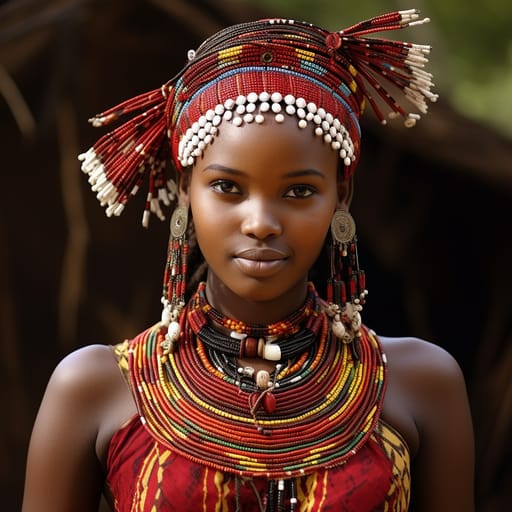
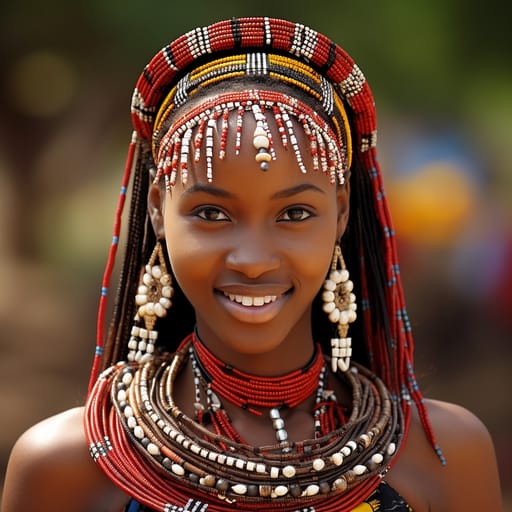
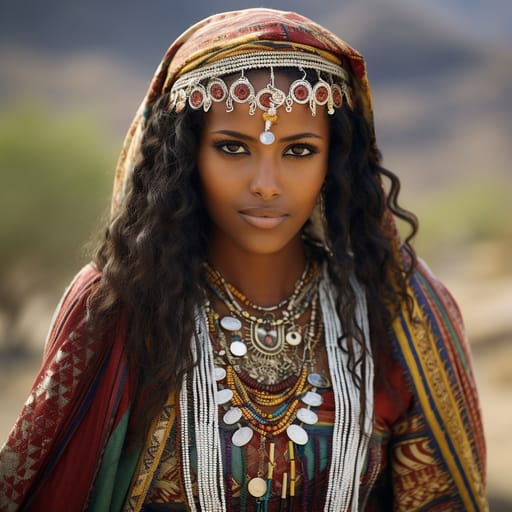
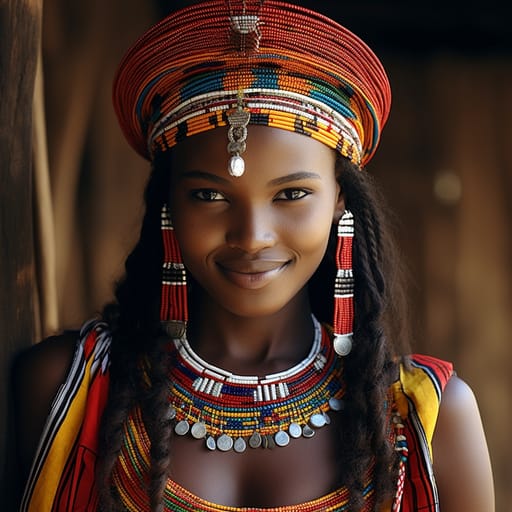
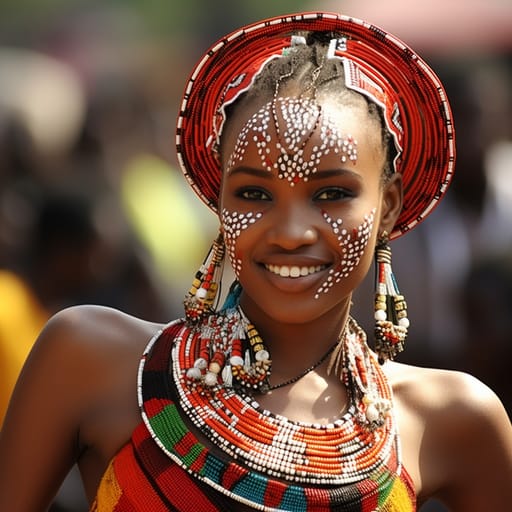
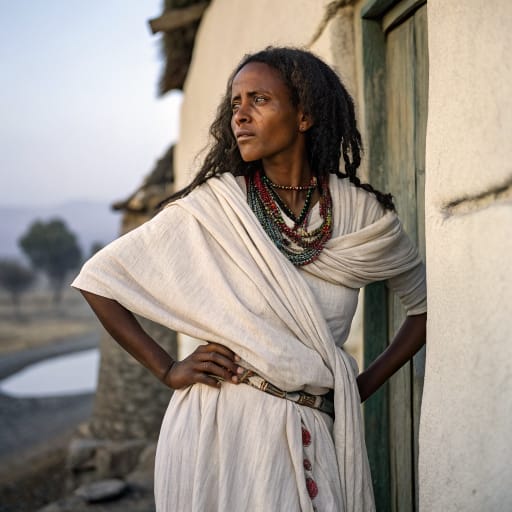
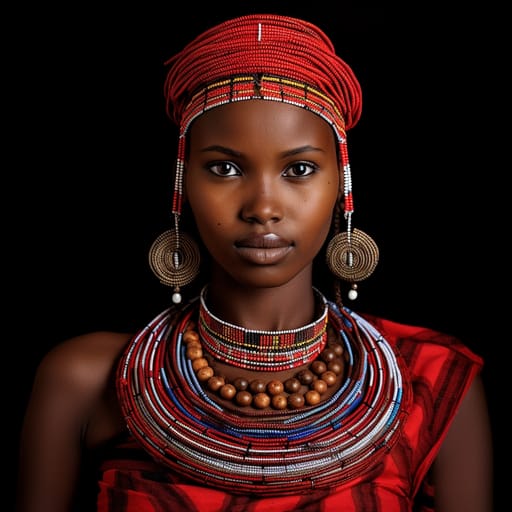
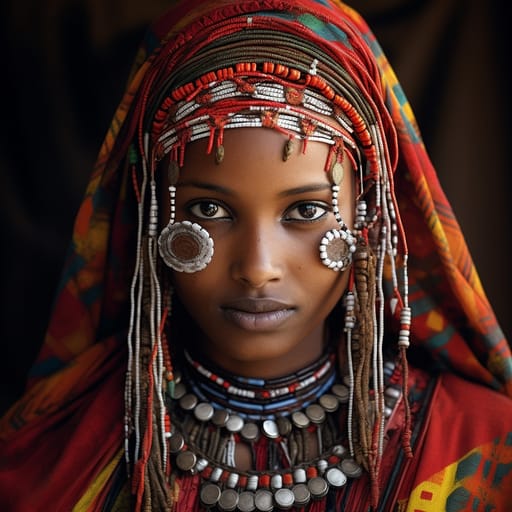
Typical Morokodo Phenotypes
Reference for AI generation: hair, eyes, skin, facial structure, build
Morokodo Body & Anatomy Reference
Per-feature anatomical profile for AI nude generation: Cushitic / Nilo-Cushitic East African phenotype
Morokodo Boobs & Breasts
Morokodo boobs follow the Cushitic / Nilo-Cushitic East African profile: small-to-medium-cup, high-set, conical. Areolar diameter is usually 28-38mm, and the coloring is moderate-to-high areolar pigmentation against the brown-to-deep-brown skin tone. Breast shape tracks body composition (lean ectomorph-to-mesomorph, mean adult female BMI 19-22), so Morokodo breasts tend to be firmer and less projecting than the African-American or West African norm. Expect a forward-set shape, not the lateral spread of the West African phenotype.
Morokodo Ass & Hips
Morokodo ass and hip morphology presents as small-to-medium, high-set, rounded, distinctly different from the wide-set heavy-projection West African or African-American norm. The Morokodo pelvic profile shows narrow-to-medium iliac crests, longer torso-to-leg ratio, anchored in the Cushitic / Nilo-Cushitic East African skeletal pattern. Morokodo butt shots in adult AI imagery should render the small-to-medium, high-set, rounded silhouette with the overall build (lean ectomorph-to-mesomorph) and the fat distribution typical of the Cushitic / Nilo-Cushitic East African phenotype.
Morokodo Vagina & Pussy
Morokodo pussy anatomy typically shows brown-to-deep-brown labial pigmentation, narrow-to-medium labia minora projection. Pubic hair is usually tightly-coiled coarse texture, densely distributed. In AI-generated Morokodo nudes, labial color should blend into the brown to deep brown skin with a gradual transition, and the hair should keep its tightly-coiled coarse texture.
Morokodo Dicks & Penis
Penis reference for Morokodo men: regional mean ~13.5cm erect, moderate girth, ~12cm circumference. Coloring: deeper-pigmented than the West African norm. An accurate Morokodo cock in AI imagery matches the surrounding brown to deep brown skin rather than a generic porn default. Circumcision depends on religion and custom, not ancestry.
Morokodo Body, Curves & Build
The Morokodo figure is generally lean ectomorph-to-mesomorph, with mean adult female BMI 19-22, characteristic of Cushitic / Nilo-Cushitic East African ancestry. AI image tools tend to flatten regional body types into a few stock shapes; here the Morokodo build is kept as its own reference.
Morokodo Skin Tone & Hair Texture
Skin: brown to deep brown (Fitzpatrick V-VI). Hair: tight 4A-4C coil, often worn natural or in braided/twisted protective styles. Both are typical of Cushitic / Nilo-Cushitic East African ancestry. The most common mistake in AI nudes of Morokodo women is a body rendered lighter than the face.
Explore phenotype categories
Structured taxonomy with peer-reviewed scales · 22 anatomical categories
Erotic Poses & Sex Positions
From the pose catalog: 219 named positions with reference skeletons
Frequently asked questions about Morokodo people
Where is the Morokodo homeland?
The Morokodo homeland is Western Equatoria, South Sudan in Eastern Africa.
What language do Morokodo people speak?
Morokodo people primarily speak Morokodo (Central Sudanic, Bongo-Bagirmi branch); Juba Arabic and English as wider languages.
What religion do Morokodo people practice?
The predominant religion among Morokodo people is Mostly Christian, with some traditional religious practice.






Make your own Morokodo images
Five a day, free, no credits to buy. The studio starts from this group's phenotype data, so you can set body type, pose and style and keep the traits accurate.
Start with Morokodo