No portrait yet
Rahanweyn Erotic
The interriverine south of Somalia, chiefly the Bay and Bakool regions with parts of Lower Shabelle and Gedo, centered on Baidoa
Maay, or Af-Maay (Cushitic, Afro-Asiatic), alongside standard Somali (Af-Maxaa)
Sunni Islam of the Shafi'i school, with a long Sufi presence, notably the Qadiriyya
A Somali clan family of the Sab line, in two branches: Digil (Tunni, Jiddu, Geledi, Dabarre) and Mirifle (Leysan, Elay, Hadamo, Hariin)
About Rahanweyn People
The Rahanweyn are Somalia's farmers, and in a country that built its self-image around camels and movement, that has always marked them out. Their ground is the land between the rivers: the belt of red soil and thornbush running through Bay and Bakool and down into Lower Shabelle, where rain-fed sorghum comes up after the gu rains and cattle count for more than camels. Baidoa is its center. Somali genealogy sorts the clan families into two lines, Samaale for the herders and Sab for the cultivators, and the Rahanweyn stand on the Sab side, in two branches: Digil, closer to the coast and the Shabelle, and Mirifle, spread across the interior plains. Reewin is what many of them call themselves.
They speak Maay, Cushitic like the standard Somali of the north but far enough from it that an Af-Maxaa speaker does not simply follow along. The 2012 constitution names both as Somali, settling on paper an argument that had run for decades. When the Barre government fixed standard Somali in Latin script in 1972 and drove it through the schools and the ministries, Maay speakers found their own language waiting outside the classroom door. The other thing that sets Rahanweyn society apart is how it is assembled. Where other Somali clans police descent from a single ancestor, the Rahanweyn keep an openly acknowledged mechanism for taking people in: gaashaanbuur, a stacking of shields, by which client families, newcomers and whole lineages from elsewhere were absorbed and given a place and a name in the structure. This is a clan family that grew by adoption as much as by birth.
Islam here is Sunni and Shafi'i, and it came with trade long before it came with reformers. Sufi orders planted farming settlements across the interriverine country, and the tombs of their sheikhs are still visited. The Geledi sultans of Afgooye, a Digil house, dominated southern trade in the nineteenth century and broke the militant Bardheere settlement in 1843. The worst chapter is recent: in 1991 and 1992, settled people with grain in storage and nowhere to run were the easiest in Somalia to rob, militias stripped Bay bare, and foreign reporters took to calling Baidoa the city of death. Out of that came the Rahanweyn Resistance Army, the recapture of Baidoa in 1999, and the federal South West State that governs from there today.
Related ethnic groups
Groups that share Rahanweyn's homeland, region, language, or religious tradition. These are likely candidates for comparative phenotype reference.
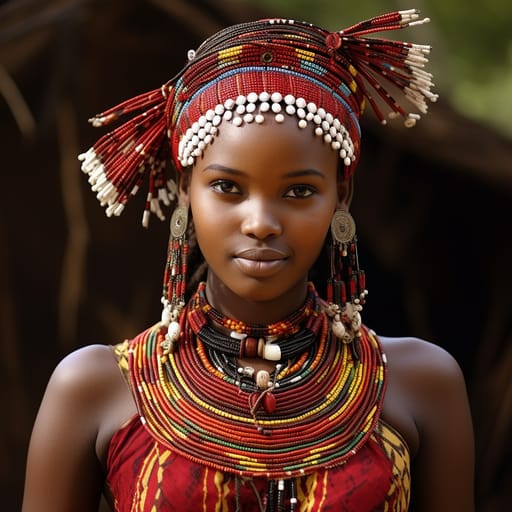
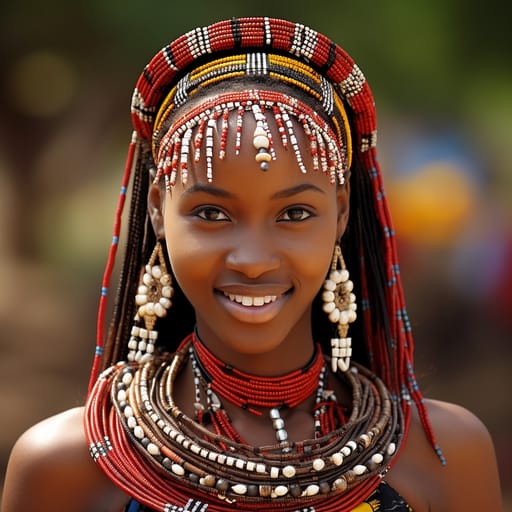
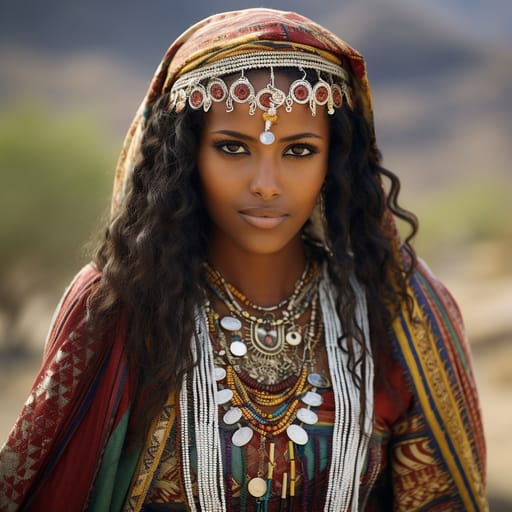
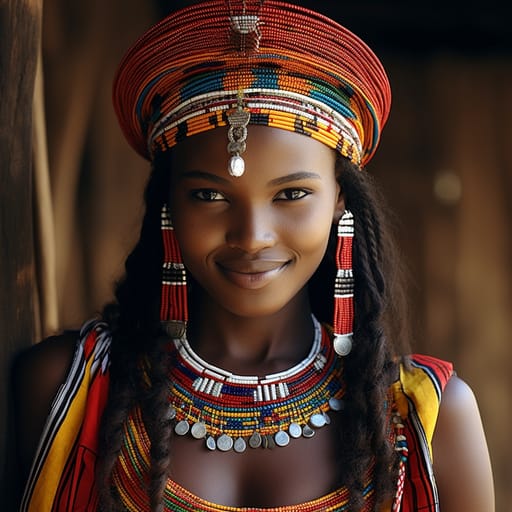
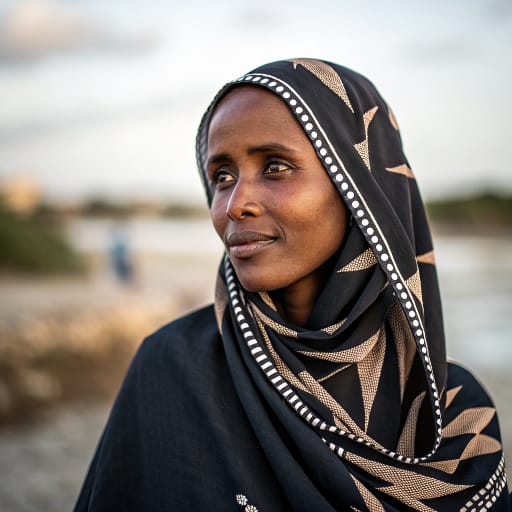
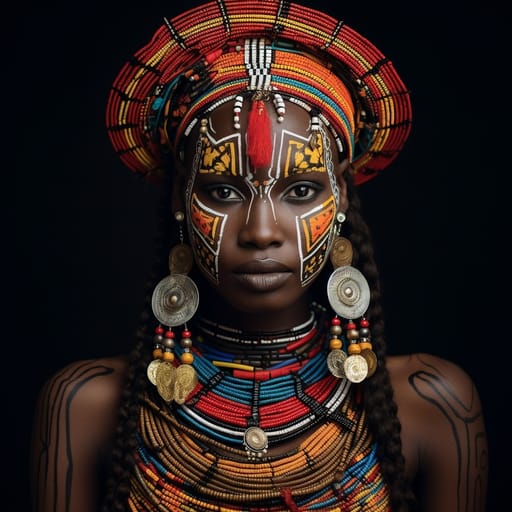
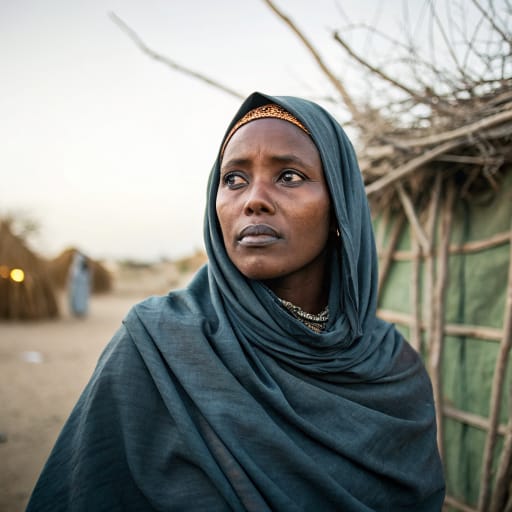
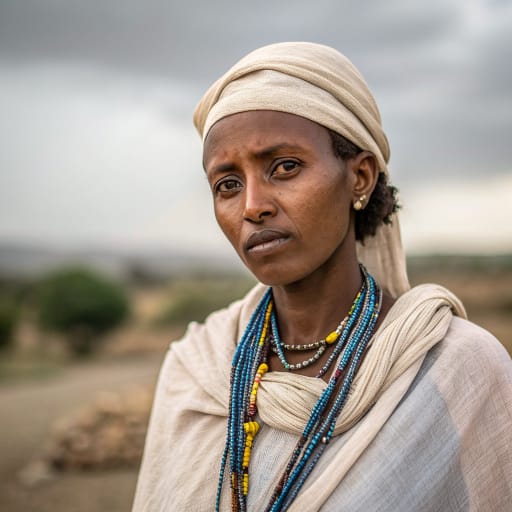
Typical Rahanweyn Phenotypes
Reference for AI generation: hair, eyes, skin, facial structure, build
Rahanweyn Body & Anatomy Reference
Anatomy by feature, Cushitic / Nilo-Cushitic East African phenotype
Rahanweyn Boobs & Breasts
Bust reference for Rahanweyn women: small-to-medium-cup, high-set, conical, which is typical of Cushitic / Nilo-Cushitic East African ancestry. Areolas measure about 28-38mm across, with moderate-to-high pigmentation. Body type (lean ectomorph-to-mesomorph) shapes the bust as well, so Rahanweyn tits are usually firmer and less projecting than the African-American or West African norm. In AI imagery, keep the forward-set shape rather than drifting toward the lateral spread of the West African phenotype.
Rahanweyn Ass & Hips
The Rahanweyn ass is typically small-to-medium, high-set, rounded, which sets it apart from the wide-set heavy-projection West African or African-American norm. Underneath, the pelvis shows narrow-to-medium iliac crests, longer torso-to-leg ratio, part of the Cushitic / Nilo-Cushitic East African skeletal pattern. For Rahanweyn butt pics and AI renders, match that silhouette and the overall build (lean ectomorph-to-mesomorph).
Rahanweyn Vagina & Pussy
Rahanweyn pussy and vulvar anatomy presents brown-to-deep-brown labial pigmentation, narrow-to-medium labia minora projection, consistent with the Cushitic / Nilo-Cushitic East African phenotype's pigmentation pattern. Rahanweyn pubic hair is typically tightly-coiled coarse texture, densely distributed, in the inverted-triangle pattern. For anatomically accurate Rahanweyn pussy renders the labial coloration should match the surrounding brown to deep brown skin tone with a continuous gradient, and the hair should keep its tightly-coiled coarse texture.
Rahanweyn Dicks & Penis
Rahanweyn dicks follow the Cushitic / Nilo-Cushitic East African reference data: regional mean ~13.5cm erect; moderate girth, ~12cm circumference; deeper-pigmented than the West African norm. Shaft color should track the brown to deep brown skin tone with a smooth change toward the glans, and Rahanweyn pubic hair keeps its tightly-coiled coarse texture.
Rahanweyn Body, Curves & Build
Rahanweyn body type and overall build presents as lean ectomorph-to-mesomorph, with mean adult female BMI 19-22: the characteristic Cushitic / Nilo-Cushitic East African habitus. Rahanweyn curves and proportions should keep the regional skeletal frame (height, shoulder-to-hip ratio, limb proportions) rather than a generic mesomorph default.
Rahanweyn Skin Tone & Hair Texture
Rahanweyn skin sits in the brown to deep brown (Fitzpatrick V-VI) band. Hair is typically tight 4A-4C coil, often worn natural or in braided/twisted protective styles, in keeping with the Cushitic / Nilo-Cushitic East African phenotype. In nude renders the skin should stay one even tone from face to body, and body, pubic and head hair should match.
Explore phenotype categories
Structured taxonomy with peer-reviewed scales · 22 anatomical categories
Erotic Poses & Sex Positions
From the pose catalog: 219 named positions with reference skeletons
Frequently asked questions about Rahanweyn people
Where is the Rahanweyn homeland?
The Rahanweyn homeland is The interriverine south of Somalia, chiefly the Bay and Bakool regions with parts of Lower Shabelle and Gedo, centered on Baidoa in Eastern Africa.
What language do Rahanweyn people speak?
Rahanweyn people primarily speak Maay, or Af-Maay (Cushitic, Afro-Asiatic), alongside standard Somali (Af-Maxaa).
What religion do Rahanweyn people practice?
The predominant religion among Rahanweyn people is Sunni Islam of the Shafi'i school, with a long Sufi presence, notably the Qadiriyya.






Make your own Rahanweyn images
Five a day, free, no credits to buy. The studio starts from this group's phenotype data, so you can set body type, pose and style and keep the traits accurate.
Start with Rahanweyn