Help us get this right
Does this portrait look right for Thuri?
Nobody has judged this one yet. You would be the first.
Thuri Erotic
Bahr el Ghazal region of northwestern South Sudan, between Wau and Aweil and between the Jur and Lol rivers, along the Wau to Deim Zubeir and Raga to Nyamlell roads.
Thuri, also called Dhe Thuri (Northern Luo, Western Nilotic, Nilo-Saharan); Luwo, Dinka and Arabic are widely used as second languages.
Christianity, introduced mainly through Catholic missions at Wau, alongside traditional northern Luo belief in a creator spirit and the ancestors.
Northern Luo branch of the Nilotic peoples, closest to the Luwo (Jur Chol). Sections usually listed as Bodho (Dembo), Colo (Jur Shol) and Manangeer (Jur Manangeer).
About Thuri People
The Thuri are one of the Luo peoples who never left. Luo oral histories, from the Shilluk on the White Nile to the Luo of the Kenyan lakeshore, point back toward the Bahr el Ghazal as the starting point of the great dispersal, and the Thuri, with their close cousins the Luwo, are among those still living there. Their land lies between Wau and Aweil in northwestern South Sudan, between the Jur and Lol rivers, where the wooded ironstone plateau gives way to the Dinka flood plains. They call themselves Jo Thuri, the people of Thuri, and their language Dhe Thuri. Outsiders have mostly known them by other people's words. Shatt is an Arabic label usually explained as "the scattered", and it is also pinned on unrelated groups elsewhere in Sudan, which has muddled the written record. Jur, which turns up in the names of Thuri sections such as the Jur Manangeer, is a Dinka word for strangers, applied to the non-Dinka farming peoples on the western margins of Dinka country.
That tangle of names says something true about their position. The Thuri are a small people, numbering in the thousands by the counts that exist, living beside the Dinka, the largest people in the country. Most are multilingual: Luwo or Dinka with the neighbors, Arabic in the markets around Wau. Thuri itself belongs to the northern branch of Luo within Western Nilotic, close enough to Luwo, Shilluk and Anuak that the family resemblance is plain, and a long way from the Ubangian and Central Sudanic languages of the Fertit peoples to the west. Three sections are usually listed: Bodho, Colo and Manangeer. Like the Luwo, they are cultivators first, with sorghum as the staple and fishing, hunting and a few animals around it, which sets them apart from the cattle economy next door.
History has been hard on the small peoples of this region. In the nineteenth century the armed trading camps called zaribas spread across the Bahr el Ghazal, and Deim Zubeir, headquarters of the slave trader Zubeir Pasha, sits at the far end of a road that runs through Thuri country. The long Sudanese civil wars later turned the corridor from Aweil to Wau into raiding ground and, in 1998, famine ground, and pushed many families from this countryside into the towns. Christianity, which arrived largely through the Catholic missions based at Wau, now sits alongside older belief, which among the northern Luo centers on a creator spirit, Jwok, and on the ancestors. What keeps the Thuri distinct is less any single custom than the language itself, still spoken at home by people who may use two or three others before noon.
Related ethnic groups
Groups that share Thuri's homeland, region, language, or religious tradition. These are likely candidates for comparative phenotype reference.
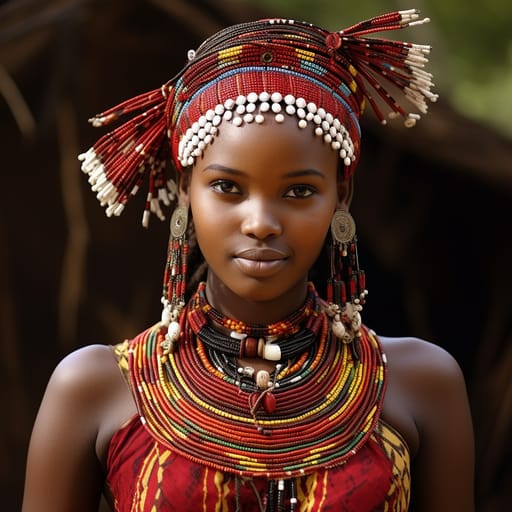
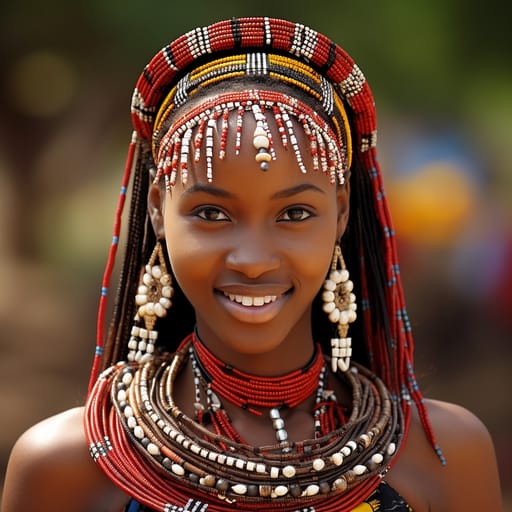
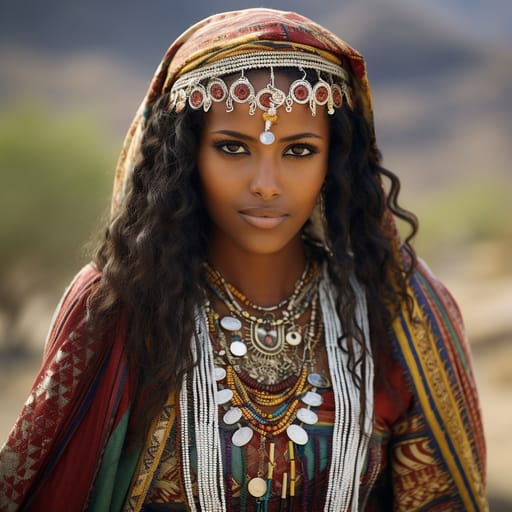
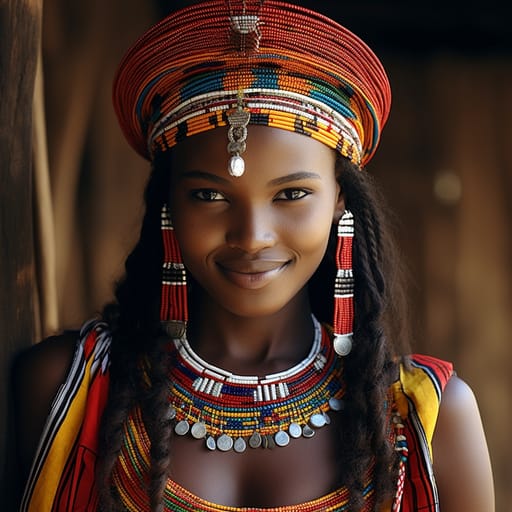
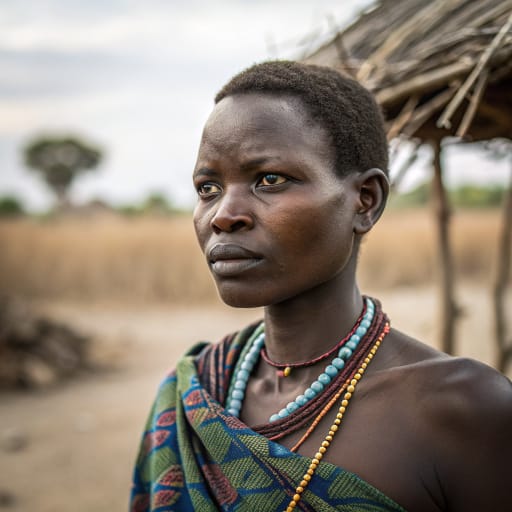
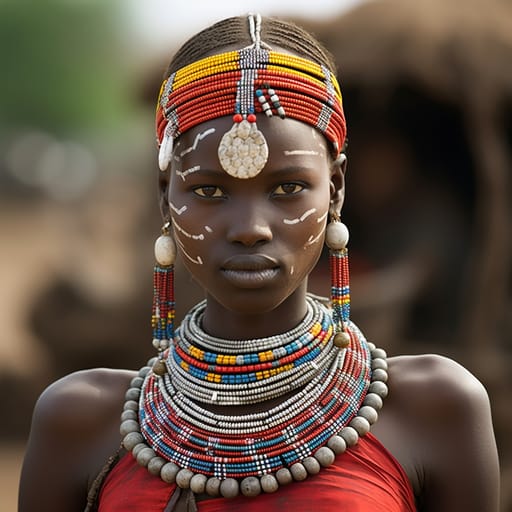
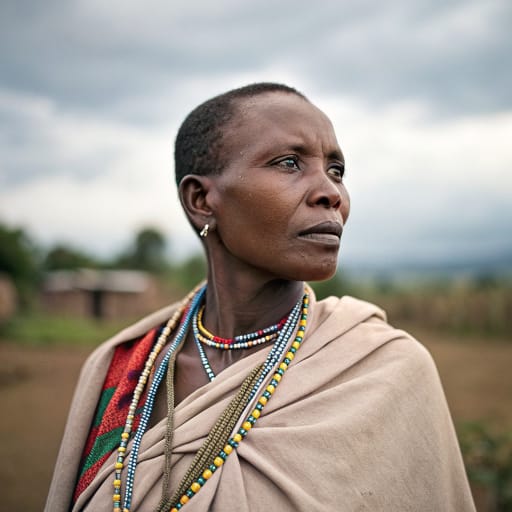
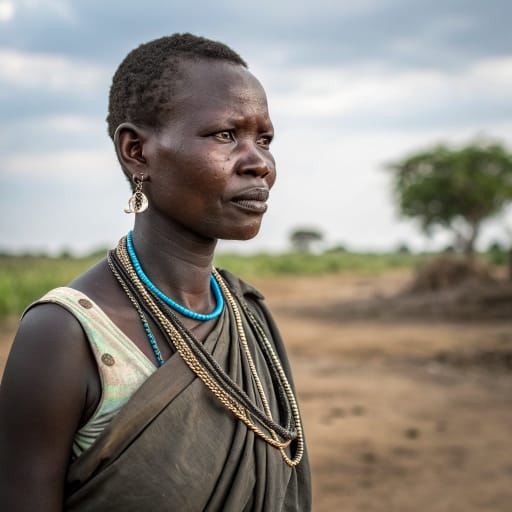
Typical Thuri Phenotypes
Reference for AI generation: hair, eyes, skin, facial structure, build
Thuri Body & Anatomy Reference
Cushitic / Nilo-Cushitic East African phenotype: anatomy reference for AI nude generation
Thuri Boobs & Breasts
Thuri boobs follow the Cushitic / Nilo-Cushitic East African profile: small-to-medium-cup, high-set, conical. Areolar diameter is usually 28-38mm, and the coloring is moderate-to-high areolar pigmentation against the brown-to-deep-brown skin tone. Breast shape tracks body composition (lean ectomorph-to-mesomorph, mean adult female BMI 19-22), so Thuri breasts tend to be firmer and less projecting than the African-American or West African norm. Expect a forward-set shape, not the lateral spread of the West African phenotype.
Thuri Ass & Hips
Thuri ass and hip morphology presents as small-to-medium, high-set, rounded, distinctly different from the wide-set heavy-projection West African or African-American norm. The Thuri pelvic profile shows narrow-to-medium iliac crests, longer torso-to-leg ratio, anchored in the Cushitic / Nilo-Cushitic East African skeletal pattern. Thuri butt shots in adult AI imagery should render the small-to-medium, high-set, rounded silhouette with the overall build (lean ectomorph-to-mesomorph) and the fat distribution typical of the Cushitic / Nilo-Cushitic East African phenotype.
Thuri Vagina & Pussy
Thuri pussy anatomy typically shows brown-to-deep-brown labial pigmentation, narrow-to-medium labia minora projection. Pubic hair is usually tightly-coiled coarse texture, densely distributed. In AI-generated Thuri nudes, labial color should blend into the brown to deep brown skin with a gradual transition, and the hair should keep its tightly-coiled coarse texture.
Thuri Dicks & Penis
Penis reference for Thuri men: regional mean ~13.5cm erect, moderate girth, ~12cm circumference. Coloring: deeper-pigmented than the West African norm. An accurate Thuri cock in AI imagery matches the surrounding brown to deep brown skin rather than a generic porn default. Circumcision depends on religion and custom, not ancestry.
Thuri Body, Curves & Build
The Thuri figure is generally lean ectomorph-to-mesomorph, with mean adult female BMI 19-22, characteristic of Cushitic / Nilo-Cushitic East African ancestry. AI image tools tend to flatten regional body types into a few stock shapes; here the Thuri build is kept as its own reference.
Thuri Skin Tone & Hair Texture
Skin: brown to deep brown (Fitzpatrick V-VI). Hair: tight 4A-4C coil, often worn natural or in braided/twisted protective styles. Both are typical of Cushitic / Nilo-Cushitic East African ancestry. The most common mistake in AI nudes of Thuri women is a body rendered lighter than the face.
Explore phenotype categories
Structured taxonomy with peer-reviewed scales · 22 anatomical categories
Erotic Poses & Sex Positions
From the pose catalog: 219 named positions with reference skeletons
Frequently asked questions about Thuri people
Where is the Thuri homeland?
The Thuri homeland is Bahr el Ghazal region of northwestern South Sudan, between Wau and Aweil and between the Jur and Lol rivers, along the Wau to Deim Zubeir and Raga to Nyamlell roads. in Eastern Africa.
What language do Thuri people speak?
Thuri people primarily speak Thuri, also called Dhe Thuri (Northern Luo, Western Nilotic, Nilo-Saharan); Luwo, Dinka and Arabic are widely used as second languages..
What religion do Thuri people practice?
The predominant religion among Thuri people is Christianity, introduced mainly through Catholic missions at Wau, alongside traditional northern Luo belief in a creator spirit and the ancestors..






Make your own Thuri images
Five a day, free, no credits to buy. The studio starts from this group's phenotype data, so you can set body type, pose and style and keep the traits accurate.
Start with Thuri