Help us get this right
Does this portrait look right for Miniconjou?
Nobody has judged this one yet. You would be the first.
Miniconjou Erotic
Western South Dakota, from the Black Hills toward the Platte River; today mainly the Cheyenne River Reservation in west-central South Dakota, United States.
Lakota (Siouan), the western dialect of the Sioux language; English is dominant in daily use today.
Lakota ceremonial tradition, including the Sun Dance, the inipi and the Sacred Calf Pipe, alongside Episcopal and Catholic Christianity.
One of the seven Titonwan (Teton) Lakota bands within the Očhéthi Šakówiŋ; today one of the four bands of the Cheyenne River Sioux Tribe.
About Miniconjou People
Mnikȟówožu, the name they call themselves, means planters by the water, and it points at something the Plains stereotype leaves out: this was a band that put seed into damp bottomland soil along the creeks, in the seasons between hunts. The Miniconjou are one of the seven Lakota bands of the Titonwan, who are in turn one of the three divisions of the Očhéthi Šakówiŋ, the Seven Council Fires. Their country ran from the Black Hills south and east toward the Platte, high short grass plains cut by wooded river bottoms, and their descendants live today mostly in west-central South Dakota on the Cheyenne River Reservation, which they share with the Sihasapa, the Itazipco and the Oohenumpa. The language is Lakota, the westernmost dialect of the Sioux language and part of the wider Siouan family that also carried Crow, Hidatsa, Osage and Omaha across the middle of the continent. It is spoken fluently now mostly by elders and taught deliberately to everyone else: immersion classrooms, dictionaries, curriculum, a whole apparatus built in one generation against the boarding schools that took it in the last.
Something else lives on Cheyenne River. The Sacred Calf Pipe, brought by White Buffalo Calf Woman in Lakota tradition, is kept at Green Grass by a Miniconjou family, the Looking Horses, through nineteen generations of keepers. Ceremony here was not reconstructed out of books. It went underground when it was illegal and came back up. The nineteenth century pressed hard on this band: the Fort Laramie treaty of 1868, then gold in the Black Hills and the war that followed, the Little Bighorn, the surrenders of 1877, the breakup of the Great Sioux Reservation in 1889. Then Wounded Knee. Spotted Elk, called Big Foot, was leading his sick and hungry Miniconjou band toward Pine Ridge in December 1890 when the Seventh Cavalry stopped them on Wounded Knee Creek and killed two hundred fifty or more of them, men, women and children. Touch the Clouds and Lame Deer were Miniconjou too, but it is Spotted Elk's band the name carries. In the 1950s the Oahe Dam drowned more than a hundred thousand acres of Cheyenne River bottomland, taking the timber, the gardens and the towns, which is a bleak thing to happen to planters by the water. Every December riders retrace Spotted Elk's route on horseback in the cold and reach the massacre site on the anniversary. They call it the Future Generations Ride.
Related ethnic groups
Groups that share Miniconjou's homeland, region, language, or religious tradition. These are likely candidates for comparative phenotype reference.
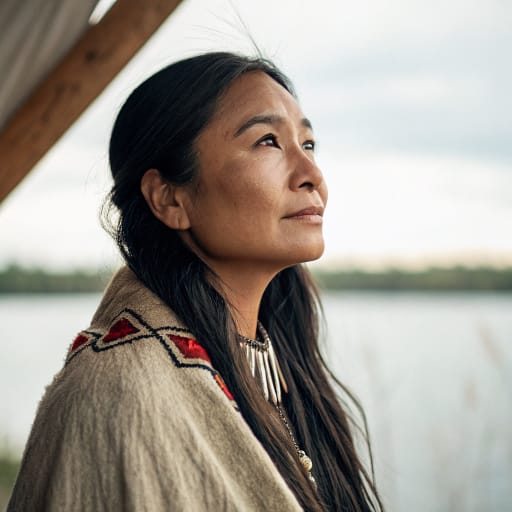
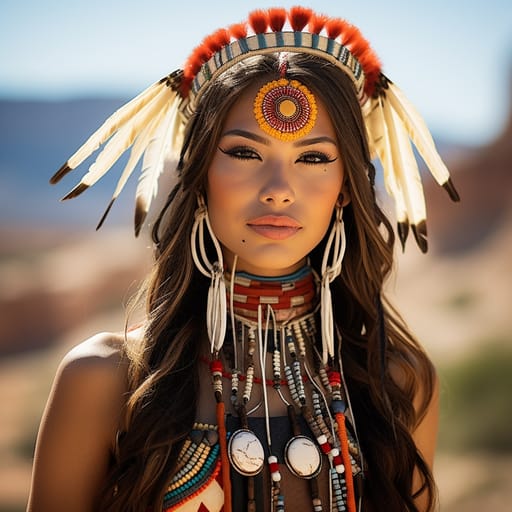
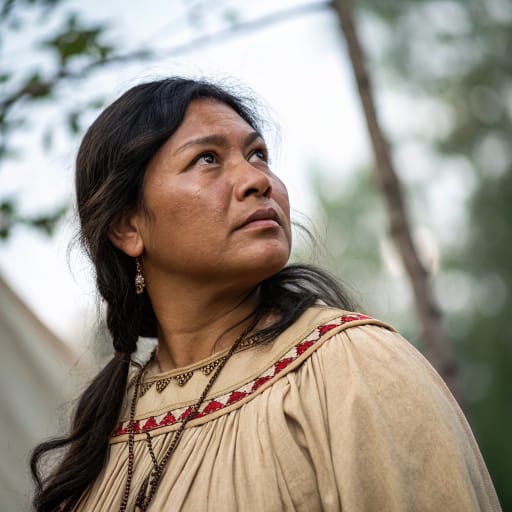
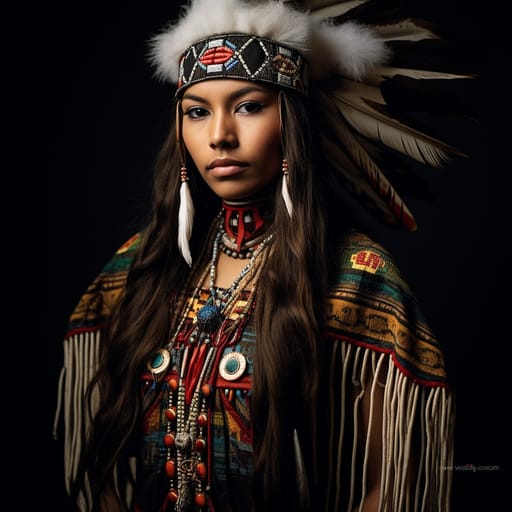
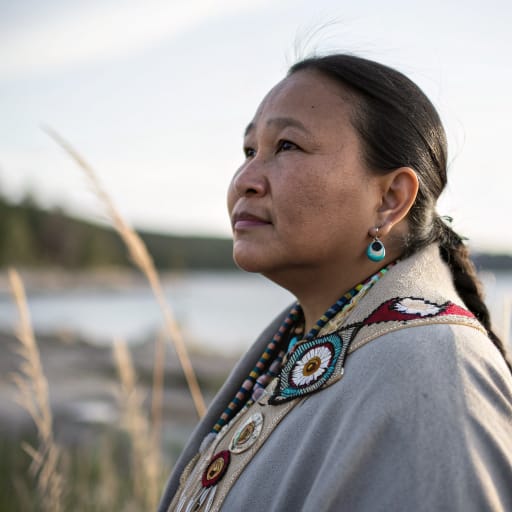
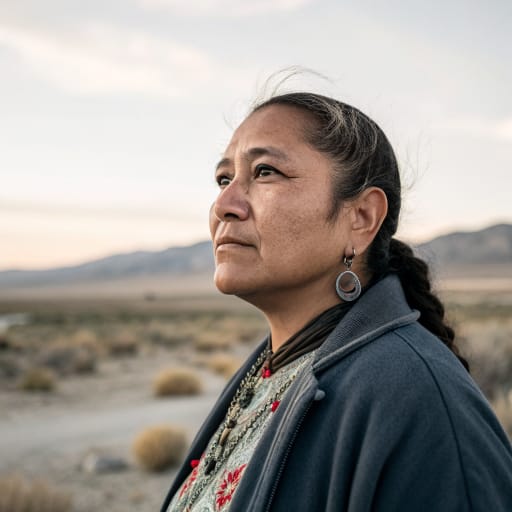
Typical Miniconjou Phenotypes
Reference for AI generation: hair, eyes, skin, facial structure, build
Miniconjou Body & Anatomy Reference
Indigenous Northern American / Algonquian-Iroquoian phenotype: anatomy reference for AI nude generation
Miniconjou Boobs & Breasts
Bust reference for Miniconjou women: medium cup, moderate projection, which is typical of Indigenous Northern American / Algonquian-Iroquoian ancestry. Areolas measure about 30-44mm across, with medium-brown pigmentation. Body type (mesomorph, broader frame in northern Indigenous populations) shapes the bust as well, so Miniconjou tits are usually full and moderate projection. In AI imagery, keep the forward-set shape rather than drifting toward the smaller East Asian bust.
Miniconjou Ass & Hips
The Miniconjou ass is typically medium, moderate-to-full projection, which sets it apart from the slim East Asian narrow-hip profile. Underneath, the pelvis shows medium iliac crests, part of the Indigenous Northern American / Algonquian-Iroquoian skeletal pattern. For Miniconjou butt pics and AI renders, match that silhouette and the overall build (mesomorph, broader frame in northern Indigenous populations).
Miniconjou Vagina & Pussy
Miniconjou pussy and vulvar anatomy presents medium-brown labial pigmentation, consistent with the Indigenous Northern American / Algonquian-Iroquoian phenotype's pigmentation pattern. Miniconjou pubic hair is typically straight medium-coarse texture, in the inverted-triangle pattern. For anatomically accurate Miniconjou pussy renders the labial coloration should match the surrounding copper to medium-brown skin tone with a continuous gradient, and the hair should keep its straight medium-coarse texture.
Miniconjou Dicks & Penis
Miniconjou dicks follow the Indigenous Northern American / Algonquian-Iroquoian reference data: regional mean ~13cm erect; moderate girth; medium-brown shaft pigmentation. Shaft color should track the copper to medium-brown skin tone with a smooth change toward the glans, and Miniconjou pubic hair keeps its straight medium-coarse texture.
Miniconjou Body, Curves & Build
Miniconjou body type and overall build presents as mesomorph, broader frame in northern Indigenous populations, with mean adult female BMI 25-28: the characteristic Indigenous Northern American / Algonquian-Iroquoian habitus. Miniconjou curves and proportions should keep the regional skeletal frame (height, shoulder-to-hip ratio, limb proportions) rather than a generic mesomorph default.
Miniconjou Skin Tone & Hair Texture
Miniconjou skin sits in the copper to medium-brown (Fitzpatrick III-V) band. Hair is typically straight 1A, dark-brown to black, often thick and dense, in keeping with the Indigenous Northern American / Algonquian-Iroquoian phenotype. In nude renders the skin should stay one even tone from face to body, and body, pubic and head hair should match.
Explore phenotype categories
Structured taxonomy with peer-reviewed scales · 22 anatomical categories
Erotic Poses & Sex Positions
From the pose catalog: 219 named positions with reference skeletons
Frequently asked questions about Miniconjou people
Where is the Miniconjou homeland?
The Miniconjou homeland is Western South Dakota, from the Black Hills toward the Platte River; today mainly the Cheyenne River Reservation in west-central South Dakota, United States. in North America.
What language do Miniconjou people speak?
Miniconjou people primarily speak Lakota (Siouan), the western dialect of the Sioux language; English is dominant in daily use today..
What religion do Miniconjou people practice?
The predominant religion among Miniconjou people is Lakota ceremonial tradition, including the Sun Dance, the inipi and the Sacred Calf Pipe, alongside Episcopal and Catholic Christianity..






Make your own Miniconjou images
Five a day, free, no credits to buy. The studio starts from this group's phenotype data, so you can set body type, pose and style and keep the traits accurate.
Start with Miniconjou