Help us get this right
Does this portrait look right for Mbugu?
Nobody has judged this one yet. You would be the first.
Mbugu Erotic
West Usambara Mountains, Lushoto District, Tanga Region, northeastern Tanzania; traditions trace earlier homes to the Laikipia plateau in Kenya and the Pare Mountains.
Mbugu in two registers: Normal Mbugu (Bantu, Niger-Congo, close to Pare) and Inner Mbugu or Ma'a (Bantu grammar with largely Cushitic vocabulary, a mixed language); also Shambaa and Swahili (Bantu).
Islam and Christianity, alongside older clan and ancestral observances.
Organized in clans, with communities around Magamba, Rangwi and Bumbuli; a Bantu-speaking people of partly Cushitic heritage, closely tied to the Pare and Shambaa.
About Mbugu People
The Mbugu are best known for something linguists argue about and the Mbugu themselves simply use: a way of speaking that keeps Bantu grammar and swaps in a different vocabulary, much of it Cushitic. In that inner language they call themselves Vamaa, and the language Ma'a. They are a small people, numbering in the thousands, living in pockets of the West Usambara Mountains in Lushoto District of northeastern Tanzania, around Magamba, Rangwi and Bumbuli, surrounded by the far more numerous Shambaa.
Their own account of how they got there runs north to south. Tradition places the ancestors on the Laikipia plateau in Kenya as cattle herders, pushed out by the Maasai, then moving through the Pare Mountains before climbing into Usambara, where they took up the high, cool pasture above the Shambaa farms. That history shows in the speech. Everyday Mbugu, which speakers call the normal language, is a Bantu language very close to Pare. Inner Mbugu runs on the same grammar, the same noun classes and verb endings, but replaces most ordinary words with a parallel set drawn from Cushitic languages, with some Maasai mixed in. Everyone who speaks the inner form also speaks the normal one, along with Shambaa and Swahili. One school of thought treats Ma'a as the remains of a Cushitic language whose grammar was gradually replaced by Bantu. Another, built on long fieldwork in the mountains, sees the inner vocabulary as something the community deliberately kept and cultivated to mark itself off from its neighbors. Either way it is a rare case, and it is why a small highland people turns up in nearly every textbook on language contact.
Separateness was a habit as well as a vocabulary. Under the Shambaa kingdom the Mbugu stayed at the edges, herding in the uplands and keeping their ritual ties pointed back toward Pare, where some clans returned for initiation. Cattle remained the measure of wealth long after farming became necessary. Today most households grow maize, beans and vegetables on steep plots like everyone else in Usambara, and crowded land and forest reserves have squeezed the old grazing. Islam and Christianity are both present, as they are throughout Lushoto, sitting alongside clan obligations that still matter. Younger Mbugu move easily in Swahili, and the inner language is heard less than it was. It has not gone, though: it is still what people reach for when they want to speak as Mbugu, among Mbugu.
Related ethnic groups
Groups that share Mbugu's homeland, region, language, or religious tradition. These are likely candidates for comparative phenotype reference.
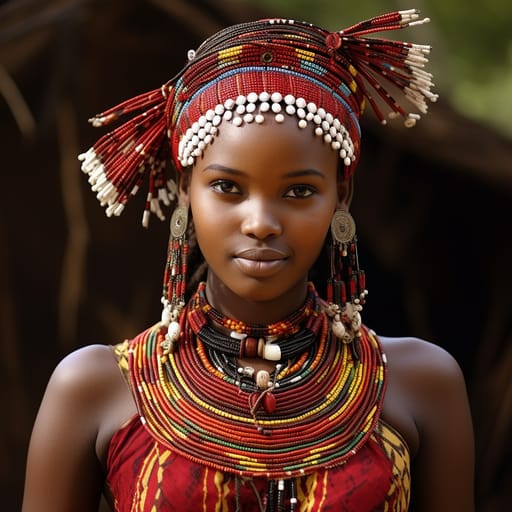
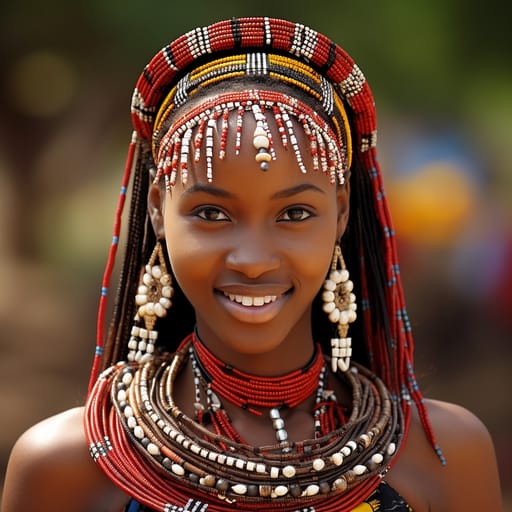
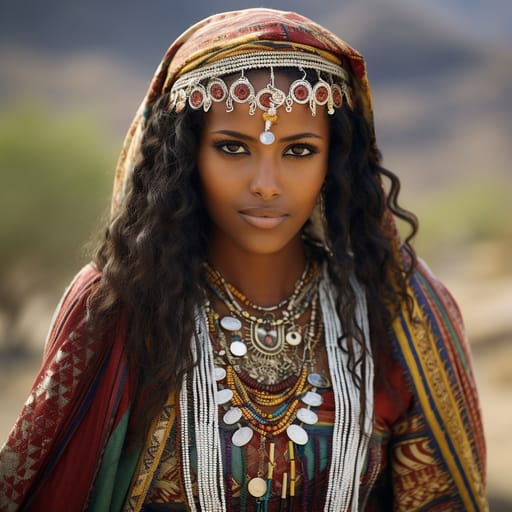
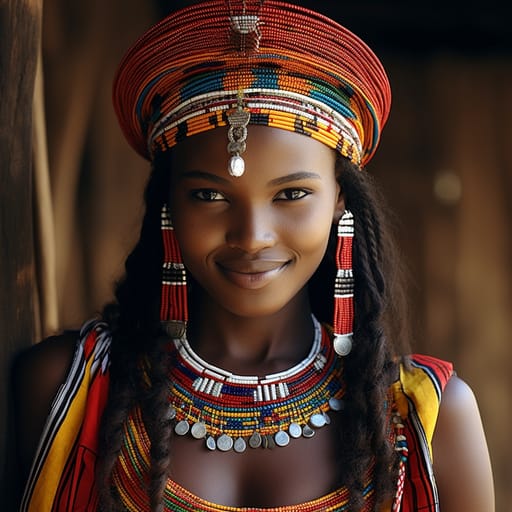
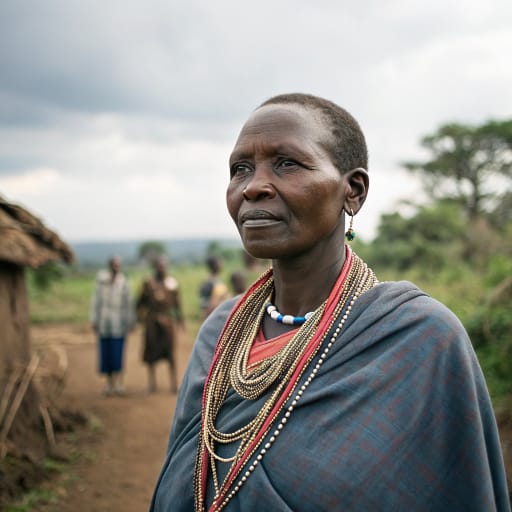
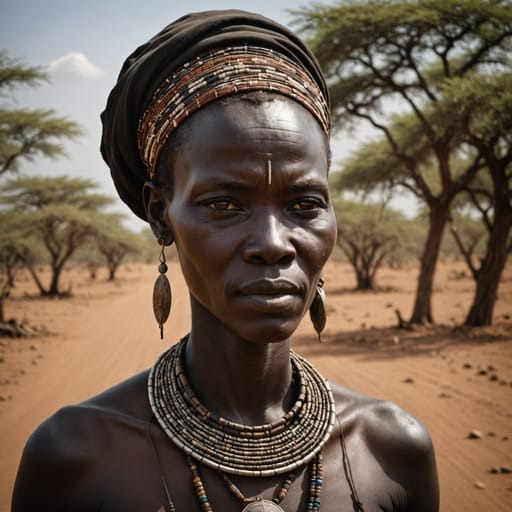
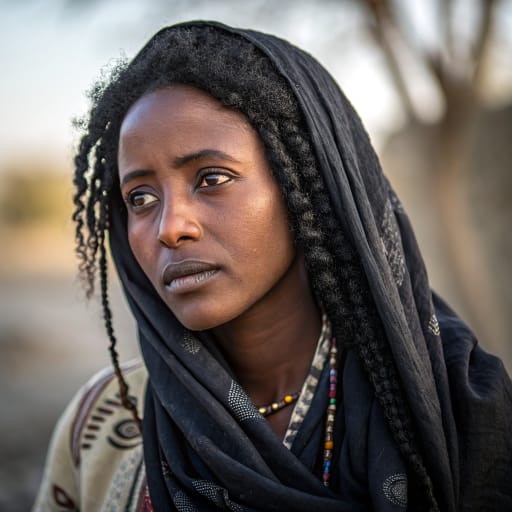
Typical Mbugu Phenotypes
Reference for AI generation: hair, eyes, skin, facial structure, build
Mbugu Body & Anatomy Reference
Cushitic / Nilo-Cushitic East African phenotype: anatomy reference for AI nude generation
Mbugu Boobs & Breasts
Mbugu boobs follow the Cushitic / Nilo-Cushitic East African profile: small-to-medium-cup, high-set, conical. Areolar diameter is usually 28-38mm, and the coloring is moderate-to-high areolar pigmentation against the brown-to-deep-brown skin tone. Breast shape tracks body composition (lean ectomorph-to-mesomorph, mean adult female BMI 19-22), so Mbugu breasts tend to be firmer and less projecting than the African-American or West African norm. Expect a forward-set shape, not the lateral spread of the West African phenotype.
Mbugu Ass & Hips
Mbugu ass and hip morphology presents as small-to-medium, high-set, rounded, distinctly different from the wide-set heavy-projection West African or African-American norm. The Mbugu pelvic profile shows narrow-to-medium iliac crests, longer torso-to-leg ratio, anchored in the Cushitic / Nilo-Cushitic East African skeletal pattern. Mbugu butt shots in adult AI imagery should render the small-to-medium, high-set, rounded silhouette with the overall build (lean ectomorph-to-mesomorph) and the fat distribution typical of the Cushitic / Nilo-Cushitic East African phenotype.
Mbugu Vagina & Pussy
Mbugu pussy anatomy typically shows brown-to-deep-brown labial pigmentation, narrow-to-medium labia minora projection. Pubic hair is usually tightly-coiled coarse texture, densely distributed. In AI-generated Mbugu nudes, labial color should blend into the brown to deep brown skin with a gradual transition, and the hair should keep its tightly-coiled coarse texture.
Mbugu Dicks & Penis
Penis reference for Mbugu men: regional mean ~13.5cm erect, moderate girth, ~12cm circumference. Coloring: deeper-pigmented than the West African norm. An accurate Mbugu cock in AI imagery matches the surrounding brown to deep brown skin rather than a generic porn default. Circumcision depends on religion and custom, not ancestry.
Mbugu Body, Curves & Build
The Mbugu figure is generally lean ectomorph-to-mesomorph, with mean adult female BMI 19-22, characteristic of Cushitic / Nilo-Cushitic East African ancestry. AI image tools tend to flatten regional body types into a few stock shapes; here the Mbugu build is kept as its own reference.
Mbugu Skin Tone & Hair Texture
Skin: brown to deep brown (Fitzpatrick V-VI). Hair: tight 4A-4C coil, often worn natural or in braided/twisted protective styles. Both are typical of Cushitic / Nilo-Cushitic East African ancestry. The most common mistake in AI nudes of Mbugu women is a body rendered lighter than the face.
Explore phenotype categories
Structured taxonomy with peer-reviewed scales · 22 anatomical categories
Erotic Poses & Sex Positions
From the pose catalog: 219 named positions with reference skeletons
Frequently asked questions about Mbugu people
Where is the Mbugu homeland?
The Mbugu homeland is West Usambara Mountains, Lushoto District, Tanga Region, northeastern Tanzania; traditions trace earlier homes to the Laikipia plateau in Kenya and the Pare Mountains. in Eastern Africa.
What language do Mbugu people speak?
Mbugu people primarily speak Mbugu in two registers: Normal Mbugu (Bantu, Niger-Congo, close to Pare) and Inner Mbugu or Ma'a (Bantu grammar with largely Cushitic vocabulary, a mixed language); also Shambaa and Swahili (Bantu)..
What religion do Mbugu people practice?
The predominant religion among Mbugu people is Islam and Christianity, alongside older clan and ancestral observances..






Make your own Mbugu images
Five a day, free, no credits to buy. The studio starts from this group's phenotype data, so you can set body type, pose and style and keep the traits accurate.
Start with Mbugu