Help us get this right
Does this portrait look right for Mayo?
Nobody has judged this one yet. You would be the first.
Mayo Erotic
The lower Mayo and Fuerte river valleys and the adjacent Gulf of California coast, in southern Sonora and northern Sinaloa, Mexico, centered on Navojoa, Etchojoa, Huatabampo and El Fuerte.
Mayo, also called Yoreme (Cahitan branch, Uto-Aztecan family), closely related to Yaqui; Spanish is near universal
Catholicism reworked into an indigenous ceremonial system, with vow-bound Holy Week societies alongside ordinary parish practice
One of the Cahitan peoples of northwest Mexico, with the Yaqui as their closest relatives; communities divide broadly between the Río Mayo towns in Sonora and the Río Fuerte towns in Sinaloa
About Mayo People
Say "Mayo" to most people and they hear "Maya," which is the first thing to clear away: these are two unrelated peoples separated by roughly two thousand miles. The Mayo live in the coastal lowlands of northwest Mexico, in southern Sonora and northern Sinaloa, along the two rivers that organize everything about the place, the Mayo and the Fuerte. Among themselves they are Yoreme, a word usually rendered as the people who respect the tradition, set against Yori, the ones who do not. It is a distinction about conduct rather than descent, and it is still in use.
Their language belongs to the Cahitan branch of Uto-Aztecan, and its closest relative is Yaqui, spoken by their neighbors to the north. The two are near enough that speakers can follow each other with some effort, and linguists still argue about whether they are separate languages or two ends of one. Mayo remains among the more widely spoken indigenous languages of northwestern Mexico, with tens of thousands of speakers, though transmission to children has thinned badly in the larger towns.
Jesuits reached the Mayo valley in 1614 and baptized thousands within weeks. The Mayo took the missions in without the long war the Yaqui fought, and what came out of it is not Catholicism with local decoration but a system with its own internal logic. The ceremonial year turns on Lent and Holy Week, run by societies whose members hold office by vow, often a promise made on their behalf in childhood in exchange for recovery from an illness, and binding for life. Masked Fariseos take over the town for weeks at a stretch, policing and clowning by turns, their masks burned in a bonfire when it ends. Pascola dancers open the fiestas with a coarse comic authority. Behind them comes the deer dancer, the maso, moving to a water drum, rasping sticks and cocoon rattles bound at the calves, a small stuffed deer head tied above his own. The songs he dances to describe the flower world, a place beneath the dawn where the deer lives.
Irrigation reshaped the valleys in the last century. Dams, canals and the commercial farms of the Mayo and Fuerte districts turned the floodplain into some of the most productive farmland in Mexico, and the Mayo became largely a people of ejido plots, wage labor in those fields, and fishing in the mangrove estuaries. The fiesta cycle held anyway, which is roughly the Mayo answer to most things.
Related ethnic groups
Groups that share Mayo's homeland, region, language, or religious tradition. These are likely candidates for comparative phenotype reference.
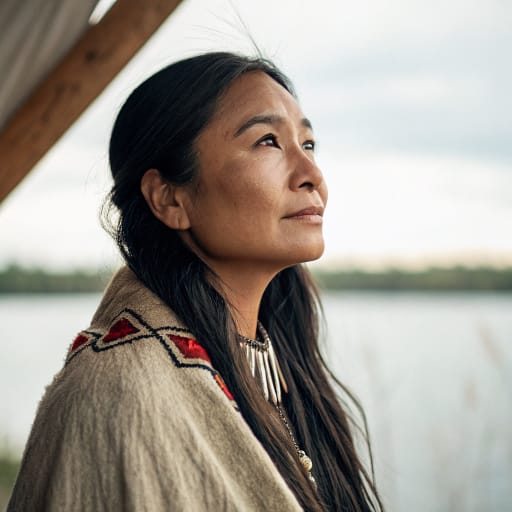
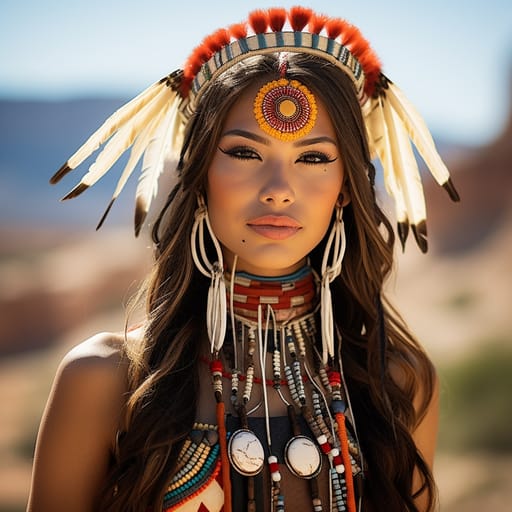
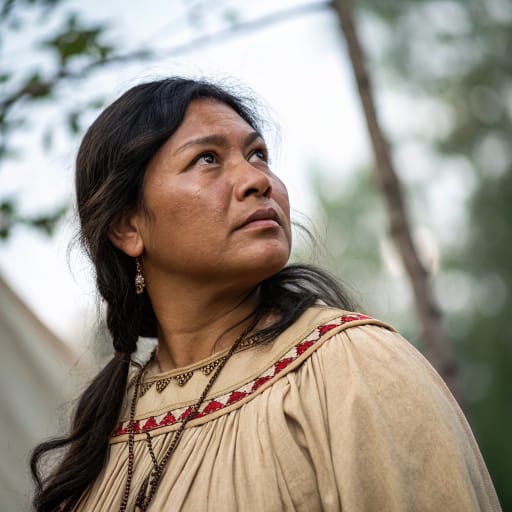
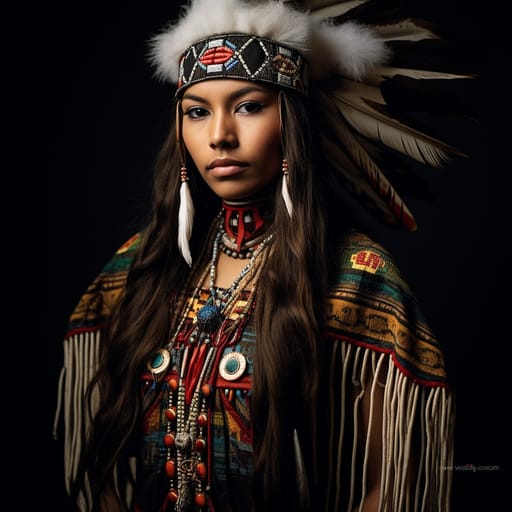
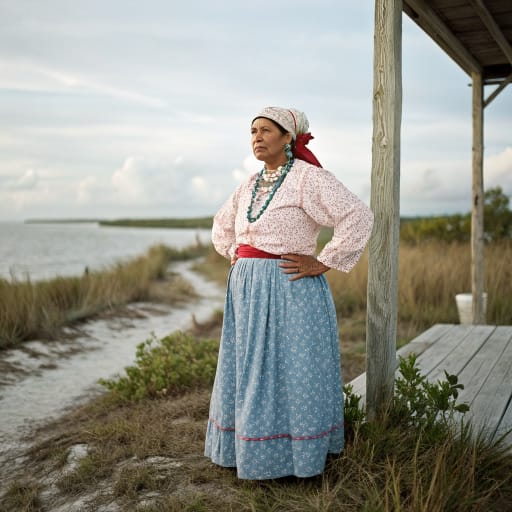
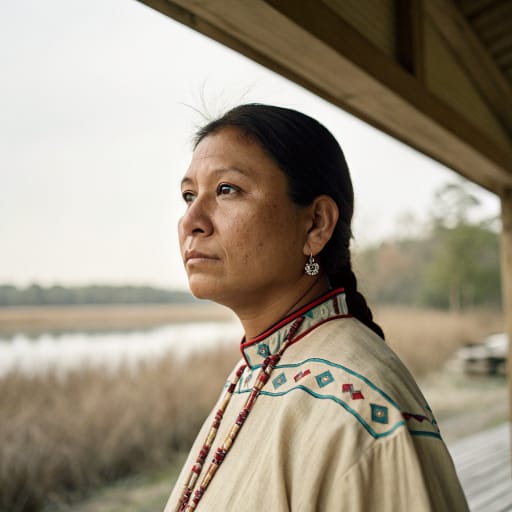
Typical Mayo Phenotypes
Reference for AI generation: hair, eyes, skin, facial structure, build
Mayo Body & Anatomy Reference
Per-feature anatomical profile for AI nude generation: Indigenous Northern American / Algonquian-Iroquoian phenotype
Mayo Boobs & Breasts
Mayo tits and boobs run medium cup, moderate projection, the classic Indigenous Northern American / Algonquian-Iroquoian bust profile. Mayo nipples and areolas show medium-brown areolar pigmentation against the copper-to-medium-brown skin tone, with areolar diameter typically in the 30-44mm range and forward-set positioning rather than the smaller East Asian bust. Mayo breasts trend full and moderate projection, a function of the mesomorph, broader frame in northern Indigenous populations body habitus and the mean adult female BMI 25-28. For anatomically accurate AI-generated Mayo nudes the render preserves the medium cup, moderate projection shape, 30-44mm areolas with medium-brown pigmentation, and the torso proportions of the Indigenous Northern American / Algonquian-Iroquoian phenotype.
Mayo Ass & Hips
Mayo hips and butt usually read as medium, moderate-to-full projection. The skeletal base is medium iliac crests, the Indigenous Northern American / Algonquian-Iroquoian pattern. Set against the slim East Asian narrow-hip profile, the difference is easy to see, and the hip-to-waist ratio is often what identifies Mayo women in photos.
Mayo Vagina & Pussy
Expect medium-brown labial pigmentation on Mayo women, in keeping with Indigenous Northern American / Algonquian-Iroquoian ancestry. The pubic hair is straight medium-coarse texture. Coloring should run evenly from the copper to medium-brown skin of the thighs to the labia, and Mayo nude imagery should keep the hair's straight medium-coarse texture.
Mayo Dicks & Penis
Mayo dick and penile anatomy in adult AI generation should anchor on the regional reference data: regional mean ~13cm erect, moderate girth, and medium-brown shaft pigmentation. The Mayo cock profile reflects the Indigenous Northern American / Algonquian-Iroquoian population's anthropometric measurements. The shaft pigmentation should track the surrounding copper to medium-brown skin tone, and the pubic hair should keep its straight medium-coarse texture in the typical inverted-V escutcheon.
Mayo Body, Curves & Build
Mayo body type: mesomorph, broader frame in northern Indigenous populations, with mean adult female BMI 25-28. This is the typical Indigenous Northern American / Algonquian-Iroquoian build. Height range, shoulder-to-hip ratio and fat distribution all follow from it, which is what an accurate Mayo nude body should show.
Mayo Skin Tone & Hair Texture
Mayo skin tone falls in the copper to medium-brown (Fitzpatrick III-V) band, the surface signal most often miscalibrated by generic AI nude generators. Mayo hair texture is typically straight 1A, dark-brown to black, often thick and dense, characteristic of the Indigenous Northern American / Algonquian-Iroquoian phenotype. In Mayo nude renders the skin should hold that band consistently across the body.
Explore phenotype categories
Structured taxonomy with peer-reviewed scales · 22 anatomical categories
Erotic Poses & Sex Positions
From the pose catalog: 219 named positions with reference skeletons
Frequently asked questions about Mayo people
Where is the Mayo homeland?
The Mayo homeland is The lower Mayo and Fuerte river valleys and the adjacent Gulf of California coast, in southern Sonora and northern Sinaloa, Mexico, centered on Navojoa, Etchojoa, Huatabampo and El Fuerte. in North America.
What language do Mayo people speak?
Mayo people primarily speak Mayo, also called Yoreme (Cahitan branch, Uto-Aztecan family), closely related to Yaqui; Spanish is near universal.
What religion do Mayo people practice?
The predominant religion among Mayo people is Catholicism reworked into an indigenous ceremonial system, with vow-bound Holy Week societies alongside ordinary parish practice.






Make your own Mayo images
Five a day, free, no credits to buy. The studio starts from this group's phenotype data, so you can set body type, pose and style and keep the traits accurate.
Start with Mayo