Help us get this right
Does this portrait look right for Mankanya?
Nobody has judged this one yet. You would be the first.
Mankanya Erotic
Cacheu Region of northwestern Guinea-Bissau, centered on Bula; migrant communities in the Casamance region of Senegal (especially Ziguinchor), Dakar and the Gambia
Mankanya (Niger-Congo, Atlantic, Bak group), closely related to Manjak and Papel; Kriol, Wolof and French widely used as second languages
Mostly traditional West African religion centered on spirit shrines (irã), with a significant Catholic minority and a smaller Muslim one
Part of the Bak-speaking cluster of coastal Guinea-Bissau with the Manjak and Papel; communities in Guinea-Bissau, Senegal (Mancagne) and the Gambia
About Mankanya People
The Mankanya are a farming people whose center of gravity is the town of Bula, a short trip north of Bissau in the Cacheu Region of Guinea-Bissau. Outsiders have called them by several names: Brame in older Portuguese records, Bola after the town, and Mancagne in Senegal and in French. What holds them together is less a fixed territory than a shared language, family ties that run back to the villages around Bula, and a ritual life that still pulls emigrants home when a relative dies.
Their language, also called Mankanya, belongs to the Bak group of the Atlantic languages within Niger-Congo. It sits very close to Manjak, spoken by neighbors to the west, and Papel, spoken to the south around Bissau. The three are regularly discussed together as one tight cluster. Few Mankanya speak only their own language. Kriol is the common tongue of markets and towns in Guinea-Bissau, and people living in Senegal usually add Wolof and French.
Religion comes in layers. A large share of the community follows the ancestral religion of this coast, which centers on spirits and shrines known in Kriol as irã. People bring offerings and seek divination there when facing illness, misfortune or a quarrel that needs settling. Catholicism has a firm foothold and there are Muslim Mankanya as well, but conversion seldom means a clean break with the old obligations. The biggest of those obligations is the funeral. As among the Papel and Manjak, a death calls for days of drumming, animal sacrifice and hosting relatives from far away, and how well a family sends off its dead says a good deal about its standing.
Portuguese traders worked the Cacheu River from the sixteenth century, but real colonial control over the inland farming villages came only with the military campaigns of the early twentieth century. In the decades that followed, many Mankanya went looking for work and land elsewhere. Migrants crossed into the Casamance region of Senegal and settled around Ziguinchor, then moved on to Dakar, the Gambia and eventually Europe. At home, farming still runs on rice and palm products, and more and more on cashew orchards, the cash crop that now sets the rural calendar across much of Guinea-Bissau.
Related ethnic groups
Groups that share Mankanya's homeland, region, language, or religious tradition. These are likely candidates for comparative phenotype reference.
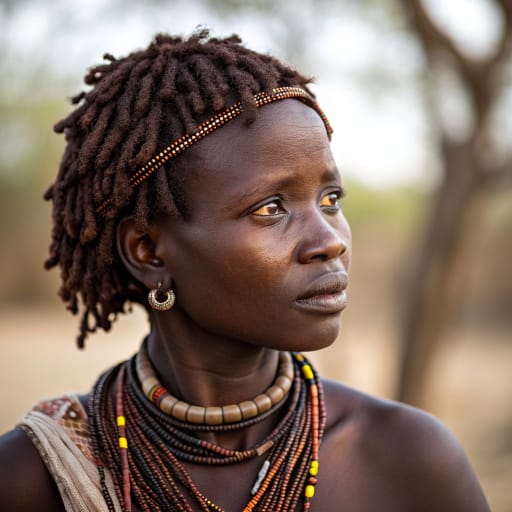
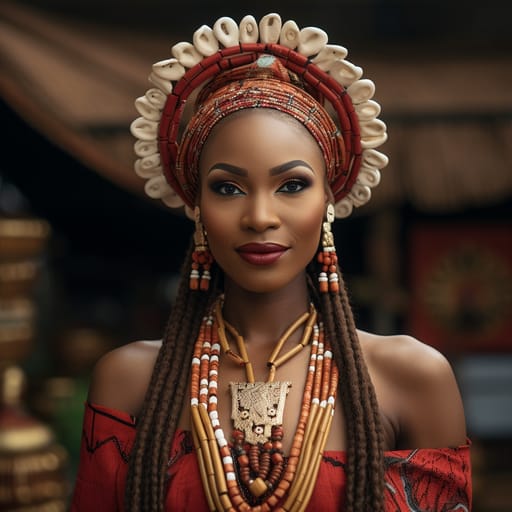
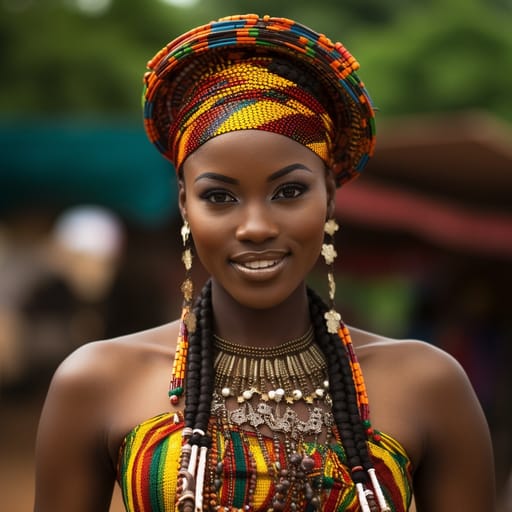
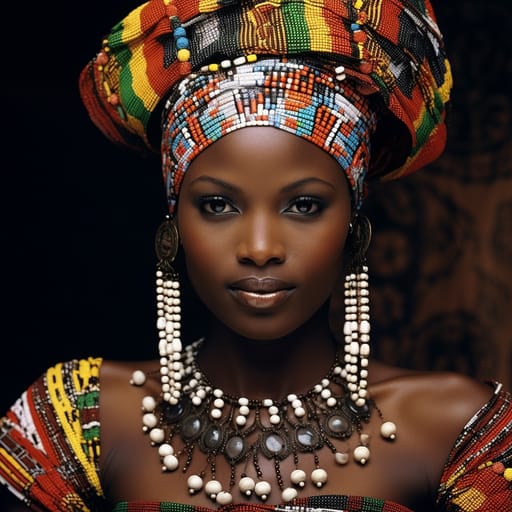
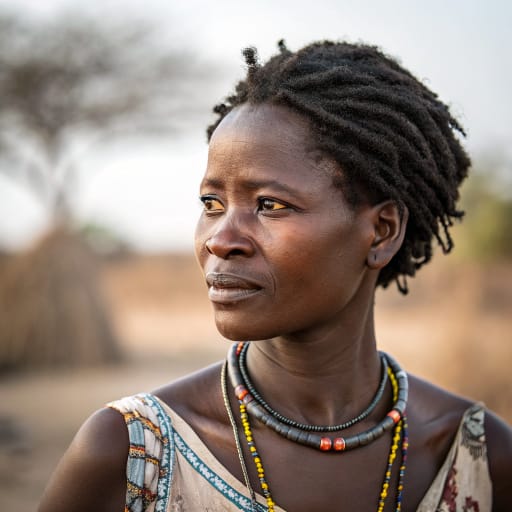
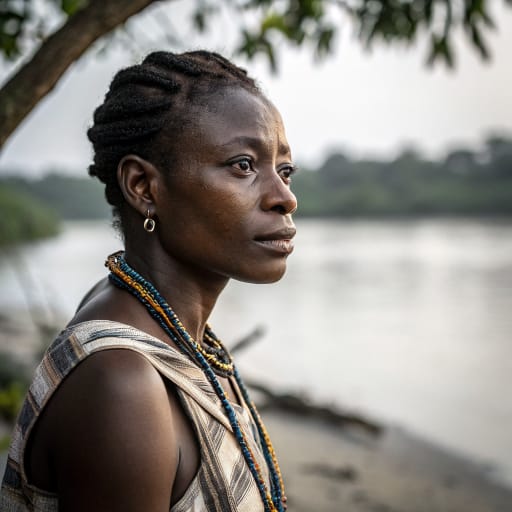
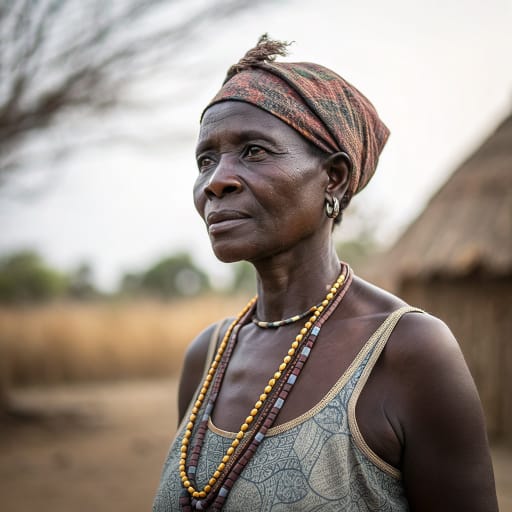
Typical Mankanya Phenotypes
Reference for AI generation: hair, eyes, skin, facial structure, build
Mankanya Body & Anatomy Reference
West African Niger-Congo phenotype: anatomy reference for AI nude generation
Mankanya Boobs & Breasts
Mankanya boobs follow the West African Niger-Congo profile: medium-to-large cup, full, projecting. Areolar diameter is usually 35-50mm, and the coloring is deep-brown to near-black areolar pigmentation against the medium-to-deep-brown skin tone. Breast shape tracks body composition (mesomorph with strong gluteal-femoral fat distribution, mean adult female BMI 24-27), so Mankanya breasts tend to be fuller and more projecting than the East African norm. Expect a forward-set shape, not the smaller conical Cushitic East African profile.
Mankanya Ass & Hips
Mankanya ass and hip morphology presents as wide-set, full, heavily projected glutes, distinctly different from the slim narrow-hip Cushitic East African profile. The Mankanya pelvic profile shows wide iliac crests, broad gynoid pelvic pattern, high glute-to-waist ratio, anchored in the West African Niger-Congo skeletal pattern. Mankanya butt shots in adult AI imagery should render the wide-set, full, heavily projected glutes silhouette with the overall build (mesomorph with strong gluteal-femoral fat distribution) and the fat distribution typical of the West African Niger-Congo phenotype.
Mankanya Vagina & Pussy
Mankanya pussy anatomy typically shows deep-brown to near-black labial pigmentation, fuller labia minora. Pubic hair is usually tightly-coiled coarse texture, densely distributed. In AI-generated Mankanya nudes, labial color should blend into the medium-brown to deep-brown skin with a gradual transition, and the hair should keep its tightly-coiled coarse texture.
Mankanya Dicks & Penis
Penis reference for Mankanya men: regional mean ~14-15cm erect, above-average girth, ~13cm circumference. Coloring: deep-brown-to-near-black shaft pigmentation. An accurate Mankanya cock in AI imagery matches the surrounding medium-brown to deep-brown skin rather than a generic porn default. Circumcision depends on religion and custom, not ancestry.
Mankanya Body, Curves & Build
The Mankanya figure is generally mesomorph with strong gluteal-femoral fat distribution, with mean adult female BMI 24-27, characteristic of West African Niger-Congo ancestry. AI image tools tend to flatten regional body types into a few stock shapes; here the Mankanya build is kept as its own reference.
Mankanya Skin Tone & Hair Texture
Skin: medium-brown to deep-brown (Fitzpatrick V-VI). Hair: tight 4A-4C coil, often worn natural, braided, or relaxed. Both are typical of West African Niger-Congo ancestry. The most common mistake in AI nudes of Mankanya women is a body rendered lighter than the face.
Explore phenotype categories
Structured taxonomy with peer-reviewed scales · 22 anatomical categories
Erotic Poses & Sex Positions
From the pose catalog: 219 named positions with reference skeletons
Frequently asked questions about Mankanya people
Where is the Mankanya homeland?
The Mankanya homeland is Cacheu Region of northwestern Guinea-Bissau, centered on Bula; migrant communities in the Casamance region of Senegal (especially Ziguinchor), Dakar and the Gambia in Western Africa.
What language do Mankanya people speak?
Mankanya people primarily speak Mankanya (Niger-Congo, Atlantic, Bak group), closely related to Manjak and Papel; Kriol, Wolof and French widely used as second languages.
What religion do Mankanya people practice?
The predominant religion among Mankanya people is Mostly traditional West African religion centered on spirit shrines (irã), with a significant Catholic minority and a smaller Muslim one.






Make your own Mankanya images
Five a day, free, no credits to buy. The studio starts from this group's phenotype data, so you can set body type, pose and style and keep the traits accurate.
Start with Mankanya