Help us get this right
Does this portrait look right for Kurumba?
Nobody has judged this one yet. You would be the first.
Kurumba Erotic
Northern Burkina Faso, mainly Soum and Loroum provinces around Aribinda, Djibo and Titao, with smaller communities in neighboring Mali
Koromfé (Gur, Niger-Congo); many also speak Mooré, Fulfulde or French
Mostly Muslim, with older ancestral and earth rites still practiced, especially at funerals
Speakers of Koromfé, a separate branch of Gur; historically centered on the kingdom of Lurum; called Fulse by the Mossi
About Kurumba People
The Kurumba are a farming people of the dry country at the edge of the Sahel in northern Burkina Faso. They live around towns such as Aribinda, Titao and Djibo, and smaller communities live across the border in Mali. What holds them together is their language, Koromfé, and a long memory of being settled here before the Mossi and Fulani who now surround them. The Mossi call them Fulse, a name that still shows up in older maps and ethnographies. An unrelated people in southern India are also called Kurumba, so check which group a source means.
Koromfé is one of the Gur languages of the Niger-Congo family. It sits on its own small branch, so it is related to Mooré, the Mossi language spoken to the south, but not closely. Everyday life often runs in several languages: Koromfé at home, Mooré or Fulfulde at the market, French in school and government offices. Kurumba villages grow millet and sorghum in a short rainy season and share the land around them with Fulani herders.
Before the Mossi kingdom of Yatenga became the dominant power in the north, the Kurumba had a state of their own. It was called Lurum, and its king held the title Ayo and kept his court at Mengao. Lurum was eventually overshadowed by Yatenga, and many Kurumba were drawn into the Mossi orbit, but the old name lives on in Loroum province. Since the mid-2010s the Kurumba homeland has been at the center of the armed insurgency across the Sahel. Towns such as Aribinda and Djibo have faced attacks and blockades, and many rural families have fled to larger towns.
Most Kurumba today are Muslim, but older rites for ancestors and the earth have not disappeared, and they show most clearly at funerals. That is when the Kurumba antelope headdress, the adoné, comes out. It is a carved wooden crest of a long-horned antelope, painted in bold geometric patterns and worn by a dancer hidden under a fiber costume. Museums and collectors value these carvings, but in the villages they belong to family lineages and serve to honor the dead, not to feed the art market.
Related ethnic groups
Groups that share Kurumba's homeland, region, language, or religious tradition. These are likely candidates for comparative phenotype reference.
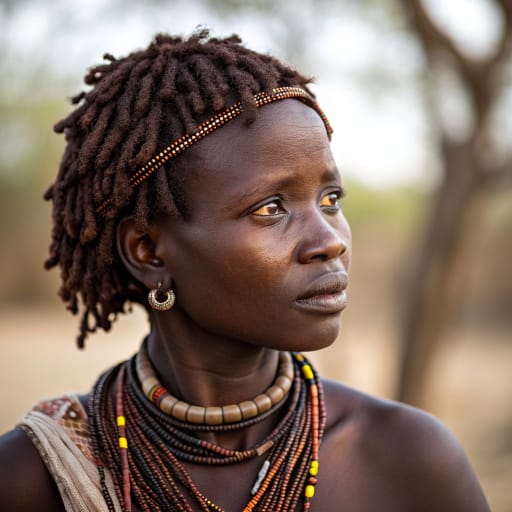
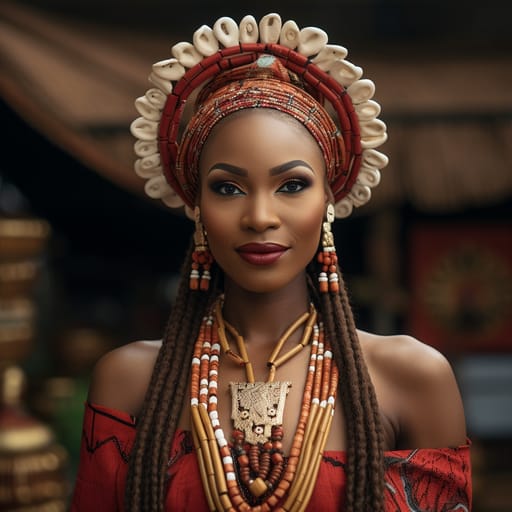
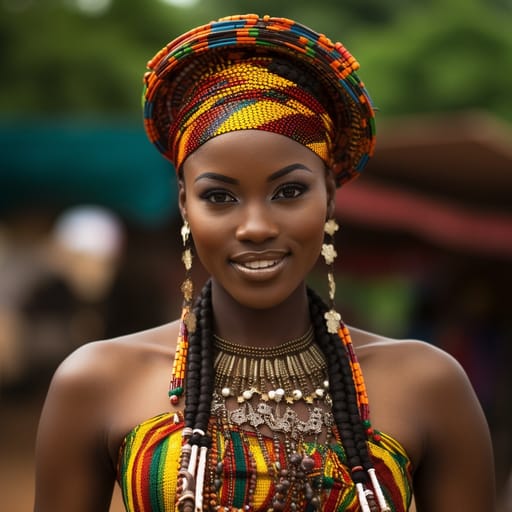
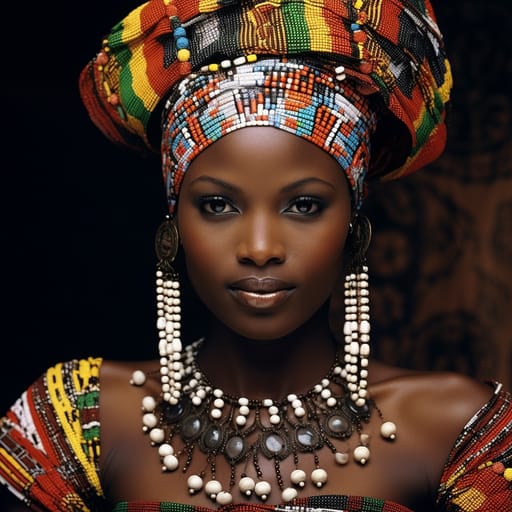
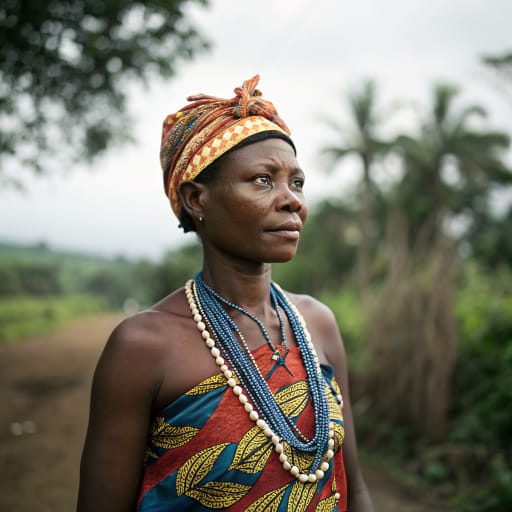
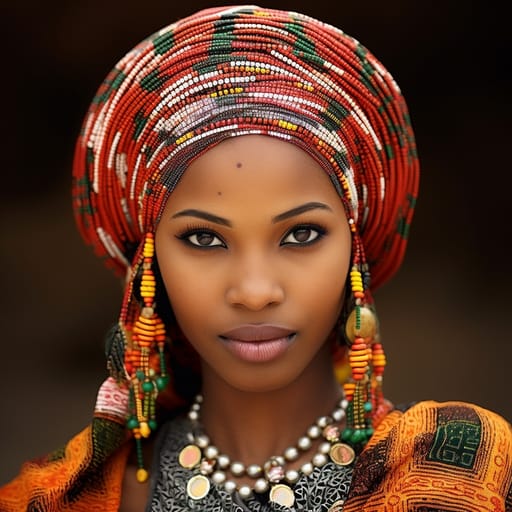
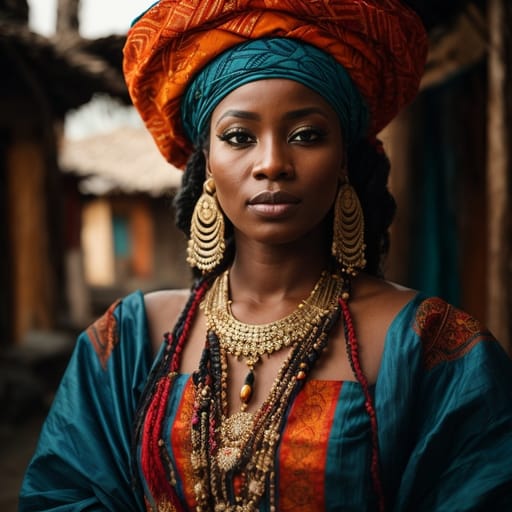
Typical Kurumba Phenotypes
Reference for AI generation: hair, eyes, skin, facial structure, build
Kurumba Body & Anatomy Reference
Per-feature anatomical profile for AI nude generation: West African Niger-Congo phenotype
Kurumba Boobs & Breasts
The typical Kurumba bust is medium-to-large cup, full, projecting, in line with the wider West African Niger-Congo pattern. Areolas usually fall in the 35-50mm range, with deep-brown to near-black areolar pigmentation against the medium-to-deep-brown skin tone. Compared with the smaller conical Cushitic East African profile, Kurumba breasts sit forward and are generally fuller and more projecting than the East African norm. A faithful AI render of Kurumba tits keeps that shape and areola size.
Kurumba Ass & Hips
Butt shape among Kurumba women: wide-set, full, heavily projected glutes, over wide iliac crests, broad gynoid pelvic pattern, high glute-to-waist ratio. This follows West African Niger-Congo ancestry and looks quite unlike the slim narrow-hip Cushitic East African profile. An accurate Kurumba ass in adult AI imagery keeps both the silhouette and the overall build (mesomorph with strong gluteal-femoral fat distribution) instead of a generic average.
Kurumba Vagina & Pussy
Vulvar anatomy among Kurumba women: deep-brown to near-black labial pigmentation, fuller labia minora. Pubic hair tends to be tightly-coiled coarse texture, densely distributed, in the usual inverted-triangle pattern. Both follow West African Niger-Congo pigmentation, which is why Kurumba pussy renders should not fall back on a pale, sparse Western template.
Kurumba Dicks & Penis
The Kurumba cock profile, from West African Niger-Congo anthropometric data: regional mean ~14-15cm erect; above-average girth, ~13cm circumference; deep-brown-to-near-black shaft pigmentation. Pubic hair has a tightly-coiled coarse texture and forms the usual inverted-V pattern. Whether Kurumba men are circumcised follows religious and cultural practice rather than phenotype.
Kurumba Body, Curves & Build
Build and curves among Kurumba women follow the West African Niger-Congo pattern: mesomorph with strong gluteal-femoral fat distribution, mean adult female BMI 24-27. Proportions matter as much as skin tone, so Kurumba figures should keep their regional height and limb ratios.
Kurumba Skin Tone & Hair Texture
The Kurumba skin range is medium-brown to deep-brown (Fitzpatrick V-VI), and hair tends to be tight 4A-4C coil, often worn natural, braided, or relaxed. That combination marks the West African Niger-Congo phenotype, and skin tone is the trait AI generators most often get wrong for Kurumba women.
Explore phenotype categories
Structured taxonomy with peer-reviewed scales · 22 anatomical categories
Erotic Poses & Sex Positions
From the pose catalog: 219 named positions with reference skeletons
Frequently asked questions about Kurumba people
Where is the Kurumba homeland?
The Kurumba homeland is Northern Burkina Faso, mainly Soum and Loroum provinces around Aribinda, Djibo and Titao, with smaller communities in neighboring Mali in Western Africa.
What language do Kurumba people speak?
Kurumba people primarily speak Koromfé (Gur, Niger-Congo); many also speak Mooré, Fulfulde or French.
What religion do Kurumba people practice?
The predominant religion among Kurumba people is Mostly Muslim, with older ancestral and earth rites still practiced, especially at funerals.






Make your own Kurumba images
Five a day, free, no credits to buy. The studio starts from this group's phenotype data, so you can set body type, pose and style and keep the traits accurate.
Start with Kurumba