Help us get this right
Does this portrait look right for Mahi?
Nobody has judged this one yet. You would be the first.
Mahi Erotic
Hill country of the Collines Department in central Benin, centered on Savalou, between the Fon heartland to the south and Yoruba-speaking areas to the east and north.
Maxi Gbe, or Mahi (Gbe, Volta-Niger branch of Niger-Congo), closely related to Fon; French is also widely used.
Vodun, practiced alongside and often combined with Christianity and Islam.
One of the Gbe peoples, closely related to the Fon; historically organized as separate chiefdoms, with Savalou the most prominent. In Brazil, the Jeje-Mahi Candomblé tradition keeps the name alive.
About Mahi People
The Mahi are the people of the rocky hill country north of Abomey in central Benin, and much of who they are comes from where they live. Their homeland around Savalou lies between the old Fon heartland of Dahomey to the south and Yoruba-speaking country to the east and north. The Mahi have lived on that border for centuries, trading and marrying across it and at times paying dearly for being in the way. Their language, Maxi Gbe, belongs to the Gbe cluster that runs from southeastern Ghana into Nigeria. It is close enough to Fon that speakers of the two largely understand each other, yet in the market towns of the Collines Department it shares the street with Idaasha and Ifè, which are Yoruba languages from a separate branch of the family. Mahi country was never one kingdom. It was a scatter of towns and chiefdoms, each with its own ruling house, and Savalou, whose kings carry the dynastic name Gbaguidi, became the best known. Being so divided left the region exposed in the eighteenth and nineteenth centuries, when Dahomey's armies raided north again and again. Captives from those raids were sold into the Atlantic slave trade through Dahomey's port at Ouidah, and the name went with them. In colonial Brazil, Africans identified as Mahi organized their own devotional associations, and in Bahia the Jeje-Mahi tradition of Candomblé still carries the name in houses around Salvador and Cachoeira.
Religion in Mahi country is layered, not either/or. Churches and mosques stand in every sizable town, but Vodun is still part of daily life, through family shrines, initiations and divination before major decisions. Just outside Savalou, the Dankoli shrine draws people from far beyond the region. Each drives a small wooden peg into its mound while making a wish, pours an offering over it, and is expected to come back with a sacrifice of thanks if the wish comes true. Every August, Savalou's yam festival marks the new harvest and fills the town with crowds, officials and royal delegations. It is a reminder that the old ruling houses still carry real social weight, even though the Beninese republic gives them no formal power. Farming, with yams at its center, still anchors the local economy, and the hills, the kingship and the shrines remain the fixed points that Mahi identity returns to.
Related ethnic groups
Groups that share Mahi's homeland, region, language, or religious tradition. These are likely candidates for comparative phenotype reference.
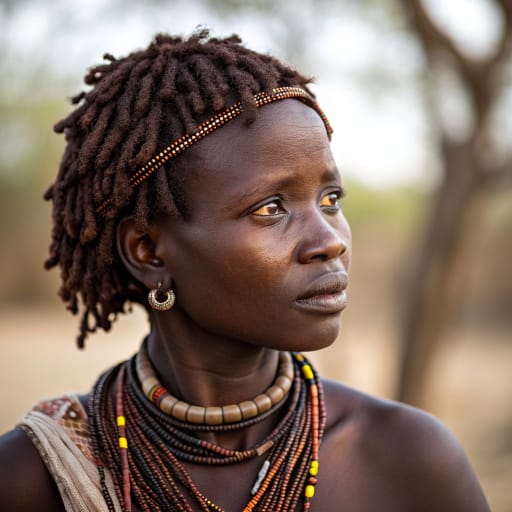
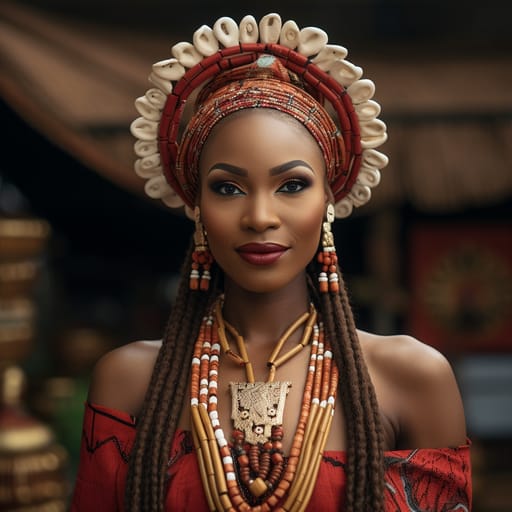
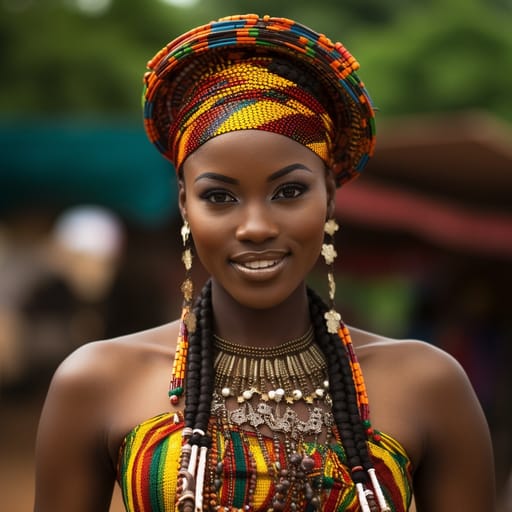
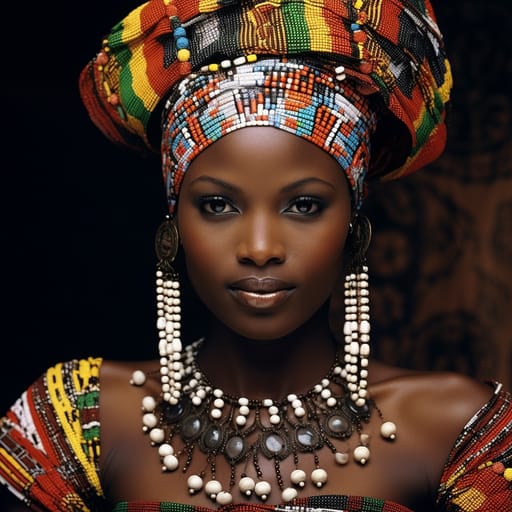
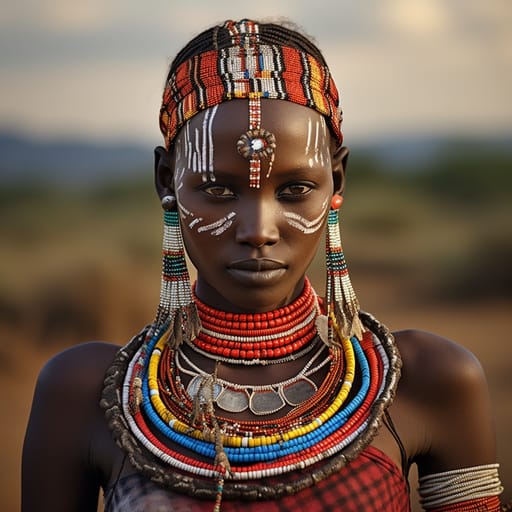
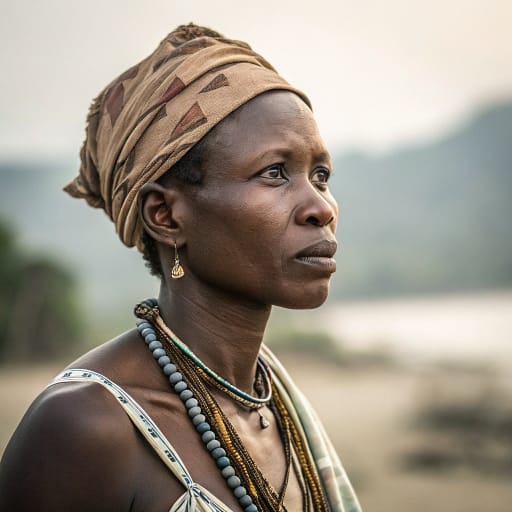
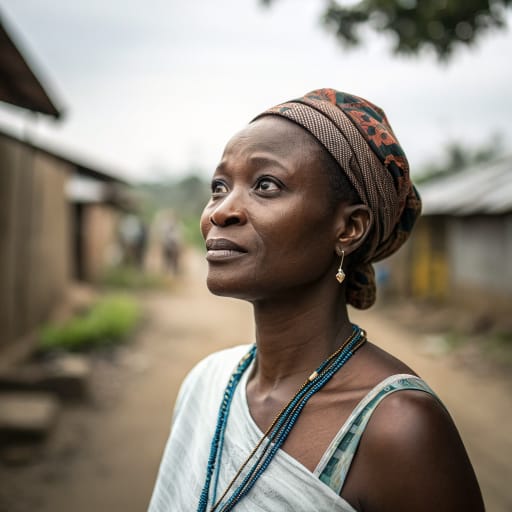
Typical Mahi Phenotypes
Reference for AI generation: hair, eyes, skin, facial structure, build
Mahi Body & Anatomy Reference
West African Niger-Congo phenotype: anatomy reference for AI nude generation
Mahi Boobs & Breasts
Bust reference for Mahi women: medium-to-large cup, full, projecting, which is typical of West African Niger-Congo ancestry. Areolas measure about 35-50mm across, with deep-brown to near-black pigmentation. Body type (mesomorph with strong gluteal-femoral fat distribution) shapes the bust as well, so Mahi tits are usually fuller and more projecting than the East African norm. In AI imagery, keep the forward-set shape rather than drifting toward the smaller conical Cushitic East African profile.
Mahi Ass & Hips
The Mahi ass is typically wide-set, full, heavily projected glutes, which sets it apart from the slim narrow-hip Cushitic East African profile. Underneath, the pelvis shows wide iliac crests, broad gynoid pelvic pattern, high glute-to-waist ratio, part of the West African Niger-Congo skeletal pattern. For Mahi butt pics and AI renders, match that silhouette and the overall build (mesomorph with strong gluteal-femoral fat distribution).
Mahi Vagina & Pussy
Mahi pussy and vulvar anatomy presents deep-brown to near-black labial pigmentation, fuller labia minora, consistent with the West African Niger-Congo phenotype's pigmentation pattern. Mahi pubic hair is typically tightly-coiled coarse texture, densely distributed, in the inverted-triangle pattern. For anatomically accurate Mahi pussy renders the labial coloration should match the surrounding medium-brown to deep-brown skin tone with a continuous gradient, and the hair should keep its tightly-coiled coarse texture.
Mahi Dicks & Penis
Mahi dicks follow the West African Niger-Congo reference data: regional mean ~14-15cm erect; above-average girth, ~13cm circumference; deep-brown-to-near-black shaft pigmentation. Shaft color should track the medium-brown to deep-brown skin tone with a smooth change toward the glans, and Mahi pubic hair keeps its tightly-coiled coarse texture.
Mahi Body, Curves & Build
Mahi body type and overall build presents as mesomorph with strong gluteal-femoral fat distribution, with mean adult female BMI 24-27: the characteristic West African Niger-Congo habitus. Mahi curves and proportions should keep the regional skeletal frame (height, shoulder-to-hip ratio, limb proportions) rather than a generic mesomorph default.
Mahi Skin Tone & Hair Texture
Mahi skin sits in the medium-brown to deep-brown (Fitzpatrick V-VI) band. Hair is typically tight 4A-4C coil, often worn natural, braided, or relaxed, in keeping with the West African Niger-Congo phenotype. In nude renders the skin should stay one even tone from face to body, and body, pubic and head hair should match.
Explore phenotype categories
Structured taxonomy with peer-reviewed scales · 22 anatomical categories
Erotic Poses & Sex Positions
From the pose catalog: 219 named positions with reference skeletons
Frequently asked questions about Mahi people
Where is the Mahi homeland?
The Mahi homeland is Hill country of the Collines Department in central Benin, centered on Savalou, between the Fon heartland to the south and Yoruba-speaking areas to the east and north. in Western Africa.
What language do Mahi people speak?
Mahi people primarily speak Maxi Gbe, or Mahi (Gbe, Volta-Niger branch of Niger-Congo), closely related to Fon; French is also widely used..
What religion do Mahi people practice?
The predominant religion among Mahi people is Vodun, practiced alongside and often combined with Christianity and Islam..






Make your own Mahi images
Five a day, free, no credits to buy. The studio starts from this group's phenotype data, so you can set body type, pose and style and keep the traits accurate.
Start with Mahi