Help us get this right
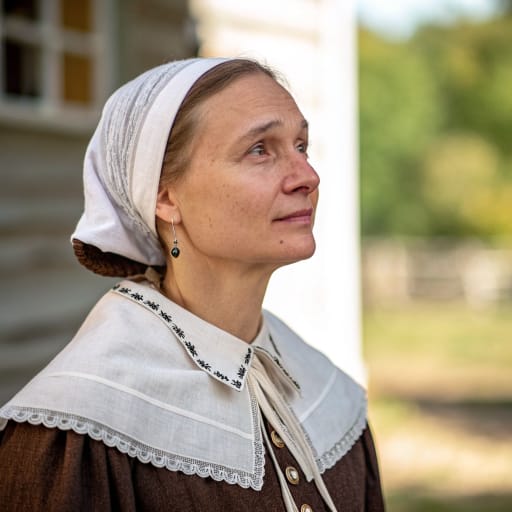
Does this portrait look right for Lummi?
Nobody has judged this one yet. You would be the first.
Lummi Erotic
Bellingham Bay, the Lummi Peninsula and the lower Nooksack River in Whatcom County, northwest Washington State, United States; historically also the San Juan Islands.
Lhéchalosem, the Lummi dialect of North Straits Salish (Salishan family); English in daily use.
Coast Salish winter smokehouse ceremony, the Indian Shaker Church, and Catholicism.
Coast Salish, Straits Salish branch; the modern Lummi Nation consolidates several ancestral village groups along with Samish and Semiahmoo families.
About Lummi People
The Lummi call themselves Lhaq'temish, the People of the Sea, and the name is not decorative. Their world is the water between the mainland and the San Juan Islands: Bellingham Bay, the Lummi Peninsula, Portage and Lummi Islands, the mouth of the Nooksack River in the far northwest corner of Washington State, a few miles short of the Canadian border. Nearly everything that distinguishes them historically comes out of that geography. They built cedar longhouses within reach of tidewater, traveled by canoe rather than by trail, and organized the year around salmon runs coming down the Strait of Georgia.
Their signature technology was the reef net, sxwo'le, used by no one outside the Straits Salish peoples. Two canoes were anchored side by side over a channel and the crew strung a false reef between them, ropes hung with grass, a ramp of shadow that led sockeye upward until they were over the net. The best anchorages were named, owned, and inherited within families, which made a fishing spot a kind of property that colonial law took a century to recognize. The Treaty of Point Elliott in 1855 reserved the right to fish at "usual and accustomed grounds," and the argument over that sentence runs from the arrests and fish-ins of the 1960s, to the Boldt decision of 1974 that Lummi helped win, to the 2016 rejection of a coal export terminal at Xwe'chi'eXen, Cherry Point, on the grounds that it would damage treaty fisheries. Xwe'chi'eXen is also an ancient village site and burial ground.
The language, Lhéchalosem, is a dialect of North Straits Salish, close kin to Saanich and Songhees across the border and only distantly related to the Nooksack speech of their inland neighbors. It lost its last first-language speakers in the twentieth century and is now being taught back from recordings and archives. Religion sits in layers: Catholic parishes, the Indian Shaker Church, and the winter smokehouse ceremonies, which are not explained to outsiders and will not be explained here. Two things are more public. The Stommish Water Festival, held since 1946 in honor of Lummi veterans, fills the bay with racing war canoes each summer. And Northwest Indian College, accredited and serving students from tribes across the region, sits on the reservation, having grown out of a school of aquaculture the tribe started in 1973. The Lummi run their own hatcheries and their own fisheries enforcement, which is the practical form the treaty takes on an ordinary Tuesday.
Related ethnic groups
Groups that share Lummi's homeland, region, language, or religious tradition. These are likely candidates for comparative phenotype reference.

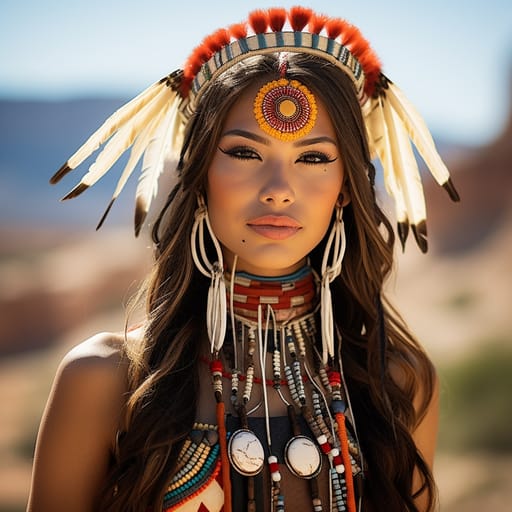
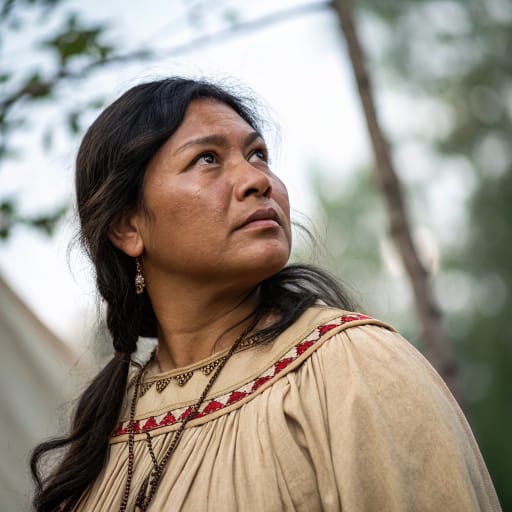
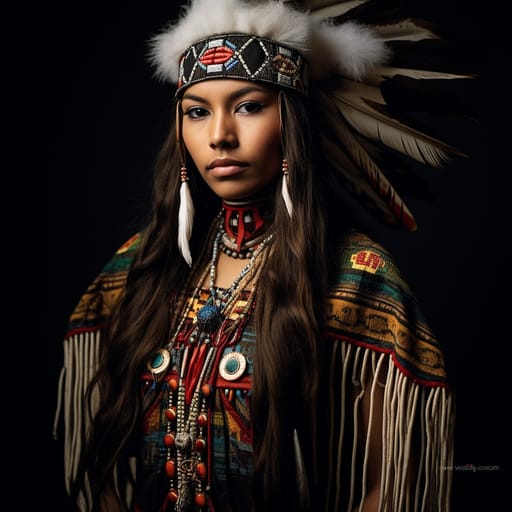


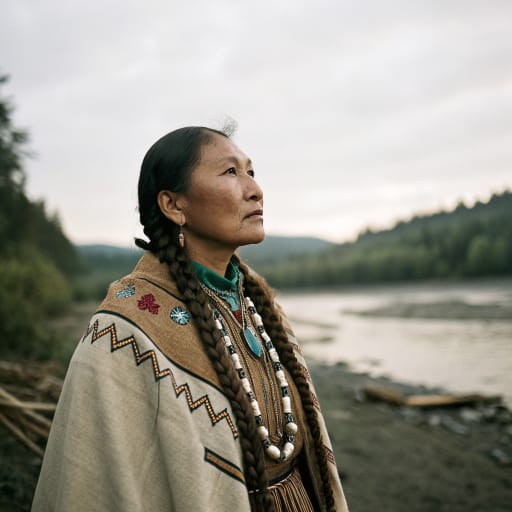
Typical Lummi Phenotypes
Reference for AI generation: hair, eyes, skin, facial structure, build
Lummi Body & Anatomy Reference
Indigenous Northern American / Algonquian-Iroquoian phenotype: anatomy reference for AI nude generation
Lummi Boobs & Breasts
Lummi tits and boobs run medium cup, moderate projection, the classic Indigenous Northern American / Algonquian-Iroquoian bust profile. Lummi nipples and areolas show medium-brown areolar pigmentation against the copper-to-medium-brown skin tone, with areolar diameter typically in the 30-44mm range and forward-set positioning rather than the smaller East Asian bust. Lummi breasts trend full and moderate projection, a function of the mesomorph, broader frame in northern Indigenous populations body habitus and the mean adult female BMI 25-28. For anatomically accurate AI-generated Lummi nudes the render preserves the medium cup, moderate projection shape, 30-44mm areolas with medium-brown pigmentation, and the torso proportions of the Indigenous Northern American / Algonquian-Iroquoian phenotype.
Lummi Ass & Hips
Lummi hips and butt usually read as medium, moderate-to-full projection. The skeletal base is medium iliac crests, the Indigenous Northern American / Algonquian-Iroquoian pattern. Set against the slim East Asian narrow-hip profile, the difference is easy to see, and the hip-to-waist ratio is often what identifies Lummi women in photos.
Lummi Vagina & Pussy
Expect medium-brown labial pigmentation on Lummi women, in keeping with Indigenous Northern American / Algonquian-Iroquoian ancestry. The pubic hair is straight medium-coarse texture. Coloring should run evenly from the copper to medium-brown skin of the thighs to the labia, and Lummi nude imagery should keep the hair's straight medium-coarse texture.
Lummi Dicks & Penis
Lummi dick and penile anatomy in adult AI generation should anchor on the regional reference data: regional mean ~13cm erect, moderate girth, and medium-brown shaft pigmentation. The Lummi cock profile reflects the Indigenous Northern American / Algonquian-Iroquoian population's anthropometric measurements. The shaft pigmentation should track the surrounding copper to medium-brown skin tone, and the pubic hair should keep its straight medium-coarse texture in the typical inverted-V escutcheon.
Lummi Body, Curves & Build
Lummi body type: mesomorph, broader frame in northern Indigenous populations, with mean adult female BMI 25-28. This is the typical Indigenous Northern American / Algonquian-Iroquoian build. Height range, shoulder-to-hip ratio and fat distribution all follow from it, which is what an accurate Lummi nude body should show.
Lummi Skin Tone & Hair Texture
Lummi skin tone falls in the copper to medium-brown (Fitzpatrick III-V) band, the surface signal most often miscalibrated by generic AI nude generators. Lummi hair texture is typically straight 1A, dark-brown to black, often thick and dense, characteristic of the Indigenous Northern American / Algonquian-Iroquoian phenotype. In Lummi nude renders the skin should hold that band consistently across the body.
Explore phenotype categories
Structured taxonomy with peer-reviewed scales · 22 anatomical categories
Erotic Poses & Sex Positions
From the pose catalog: 219 named positions with reference skeletons
Frequently asked questions about Lummi people
Where is the Lummi homeland?
The Lummi homeland is Bellingham Bay, the Lummi Peninsula and the lower Nooksack River in Whatcom County, northwest Washington State, United States; historically also the San Juan Islands. in North America.
What language do Lummi people speak?
Lummi people primarily speak Lhéchalosem, the Lummi dialect of North Straits Salish (Salishan family); English in daily use..
What religion do Lummi people practice?
The predominant religion among Lummi people is Coast Salish winter smokehouse ceremony, the Indian Shaker Church, and Catholicism..






Make your own Lummi images
Five a day, free, no credits to buy. The studio starts from this group's phenotype data, so you can set body type, pose and style and keep the traits accurate.
Start with Lummi