Help us get this right
Does this portrait look right for Chetco?
One tap. It takes a second and it is recorded.
1 says it looks right, 0 say it looks off.
Chetco Erotic
Southwestern Oregon coast along the Chetco and Winchuck rivers, around present-day Brookings, United States; descendants live mainly around Siletz, Oregon
English (Indo-European); Chetco-Tolowa, carried on as Siletz Dee-ni (Athabaskan, Na-Dene)
Christianity alongside traditional ceremonial practice, including the Nee-dash world renewal dance
Coastal Oregon Athabaskan people closely tied to the Tolowa; now part of the Confederated Tribes of Siletz Indians
About Chetco People
The Chetco are named for the river that comes down out of the coastal mountains of far southwestern Oregon and reaches the Pacific a few miles north of the California line. For generations the mouth of that river was the center of their world. Villages stood on both banks, where the towns of Brookings and Harbor now sit, and more settlements lay upriver and along the Winchuck just to the south. This is a short, steep, heavily wooded coast, and Chetco life was built on what it gave: salmon and smelt runs, shellfish off the rocks, sea mammals, acorns from the tanoak groves, and timber split into planks for houses dug partly into the ground.
Chetco speech is Athabaskan, the same family as Navajo and Apache in the Southwest and the Dene languages of northern Canada and Alaska. On this coast it formed a small Athabaskan pocket. The Tututni to the north spoke related Oregon Athabaskan dialects, and the Tolowa just across the state line spoke a form so close that linguists often treat Chetco and Tolowa as a single language. The two peoples shared much of their culture as well. They sat at the northern edge of the northwestern California world, where strings of dentalium shell counted as money and wealth was shown off at ceremonies.
Contact turned violent fast. Gold strikes in the early 1850s brought miners and settlers onto the southern Oregon coast, and a settler named A. F. Miller, who wanted the land at the river mouth, led men who burned the Chetco villages there and killed a number of the people living in them. The Rogue River War of 1855 and 1856 finished what that raid started. Survivors were removed north to the Coast Reservation, far from their river, and settled among more than twenty other bands with their own languages and histories.
Most Chetco descendants today belong to the Confederated Tribes of Siletz Indians, a nation Congress terminated in 1954 and restored to federal recognition in 1977. The Athabaskan language carried on there, now called Siletz Dee-ni, draws heavily on Chetco and Tolowa speech. It has been documented in a talking dictionary and is being taught to a new generation. Ceremonial life includes the Nee-dash, or Feather Dance, a world renewal dance from the wider Tolowa and Chetco tradition. The river still carries their name, even though most of the people who carry it now live well up the coast.
Related ethnic groups
Groups that share Chetco's homeland, region, language, or religious tradition. These are likely candidates for comparative phenotype reference.
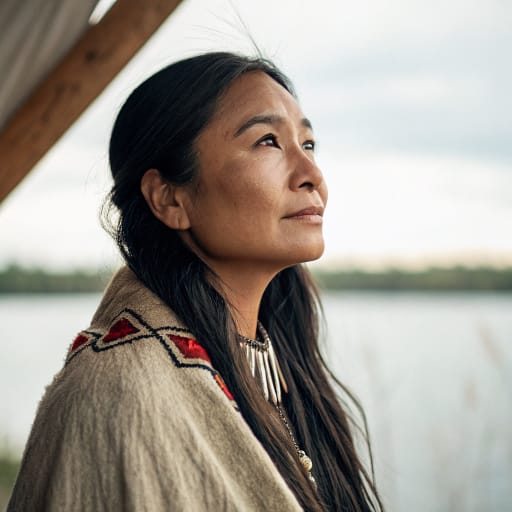
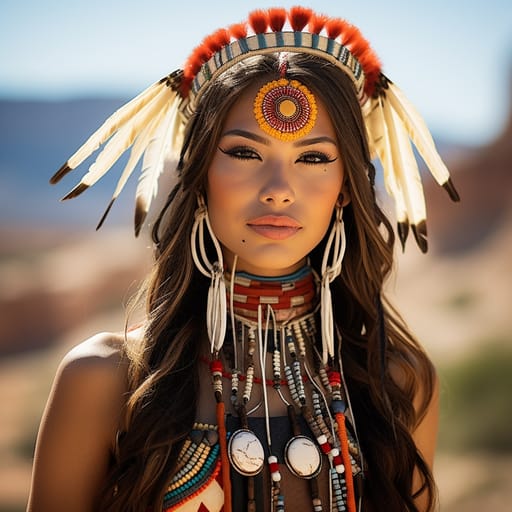
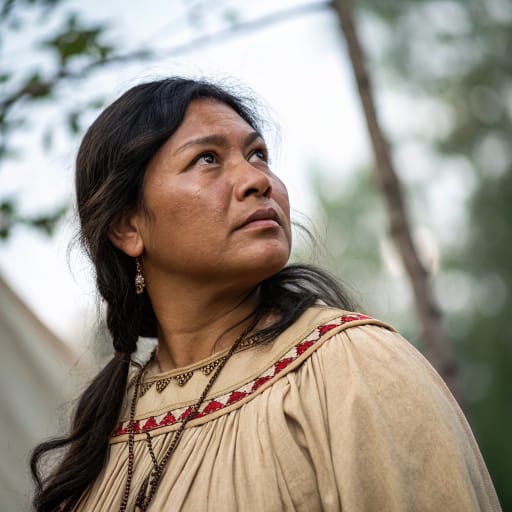
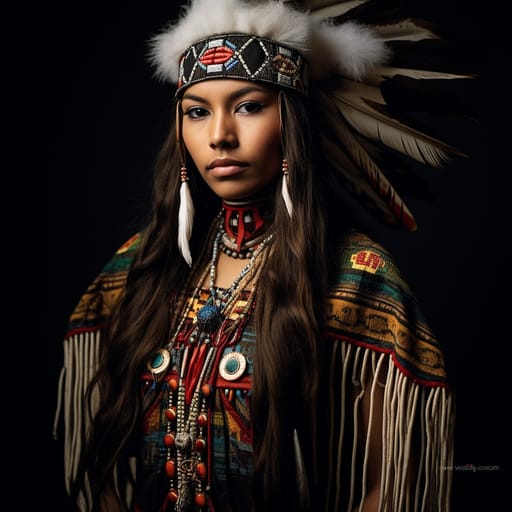
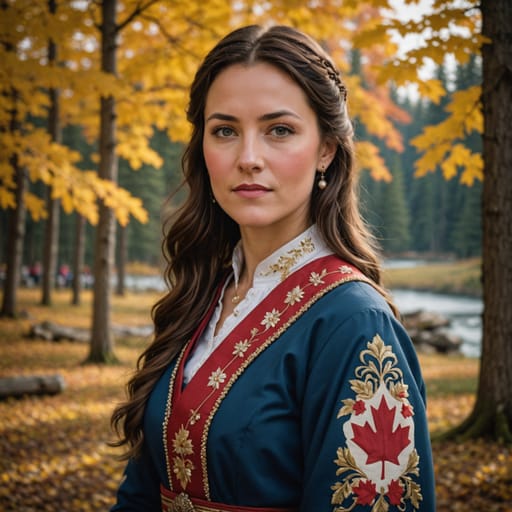
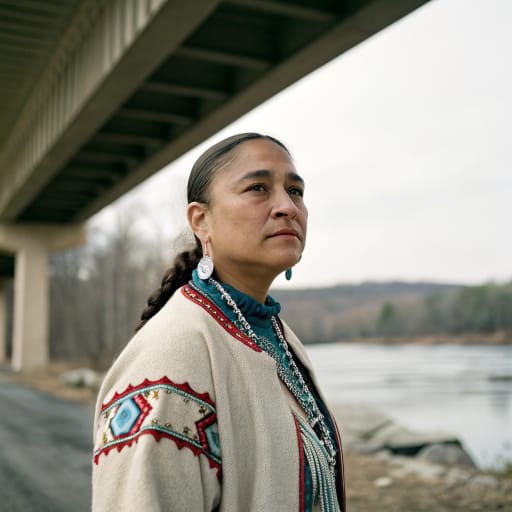
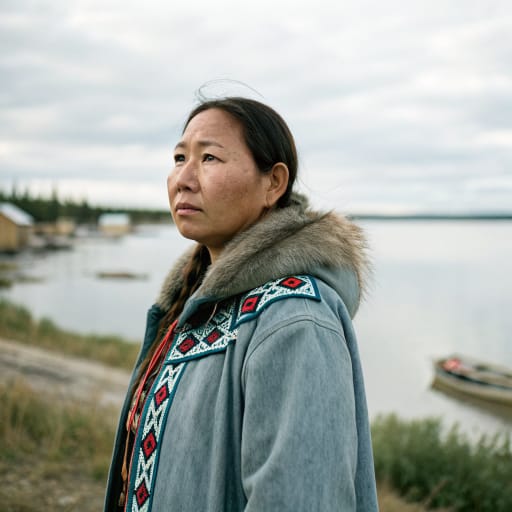
Typical Chetco Phenotypes
Reference for AI generation: hair, eyes, skin, facial structure, build
Chetco Body & Anatomy Reference
Per-feature anatomical profile for AI nude generation: Indigenous Northern American / Algonquian-Iroquoian phenotype
Chetco Boobs & Breasts
Chetco boobs follow the Indigenous Northern American / Algonquian-Iroquoian profile: medium cup, moderate projection. Areolar diameter is usually 30-44mm, and the coloring is medium-brown areolar pigmentation against the copper-to-medium-brown skin tone. Breast shape tracks body composition (mesomorph, broader frame in northern Indigenous populations, mean adult female BMI 25-28), so Chetco breasts tend to be full and moderate projection. Expect a forward-set shape, not the smaller East Asian bust.
Chetco Ass & Hips
Chetco ass and hip morphology presents as medium, moderate-to-full projection, distinctly different from the slim East Asian narrow-hip profile. The Chetco pelvic profile shows medium iliac crests, anchored in the Indigenous Northern American / Algonquian-Iroquoian skeletal pattern. Chetco butt shots in adult AI imagery should render the medium, moderate-to-full projection silhouette with the overall build (mesomorph, broader frame in northern Indigenous populations) and the fat distribution typical of the Indigenous Northern American / Algonquian-Iroquoian phenotype.
Chetco Vagina & Pussy
Chetco pussy anatomy typically shows medium-brown labial pigmentation. Pubic hair is usually straight medium-coarse texture. In AI-generated Chetco nudes, labial color should blend into the copper to medium-brown skin with a gradual transition, and the hair should keep its straight medium-coarse texture.
Chetco Dicks & Penis
Penis reference for Chetco men: regional mean ~13cm erect, moderate girth. Coloring: medium-brown shaft pigmentation. An accurate Chetco cock in AI imagery matches the surrounding copper to medium-brown skin rather than a generic porn default. Circumcision depends on religion and custom, not ancestry.
Chetco Body, Curves & Build
The Chetco figure is generally mesomorph, broader frame in northern Indigenous populations, with mean adult female BMI 25-28, characteristic of Indigenous Northern American / Algonquian-Iroquoian ancestry. AI image tools tend to flatten regional body types into a few stock shapes; here the Chetco build is kept as its own reference.
Chetco Skin Tone & Hair Texture
Skin: copper to medium-brown (Fitzpatrick III-V). Hair: straight 1A, dark-brown to black, often thick and dense. Both are typical of Indigenous Northern American / Algonquian-Iroquoian ancestry. The most common mistake in AI nudes of Chetco women is a body rendered lighter than the face.
Explore phenotype categories
Structured taxonomy with peer-reviewed scales · 22 anatomical categories
Erotic Poses & Sex Positions
From the pose catalog: 219 named positions with reference skeletons
Frequently asked questions about Chetco people
Where is the Chetco homeland?
The Chetco homeland is Southwestern Oregon coast along the Chetco and Winchuck rivers, around present-day Brookings, United States; descendants live mainly around Siletz, Oregon in North America.
What language do Chetco people speak?
Chetco people primarily speak English (Indo-European); Chetco-Tolowa, carried on as Siletz Dee-ni (Athabaskan, Na-Dene).
What religion do Chetco people practice?
The predominant religion among Chetco people is Christianity alongside traditional ceremonial practice, including the Nee-dash world renewal dance.






Make your own Chetco images
Five a day, free, no credits to buy. The studio starts from this group's phenotype data, so you can set body type, pose and style and keep the traits accurate.
Start with Chetco