No portrait yet
Nuxalk Erotic
The Bella Coola Valley and the surrounding inlets of the central coast of British Columbia, Canada, including North and South Bentinck Arm, Kwatna, and the Dean River at Kimsquit.
Nuxalk, also called Bella Coola (Salishan, a divergent branch with no close relatives); English is now dominant
Ancestral Nuxalk cosmology and ceremonial societies, alongside Christianity introduced by Methodist missions
Salishan-speaking peoples of the Northwest Coast; historically the village groups of the Bella Coola River, Kimsquit, Kwatna, and South Bentinck Arm, now consolidated as the Nuxalk Nation
About Nuxalk People
The Nuxalk hold one deep valley and the fjords below it. The Bella Coola River drops out of the Coast Mountains of central British Columbia and empties at the head of North Bentinck Arm, and that corridor, together with older village sites at Kimsquit on the Dean River, at Kwatna, and up South Bentinck Arm, is the homeland. It is closed-in country: no road crossed the mountains into the valley until residents built one themselves in 1953. What separates the Nuxalk most sharply from their neighbors is the language. Nuxalk is Salishan, but it sits stranded far north of the rest of that family, ringed by Wakashan speakers on the coast, Heiltsuk and Wuikinuxv, and by Athabaskan-speaking Dakelh over the mountains inland. It has no close relative anywhere. Linguists know it for what it does with consonants: long clusters, and words that contain no vowel at all. Fluent first-language speakers are now few and old, and the nation runs its own school, Acwsalcta, with immersion teaching pointed directly at that.
Families trace themselves through smayusta, the ancestral histories recording which forebear came down from the sky world, at which mountain, and in what form. These are not stories in the idle sense. They establish names, standing, and rights to specific ground, and they are still argued that way. Winter belonged to two ceremonial societies, the hereditary Sisaok of the chiefly families and the Kusiut, whose concern was the supernatural. Masks made for them are carved in an idiom outsiders recognize on sight, heavy in the brow and worked in a blue-green so particular that people simply call it Nuxalk blue. Grease trails ran east from the valley for centuries, carrying eulachon oil inland to the Dakelh, and Alexander Mackenzie came down one of them in 1793 to finish the first recorded crossing of the continent north of Mexico. Nine Nuxalk men toured Germany in 1885 and 1886, and a young Franz Boas, watching them in Berlin, turned his career toward this coast. Smallpox in the 1860s gutted the villages and drove survivors together at the river mouth. Norwegian homesteaders took up the valley floor in the 1890s. The potlatch ban ran until 1951. In 1995 hereditary chiefs and their supporters blocked logging at Ista, on King Island, and were arrested for it, which is roughly how the nation has met outside claims on its territory since. Most members live in Bella Coola today. The eulachon runs that once paid for everything have collapsed, and masks carried off a century ago are still being asked back.
Related ethnic groups
Groups that share Nuxalk's homeland, region, language, or religious tradition. These are likely candidates for comparative phenotype reference.
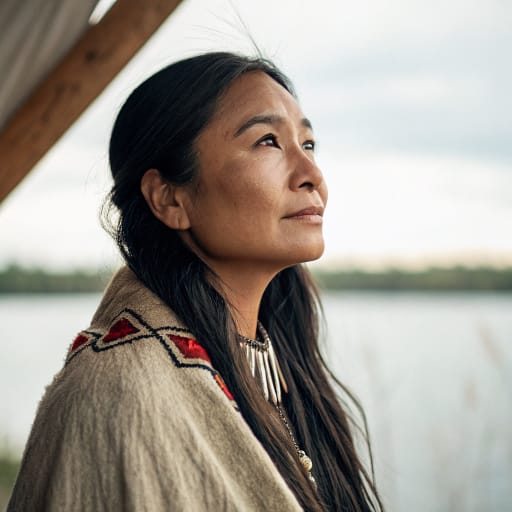
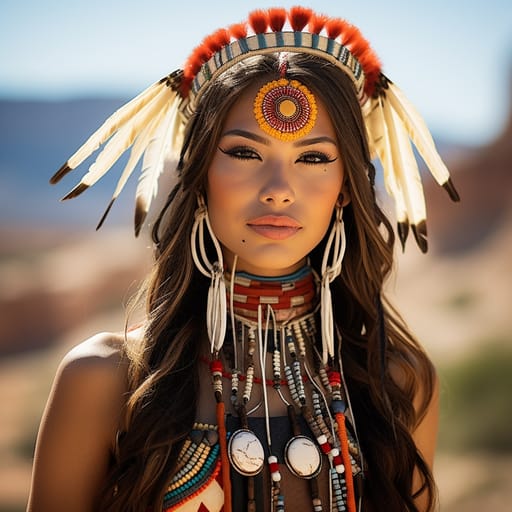
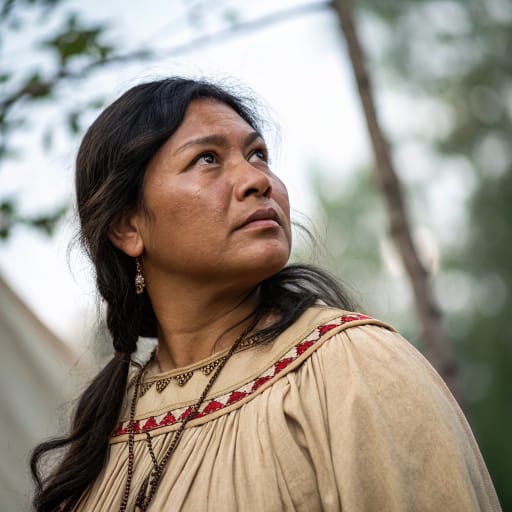
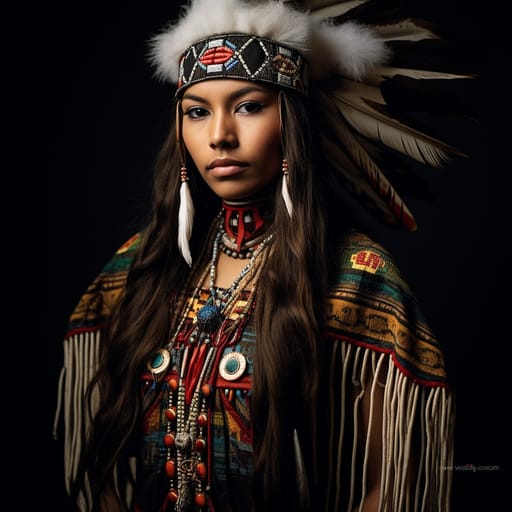
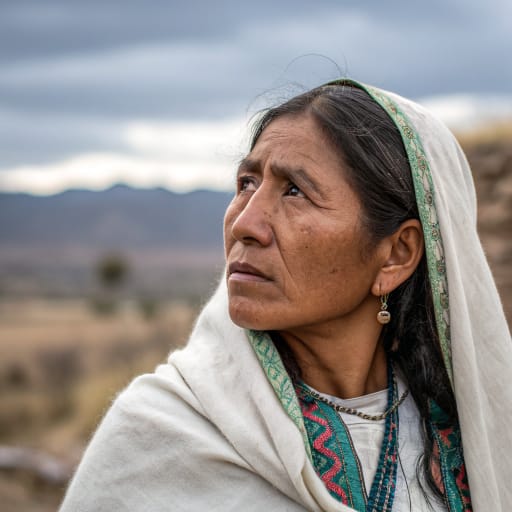
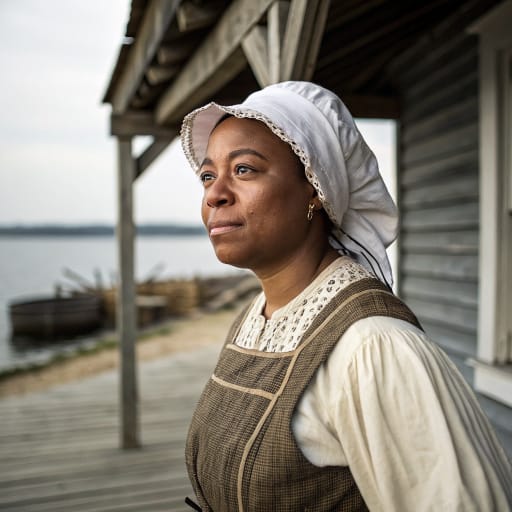
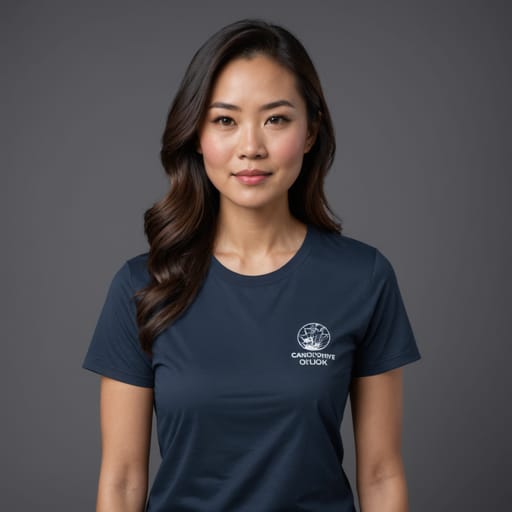
Typical Nuxalk Phenotypes
Reference for AI generation: hair, eyes, skin, facial structure, build
Nuxalk Body & Anatomy Reference
Per-feature anatomical profile for AI nude generation: Indigenous Northern American / Algonquian-Iroquoian phenotype
Nuxalk Boobs & Breasts
The typical Nuxalk bust is medium cup, moderate projection, in line with the wider Indigenous Northern American / Algonquian-Iroquoian pattern. Areolas usually fall in the 30-44mm range, with medium-brown areolar pigmentation against the copper-to-medium-brown skin tone. Compared with the smaller East Asian bust, Nuxalk breasts sit forward and are generally full and moderate projection. A faithful AI render of Nuxalk tits keeps that shape and areola size.
Nuxalk Ass & Hips
Butt shape among Nuxalk women: medium, moderate-to-full projection, over medium iliac crests. This follows Indigenous Northern American / Algonquian-Iroquoian ancestry and looks quite unlike the slim East Asian narrow-hip profile. An accurate Nuxalk ass in adult AI imagery keeps both the silhouette and the overall build (mesomorph, broader frame in northern Indigenous populations) instead of a generic average.
Nuxalk Vagina & Pussy
Vulvar anatomy among Nuxalk women: medium-brown labial pigmentation. Pubic hair tends to be straight medium-coarse texture, in the usual inverted-triangle pattern. Both follow Indigenous Northern American / Algonquian-Iroquoian pigmentation, which is why Nuxalk pussy renders should not fall back on a pale, sparse Western template.
Nuxalk Dicks & Penis
The Nuxalk cock profile, from Indigenous Northern American / Algonquian-Iroquoian anthropometric data: regional mean ~13cm erect; moderate girth; medium-brown shaft pigmentation. Pubic hair has a straight medium-coarse texture and forms the usual inverted-V pattern. Whether Nuxalk men are circumcised follows religious and cultural practice rather than phenotype.
Nuxalk Body, Curves & Build
Build and curves among Nuxalk women follow the Indigenous Northern American / Algonquian-Iroquoian pattern: mesomorph, broader frame in northern Indigenous populations, mean adult female BMI 25-28. Proportions matter as much as skin tone, so Nuxalk figures should keep their regional height and limb ratios.
Nuxalk Skin Tone & Hair Texture
The Nuxalk skin range is copper to medium-brown (Fitzpatrick III-V), and hair tends to be straight 1A, dark-brown to black, often thick and dense. That combination marks the Indigenous Northern American / Algonquian-Iroquoian phenotype, and skin tone is the trait AI generators most often get wrong for Nuxalk women.
Explore phenotype categories
Structured taxonomy with peer-reviewed scales · 22 anatomical categories
Erotic Poses & Sex Positions
From the pose catalog: 219 named positions with reference skeletons
Frequently asked questions about Nuxalk people
Where is the Nuxalk homeland?
The Nuxalk homeland is The Bella Coola Valley and the surrounding inlets of the central coast of British Columbia, Canada, including North and South Bentinck Arm, Kwatna, and the Dean River at Kimsquit. in North America.
What language do Nuxalk people speak?
Nuxalk people primarily speak Nuxalk, also called Bella Coola (Salishan, a divergent branch with no close relatives); English is now dominant.
What religion do Nuxalk people practice?
The predominant religion among Nuxalk people is Ancestral Nuxalk cosmology and ceremonial societies, alongside Christianity introduced by Methodist missions.






Make your own Nuxalk images
Five a day, free, no credits to buy. The studio starts from this group's phenotype data, so you can set body type, pose and style and keep the traits accurate.
Start with Nuxalk