Help us get this right
Does this portrait look right for Lawa?
Nobody has judged this one yet. You would be the first.
Lawa Erotic
Upland villages of Chiang Mai and Mae Hong Son provinces in northern Thailand, especially around Mae Sariang, Mae La Noi and the Bo Luang plateau.
Lawa, in Western and Eastern varieties (Austroasiatic, Palaungic); most also speak Northern Thai and Thai.
Theravada Buddhism blended with worship of ancestral and guardian spirits; some Christian communities.
Western Lawa of Mae Hong Son and Eastern Lawa of the Bo Luang plateau; part of the Palaungic peoples alongside the Wa and Blang.
About Lawa People
The Lawa hold an unusual place in northern Thailand: they are widely regarded as the people who were there first. Before Tai lords built the kingdom of Lanna, Lawa communities lived in the hills and valleys around what is now Chiang Mai, and the region's own chronicles and ceremonies still concede the point. Today most Lawa live in upland villages in Chiang Mai and Mae Hong Son provinces. They grow rice, raise livestock and switch easily between their own language and Northern Thai.
Lawa belongs to the Palaungic branch of the Austroasiatic family. That ties it to Wa and Blang in Myanmar and China, not to the Tai languages spoken all around it. There are two main varieties: Western Lawa in the Mae Sariang and Mae La Noi districts of Mae Hong Son, and Eastern Lawa on the Bo Luang plateau of Chiang Mai. The name causes confusion, since unrelated hill peoples in Thailand and Laos have also been called Lua.
The Lawa claim to be first lives on in story. The best known concerns Khun Luang Wilangkha, a Lawa chief who wanted to marry Queen Chamadevi of the Mon city of Hariphunchai. She told him to throw a spear from the mountain above Chiang Mai into her city. Then she sent him a hat sewn from her own skirt cloth, which drained his power, and the spear fell short. The guardian spirits Pu Sae and Ya Sae, remembered as Lawa ancestors, still receive a buffalo offering every year in the hills just outside the city. Lanna court ritual made the same point: when a new ruler entered Chiang Mai, Lawa went in ahead of him leading a dog, a nod to the original owners of the land.
Religious life has layers too. Most Lawa are Buddhist and some communities are Christian, but duties to ancestral and village spirits still shape household life, with offerings of chickens, pigs and, on major occasions, buffalo. Villages traditionally looked to hereditary ritual leaders, the samang, who came from particular family lines. Fieldwork in Lawa villages in the 1960s documented a closely managed rotation of hill fields alongside irrigated terraces, far from the image of careless slash-and-burn farming. Women's dress is the clearest outward marker: a handwoven tube skirt banded in horizontal stripes, a plain blouse and heavy strands of glass beads, still worn by older women and at festivals.
Related ethnic groups
Groups that share Lawa's homeland, region, language, or religious tradition. These are likely candidates for comparative phenotype reference.
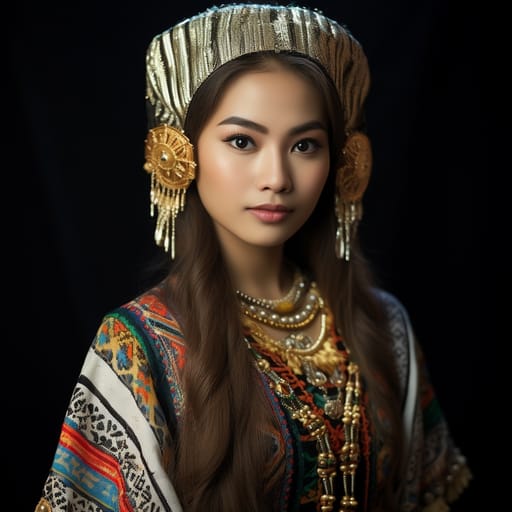
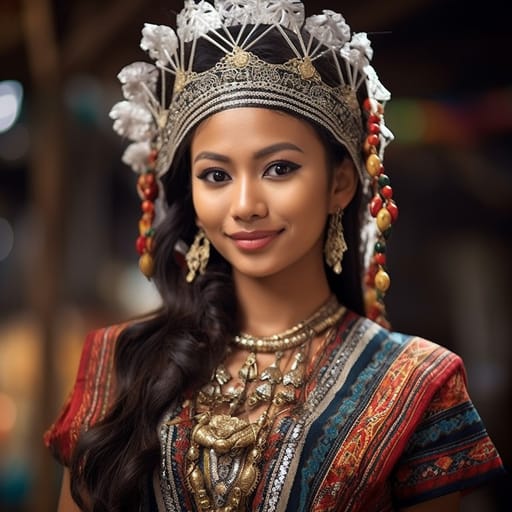
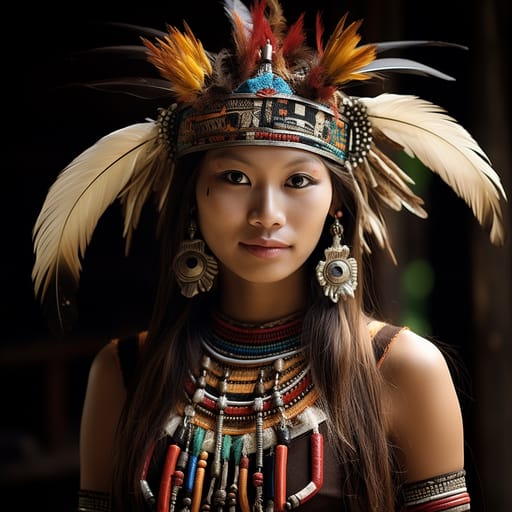
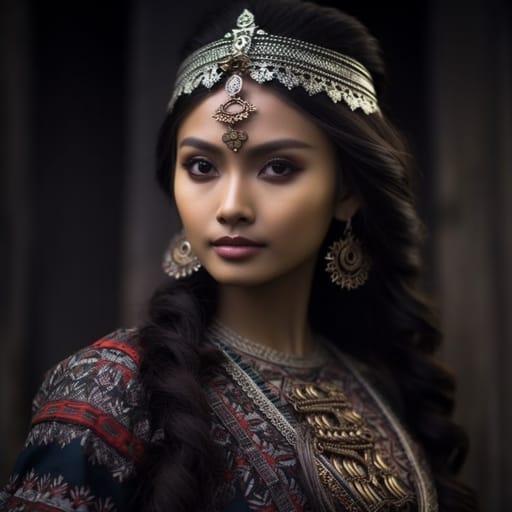
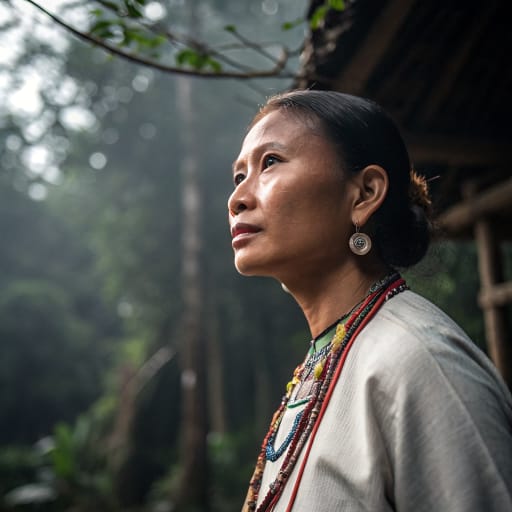
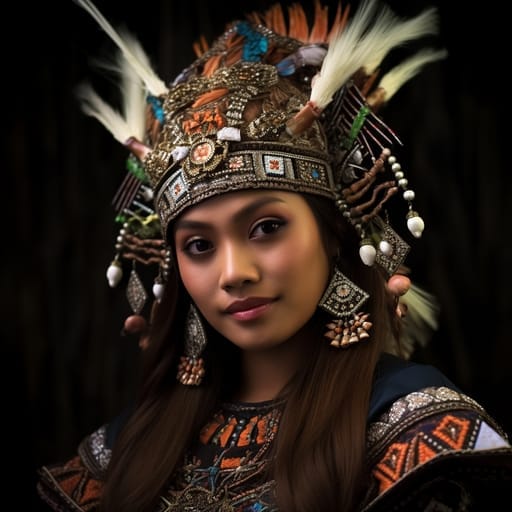
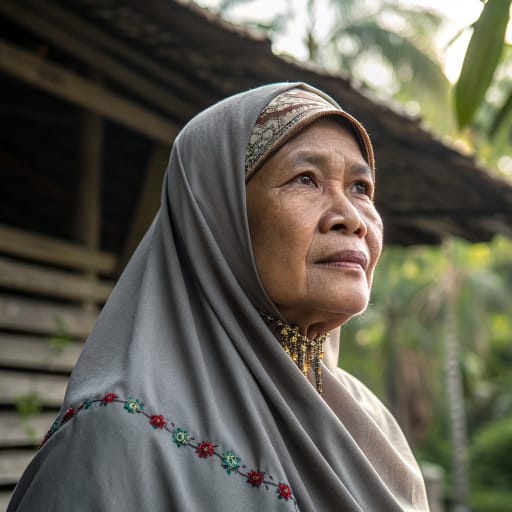
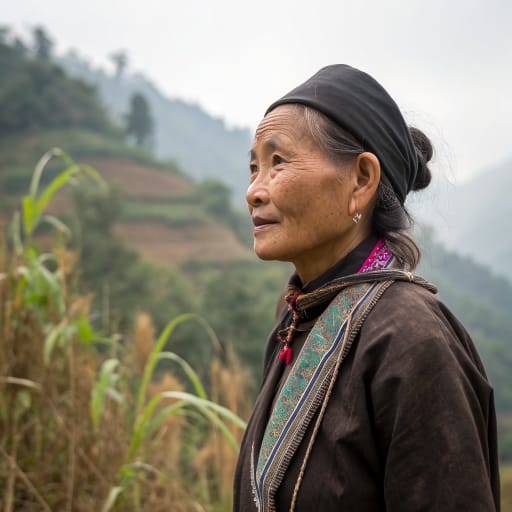
Typical Lawa Phenotypes
Reference for AI generation: hair, eyes, skin, facial structure, build
Lawa Body & Anatomy Reference
Anatomy by feature, Southeast Asian Austronesian / Austroasiatic phenotype
Lawa Boobs & Breasts
The typical Lawa bust is small-to-medium cup, modest projection, in line with the wider Southeast Asian Austronesian / Austroasiatic pattern. Areolas usually fall in the 26-38mm range, with medium-brown to dark-brown areolar pigmentation against the tan-to-medium-brown skin tone. Compared with the fuller South Asian or Polynesian bust, Lawa breasts sit forward and are generally firm, modest projection. A faithful AI render of Lawa tits keeps that shape and areola size.
Lawa Ass & Hips
Butt shape among Lawa women: small-to-medium, modest projection, narrower hip profile, over narrow-to-medium iliac crests. This follows Southeast Asian Austronesian / Austroasiatic ancestry and looks quite unlike the fuller glutes of the Pacific Islander phenotype. An accurate Lawa ass in adult AI imagery keeps both the silhouette and the overall build (ectomorph, petite frame) instead of a generic average.
Lawa Vagina & Pussy
Vulvar anatomy among Lawa women: medium-brown to dark-brown labial pigmentation. Pubic hair tends to be straight-to-wavy fine-to-medium texture, in the usual inverted-triangle pattern. Both follow Southeast Asian Austronesian / Austroasiatic pigmentation, which is why Lawa pussy renders should not fall back on a pale, sparse Western template.
Lawa Dicks & Penis
The Lawa cock profile, from Southeast Asian Austronesian / Austroasiatic anthropometric data: regional mean ~11cm erect; moderate girth; medium-brown shaft pigmentation. Pubic hair has a straight-to-wavy fine-to-medium texture and forms the usual inverted-V pattern. Whether Lawa men are circumcised follows religious and cultural practice rather than phenotype.
Lawa Body, Curves & Build
Build and curves among Lawa women follow the Southeast Asian Austronesian / Austroasiatic pattern: ectomorph, petite frame, mean adult female BMI 20-23. Proportions matter as much as skin tone, so Lawa figures should keep their regional height and limb ratios.
Lawa Skin Tone & Hair Texture
The Lawa skin range is tan to medium-brown (Fitzpatrick III-V), and hair tends to be straight-to-wavy 1A-2A, dark-brown to black. That combination marks the Southeast Asian Austronesian / Austroasiatic phenotype, and skin tone is the trait AI generators most often get wrong for Lawa women.
Explore phenotype categories
Structured taxonomy with peer-reviewed scales · 22 anatomical categories
Erotic Poses & Sex Positions
From the pose catalog: 219 named positions with reference skeletons
Frequently asked questions about Lawa people
Where is the Lawa homeland?
The Lawa homeland is Upland villages of Chiang Mai and Mae Hong Son provinces in northern Thailand, especially around Mae Sariang, Mae La Noi and the Bo Luang plateau. in Southeast Asia.
What language do Lawa people speak?
Lawa people primarily speak Lawa, in Western and Eastern varieties (Austroasiatic, Palaungic); most also speak Northern Thai and Thai..
What religion do Lawa people practice?
The predominant religion among Lawa people is Theravada Buddhism blended with worship of ancestral and guardian spirits; some Christian communities..






Make your own Lawa images
Five a day, free, no credits to buy. The studio starts from this group's phenotype data, so you can set body type, pose and style and keep the traits accurate.
Start with Lawa