No portrait yet
Kwanyama Erotic
The Oukwanyama area straddling the border: Cunene Province in southern Angola (around Ondjiva) and Ohangwena Region in northern Namibia (around Eenhana and Oshikango).
Oshikwanyama, a written standard of Oshiwambo (Bantu, Niger Congo)
Mostly Christian (Lutheran, Anglican, Catholic), with ancestral beliefs and customs still present in some families.
The largest of the Ovambo (Aawambo) groups, related to the Ndonga, Kwambi, Ngandjera, Mbalantu and Kwaluudhi.
About Kwanyama People
The Kwanyama are the people of Oukwanyama, once the largest and most powerful of the Ovambo kingdoms. More than anything else, a border shapes who they are today. In 1886 Portugal and Germany drew a colonial boundary across the flat country between the Kunene and Okavango rivers, and it ran straight through Kwanyama land. The kingdom's old heartland now sits partly in Angola's Cunene Province, around the provincial capital Ondjiva, and partly in Namibia's Ohangwena Region, around Eenhana, Engela and the busy border town of Oshikango. The land is sandy and dotted with shallow pans called oshanas, which fill with water in good rain years. Families, clans and trade still cross the border constantly, and people on both sides call themselves Ovakwanyama first.
Their language, Oshikwanyama, is one of the two written standards of Oshiwambo. The other is Oshindonga, and speakers of the two understand each other with little effort. In Namibia, Oshikwanyama is taught in schools and heard on national radio. Kwanyama society is matrilineal: a child belongs to the mother's clan, and kin duties have long followed that line. Village life still turns on pearl millet, known locally as mahangu. It is pounded into a stiff porridge or made into oshikundu, a lightly fermented drink. Cattle remain a measure of a household's standing.
The kingdom lost its independence during the First World War. King Mandume ya Ndemufayo was a young ruler who pushed back against both Portuguese and South African encroachment. After Kwanyama forces were defeated by the Portuguese at Mongua in 1915, he moved his court south of the border. He died fighting South African troops in 1917. Both Namibia and Angola now honor him as an early hero of anticolonial resistance, and his grave and memorial at Oihole are a place of pilgrimage.
Missionaries arrived in the 1890s, and today most Kwanyama are Christian. Lutheran and Anglican churches are strong on the Namibian side, and the Catholic Church has a large following in Angola. The churches reshaped older customs but did not erase them. The missions fought for decades against efundula, a group coming of age ceremony for young women, and it has become a symbol in arguments over what tradition should mean. In the late twentieth century the homeland became a front line again. Namibia's liberation war and the long conflict in southern Angola were fought through these villages, and that history is still close for many families.
Related ethnic groups
Groups that share Kwanyama's homeland, region, language, or religious tradition. These are likely candidates for comparative phenotype reference.
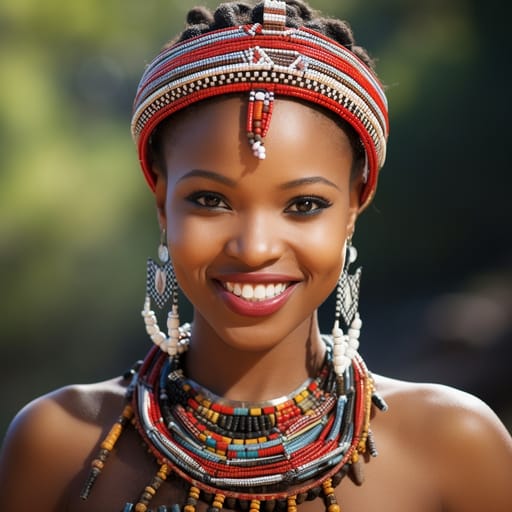
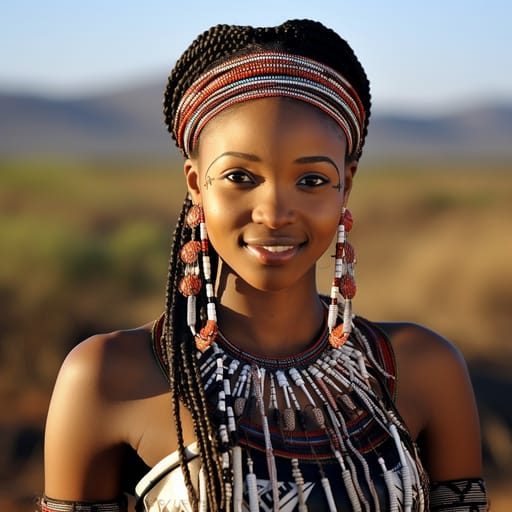
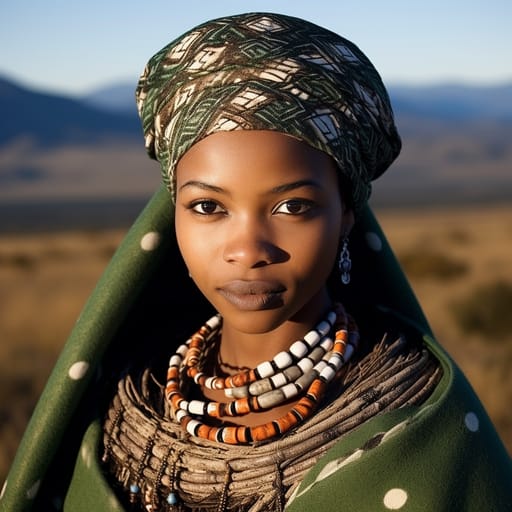
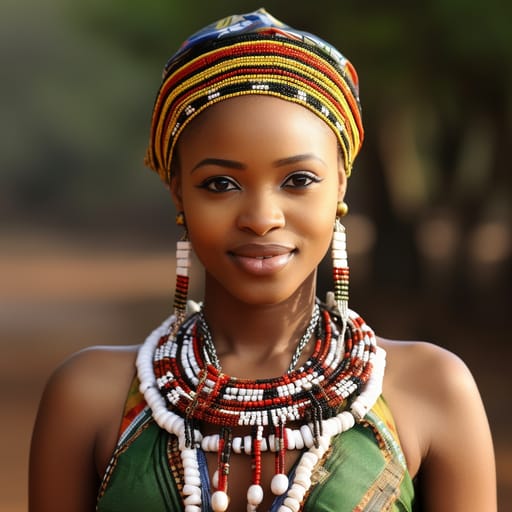
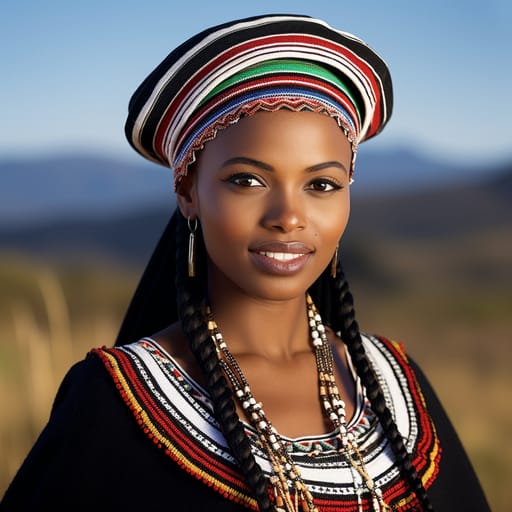

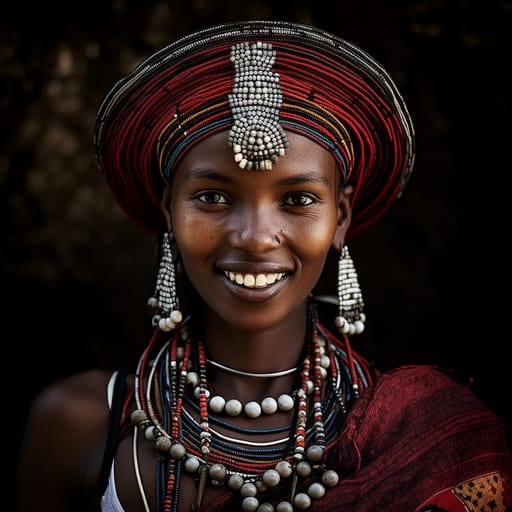
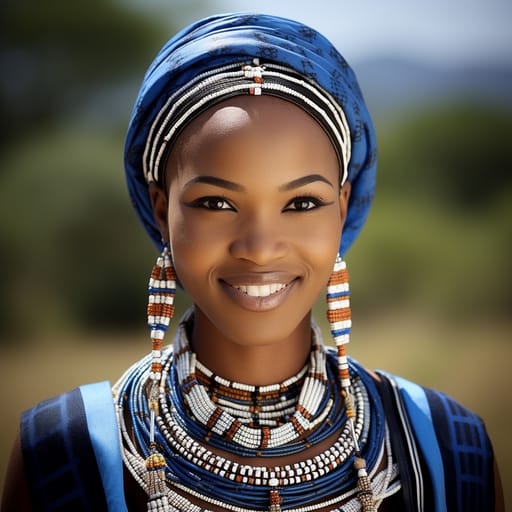
Typical Kwanyama Phenotypes
Reference for AI generation: hair, eyes, skin, facial structure, build
Kwanyama Body & Anatomy Reference
Per-feature anatomical profile for AI nude generation: Bantu / Khoisan Southern African phenotype
Kwanyama Boobs & Breasts
Bust reference for Kwanyama women: medium cup, full but moderate projection, which is typical of Bantu / Khoisan Southern African ancestry. Areolas measure about 30-44mm across, with medium-brown to deep-brown pigmentation. Body type (mesomorph; Khoisan-descended sub-populations show distinctive steatopygic fat deposition) shapes the bust as well, so Kwanyama tits are usually moderately full; less projecting than West African norm. In AI imagery, keep the forward-set shape rather than drifting toward the heavier West African bust.
Kwanyama Ass & Hips
The Kwanyama ass is typically the distinctive Khoisan-influenced steatopygic profile in some sub-populations (San, Khoekhoe); broader gluteal projection in Bantu-speaking groups, which sets it apart from the slim Cushitic East African profile. Underneath, the pelvis shows wide iliac crests with notable lordosis in Khoisan-descended sub-populations, part of the Bantu / Khoisan Southern African skeletal pattern. For Kwanyama butt pics and AI renders, match that silhouette and the overall build (mesomorph; Khoisan-descended sub-populations show distinctive steatopygic fat deposition).
Kwanyama Vagina & Pussy
Kwanyama pussy and vulvar anatomy presents deep-brown labial pigmentation; the elongated labia minora documented in some Khoisan-descended populations, consistent with the Bantu / Khoisan Southern African phenotype's pigmentation pattern. Kwanyama pubic hair is typically tightly-coiled coarse texture, in the inverted-triangle pattern. For anatomically accurate Kwanyama pussy renders the labial coloration should match the surrounding medium-brown to deep-brown skin tone with a continuous gradient, and the hair should keep its tightly-coiled coarse texture.
Kwanyama Dicks & Penis
Kwanyama dicks follow the Bantu / Khoisan Southern African reference data: regional mean ~14cm erect; moderate-to-above-average girth; deep-brown shaft pigmentation. Shaft color should track the medium-brown to deep-brown skin tone with a smooth change toward the glans, and Kwanyama pubic hair keeps its tightly-coiled coarse texture.
Kwanyama Body, Curves & Build
Kwanyama body type and overall build presents as mesomorph; Khoisan-descended sub-populations show distinctive steatopygic fat deposition, with mean adult female BMI 24-28: the characteristic Bantu / Khoisan Southern African habitus. Kwanyama curves and proportions should keep the regional skeletal frame (height, shoulder-to-hip ratio, limb proportions) rather than a generic mesomorph default.
Kwanyama Skin Tone & Hair Texture
Kwanyama skin sits in the medium-brown to deep-brown (Fitzpatrick V-VI); lighter in Khoisan-descended populations band. Hair is typically tightly-coiled 4A-4C; the distinctive 'peppercorn' tight-spiral texture in Khoisan-descended populations, in keeping with the Bantu / Khoisan Southern African phenotype. In nude renders the skin should stay one even tone from face to body, and body, pubic and head hair should match.
Explore phenotype categories
Structured taxonomy with peer-reviewed scales · 22 anatomical categories
Erotic Poses & Sex Positions
From the pose catalog: 219 named positions with reference skeletons
Frequently asked questions about Kwanyama people
Where is the Kwanyama homeland?
The Kwanyama homeland is The Oukwanyama area straddling the border: Cunene Province in southern Angola (around Ondjiva) and Ohangwena Region in northern Namibia (around Eenhana and Oshikango). in Southern Africa.
What language do Kwanyama people speak?
Kwanyama people primarily speak Oshikwanyama, a written standard of Oshiwambo (Bantu, Niger Congo).
What religion do Kwanyama people practice?
The predominant religion among Kwanyama people is Mostly Christian (Lutheran, Anglican, Catholic), with ancestral beliefs and customs still present in some families..






Make your own Kwanyama images
Five a day, free, no credits to buy. The studio starts from this group's phenotype data, so you can set body type, pose and style and keep the traits accurate.
Start with Kwanyama