Help us get this right
Does this portrait look right for Kulango?
Nobody has judged this one yet. You would be the first.
Kulango Erotic
Northeastern Côte d'Ivoire around Bouna and Bondoukou, including the Comoé National Park area, and neighboring western Ghana
Kulango, with Bouna and Bondoukou varieties (Niger-Congo, usually classed as Gur)
Traditional religion centered on ancestors and earth shrines, alongside Islam and Christianity
Bouna Kulango and Bondoukou Kulango; closely related to the Lorhon
About Kulango People
The Kulango were already farming the savanna of northeastern Côte d'Ivoire when kings, merchants and migrants began to arrive, and much of their identity still rests on that fact. Around the towns of Bouna and Bondoukou, and across the border in western Ghana, Kulango lineages are recognized as the first occupants and owners of the land. Earth priests keep the shrines that tie each harvest to the goodwill of the ground. The Lobi moved into the Bouna country during the nineteenth century, but they settled on land whose ritual authority stayed in Kulango hands.
That standing as first-comers survived two very different conquests. In the north, a ruling line that traced its origins to the Dagomba country of present-day northern Ghana founded the kingdom of Bouna, probably in the seventeenth century, and came to speak the language of its Kulango subjects. Farther south, the Akan-speaking Abron built the Gyaman kingdom around Bondoukou. The Kulango there became part of an Akan political world while living next to Abron, Dyula and Nafana neighbors. So the Kulango have two historical faces: Bouna, a savanna kingdom that looked north, and Bondoukou, a trading town that faced the forest. Bouna's independence ended when Samori Touré's army sacked the town in the 1890s, shortly before French rule took hold.
Kulango belongs to the Niger-Congo family and is usually grouped with the Gur languages, though its exact place there is debated. Its closest relative is Lorhon, a smaller neighboring language. It has two main varieties, one centered on Bouna and one on Bondoukou, and it is surrounded by very different languages: Akan languages to the south, Mande Dyula in the market towns and other Gur languages such as Lobi close by. Religion is layered in the same way. Dyula traders carried Islam into the region centuries ago, and Bondoukou became known for its many mosques and its Koranic scholars. In the villages, though, ancestors and earth shrines remain at the center of ritual life, often alongside Islam or Christianity. Most Kulango today farm yams, maize and cashew, and their homeland includes Comoé National Park, one of the largest protected areas in West Africa.
Related ethnic groups
Groups that share Kulango's homeland, region, language, or religious tradition. These are likely candidates for comparative phenotype reference.
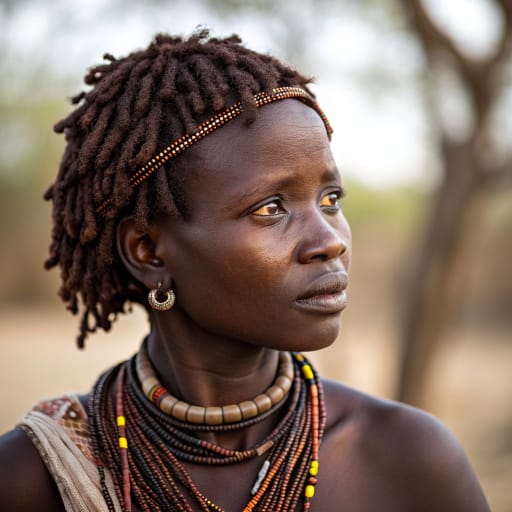
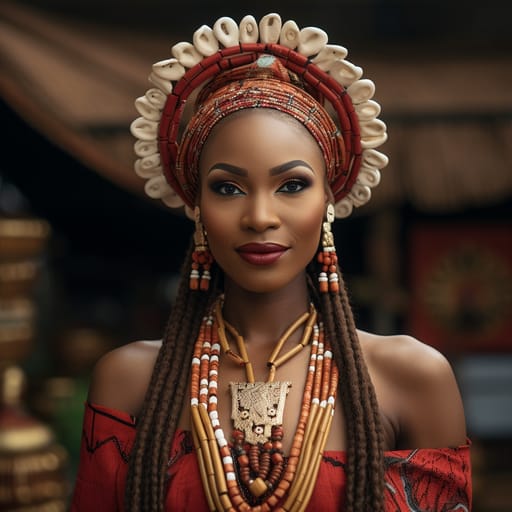
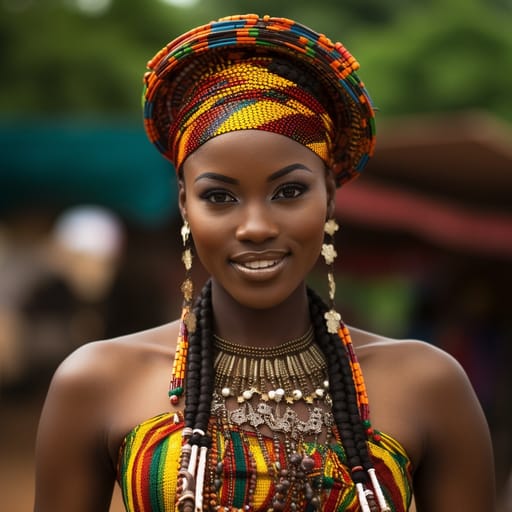
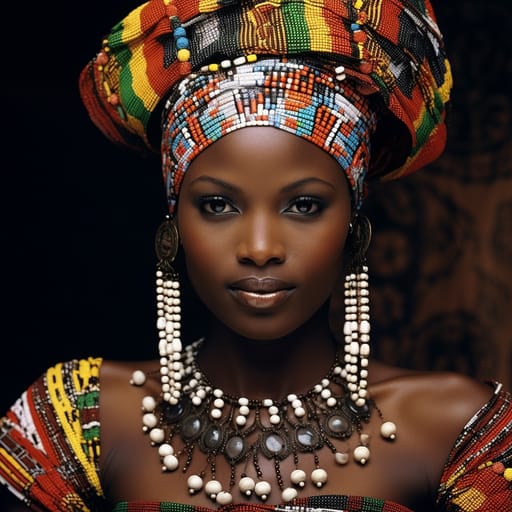
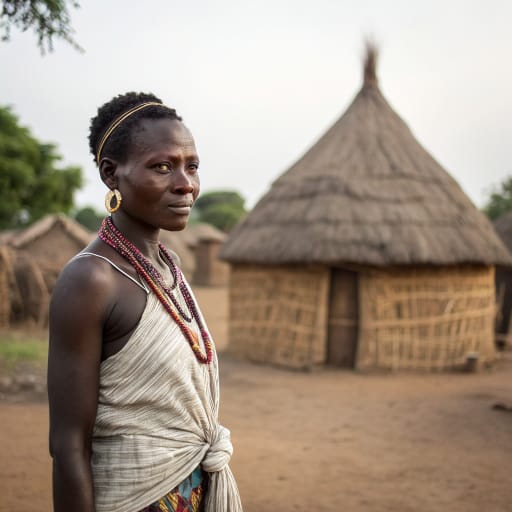
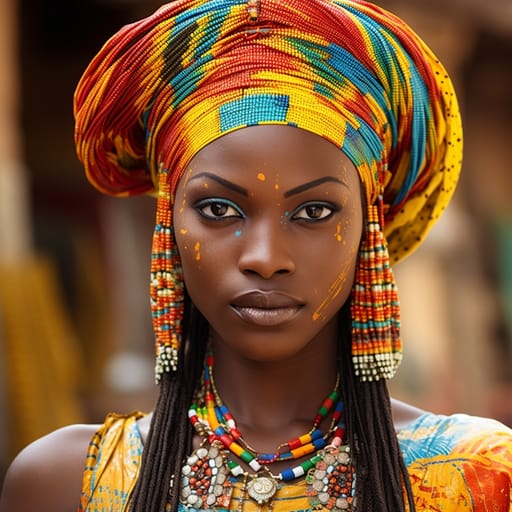
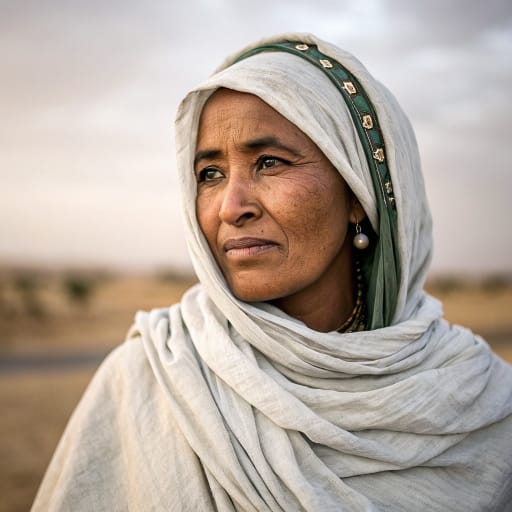
Typical Kulango Phenotypes
Reference for AI generation: hair, eyes, skin, facial structure, build
Kulango Body & Anatomy Reference
Per-feature anatomical profile for AI nude generation: West African Niger-Congo phenotype
Kulango Boobs & Breasts
The typical Kulango bust is medium-to-large cup, full, projecting, in line with the wider West African Niger-Congo pattern. Areolas usually fall in the 35-50mm range, with deep-brown to near-black areolar pigmentation against the medium-to-deep-brown skin tone. Compared with the smaller conical Cushitic East African profile, Kulango breasts sit forward and are generally fuller and more projecting than the East African norm. A faithful AI render of Kulango tits keeps that shape and areola size.
Kulango Ass & Hips
Butt shape among Kulango women: wide-set, full, heavily projected glutes, over wide iliac crests, broad gynoid pelvic pattern, high glute-to-waist ratio. This follows West African Niger-Congo ancestry and looks quite unlike the slim narrow-hip Cushitic East African profile. An accurate Kulango ass in adult AI imagery keeps both the silhouette and the overall build (mesomorph with strong gluteal-femoral fat distribution) instead of a generic average.
Kulango Vagina & Pussy
Vulvar anatomy among Kulango women: deep-brown to near-black labial pigmentation, fuller labia minora. Pubic hair tends to be tightly-coiled coarse texture, densely distributed, in the usual inverted-triangle pattern. Both follow West African Niger-Congo pigmentation, which is why Kulango pussy renders should not fall back on a pale, sparse Western template.
Kulango Dicks & Penis
The Kulango cock profile, from West African Niger-Congo anthropometric data: regional mean ~14-15cm erect; above-average girth, ~13cm circumference; deep-brown-to-near-black shaft pigmentation. Pubic hair has a tightly-coiled coarse texture and forms the usual inverted-V pattern. Whether Kulango men are circumcised follows religious and cultural practice rather than phenotype.
Kulango Body, Curves & Build
Build and curves among Kulango women follow the West African Niger-Congo pattern: mesomorph with strong gluteal-femoral fat distribution, mean adult female BMI 24-27. Proportions matter as much as skin tone, so Kulango figures should keep their regional height and limb ratios.
Kulango Skin Tone & Hair Texture
The Kulango skin range is medium-brown to deep-brown (Fitzpatrick V-VI), and hair tends to be tight 4A-4C coil, often worn natural, braided, or relaxed. That combination marks the West African Niger-Congo phenotype, and skin tone is the trait AI generators most often get wrong for Kulango women.
Explore phenotype categories
Structured taxonomy with peer-reviewed scales · 22 anatomical categories
Erotic Poses & Sex Positions
From the pose catalog: 219 named positions with reference skeletons
Frequently asked questions about Kulango people
Where is the Kulango homeland?
The Kulango homeland is Northeastern Côte d'Ivoire around Bouna and Bondoukou, including the Comoé National Park area, and neighboring western Ghana in Western Africa.
What language do Kulango people speak?
Kulango people primarily speak Kulango, with Bouna and Bondoukou varieties (Niger-Congo, usually classed as Gur).
What religion do Kulango people practice?
The predominant religion among Kulango people is Traditional religion centered on ancestors and earth shrines, alongside Islam and Christianity.






Make your own Kulango images
Five a day, free, no credits to buy. The studio starts from this group's phenotype data, so you can set body type, pose and style and keep the traits accurate.
Start with Kulango