No portrait yet
Koma Erotic
A small cluster of farming villages in the savanna of northern Ghana, including Yikpabongo
Konni, also called Koma (Niger-Congo, Gur), closely related to Buli
Traditional religion alongside Christianity and Islam
Gur-speaking peoples of northern Ghana; linguistically closest to the Bulsa (Builsa)
About Koma People
The Koma are one of the smallest peoples of northern Ghana, a few farming villages in the dry savanna whose name has traveled much farther than they have. Outside Ghana, Koma mostly means clay figurines in museum cases and auction catalogs. At home it means a community that has kept its own language and identity while surrounded by far larger neighbors.
Their language, Konni, belongs to the Gur family of Niger-Congo. Gur languages are spoken across much of the savanna belt, from Mali and Burkina Faso through northern Ghana, Togo and Benin. Konni's nearest relative is Buli, the language of the Bulsa, and linguists place the two side by side in the same small branch. Konni has only a few thousand speakers. In Ghana, school and government run in English and trade favors bigger regional languages. So when a family speaks Konni at home, it is keeping the language going by choice. Village life follows the savanna calendar: one rainy season for growing grain, then a long, hard dry season. As in much of rural northern Ghana, older religious practice tied to ancestors and the land exists alongside Christianity and Islam.
Koma Land
Starting in the 1980s, terracotta figures began turning up in and around Koma villages, and the area became known as Koma Land. Archaeologists dug into earthen mounds, most famously at Yikpabongo, and found the figures linked to burial and ritual deposits, along with pottery and other goods. The pieces are hard to forget: stylized heads and bodies with elaborate hairstyles or headgear, some with features pushed well past realism. They are generally dated to several centuries spanning the late first and early second millennium AD. The fame brought looters along with scholars, and a lot of material left the area through illegal digging before anyone could record where it came from. The name comes from where the objects were found. It does not prove that today's Koma descend from the people who made them, and that question is still open. The Koma live on top of one of West Africa's most important archaeological landscapes, and most of the world knows their name only because of it.
Related ethnic groups
Groups that share Koma's homeland, region, language, or religious tradition. These are likely candidates for comparative phenotype reference.
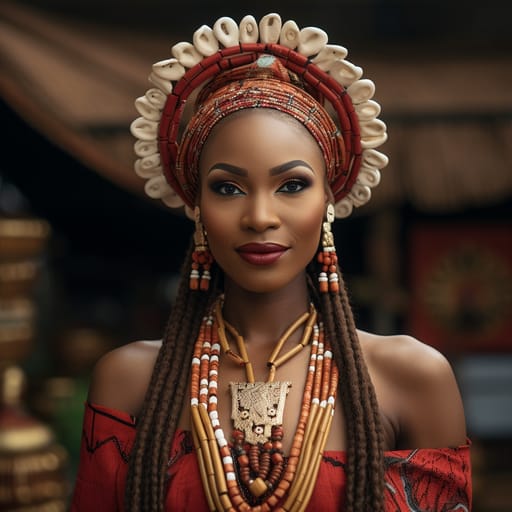
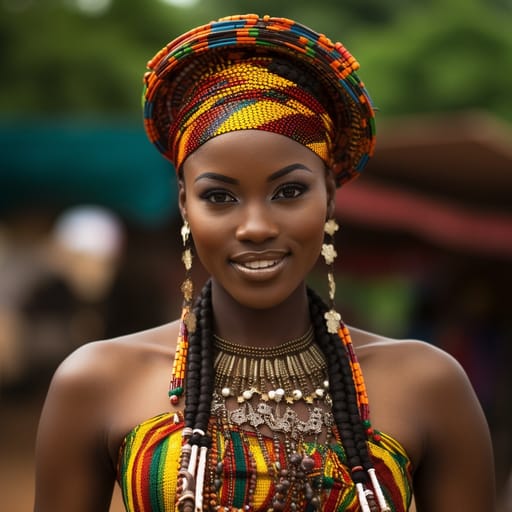
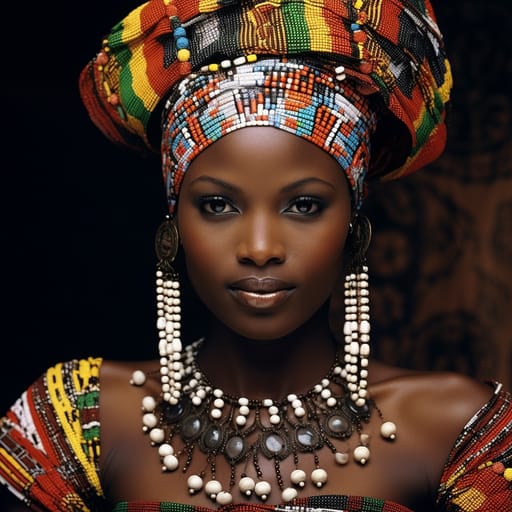
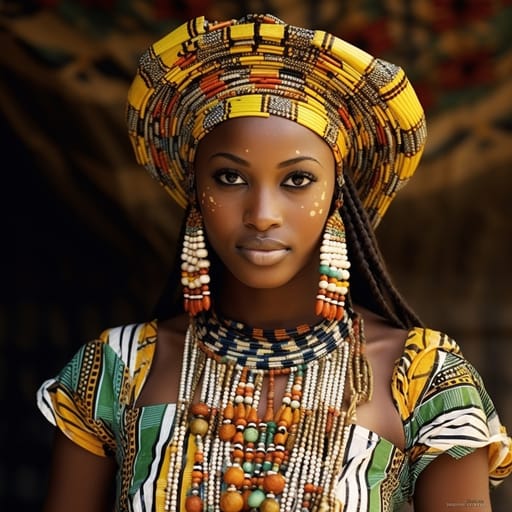
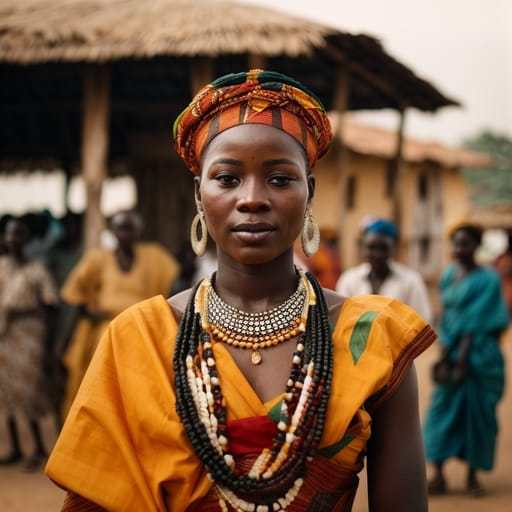
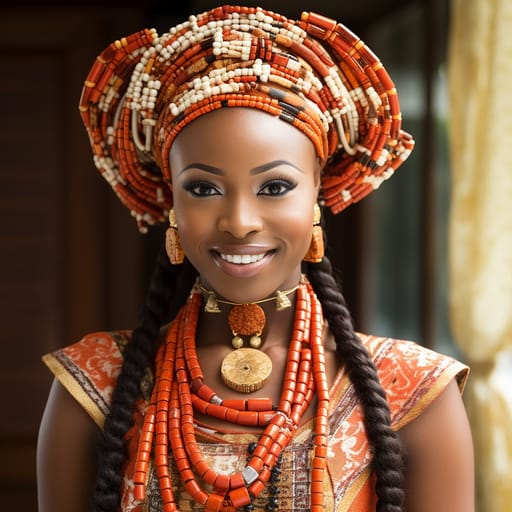
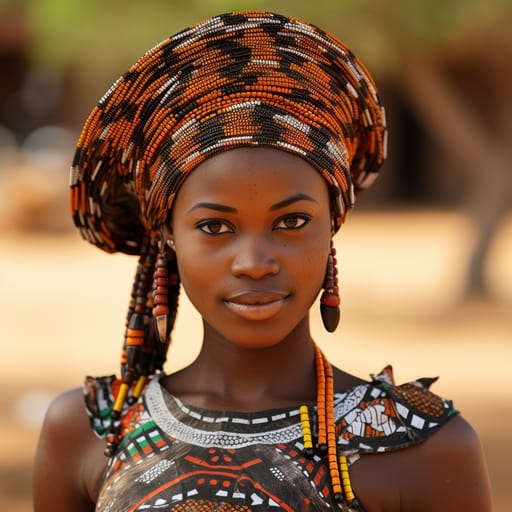
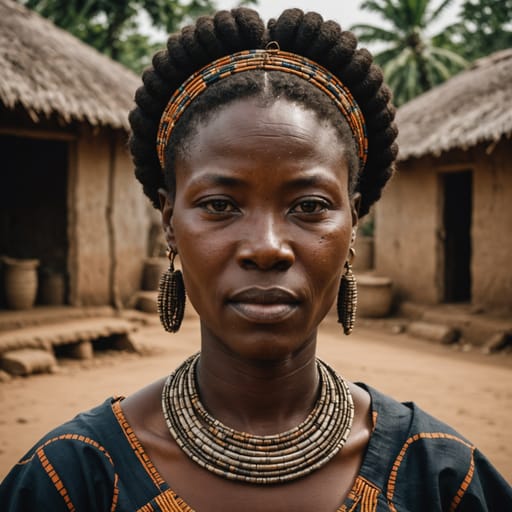
Typical Koma Phenotypes
Reference for AI generation: hair, eyes, skin, facial structure, build
Koma Body & Anatomy Reference
Per-feature anatomical profile for AI nude generation: West African Niger-Congo phenotype
Koma Boobs & Breasts
Koma boobs follow the West African Niger-Congo profile: medium-to-large cup, full, projecting. Areolar diameter is usually 35-50mm, and the coloring is deep-brown to near-black areolar pigmentation against the medium-to-deep-brown skin tone. Breast shape tracks body composition (mesomorph with strong gluteal-femoral fat distribution, mean adult female BMI 24-27), so Koma breasts tend to be fuller and more projecting than the East African norm. Expect a forward-set shape, not the smaller conical Cushitic East African profile.
Koma Ass & Hips
Koma ass and hip morphology presents as wide-set, full, heavily projected glutes, distinctly different from the slim narrow-hip Cushitic East African profile. The Koma pelvic profile shows wide iliac crests, broad gynoid pelvic pattern, high glute-to-waist ratio, anchored in the West African Niger-Congo skeletal pattern. Koma butt shots in adult AI imagery should render the wide-set, full, heavily projected glutes silhouette with the overall build (mesomorph with strong gluteal-femoral fat distribution) and the fat distribution typical of the West African Niger-Congo phenotype.
Koma Vagina & Pussy
Koma pussy anatomy typically shows deep-brown to near-black labial pigmentation, fuller labia minora. Pubic hair is usually tightly-coiled coarse texture, densely distributed. In AI-generated Koma nudes, labial color should blend into the medium-brown to deep-brown skin with a gradual transition, and the hair should keep its tightly-coiled coarse texture.
Koma Dicks & Penis
Penis reference for Koma men: regional mean ~14-15cm erect, above-average girth, ~13cm circumference. Coloring: deep-brown-to-near-black shaft pigmentation. An accurate Koma cock in AI imagery matches the surrounding medium-brown to deep-brown skin rather than a generic porn default. Circumcision depends on religion and custom, not ancestry.
Koma Body, Curves & Build
The Koma figure is generally mesomorph with strong gluteal-femoral fat distribution, with mean adult female BMI 24-27, characteristic of West African Niger-Congo ancestry. AI image tools tend to flatten regional body types into a few stock shapes; here the Koma build is kept as its own reference.
Koma Skin Tone & Hair Texture
Skin: medium-brown to deep-brown (Fitzpatrick V-VI). Hair: tight 4A-4C coil, often worn natural, braided, or relaxed. Both are typical of West African Niger-Congo ancestry. The most common mistake in AI nudes of Koma women is a body rendered lighter than the face.
Explore phenotype categories
Structured taxonomy with peer-reviewed scales · 22 anatomical categories
Erotic Poses & Sex Positions
From the pose catalog: 219 named positions with reference skeletons
Frequently asked questions about Koma people
Where is the Koma homeland?
The Koma homeland is A small cluster of farming villages in the savanna of northern Ghana, including Yikpabongo in Western Africa.
What language do Koma people speak?
Koma people primarily speak Konni, also called Koma (Niger-Congo, Gur), closely related to Buli.
What religion do Koma people practice?
The predominant religion among Koma people is Traditional religion alongside Christianity and Islam.






Make your own Koma images
Five a day, free, no credits to buy. The studio starts from this group's phenotype data, so you can set body type, pose and style and keep the traits accurate.
Start with Koma