Help us get this right
Does this portrait look right for Kucong?
Nobody has judged this one yet. You would be the first.
Kucong Erotic
Ailao and Wuliang mountains of southern Yunnan, China (Jinping, Luchun, Zhenyuan, Xinping and Mojiang counties); related La Hu communities in Muong Te district, Lai Chau province, Vietnam.
Kucong, closely related to Lahu (Sino-Tibetan, Tibeto-Burman, Loloish); many also speak Yunnan Mandarin or Vietnamese.
Animism and ancestor veneration, centered on mountain, forest and hunting spirits.
A branch of the Lahu, officially classified within the Lahu nationality in China since 1987. Divisions follow Lahu names: Yellow (Lahu Shi), Black (Lahu Na), White (Lahu Pu). Counted as La Hu in Vietnam.
About Kucong People
The Kucong are the people the Ailao Mountains kept hidden. Until the 1950s most of them lived deep in the forests of southern Yunnan, between the Red River and the Vietnamese border, moving camp every few seasons, hunting with crossbows, and clearing small swiddens for corn. Their neighbors knew them mainly through silent trade: Kucong would leave rattan baskets, game or forest herbs beside a path and withdraw, and Hani or Dai villagers would set down salt, cloth or iron in exchange. Across the border in Vietnam, where their relatives are registered as the La Hu of Muong Te district in Lai Chau, lowlanders called them Xa La Vang, the yellow leaf people, because they abandoned a shelter once its leaf roof dried and turned.
They are, by language and by their own reckoning, a branch of the Lahu. Kucong speech belongs to the Loloish branch of Tibeto-Burman and sits close to Lahu proper, closer than to the Hani and Yi languages spoken around it, and the internal divisions follow Lahu color names: Yellow, Black and White. One common account holds that their ancestors were Lahu who retreated into the high forest after failed uprisings against the Qing in the eighteenth and nineteenth centuries, trading farmland for safety. China's ethnic classification left them in limbo for decades as an undetermined group; in 1987, after their own petitions, they were formally folded into the Lahu nationality. The name Kucong is a Chinese one, written with the character for bitter, which is one reason many now simply call themselves Lahu. They number a few tens of thousands in Yunnan, and about twelve thousand La Hu live on the Vietnamese side.
The move out of the forest was not a single event. Government work teams built villages, handed out tools, grain and cattle, and watched many families walk back uphill; it took several rounds of resettlement, and later poverty programs, before settled farming stuck. Today most Kucong live in villages in Jinping, Luchun, Zhenyuan, Xinping and Mojiang counties, growing corn, upland rice and cash crops, and they remain among the poorer communities in a poor region. Older habits persist under the new roofs. Religion is animist: spirits of mountain, forest and hunt are fed and placated, ancestors are honored, and ritual specialists handle illness and misfortune. Fire carries special weight, a legacy of camps where the hearth was never allowed to go out and embers were carried from site to site. Hunters traditionally shared game by fixed rules rather than keeping it, and bamboo and rattan work remains the craft Kucong are known for locally.
Related ethnic groups
Groups that share Kucong's homeland, region, language, or religious tradition. These are likely candidates for comparative phenotype reference.

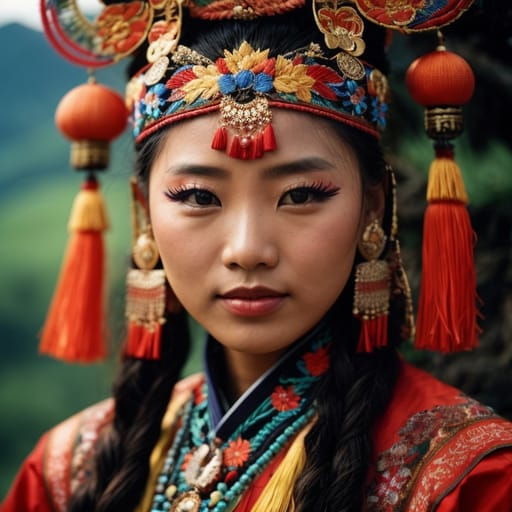
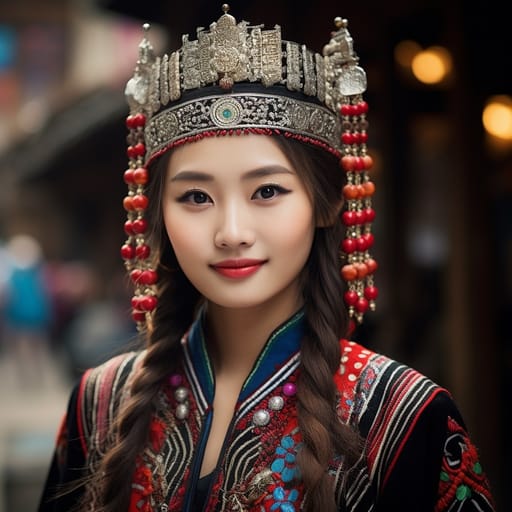
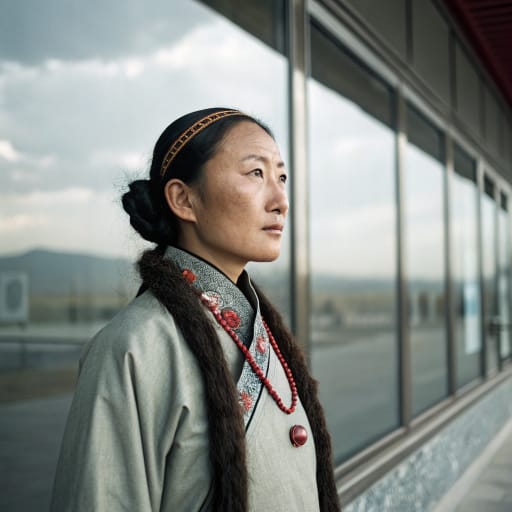
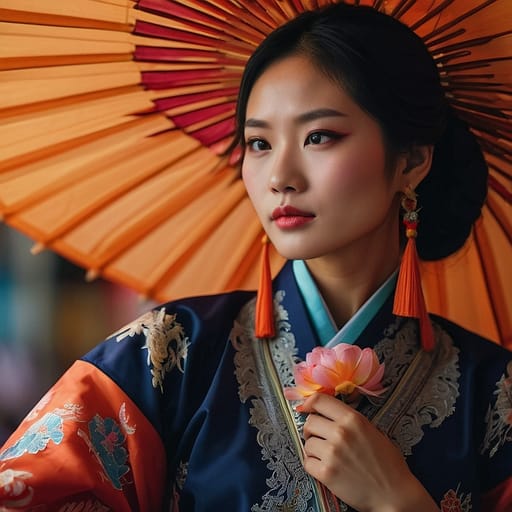

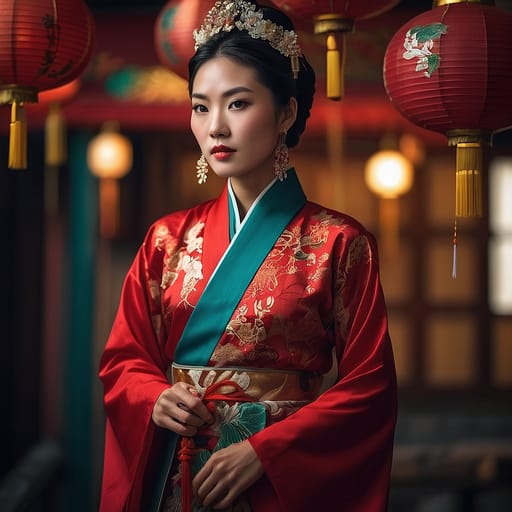
Typical Kucong Phenotypes
Reference for AI generation: hair, eyes, skin, facial structure, build
Kucong Body & Anatomy Reference
East Asian Sinitic / Mongoloid phenotype: anatomy reference for AI nude generation
Kucong Boobs & Breasts
Bust reference for Kucong women: small-to-medium cup, modest projection, which is typical of East Asian Sinitic / Mongoloid ancestry. Areolas measure about 26-36mm across, with light-pink to medium-brown pigmentation. Body type (ectomorph-to-mesomorph, lean frame) shapes the bust as well, so Kucong tits are usually firm and modestly projecting; smaller cup size than the South Asian or Western Asian average. In AI imagery, keep the forward-set shape rather than drifting toward the fuller South Asian or Levantine bust profile.
Kucong Ass & Hips
The Kucong ass is typically small-to-medium, modest projection, narrower hip profile, which sets it apart from the fuller projected glutes of the West African or Polynesian phenotype. Underneath, the pelvis shows narrower iliac crests, less gluteal-femoral fat deposition, part of the East Asian Sinitic / Mongoloid skeletal pattern. For Kucong butt pics and AI renders, match that silhouette and the overall build (ectomorph-to-mesomorph, lean frame).
Kucong Vagina & Pussy
Kucong pussy and vulvar anatomy presents light-pink to medium-brown labial pigmentation, smaller labia minora, consistent with the East Asian Sinitic / Mongoloid phenotype's pigmentation pattern. Kucong pubic hair is typically straight fine texture, sparser distribution than the South Asian norm, in the inverted-triangle pattern. For anatomically accurate Kucong pussy renders the labial coloration should match the surrounding light to medium skin tone with a continuous gradient, and the hair should keep its straight fine texture.
Kucong Dicks & Penis
Kucong dicks follow the East Asian Sinitic / Mongoloid reference data: regional mean ~11-12cm erect; moderate girth; light-brown shaft pigmentation. Shaft color should track the light to medium skin tone with a smooth change toward the glans, and Kucong pubic hair keeps its straight fine texture.
Kucong Body, Curves & Build
Kucong body type and overall build presents as ectomorph-to-mesomorph, lean frame, with mean adult female BMI 20-23: the characteristic East Asian Sinitic / Mongoloid habitus. Kucong curves and proportions should keep the regional skeletal frame (height, shoulder-to-hip ratio, limb proportions) rather than a generic mesomorph default.
Kucong Skin Tone & Hair Texture
Kucong skin sits in the light to medium (Fitzpatrick II-IV) band. Hair is typically straight 1A, fine-to-medium, predominantly black, in keeping with the East Asian Sinitic / Mongoloid phenotype. In nude renders the skin should stay one even tone from face to body, and body, pubic and head hair should match.
Explore phenotype categories
Structured taxonomy with peer-reviewed scales · 22 anatomical categories
Erotic Poses & Sex Positions
From the pose catalog: 219 named positions with reference skeletons
Frequently asked questions about Kucong people
Where is the Kucong homeland?
The Kucong homeland is Ailao and Wuliang mountains of southern Yunnan, China (Jinping, Luchun, Zhenyuan, Xinping and Mojiang counties); related La Hu communities in Muong Te district, Lai Chau province, Vietnam. in East Asia.
What language do Kucong people speak?
Kucong people primarily speak Kucong, closely related to Lahu (Sino-Tibetan, Tibeto-Burman, Loloish); many also speak Yunnan Mandarin or Vietnamese..
What religion do Kucong people practice?
The predominant religion among Kucong people is Animism and ancestor veneration, centered on mountain, forest and hunting spirits..






Make your own Kucong images
Five a day, free, no credits to buy. The studio starts from this group's phenotype data, so you can set body type, pose and style and keep the traits accurate.
Start with Kucong