Help us get this right
Does this portrait look right for Knanaya?
Nobody has judged this one yet. You would be the first.
Knanaya Erotic
Central Kerala, India, concentrated around Kottayam, Chingavanam, Kaduthuruthy and Ranni, with a substantial diaspora in the United States, the Gulf states, the United Kingdom and Australia.
Malayalam (Dravidian); Syriac, both East and West rite, retained liturgically and in the old wedding songs (Aramaic, Semitic)
Christianity: roughly half Syro-Malabar Catholic under the Archeparchy of Kottayam, half Syriac Orthodox under the Knanaya Jacobite Archdiocese of Chingavanam
The Southists (Tekkumbhagar) of the Saint Thomas Christians of Kerala, divided by rite into Knanaya Catholic and Knanaya Jacobite
About Knanaya People
The Knanaya are defined less by where they live than by whom they marry. About 300,000 strong, they are an endogamous community inside Kerala's much larger Saint Thomas Christian population, and the rule is hard: marry out and you are out, and so are your children. Nearly everything else that marks them off, the songs, the origin story, the separate churches, hangs from that one line.
They trace themselves to a merchant remembered as Knai Thoma, Thomas of Cana, who is said to have arrived at the port of Kodungallur in the fourth century with a bishop, clergy, and seventy-two families out of Mesopotamia. The newcomers settled the south side of the town and the Christians already there the north, which is why the Knanaya are called Southists, Tekkumbhagar, and everyone else Northists. Copper plates recording the privileges a local ruler granted Knai Thoma were still in the community's hands in the sixteenth century, then disappeared, probably carried off to Portugal, and people have argued about them ever since. When the Periyar flooded in 1341 and ruined the Kodungallur harbor, the community moved south and inland; its center has been Kottayam and Chingavanam ever since.
Their everyday language is Malayalam, like their neighbors', and their old liturgical language is Syriac. The Coonan Cross Oath of 1653 broke the Saint Thomas Christians in two and broke the Knanaya along with them, so the community today is split between the Syro-Malabar Catholic archeparchy of Kottayam and the Syriac Orthodox archdiocese of Chingavanam. The two halves still intermarry freely. Denomination is negotiable; descent is not. Rome made room for this in 1911 by erecting Kottayam as a diocese defined by a people rather than a territory, with jurisdiction that follows Knanaya Catholics wherever they go.
Weddings hold the oldest material. There is a henna night, a ceremonial adorning of the bride and groom, a formal blessing asked of the parents, and a body of wedding songs taken from oral transmission and printed in 1910, some of them in a Malayalam old enough and thick enough with Syriac that singers no longer follow every line. Several are about Jerusalem. In the diaspora, in Chicago and Houston and the Gulf, the marriage rule is under more strain than it has ever faced, and the question of who still counts has reached the civil courts. The community is small enough that everyone in it has a position.
Related ethnic groups
Groups that share Knanaya's homeland, region, language, or religious tradition. These are likely candidates for comparative phenotype reference.
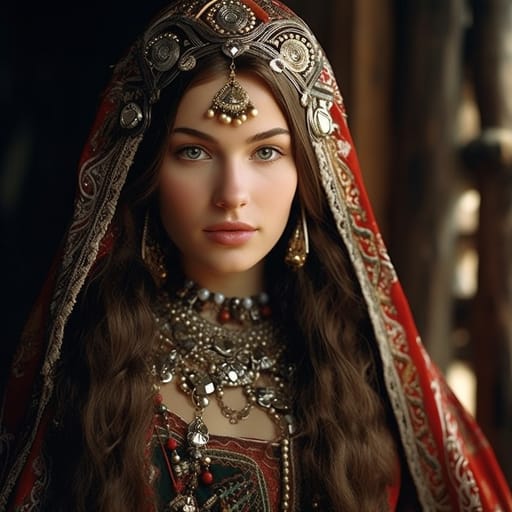
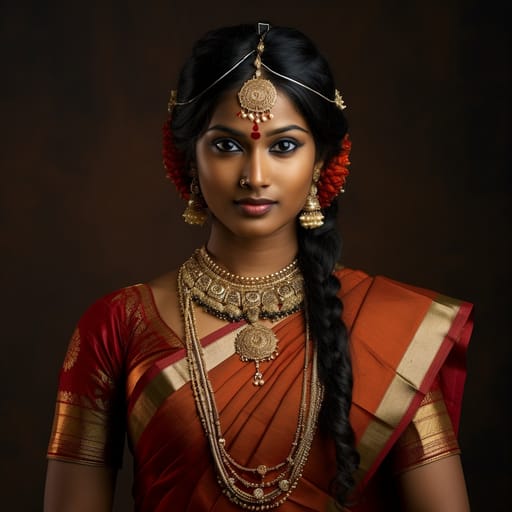
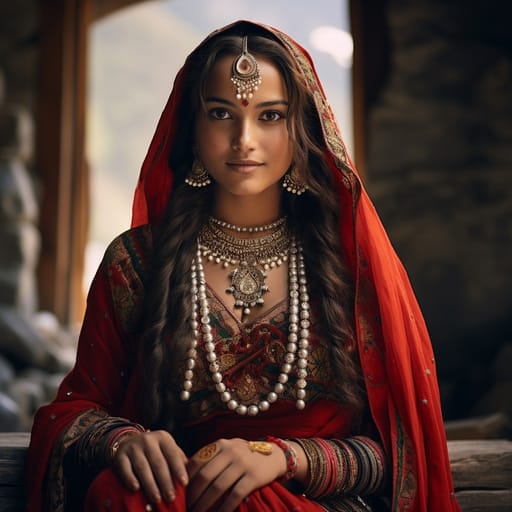
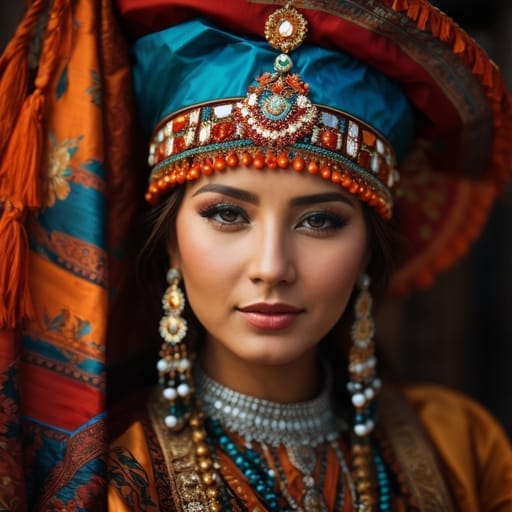
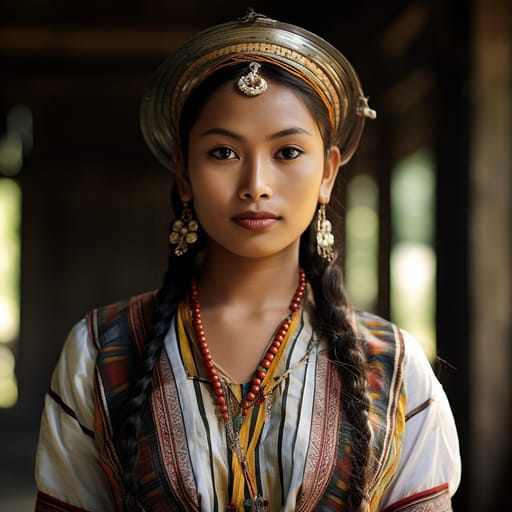
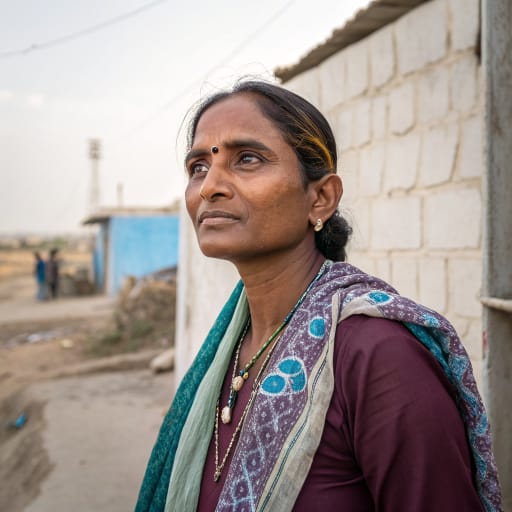
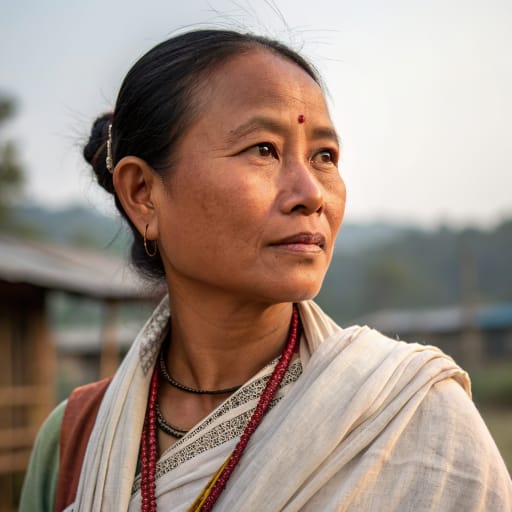
Typical Knanaya Phenotypes
Reference for AI generation: hair, eyes, skin, facial structure, build
Explore phenotype categories
Structured taxonomy with peer-reviewed scales · 22 anatomical categories
Erotic Poses & Sex Positions
From the pose catalog: 219 named positions with reference skeletons
Frequently asked questions about Knanaya people
Where is the Knanaya homeland?
The Knanaya homeland is Central Kerala, India, concentrated around Kottayam, Chingavanam, Kaduthuruthy and Ranni, with a substantial diaspora in the United States, the Gulf states, the United Kingdom and Australia. in Southern Asia.
What language do Knanaya people speak?
Knanaya people primarily speak Malayalam (Dravidian); Syriac, both East and West rite, retained liturgically and in the old wedding songs (Aramaic, Semitic).
What religion do Knanaya people practice?
The predominant religion among Knanaya people is Christianity: roughly half Syro-Malabar Catholic under the Archeparchy of Kottayam, half Syriac Orthodox under the Knanaya Jacobite Archdiocese of Chingavanam.






Make your own Knanaya images
Five a day, free, no credits to buy. The studio starts from this group's phenotype data, so you can set body type, pose and style and keep the traits accurate.
Start with Knanaya