Help us get this right
Does this portrait look right for Zomi?
One tap. It takes a second and it is recorded.
4 say it looks right, 2 say it looks off.
Zomi Erotic
Zogam (Myanmar, Bangladesh, India)
Christianity
Thadou, Paite, Simte, Zou, Lamkang, Kom, Lushai, Hmar, Koireng, Mizo, Aimol, Mru, Mrucha (including Anu-Hkongso), Bawm, Biate, Chin people Asho
About Zomi People
The Zomi are a constellation of related Kuki-Chin peoples spread across the hill country where Myanmar, India, and Bangladesh meet — a homeland its own speakers call Zogam, "the land of the Zomi." The name itself is a political statement as much as an ethnonym: zo meaning hill, mi meaning people. It collapses dozens of formerly distinct clan and dialect identities — Thadou, Paite, Simte, Zou, Hmar, Mizo, Lushai, Bawm, Biate, Mru, Asho Chin, and others — under a single umbrella that emerged in the twentieth century as a response to colonial-era partition. The borders drawn by the British, and later inherited by three independent states, cut Zogam into fragments. Much of Zomi cultural and political life since has been an attempt to think across those borders rather than within them.
The languages belong to the Kuki-Chin branch of Sino-Tibetan, closely interrelated but not always mutually intelligible — a Tedim speaker and a Lushai speaker can usually find common ground only with effort. This linguistic patchwork mirrors the social structure: traditionally, the basic unit was the village under a chief, with strong clan loyalties and a culture of oral genealogy that could trace lineages back many generations. Hill agriculture, primarily swidden rice, shaped the rhythm of life, as did a warrior ethic that pre-colonial chronicles record in some detail.
The single most transformative event in Zomi history is conversion. American and British Baptist and Presbyterian missionaries arrived in the late nineteenth and early twentieth centuries, and within roughly two generations Christianity became near-universal across most Zomi communities — a faster and more thorough religious transition than almost anywhere else in Asia. Today the church is the central institution of Zomi public life, organizing not just worship but education, choral music, charity, and political identity. Sunday is observed seriously. Hymn-singing, often in elaborate four-part harmony, is a defining cultural practice; Zomi choirs are well known across northeast India and the Chin Hills.
The group's contemporary situation is uneven. Mizo communities in India's Mizoram state enjoy political recognition and a thriving literary culture. Chin and Zomi communities inside Myanmar have lived through decades of military repression, with significant refugee outflows to Malaysia, India, and the United States — Indianapolis, of all places, has become an unlikely center of Zomi diaspora life.
Related ethnic groups
Groups that share Zomi's homeland, region, language, or religious tradition. These are likely candidates for comparative phenotype reference.
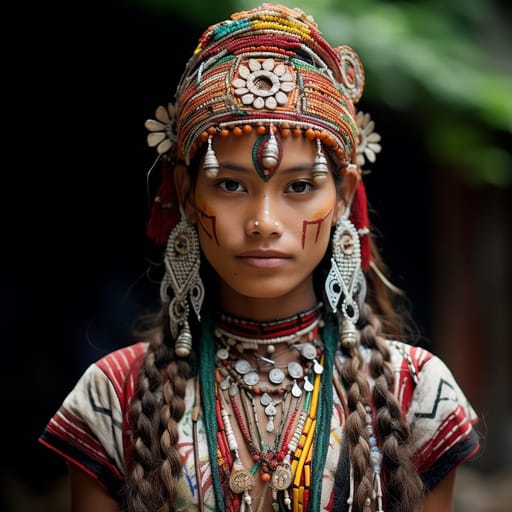
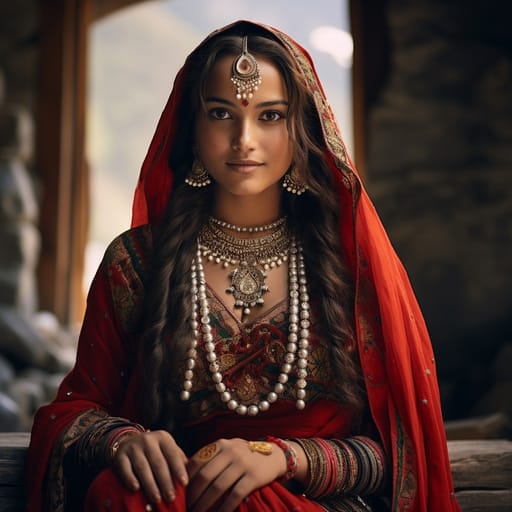
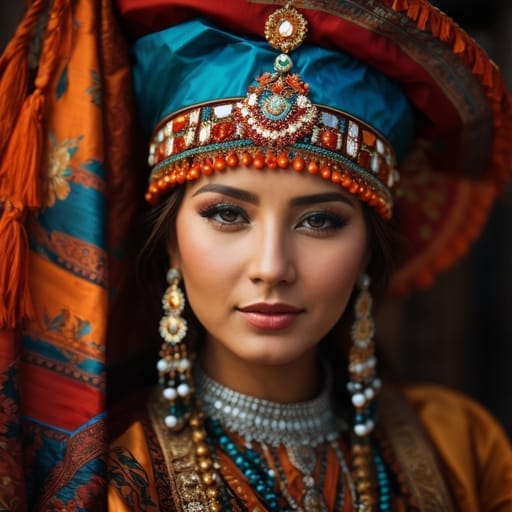
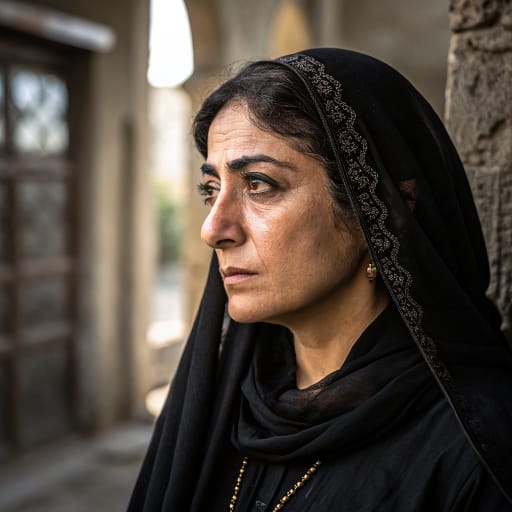
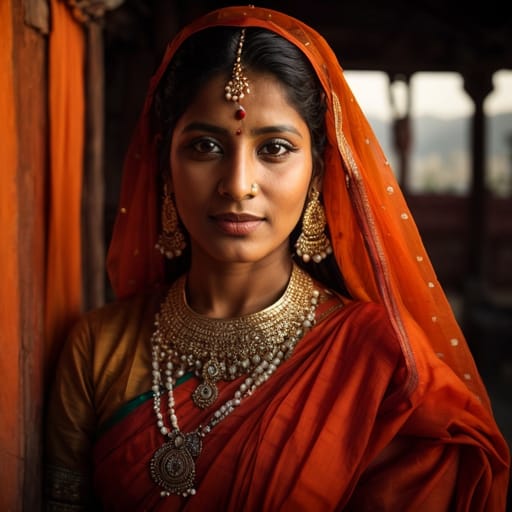

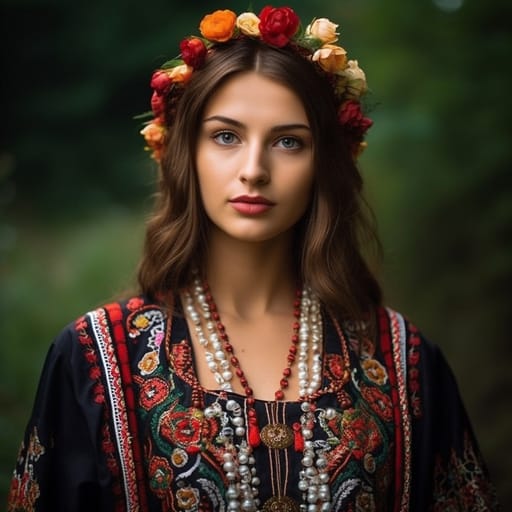
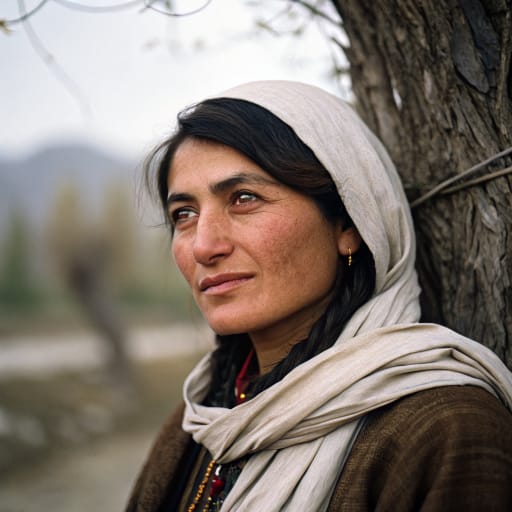
Typical Zomi Phenotypes
Reference for AI generation: hair, eyes, skin, facial structure, build
The Zomi sit phenotypically at the meeting point of Tibeto-Burman highland populations and South Asian lowland gene flow, and the result is a face that reads East Asian at first glance with softer, more gracile structure than Han or Tibetan neighbors. Hair is uniformly black to very dark brown, straight to faintly wavy, coarse but finer in shaft than in mainland Southeast Asian groups; graying tends to come late. Premature thinning is uncommon in women, more visible in older men. Body hair is sparse across both sexes.
Eyes are dark brown — the lighter hazel range seen in some Burman populations is rare here. The epicanthic fold is near-universal but typically lighter and less hooded than in Han Chinese, often producing an almond rather than a fully monolid eye; double-fold eyelids occur at meaningful frequency, especially among Mizo and Hmar. Palpebral fissures slant slightly upward.
Skin tone clusters in the Fitzpatrick III–IV range with warm golden to olive undertones — distinctly lighter than neighboring Bengali or Assamese populations, comparable to Burman or northern Thai. Sun-exposed agricultural communities in the Chin Hills tan to a deeper bronze without the redness typical of European IV skin.
Nasal structure is the most regionally specific marker: bridges are low to moderate in height, narrow at the root, with rounded tips and moderate alar width — never the high straight bridge of Tibetans nor the broad flat nose of some Naga subgroups. Cheekbones are high and laterally projected, giving a heart-shaped face. Lips are medium fullness, well-defined. Jaws are narrow and slightly tapered; chins are small.
Build runs short and lean. Adult male stature averages around 162–166 cm, female 150–155 cm, with compact musculature from terraced-hill agriculture. The Mru and Mrucha branches in the Chittagong Hill Tracts trend slightly darker-skinned and more gracile-featured than the central Chin–Mizo cluster, while Asho Chin populations in the Burmese plains carry visibly more Burman admixture — rounder faces, fuller lips, marginally taller frames.
Zomi Body & Anatomy Reference
Per-feature anatomical profile for AI nude generation: Indo-Aryan / Dravidian South Asian phenotype
Zomi Boobs & Breasts
Bust reference for Zomi women: medium-to-large cup, moderate-to-full projection, which is typical of Indo-Aryan / Dravidian South Asian ancestry. Areolas measure about 32-46mm across, with medium-brown to dark-brown pigmentation. Body type (endomorph-to-mesomorph with fuller hip deposition) shapes the bust as well, so Zomi tits are usually full and soft, generally fuller than the East Asian norm. In AI imagery, keep the forward-set shape rather than drifting toward the smaller East Asian bust profile.
Zomi Ass & Hips
The Zomi ass is typically medium-to-full, moderate-to-high projection, classic curvy hip profile, which sets it apart from the slim hip profile of East Asian women. Underneath, the pelvis shows medium-to-wide iliac crests, full gluteal-femoral fat distribution, part of the Indo-Aryan / Dravidian South Asian skeletal pattern. For Zomi butt pics and AI renders, match that silhouette and the overall build (endomorph-to-mesomorph with fuller hip deposition).
Zomi Vagina & Pussy
Zomi pussy and vulvar anatomy presents medium-brown to dark-brown labial pigmentation, fuller labia minora projection, consistent with the Indo-Aryan / Dravidian South Asian phenotype's pigmentation pattern. Zomi pubic hair is typically straight-to-wavy coarse texture, dense distribution, in the inverted-triangle pattern. For anatomically accurate Zomi pussy renders the labial coloration should match the surrounding wheatish to brown skin tone with a continuous gradient, and the hair should keep its straight-to-wavy coarse texture.
Zomi Dicks & Penis
Zomi dicks follow the Indo-Aryan / Dravidian South Asian reference data: regional mean ~13cm erect; moderate girth; medium-brown shaft pigmentation. Shaft color should track the wheatish to brown skin tone with a smooth change toward the glans, and Zomi pubic hair keeps its straight-to-wavy coarse texture.
Zomi Body, Curves & Build
Zomi body type and overall build presents as endomorph-to-mesomorph with fuller hip deposition, with mean adult female BMI 22-25: the characteristic Indo-Aryan / Dravidian South Asian habitus. Zomi curves and proportions should keep the regional skeletal frame (height, shoulder-to-hip ratio, limb proportions) rather than a generic mesomorph default.
Zomi Skin Tone & Hair Texture
Zomi skin sits in the wheatish to brown (Fitzpatrick III-V) band. Hair is typically straight-to-wavy 1A-2B, dense, dark-brown to black, in keeping with the Indo-Aryan / Dravidian South Asian phenotype. In nude renders the skin should stay one even tone from face to body, and body, pubic and head hair should match.
Data depth
0/100Coverage of image-grounded phenotype observations · drives AI generation diversity
- Sample size
- 0/40· 0 images
- Image quality
- 0/30· 0% high
- Confidence
- 0/20
- Source diversity
- 0/10
- ·No image observations yet
Explore phenotype categories
Structured taxonomy with peer-reviewed scales · 22 anatomical categories
Notable Zomi People
74 reference figures, sourced from Wikipedia
- Daniel Lhungdim, scholar, songwriter, poet
- Benjamin Sum, singer and runner-up of Myanmar Idol Season 4
- Cheery Zahau, human rights and women's rights activist, politician, writer and peace leader…
- Esther Dawt Chin Sung, singer; winner of Myanmar Idol Season 4
- Henry Van Thio, politician; Vice-President of Myanmar (2016-2024)
- Khai Kam Suantak, chief who ruled over the largest territory in the Chin Hills; Khai Kam Colleg…
- Lian Hmung Sakhong, politician
- Salai Lian Luai, lawyer, previous Chief Minister of Chin State
- Taik Chun, recipient of the Aung San Thuriya medal, the highest Burmese military award f…
- Thet Mon Myint, actress and two-time recipient of the Myanmar Academy Award
- Zoramthanga, boxer; bronze medallist at the 1990 Bombay Boxing World Cup
- Lal Dena, Manipur and Mizoram historian
- Lalmuanpuia Punte, political advisor to the Chief Minister of Mizoram
- Lalnghinglova Hmar, journalist and football administrator; honorary secretary of the Mizoram Foot…
- Lalremsiami Hmarzote, field hockey player
- Lalthlamuong Keivom, Indian diplomant and writer
- Ngurdinglien Sanate, former Minister of Manipur
- Ngursanglur Sanate, member of the Manipur Legislative Assembly
- Rochunga Pudaite, evangelist and Bible translator; founder of Bibles for the World
- Nemcha Kipgen, Deputy Chief Minister of Manipur
- T. N. Haokip, six-time MLA from Saikot; former Manipur cabinet minister and President of th…
- David Van Bik, Lai Bible translator
- Joshua Van, mixed martial artist; UFC Flyweight Champion (2025-present); first Asian-born…
- Lal Thanhawla, whose maternal lineage connects to the Lai community of Lawngtlai
- Hiphei, politician; seven-time MLA and former Speaker of the Mizoram Legislative Asse…
- K. Beichhua, politician and surgeon; MLA from Saiha
- A. Thanglura, member of Indian Parliament; first Mizo law graduate
- B. Lalchhanzova, politician and social worker
- Buangi Sailo, writer, poet and composer; Padma Shri (2011)
- Ch. Chhunga, first Chief Minister of Mizoram
- Esther Hnamte, child singer and prodigy
- James Dokhuma, poet, writer and former insurgent; Padma Shri (1985)
- K. Vanlalvena, member of Parliament at the Rajya Sabha
- L. Z. Sailo, writer and former Indian Army captain; Padma Bhushan (2007)
- Lalbiakthanga Pachuau, journalist; Padma Shri (2021)
- Laldenga, founder of the Mizo National Front; first Chief Minister of the State of Mizoram
- Lalduhoma, current Chief Minister of Mizoram
- Lalsangzuali Sailo, gospel singer, composer and writer; Padma Shri (1998)
- Laltluangliana Khiangte, playwright and folklorist; Padma Shri (2006)
- Nuchhungi Renthlei, poet, singer and educator; Padma Shri (1986)
- R. Rothuama, member of Indian Parliament
- Sangthankima, social worker; Padma Shri (2024)
- Brigadier Ṭhenphunga "T." Sailo, second Chief Minister of Mizoram; founder of the Mizoram People's Conference;…
- Vandula, chief of the Haulawng subclan
- Ziona, leader of Lalpa Kohhran Thar and Guinness World Records holder of the "world'…
- Chuauṭhuama, Presbyterian minister and biblical scholar; first Mizo to earn a degree from …
- Hannah Lalhlanpuii, author and academic
- J. F. Laldailova, writer and officer in the Indian English Army
- Joy L. Pachuau, author and writer
- Lalsawma, social worker, missionary and peace negotiator during the Mizo insurgency; Pa…
- Lalzuia Colney, academic and writer; Padma Shri (2010)
- R. Lalthantluanga, former professor of biochemistry and vice chancellor of Mizoram University
- Vankhama, composer and poet
- Zairema, Presbyterian minister and pioneer theologian; first Mizo to obtain the degree…
- Daniel Lalhlimpuia, footballer
- Jeje Lalpekhlua, footballer and politician
- Jeremy Lalrinnunga, weightlifter; first Indian to win gold at the Youth Olympics; gold medallist …
- Jerry Lalrinzuala, footballer
- Jerry Mawihmingthanga, footballer
- Jerry Zirsanga, footballer
- Khawlhring Lalremruata, cricketer
- Lalengmawia Ralte, footballer known as "Apuia"; plays as a midfielder for Mohun Bagan Super Gian…
- Lallianzuala Chhangte, footballer known as the "Mizo Flash"; captain of Mumbai City FC; AIFF Men's P…
- Lalremsiami, field hockey player; forward for the India women's national field hockey team…
- Lalrindika Ralte, footballer; captain of East Bengal FC
- R. Malsawmtluanga, footballer
- Robert Lalthlamuana, footballer
- Evelyn Zachhingpuii, model, Miss Universe Mizoram 2025
- Chin Sian Thang, former chairman of the Zomi Congress for Democracy
- Khan Thuam, 19th-century Sukte chief; founder of the Sukte paramountcy in the Northern Ch…
- Pau Cin Hau, religious leader and creator of the Pau Cin Hau scripts; founder of the Laipi…
- Thangkhangin Ngaihte, president of the Lok Janshakti Party Manipur State Committee
- Thuam Hang, chief of Khuasak, one of the earliest Christian converts among the Zomi
- Vungzagin Valte, three-time MLA from Thanlon; former cabinet minister in the Government of Man…
Erotic Poses & Sex Positions
From the pose catalog: 219 named positions with reference skeletons
Frequently asked questions about Zomi people
Where is the Zomi homeland?
The Zomi homeland is Zogam (Myanmar, Bangladesh, India) in Southern Asia.
What language do Zomi people speak?
Zomi people primarily speak Sino-Tibetan / Kuki-Chin-Naga.
What religion do Zomi people practice?
The predominant religion among Zomi people is Christianity.
What does a typical Zomi woman look like?
Zomi women typically have straight black to very dark brown hair and dark brown eyes with a light epicanthic fold, and double eyelids are fairly common. Skin is Fitzpatrick III to IV with warm golden to olive undertones. Faces are heart-shaped, with high cheekbones, a low to moderate nasal bridge and well-defined medium lips, and women average around 150 to 155 cm with a lean build.






Make your own Zomi images
Five a day, free, no credits to buy. The studio starts from this group's phenotype data, so you can set body type, pose and style and keep the traits accurate.
Start with Zomi