No portrait yet
Purum Erotic
Hill villages in Manipur, northeast India.
Purum (Old Kuki, Kuki-Chin branch of Sino-Tibetan); Meitei and English widely used as second languages.
Predominantly Christian; earlier animist tradition of offerings and sacrifice to village and household spirits.
Old Kuki peoples of Manipur, related to the Kom, Aimol and Chiru; traditionally organized into five exogamous patrilineal clans.
About Purum People
The Purum are one of the smallest officially recognized tribes of Manipur, a hill people few outsiders in India could place on a map. Even so, their name shows up on anthropology reading lists on several continents. That odd fame goes back to one book. The Indian anthropologist T. C. Das did fieldwork among them in the 1930s and published The Purums: An Old Kuki Tribe of Manipur in 1945. His careful record of who married whom became raw material for one of the longest arguments in kinship theory.
Das found the Purum divided into five exogamous patrilineal clans. A man was expected to marry into the clan his mother came from, and a clan that gave wives to another was not supposed to take wives back from it. In 1955 George Homans and David Schneider wrote about marriage systems of this kind in terms of sentiment and personal ties. Rodney Needham answered with a structural analysis of Purum society in 1958, and again in Structure and Sentiment in 1962. He held up the Purum as a model case of asymmetric alliance, a closed circle of wife-givers and wife-takers. Later critics went back to the genealogies, counted, and found the actual marriages messier than the diagram. The Purum took no part in the quarrel. It stands as a fair lesson in how much weight a single ethnography can carry.
Their language, also called Purum, belongs to the Old Kuki cluster of the Kuki-Chin branch of Sino-Tibetan. It is closely related to the speech of neighbors such as the Kom, Aimol and Chiru. It is a small language, and its speakers also live in the wider languages of the state: Meitei, the common tongue of the Imphal Valley, and English through school. The older religion dealt with village and household spirits through offerings and animal sacrifice. Over the twentieth century most Purum became Christian. Like other small Old Kuki communities, they live in a state whose politics are dominated by the much larger Meitei, Naga and Kuki populations. For them, keeping a distinct, recognized identity is a practical matter as much as a sentimental one.
Related ethnic groups
Groups that share Purum's homeland, region, language, or religious tradition. These are likely candidates for comparative phenotype reference.
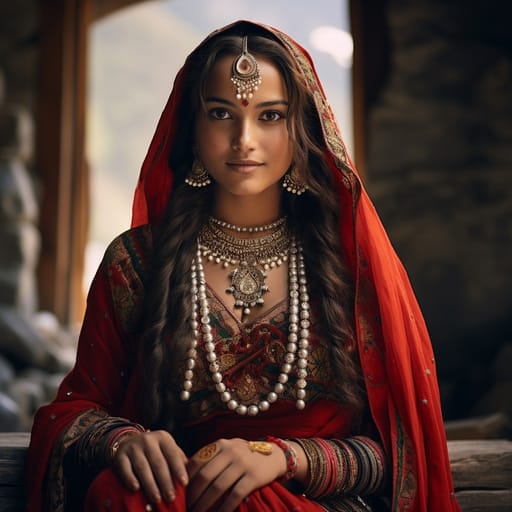
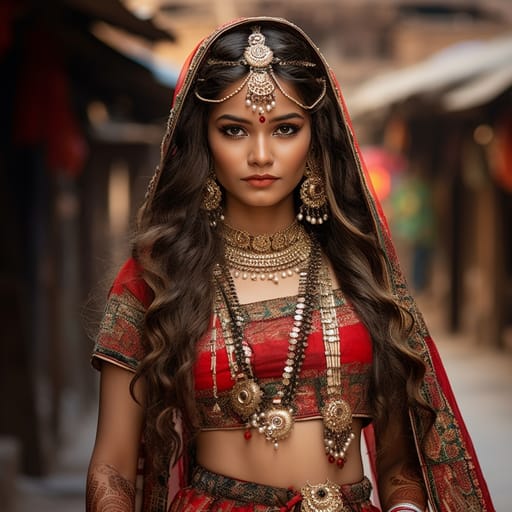
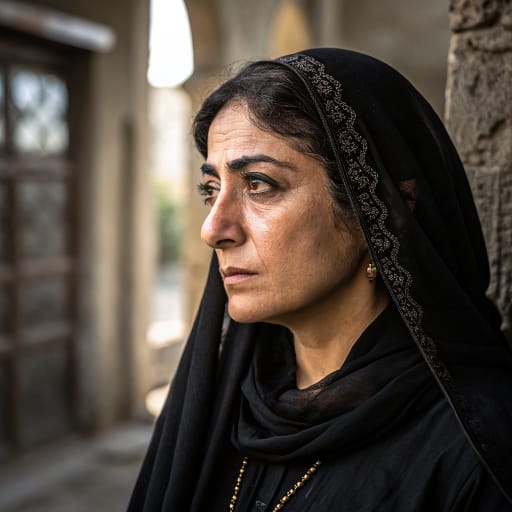
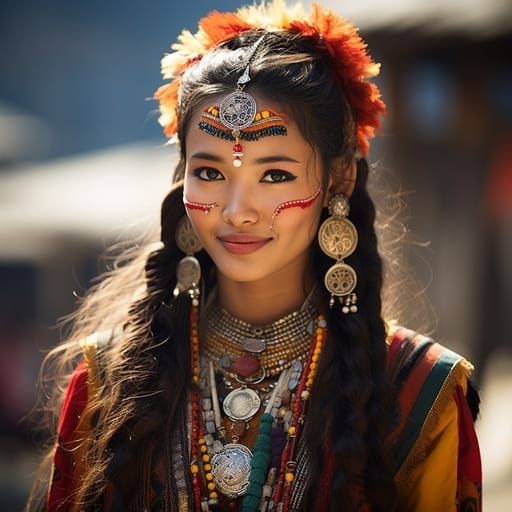
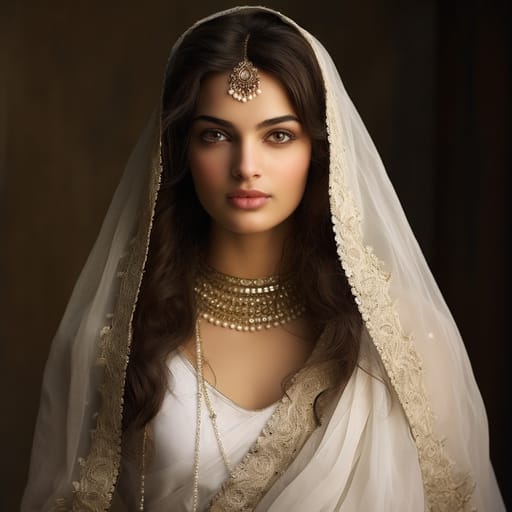
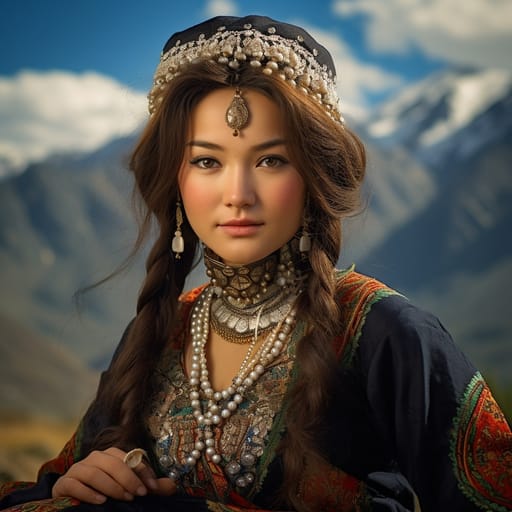
Typical Purum Phenotypes
Reference for AI generation: hair, eyes, skin, facial structure, build
Explore phenotype categories
Structured taxonomy with peer-reviewed scales · 22 anatomical categories
Erotic Poses & Sex Positions
From the pose catalog: 219 named positions with reference skeletons
Frequently asked questions about Purum people
Where is the Purum homeland?
The Purum homeland is Hill villages in Manipur, northeast India. in Southern Asia.
What language do Purum people speak?
Purum people primarily speak Purum (Old Kuki, Kuki-Chin branch of Sino-Tibetan); Meitei and English widely used as second languages..
What religion do Purum people practice?
The predominant religion among Purum people is Predominantly Christian; earlier animist tradition of offerings and sacrifice to village and household spirits..






Make your own Purum images
Five a day, free, no credits to buy. The studio starts from this group's phenotype data, so you can set body type, pose and style and keep the traits accurate.
Start with Purum