Help us get this right
Does this portrait look right for Kiyat?
Nobody has judged this one yet. You would be the first.
Kiyat Erotic
Onon and Kherlen river basins of northeastern Mongolia in the twelfth century; clan lines now live in Mongolia, Inner Mongolia (China), Kazakhstan, Uzbekistan and Karakalpakstan
Middle Mongol originally (Mongolic); today Mongolian (Mongolic) in Mongolia and China, and Kazakh, Uzbek, Karakalpak or Nogai (Turkic) among western clan lines
Tengrism and shamanism originally; Tibetan Buddhism among Mongolian Kiyat, Sunni Islam among Turkic-speaking Kiyat lines
Branch of the Borjigin lineage of the Mongols; sub-branches include the Kiyat-Borjigin (Yesugei and Genghis Khan's house) and the Kiyat-Yurkin (Jurkin)
About Kiyat People
The Kiyat are less a people than a lineage, and for a few decades in the twelfth century they were the lineage that mattered most on the Mongolian steppe: the clan of Yesugei and of his son Temujin, who became Genghis Khan. The name comes from kiyan, a torrent pouring down a mountainside, and Kiyat is simply its plural. The Persian chronicler Rashid al-Din, writing for the Mongol rulers of Iran, made Kiyan one of two ancestors who led the surviving Mongols into the hidden valley of Ergenekon, where they multiplied for generations before melting a way out through an iron mountain. That is legend. Recorded history begins with Khabul Khan, the first ruler of the Khamag Mongol confederation, whose descendants took up the old Kiyat name as a mark of the senior line. Their pasture was the grass and larch country along the Onon and Kherlen rivers in what is now northeastern Mongolia, shared and contested with the Tayichiud, the Merkit and the Tatars. They spoke Middle Mongol and belonged to the wider Borjigin descent group. Yesugei's house called itself Kiyat-Borjigin. The descendants of Khabul's eldest son were the Kiyat-Yurkin, a proud line whose chiefs Temujin executed early in his rise after they refused to follow him against the Tatars. That killing inside the family was the first sign that he meant to replace kinship with loyalty as the basis of power. Once he became Genghis Khan he reserved Borjigin for his own descendants, and the Kiyat name settled on the collateral cousins.
Religion in the founding era was the steppe's own: reverence for Tengri, the eternal blue sky, and for the spirits of mountains and rivers, reached through shamans. Descendants who stayed in Mongolia became Tibetan Buddhists from the sixteenth century on. Those who rode west with the empire became Muslims, and it is in the west that the name had its second life. In the Golden Horde, Mamai, the strongman who ruled through puppet khans and lost to the Russians at Kulikovo in 1380, was a Kiyat. The Glinsky princes of Lithuania later claimed descent from him, a pedigree that would run through Elena Glinskaya to her son Ivan the Terrible. Today Kiyat survives as a clan name among Kazakhs, Uzbeks, Karakalpaks and Nogais, and in Mongolia, where clan names were restored in the 1990s, many families registered as Khiad or Khiad Borjigin, reclaiming an affiliation that had gone unrecorded through seventy years of socialist rule.
Related ethnic groups
Groups that share Kiyat's homeland, region, language, or religious tradition. These are likely candidates for comparative phenotype reference.

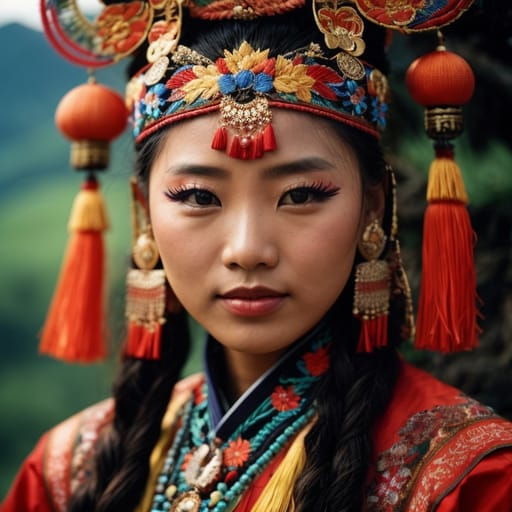
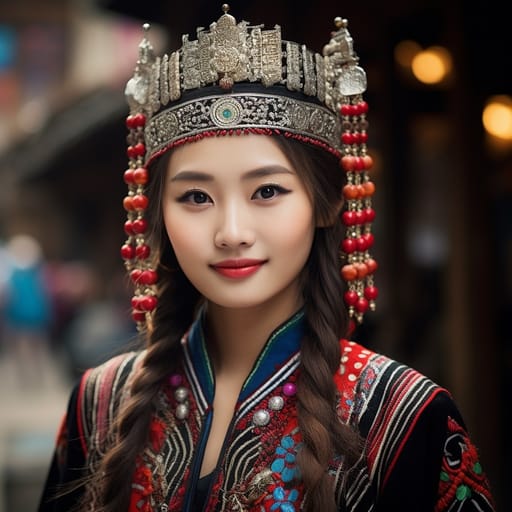



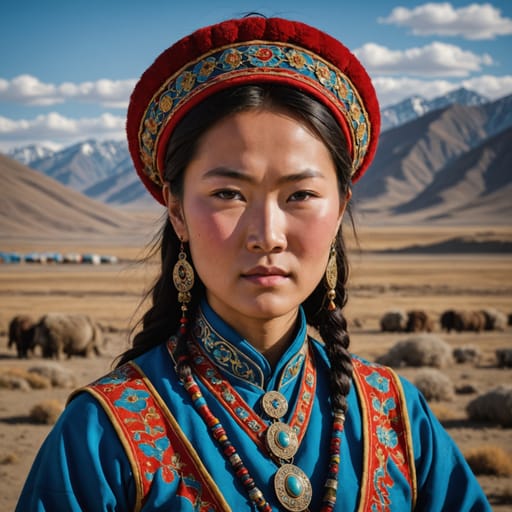

Typical Kiyat Phenotypes
Reference for AI generation: hair, eyes, skin, facial structure, build
Explore phenotype categories
Structured taxonomy with peer-reviewed scales · 22 anatomical categories
Erotic Poses & Sex Positions
From the pose catalog: 219 named positions with reference skeletons
Frequently asked questions about Kiyat people
Where is the Kiyat homeland?
The Kiyat homeland is Onon and Kherlen river basins of northeastern Mongolia in the twelfth century; clan lines now live in Mongolia, Inner Mongolia (China), Kazakhstan, Uzbekistan and Karakalpakstan in East Asia.
What language do Kiyat people speak?
Kiyat people primarily speak Middle Mongol originally (Mongolic); today Mongolian (Mongolic) in Mongolia and China, and Kazakh, Uzbek, Karakalpak or Nogai (Turkic) among western clan lines.
What religion do Kiyat people practice?
The predominant religion among Kiyat people is Tengrism and shamanism originally; Tibetan Buddhism among Mongolian Kiyat, Sunni Islam among Turkic-speaking Kiyat lines.






Make your own Kiyat images
Five a day, free, no credits to buy. The studio starts from this group's phenotype data, so you can set body type, pose and style and keep the traits accurate.
Start with Kiyat