Help us get this right
Does this portrait look right for Khotons?
Nobody has judged this one yet. You would be the first.
Khotons Erotic
Uvs Province in northwestern Mongolia, chiefly Tarialan sum in the Uvs Nuur basin
Oirat Mongolian, Dorbet dialect (Mongolic); a Turkic language was spoken until it was lost
Sunni Islam, loosely observed, long mixed with Mongolian folk practice and largely reduced to inherited custom
Turkic in origin, absorbed into the Oirat Mongol world and administratively grouped with the Dorbet of Uvs
About Khotons People
The Khotons are the answer to a question most people never think to ask about Mongolia: what became of the oasis people the Dzungars carried north. They live in Uvs Province, in the far northwest, concentrated in Tarialan sum on the south side of the Uvs Nuur basin, a high endorheic salt lake ringed by steppe and desert, with summers that turn hot and winters among the coldest anywhere people keep living through them. Their name comes from the Mongolian word for a walled town, and it is less an ethnonym than a description: they were not herders. They were farmers and townspeople from the Turkestan oases, moved onto the steppe under Dzungar rule in the seventeenth and eighteenth centuries and left stranded there when the Qing broke the Dzungar state in the 1750s.
What makes them identifiable is the distance between where they came from and what they became. The Turkic language is gone. Khotons speak the Dorbet dialect of Oirat Mongolian, indistinguishable to an outsider from their neighbors' speech, with only scattered vocabulary carrying the older layer. Islam stayed, but at the thin end of a very long thread: no scholars, no functioning contact with the wider Muslim world across generations, so practice narrowed to what a community can carry without institutions. Circumcision, avoidance of pork, burial of the dead, and marriage inside the group. That last one turned out to matter beyond religion. Khoton endogamy held tightly enough and long enough that geneticists sampling the population in the early 2000s found a profile measurably distinct from the Mongol groups around them, carrying a notably larger share of West Eurasian maternal lineages.
They kept the farming too. Tarialan means cropland, and the Khotons are credited with sustaining irrigated grain cultivation in a province whose economy otherwise ran on animals, a settled inheritance surviving inside a nomadic world. Mongolian censuses count them as an ethnicity in their own right, a population in the thousands rather than the millions, listed alongside the Dorbet and Bayad they live among and have long been administered with. Decades of socialist rule suppressed religious practice across the country, and among Khotons today Muslim identity is often a matter of descent and household custom more than observance, which does not make it any less the thing that keeps them a separate people in their own reckoning.
Related ethnic groups
Groups that share Khotons's homeland, region, language, or religious tradition. These are likely candidates for comparative phenotype reference.
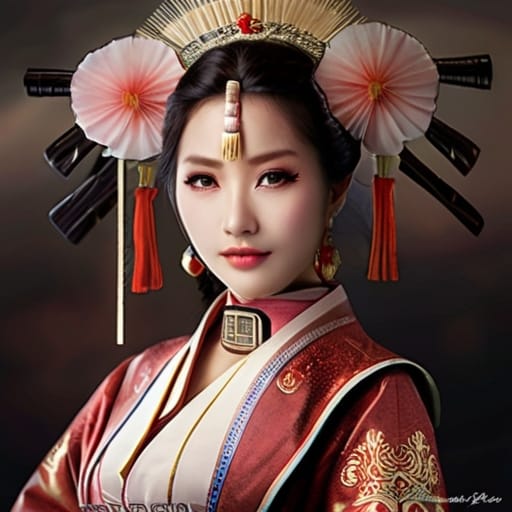
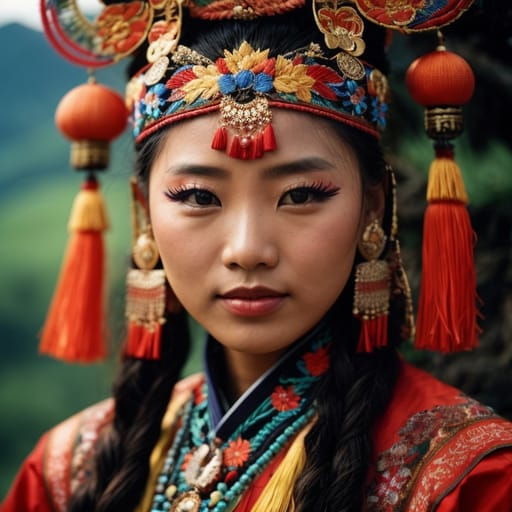
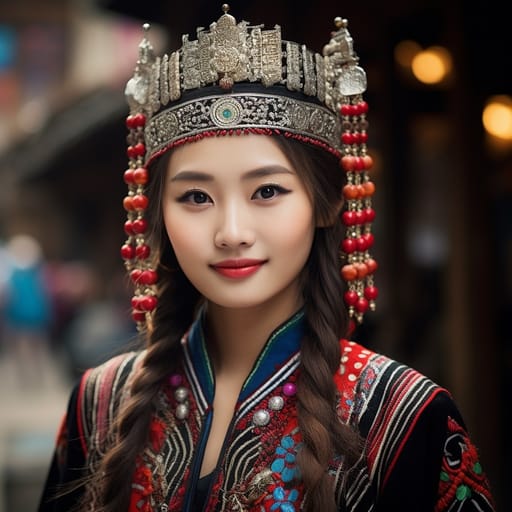
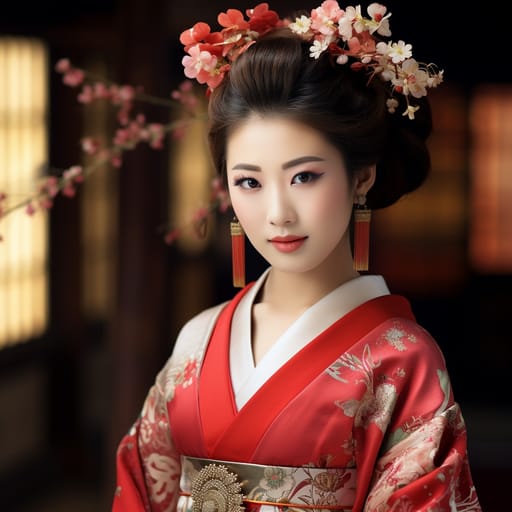
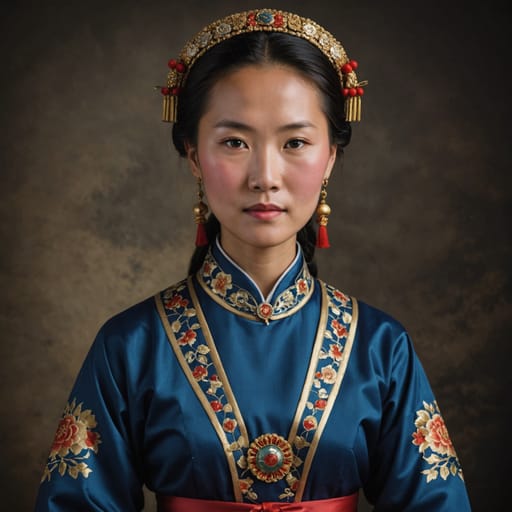
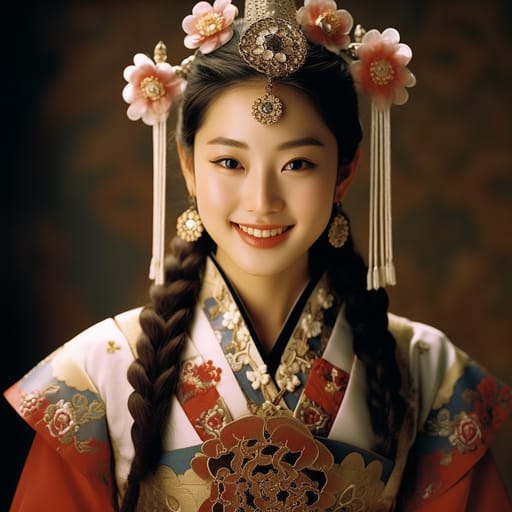
Typical Khotons Phenotypes
Reference for AI generation: hair, eyes, skin, facial structure, build
Khotons Body & Anatomy Reference
East Asian Sinitic / Mongoloid phenotype: anatomy reference for AI nude generation
Khotons Boobs & Breasts
Khotons boobs follow the East Asian Sinitic / Mongoloid profile: small-to-medium cup, modest projection. Areolar diameter is usually 26-36mm, and the coloring is light-pink to medium-brown areolar pigmentation against the light-to-medium skin tone. Breast shape tracks body composition (ectomorph-to-mesomorph, lean frame, mean adult female BMI 20-23), so Khotons breasts tend to be firm and modestly projecting; smaller cup size than the South Asian or Western Asian average. Expect a forward-set shape, not the fuller South Asian or Levantine bust profile.
Khotons Ass & Hips
Khotons ass and hip morphology presents as small-to-medium, modest projection, narrower hip profile, distinctly different from the fuller projected glutes of the West African or Polynesian phenotype. The Khotons pelvic profile shows narrower iliac crests, less gluteal-femoral fat deposition, anchored in the East Asian Sinitic / Mongoloid skeletal pattern. Khotons butt shots in adult AI imagery should render the small-to-medium, modest projection, narrower hip profile silhouette with the overall build (ectomorph-to-mesomorph, lean frame) and the fat distribution typical of the East Asian Sinitic / Mongoloid phenotype.
Khotons Vagina & Pussy
Khotons pussy anatomy typically shows light-pink to medium-brown labial pigmentation, smaller labia minora. Pubic hair is usually straight fine texture, sparser distribution than the South Asian norm. In AI-generated Khotons nudes, labial color should blend into the light to medium skin with a gradual transition, and the hair should keep its straight fine texture.
Khotons Dicks & Penis
Penis reference for Khotons men: regional mean ~11-12cm erect, moderate girth. Coloring: light-brown shaft pigmentation. An accurate Khotons cock in AI imagery matches the surrounding light to medium skin rather than a generic porn default. Circumcision depends on religion and custom, not ancestry.
Khotons Body, Curves & Build
The Khotons figure is generally ectomorph-to-mesomorph, lean frame, with mean adult female BMI 20-23, characteristic of East Asian Sinitic / Mongoloid ancestry. AI image tools tend to flatten regional body types into a few stock shapes; here the Khotons build is kept as its own reference.
Khotons Skin Tone & Hair Texture
Skin: light to medium (Fitzpatrick II-IV). Hair: straight 1A, fine-to-medium, predominantly black. Both are typical of East Asian Sinitic / Mongoloid ancestry. The most common mistake in AI nudes of Khotons women is a body rendered lighter than the face.
Explore phenotype categories
Structured taxonomy with peer-reviewed scales · 22 anatomical categories
Erotic Poses & Sex Positions
From the pose catalog: 219 named positions with reference skeletons
Frequently asked questions about Khotons people
Where is the Khotons homeland?
The Khotons homeland is Uvs Province in northwestern Mongolia, chiefly Tarialan sum in the Uvs Nuur basin in East Asia.
What language do Khotons people speak?
Khotons people primarily speak Oirat Mongolian, Dorbet dialect (Mongolic); a Turkic language was spoken until it was lost.
What religion do Khotons people practice?
The predominant religion among Khotons people is Sunni Islam, loosely observed, long mixed with Mongolian folk practice and largely reduced to inherited custom.






Make your own Khotons images
Five a day, free, no credits to buy. The studio starts from this group's phenotype data, so you can set body type, pose and style and keep the traits accurate.
Start with Khotons