Help us get this right
Does this portrait look right for Ilongot?
Nobody has judged this one yet. You would be the first.
Ilongot Erotic
Upland forests of the southern Sierra Madre and Caraballo Mountains in northern Luzon, Philippines, mainly in Nueva Vizcaya, Quirino and Aurora provinces
Ilongot or Bugkalot (Austronesian, Northern Luzon branch); Ilocano and Tagalog widely used as second languages
Mostly evangelical Protestant Christian since the 1970s, with lingering traditional beliefs in forest spirits and spell magic
Local kin-based groupings known as bertan; counted among the indigenous highland peoples of northern Luzon
About Ilongot People
The Ilongot call themselves Bugkalot, and for much of the twentieth century outsiders knew them for one thing: they were among the last people in the Philippines to take heads. That reputation has lasted about half a century longer than the practice itself. The Bugkalot are upland farmers and hunters in the forested ridges where the Sierra Madre meets the Caraballo Mountains, in the provinces of Nueva Vizcaya, Quirino and Aurora in northern Luzon. They are a small people who stayed in the hills while Spanish missions and American administrators came and went below them, and lowland settlers came and stayed.
Life runs on swidden fields cut from the forest and planted with rice and root crops. Hunting wild pig and deer with dogs and fishing the rivers add to it. Households gather in small settlements linked by kin groupings, and a husband has traditionally moved in with his wife's family. Their language, also called Ilongot or Bugkalot, belongs to the Northern Luzon branch of the Austronesian family. It is a separate language from the Ilocano and Tagalog spoken around them, so many people speak one or both of those as well.
Much of what outsiders know about Bugkalot inner life comes from the anthropologists Michelle and Renato Rosaldo, who lived among them in the late 1960s and 1970s. They described a moral vocabulary built around liget, a charged mix of energy, anger and passion, balanced by beya, the knowledge and restraint that come with age. Headhunting drew on both. Young men felt they had to take a head before they could settle into adulthood and marriage. Older men described the rage that comes with grief as a weight they could throw off only by killing someone and tossing the severed head away. A man who had killed earned the right to wear red hornbill earrings. Words mattered as much as violence: bridewealth and disputes were settled through formal oratory full of veiled, indirect speech.
Headhunting ended in the 1970s under two pressures at once. Martial law under Ferdinand Marcos brought the threat of the firing squad for anyone who took a head, and evangelical Protestant missions won a wave of converts. Renato Rosaldo later wrote that many turned to the new faith partly as another way to carry grief. Christianity now dominates, though older ideas about forest spirits and spoken spells for gardens and hunts have not disappeared. The bigger fights today are over land. Logging, settlers and development projects have pushed into Bugkalot forest, and communities have filed ancestral domain claims to protect what remains.
Related ethnic groups
Groups that share Ilongot's homeland, region, language, or religious tradition. These are likely candidates for comparative phenotype reference.
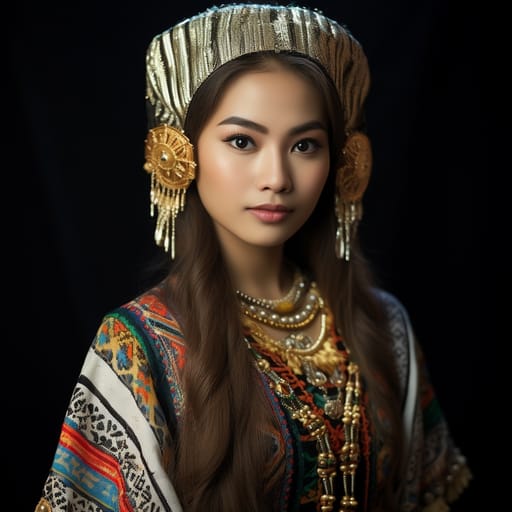
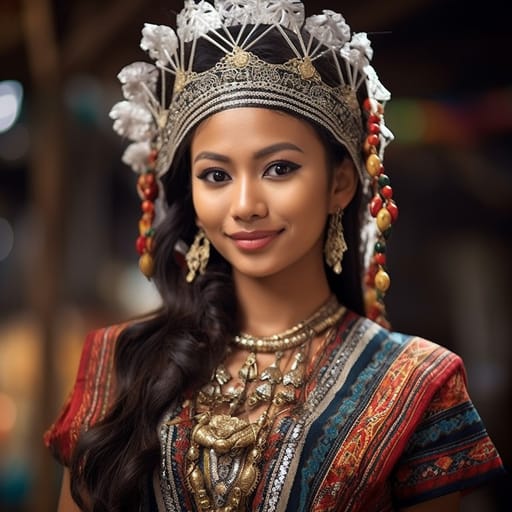
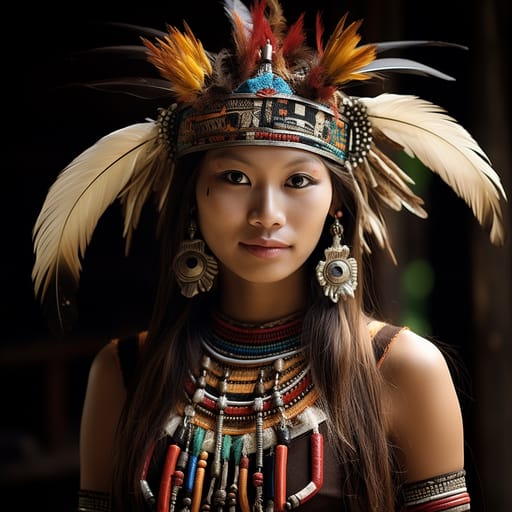
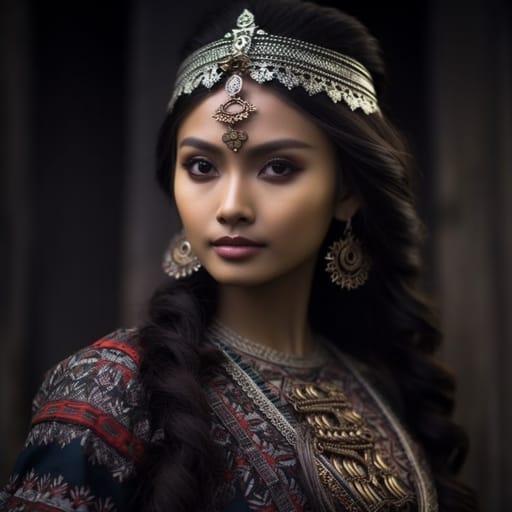
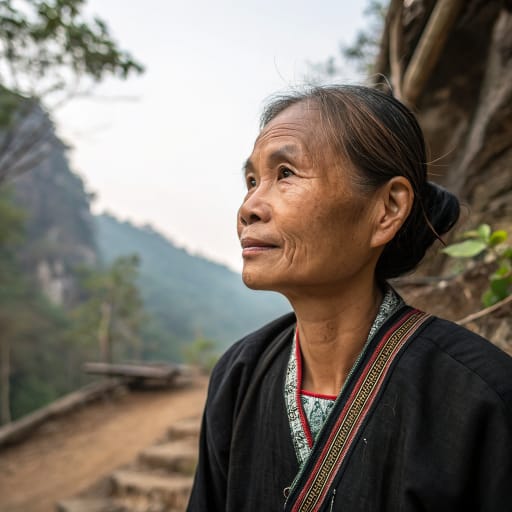
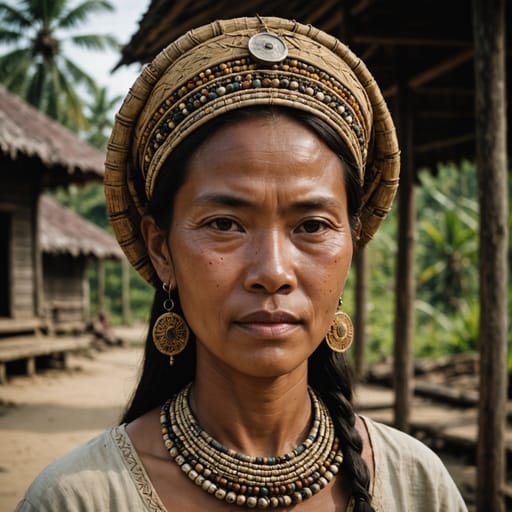
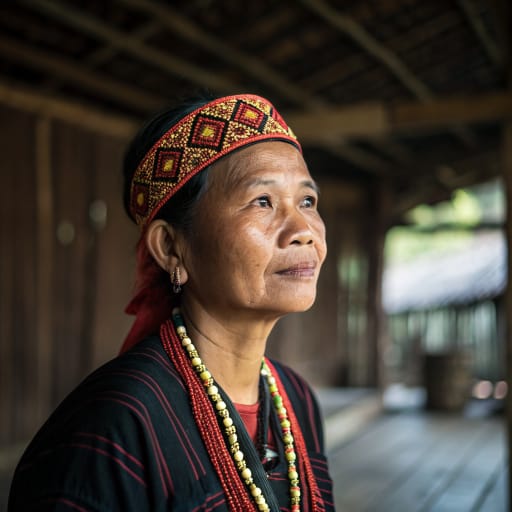
Typical Ilongot Phenotypes
Reference for AI generation: hair, eyes, skin, facial structure, build
Ilongot Body & Anatomy Reference
Per-feature anatomical profile for AI nude generation: Southeast Asian Austronesian / Austroasiatic phenotype
Ilongot Boobs & Breasts
Ilongot boobs follow the Southeast Asian Austronesian / Austroasiatic profile: small-to-medium cup, modest projection. Areolar diameter is usually 26-38mm, and the coloring is medium-brown to dark-brown areolar pigmentation against the tan-to-medium-brown skin tone. Breast shape tracks body composition (ectomorph, petite frame, mean adult female BMI 20-23), so Ilongot breasts tend to be firm, modest projection. Expect a forward-set shape, not the fuller South Asian or Polynesian bust.
Ilongot Ass & Hips
Ilongot ass and hip morphology presents as small-to-medium, modest projection, narrower hip profile, distinctly different from the fuller glutes of the Pacific Islander phenotype. The Ilongot pelvic profile shows narrow-to-medium iliac crests, anchored in the Southeast Asian Austronesian / Austroasiatic skeletal pattern. Ilongot butt shots in adult AI imagery should render the small-to-medium, modest projection, narrower hip profile silhouette with the overall build (ectomorph, petite frame) and the fat distribution typical of the Southeast Asian Austronesian / Austroasiatic phenotype.
Ilongot Vagina & Pussy
Ilongot pussy anatomy typically shows medium-brown to dark-brown labial pigmentation. Pubic hair is usually straight-to-wavy fine-to-medium texture. In AI-generated Ilongot nudes, labial color should blend into the tan to medium-brown skin with a gradual transition, and the hair should keep its straight-to-wavy fine-to-medium texture.
Ilongot Dicks & Penis
Penis reference for Ilongot men: regional mean ~11cm erect, moderate girth. Coloring: medium-brown shaft pigmentation. An accurate Ilongot cock in AI imagery matches the surrounding tan to medium-brown skin rather than a generic porn default. Circumcision depends on religion and custom, not ancestry.
Ilongot Body, Curves & Build
The Ilongot figure is generally ectomorph, petite frame, with mean adult female BMI 20-23, characteristic of Southeast Asian Austronesian / Austroasiatic ancestry. AI image tools tend to flatten regional body types into a few stock shapes; here the Ilongot build is kept as its own reference.
Ilongot Skin Tone & Hair Texture
Skin: tan to medium-brown (Fitzpatrick III-V). Hair: straight-to-wavy 1A-2A, dark-brown to black. Both are typical of Southeast Asian Austronesian / Austroasiatic ancestry. The most common mistake in AI nudes of Ilongot women is a body rendered lighter than the face.
Explore phenotype categories
Structured taxonomy with peer-reviewed scales · 22 anatomical categories
Erotic Poses & Sex Positions
From the pose catalog: 219 named positions with reference skeletons
Frequently asked questions about Ilongot people
Where is the Ilongot homeland?
The Ilongot homeland is Upland forests of the southern Sierra Madre and Caraballo Mountains in northern Luzon, Philippines, mainly in Nueva Vizcaya, Quirino and Aurora provinces in Southeast Asia.
What language do Ilongot people speak?
Ilongot people primarily speak Ilongot or Bugkalot (Austronesian, Northern Luzon branch); Ilocano and Tagalog widely used as second languages.
What religion do Ilongot people practice?
The predominant religion among Ilongot people is Mostly evangelical Protestant Christian since the 1970s, with lingering traditional beliefs in forest spirits and spell magic.






Make your own Ilongot images
Five a day, free, no credits to buy. The studio starts from this group's phenotype data, so you can set body type, pose and style and keep the traits accurate.
Start with Ilongot