No portrait yet
Ngái Erotic
Northeastern Vietnam, chiefly Quảng Ninh, Bắc Giang, Lạng Sơn, Thái Nguyên, Cao Bằng and Bắc Kạn provinces, including the Gulf of Tonkin coast
Hakka (Sinitic, Sino-Tibetan), with widespread Vietnamese and, locally, Cantonese, Tày and Nùng
Ancestor veneration and Chinese popular religion, with Mahayana Buddhist and Taoist elements
Hakka branch of the Han Chinese; local branches recorded as Hắc Cá, Hẹ, Lầu Mần, Xín and the boat-dwelling Đản; closely tied to, and often reclassified as, the Hoa
About Ngái People
The Ngái are named after a pronoun. In Hakka, ngai is how you say "I," and across southern China and northern Vietnam that one syllable became the tag neighbors used for the people who talked that way. So the Ngái are Hakka at root: descendants of Chinese migrants who moved into the northeastern uplands and the Gulf of Tonkin coast over several centuries, some farming, some working the coal seams and ports of what is now Quảng Ninh, some running shops and boats. Vietnam counts them among its 54 recognized ethnic groups, and they are one of the smallest on that list, numbering in the low thousands, scattered thinly through Quảng Ninh, Bắc Giang, Lạng Sơn, Thái Nguyên, Cao Bằng and Bắc Kạn.
That smallness has a date attached to it. When relations between Hanoi and Beijing broke down in 1978 and 1979, ethnic Chinese communities in the north were pushed out or left under pressure, by land into Guangxi and by boat into the South China Sea. Ngái villages emptied. Many who stayed stopped declaring themselves Ngái at all, registering instead as Hoa or simply as Kinh, which is why the official count says as much about paperwork and caution as about ancestry. Vietnamese ethnographers still record local branches under the label: Hắc Cá and Hẹ, both Hakka names, along with Lầu Mần, Xín, and the Đản, boat-dwelling fishing families of the coastal bays who lived aboard for generations.
What holds a Ngái household together is the patriline and the altar on the back wall. Ancestors are fed at Lunar New Year and on death anniversaries, kitchen and door gods keep their places, and Buddhist and Taoist material is folded into daily practice without much concern for the seam. Burial is often done twice: the body first, then, after some years, the cleaned bones lifted into a ceramic jar and settled in a permanent site chosen for it, a Hakka habit carried south intact. The language is the part slipping fastest. Older people still use Hakka at home and sometimes Cantonese in the market towns, but the young grow up in Vietnamese, and the pronoun that gave the group its name is heard a little less each decade.
Related ethnic groups
Groups that share Ngái's homeland, region, language, or religious tradition. These are likely candidates for comparative phenotype reference.
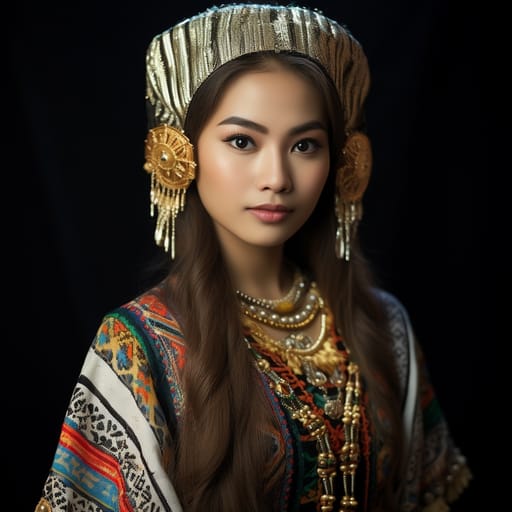
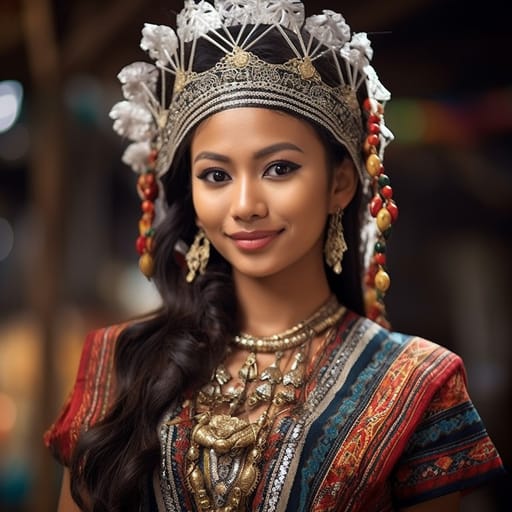
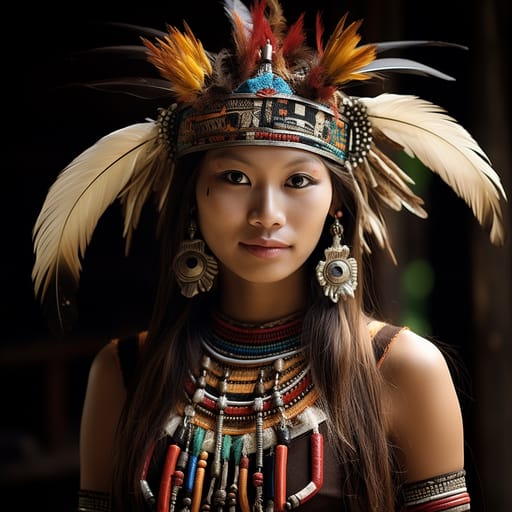
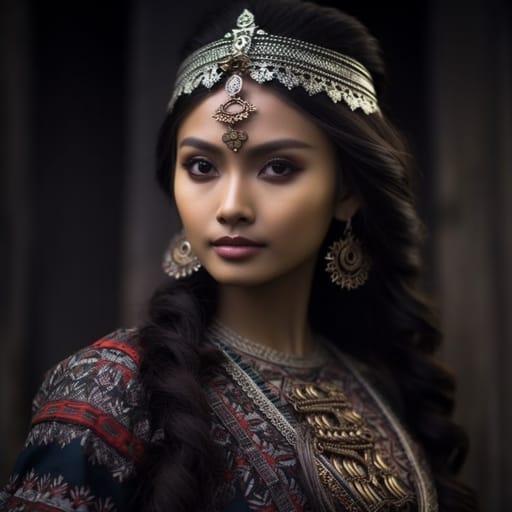
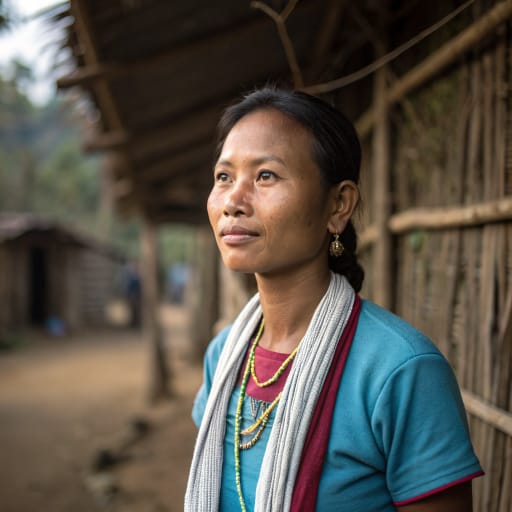
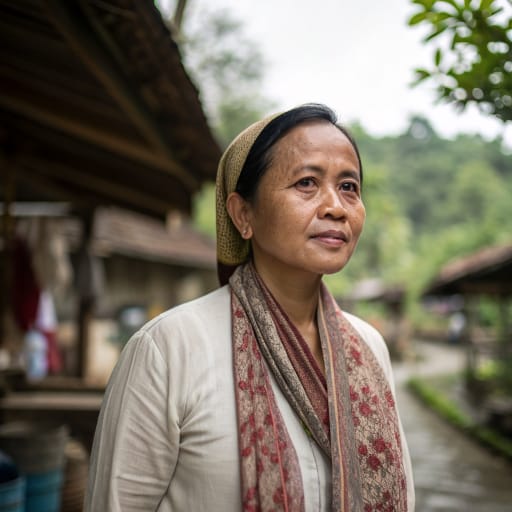
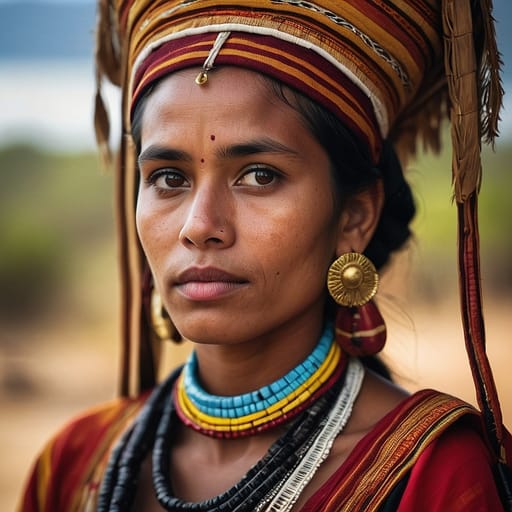
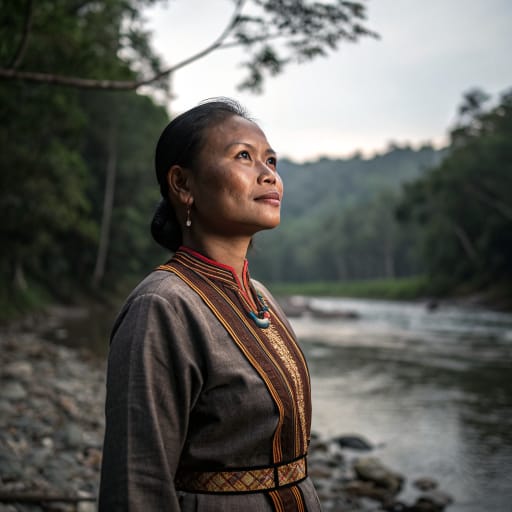
Typical Ngái Phenotypes
Reference for AI generation: hair, eyes, skin, facial structure, build
Ngái Body & Anatomy Reference
Southeast Asian Austronesian / Austroasiatic phenotype: anatomy reference for AI nude generation
Ngái Boobs & Breasts
Bust reference for Ngái women: small-to-medium cup, modest projection, which is typical of Southeast Asian Austronesian / Austroasiatic ancestry. Areolas measure about 26-38mm across, with medium-brown to dark-brown pigmentation. Body type (ectomorph, petite frame) shapes the bust as well, so Ngái tits are usually firm, modest projection. In AI imagery, keep the forward-set shape rather than drifting toward the fuller South Asian or Polynesian bust.
Ngái Ass & Hips
The Ngái ass is typically small-to-medium, modest projection, narrower hip profile, which sets it apart from the fuller glutes of the Pacific Islander phenotype. Underneath, the pelvis shows narrow-to-medium iliac crests, part of the Southeast Asian Austronesian / Austroasiatic skeletal pattern. For Ngái butt pics and AI renders, match that silhouette and the overall build (ectomorph, petite frame).
Ngái Vagina & Pussy
Ngái pussy and vulvar anatomy presents medium-brown to dark-brown labial pigmentation, consistent with the Southeast Asian Austronesian / Austroasiatic phenotype's pigmentation pattern. Ngái pubic hair is typically straight-to-wavy fine-to-medium texture, in the inverted-triangle pattern. For anatomically accurate Ngái pussy renders the labial coloration should match the surrounding tan to medium-brown skin tone with a continuous gradient, and the hair should keep its straight-to-wavy fine-to-medium texture.
Ngái Dicks & Penis
Ngái dicks follow the Southeast Asian Austronesian / Austroasiatic reference data: regional mean ~11cm erect; moderate girth; medium-brown shaft pigmentation. Shaft color should track the tan to medium-brown skin tone with a smooth change toward the glans, and Ngái pubic hair keeps its straight-to-wavy fine-to-medium texture.
Ngái Body, Curves & Build
Ngái body type and overall build presents as ectomorph, petite frame, with mean adult female BMI 20-23: the characteristic Southeast Asian Austronesian / Austroasiatic habitus. Ngái curves and proportions should keep the regional skeletal frame (height, shoulder-to-hip ratio, limb proportions) rather than a generic mesomorph default.
Ngái Skin Tone & Hair Texture
Ngái skin sits in the tan to medium-brown (Fitzpatrick III-V) band. Hair is typically straight-to-wavy 1A-2A, dark-brown to black, in keeping with the Southeast Asian Austronesian / Austroasiatic phenotype. In nude renders the skin should stay one even tone from face to body, and body, pubic and head hair should match.
Explore phenotype categories
Structured taxonomy with peer-reviewed scales · 22 anatomical categories
Erotic Poses & Sex Positions
From the pose catalog: 219 named positions with reference skeletons
Frequently asked questions about Ngái people
Where is the Ngái homeland?
The Ngái homeland is Northeastern Vietnam, chiefly Quảng Ninh, Bắc Giang, Lạng Sơn, Thái Nguyên, Cao Bằng and Bắc Kạn provinces, including the Gulf of Tonkin coast in Southeast Asia.
What language do Ngái people speak?
Ngái people primarily speak Hakka (Sinitic, Sino-Tibetan), with widespread Vietnamese and, locally, Cantonese, Tày and Nùng.
What religion do Ngái people practice?
The predominant religion among Ngái people is Ancestor veneration and Chinese popular religion, with Mahayana Buddhist and Taoist elements.






Make your own Ngái images
Five a day, free, no credits to buy. The studio starts from this group's phenotype data, so you can set body type, pose and style and keep the traits accurate.
Start with Ngái