Help us get this right
Does this portrait look right for Bantenese?
Nobody has judged this one yet. You would be the first.
Bantenese Erotic
Banten province at the western tip of Java, Indonesia, including Serang, Cilegon, Pandeglang, Lebak and Tangerang
Banten Sundanese, Basa Sunda Banten (Austronesian, Sundanese), a dialect without formal speech levels; Banten Javanese along the north coast (Austronesian); Indonesian (Austronesian, Malayic)
Sunni Islam, with strong pesantren and Sufi order traditions
Sub-group of the Sundanese, set apart from the highland Priangan Sundanese; part of the wider Austronesian peoples of Java
About Bantenese People
Ask a Sundanese speaker from Bandung about the way people talk in Banten and you may hear the word kasar, coarse. Bantenese hear it differently. Their Sundanese never took on the elaborate speech levels that highland Priangan absorbed from the Javanese court of Mataram, so a farmer in Pandeglang addresses an elder or an official with much the same words used for a neighbor. That plainness is part of what sets them apart. It fits a wider sense of being Sundanese on their own terms, shaped less by highland aristocracy than by a coastal Islamic sultanate. That sultanate took shape in the 1520s, when Muslim forces tied to Cirebon and Demak seized the pepper port of Banten from the Sundanese kingdom of Pajajaran. For the next century and a half it was among the busiest harbors in the archipelago, drawing Chinese, Gujarati, Arab, Portuguese, English and Dutch traders. The first Dutch fleet to reach Java anchored there in 1596. Sultan Ageng Tirtayasa resisted the Dutch East India Company until the early 1680s, when his own son called in the Company against him and won. After that Banten was independent in name only. The Dutch abolished the sultanate in the early nineteenth century, yet the region stayed restless. In 1888, five years after the Krakatoa eruption and tsunami wrecked the western coast, hajis and religious teachers led an armed uprising in Cilegon. Banten became a province separate from West Java only in 2000.
Most Bantenese are Sunni Muslims, and faith runs through public life. The province is thick with pesantren, Islamic boarding schools whose kiai command deep loyalty. Beside the kiai stands the jawara, a local strongman trained in pencak silat, often pictured in black with a golok at the hip. Debus grows from the same ground: performers linked to Sufi orders stab at themselves with the iron awl that gives the art its name or draw machetes across their skin. They treat the absence of wounds as a matter of faith, not a stunt. Pilgrims come to the Great Mosque of Old Banten, with its lighthouse-like minaret, and to the sultans' tombs beside it. Along the north coast around Serang and Cilegon many people speak a Javanese dialect, a legacy of the sultanate's founders. In the hills of Lebak, the Baduy hold to an older Sundanese faith and keep outsiders at arm's length. Steel plants in Cilegon and Jakarta's spreading suburbs in Tangerang now sit a short drive from villages where the kiai still carry real weight.
Related ethnic groups
Groups that share Bantenese's homeland, region, language, or religious tradition. These are likely candidates for comparative phenotype reference.
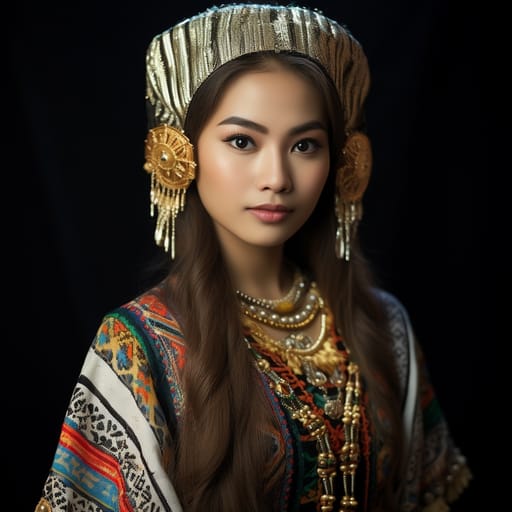
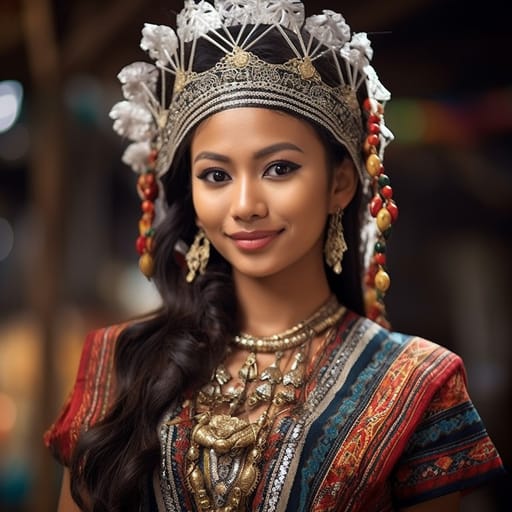
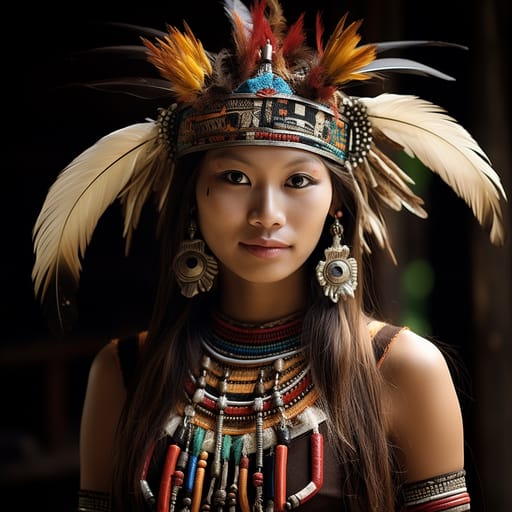
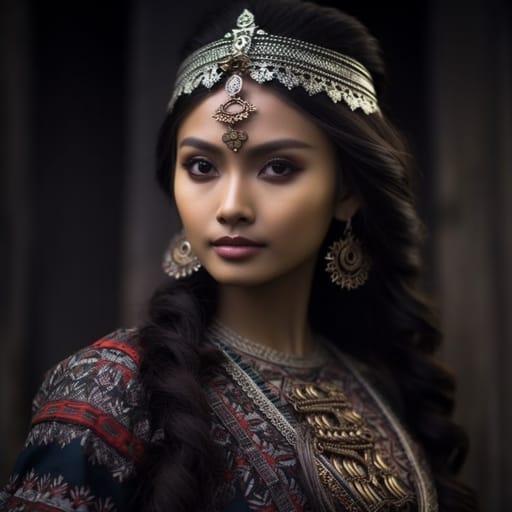
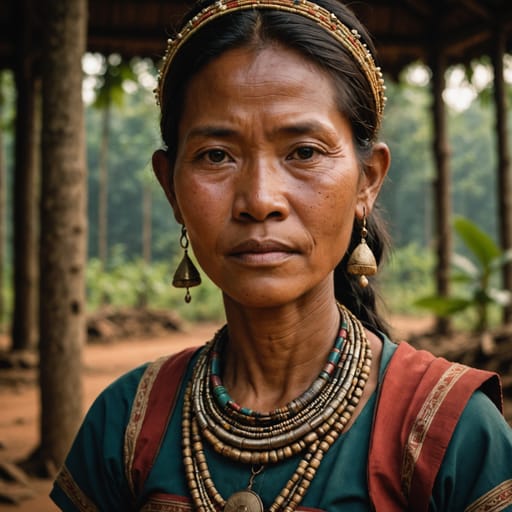
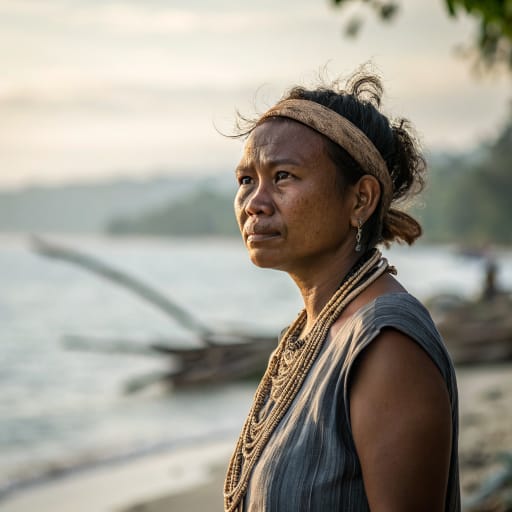
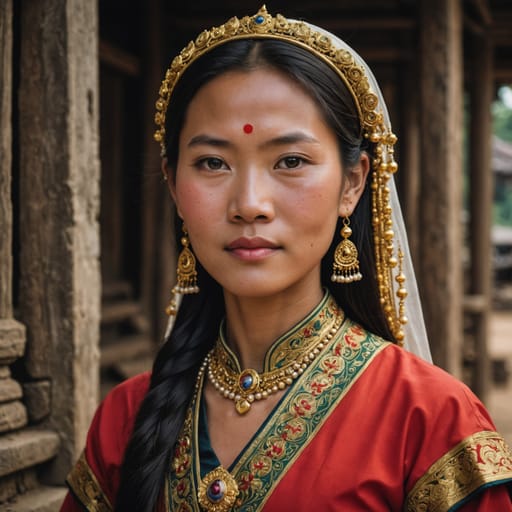
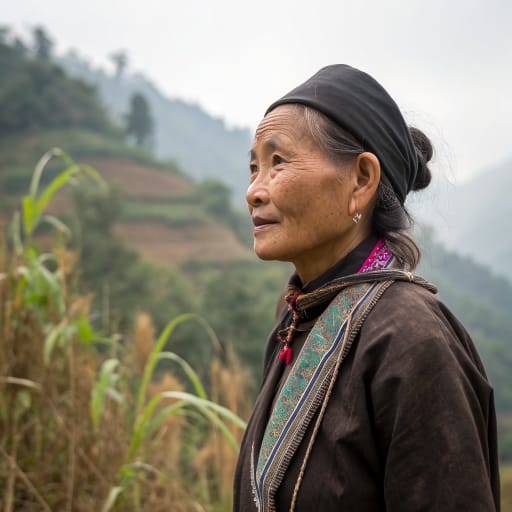
Typical Bantenese Phenotypes
Reference for AI generation: hair, eyes, skin, facial structure, build
Bantenese Body & Anatomy Reference
Anatomy by feature, Southeast Asian Austronesian / Austroasiatic phenotype
Bantenese Boobs & Breasts
Bust reference for Bantenese women: small-to-medium cup, modest projection, which is typical of Southeast Asian Austronesian / Austroasiatic ancestry. Areolas measure about 26-38mm across, with medium-brown to dark-brown pigmentation. Body type (ectomorph, petite frame) shapes the bust as well, so Bantenese tits are usually firm, modest projection. In AI imagery, keep the forward-set shape rather than drifting toward the fuller South Asian or Polynesian bust.
Bantenese Ass & Hips
The Bantenese ass is typically small-to-medium, modest projection, narrower hip profile, which sets it apart from the fuller glutes of the Pacific Islander phenotype. Underneath, the pelvis shows narrow-to-medium iliac crests, part of the Southeast Asian Austronesian / Austroasiatic skeletal pattern. For Bantenese butt pics and AI renders, match that silhouette and the overall build (ectomorph, petite frame).
Bantenese Vagina & Pussy
Bantenese pussy and vulvar anatomy presents medium-brown to dark-brown labial pigmentation, consistent with the Southeast Asian Austronesian / Austroasiatic phenotype's pigmentation pattern. Bantenese pubic hair is typically straight-to-wavy fine-to-medium texture, in the inverted-triangle pattern. For anatomically accurate Bantenese pussy renders the labial coloration should match the surrounding tan to medium-brown skin tone with a continuous gradient, and the hair should keep its straight-to-wavy fine-to-medium texture.
Bantenese Dicks & Penis
Bantenese dicks follow the Southeast Asian Austronesian / Austroasiatic reference data: regional mean ~11cm erect; moderate girth; medium-brown shaft pigmentation. Shaft color should track the tan to medium-brown skin tone with a smooth change toward the glans, and Bantenese pubic hair keeps its straight-to-wavy fine-to-medium texture.
Bantenese Body, Curves & Build
Bantenese body type and overall build presents as ectomorph, petite frame, with mean adult female BMI 20-23: the characteristic Southeast Asian Austronesian / Austroasiatic habitus. Bantenese curves and proportions should keep the regional skeletal frame (height, shoulder-to-hip ratio, limb proportions) rather than a generic mesomorph default.
Bantenese Skin Tone & Hair Texture
Bantenese skin sits in the tan to medium-brown (Fitzpatrick III-V) band. Hair is typically straight-to-wavy 1A-2A, dark-brown to black, in keeping with the Southeast Asian Austronesian / Austroasiatic phenotype. In nude renders the skin should stay one even tone from face to body, and body, pubic and head hair should match.
Explore phenotype categories
Structured taxonomy with peer-reviewed scales · 22 anatomical categories
Erotic Poses & Sex Positions
From the pose catalog: 219 named positions with reference skeletons
Frequently asked questions about Bantenese people
Where is the Bantenese homeland?
The Bantenese homeland is Banten province at the western tip of Java, Indonesia, including Serang, Cilegon, Pandeglang, Lebak and Tangerang in Southeast Asia.
What language do Bantenese people speak?
Bantenese people primarily speak Banten Sundanese, Basa Sunda Banten (Austronesian, Sundanese), a dialect without formal speech levels; Banten Javanese along the north coast (Austronesian); Indonesian (Austronesian, Malayic).
What religion do Bantenese people practice?
The predominant religion among Bantenese people is Sunni Islam, with strong pesantren and Sufi order traditions.






Make your own Bantenese images
Five a day, free, no credits to buy. The studio starts from this group's phenotype data, so you can set body type, pose and style and keep the traits accurate.
Start with Bantenese