Help us get this right
Does this portrait look right for Lun Bawang?
Nobody has judged this one yet. You would be the first.
Lun Bawang Erotic
Highland interior of northern Borneo: Lawas, Limbang and Ba' Kelalan in Sarawak, Malaysia; Temburong, Brunei; the Sipitang interior of Sabah; and the Krayan highlands of North Kalimantan, Indonesia.
Lun Bawang, also called Lundayeh (Austronesian, Malayo-Polynesian, Dayic or Apo Duat branch)
Overwhelmingly Christian, mostly Protestant, centered on the Sidang Injil Borneo church
Part of the wider Apo Duat or Dayic grouping alongside the Kelabit, Sa'ban and Tring; known as Lun Dayeh in Indonesia and parts of Sabah
About Lun Bawang People
The Lun Bawang name themselves without ornament: lun is people, bawang is the land or the settled place, so the ethnonym means roughly the people of this country. Across the Indonesian border in the Krayan highlands, and among some communities in Sabah, the same people are known as Lun Dayeh, people of the interior. Until the middle of the twentieth century colonial officers in Sarawak filed them under Murut, a label belonging to a different people in Sabah, and getting that name struck from the record was itself a small act of self-definition. Their homeland is the highland interior where four jurisdictions meet: the Trusan and Lawas valleys and Ba' Kelalan in northern Sarawak, Temburong in Brunei, the Sipitang interior in Sabah, and Krayan in North Kalimantan. Their language belongs to the Dayic or Apo Duat branch of Austronesian, close enough to Kelabit that speakers can work their way through a conversation.
What sets them apart from most of interior Borneo is how they farm. Instead of clearing hill rice from the forest, they built irrigated wet paddies in the highland valleys and worked them with water buffalo, and the fine fragrant Adan rice from Ba' Kelalan and Krayan still trades on that reputation. They boiled salt from mountain springs and carried it along footpaths that ignored the border long before anyone drew one. Their ancestors moved stone: burial urns, standing stones, carved rock and earth ditches are scattered through the uplands, most of them raised to mark a death. Two events reshaped the community in living memory. The first was the arrival of the Borneo Evangelical Mission in 1928 and the conversions that followed, which ended the older ritual life and the rice beer that went with it. The Sidang Injil Borneo church is now the center of Lun Bawang social life, and the choral singing and bamboo bands that came out of it are a genuine local art form rather than an import. The second was the war, when highland men guided and fought alongside Allied operatives dropped into the interior against the Japanese. Today most Lun Bawang live and work in towns like Lawas, Miri, Kota Kinabalu and Brunei, returning upriver for the Irau feasts that keep the valleys populated for a week at a time.
Related ethnic groups
Groups that share Lun Bawang's homeland, region, language, or religious tradition. These are likely candidates for comparative phenotype reference.
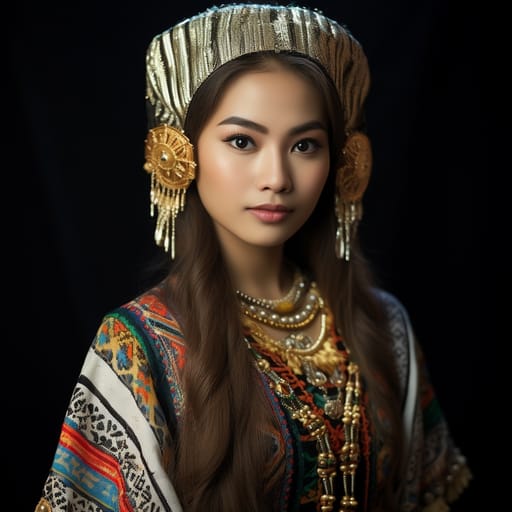
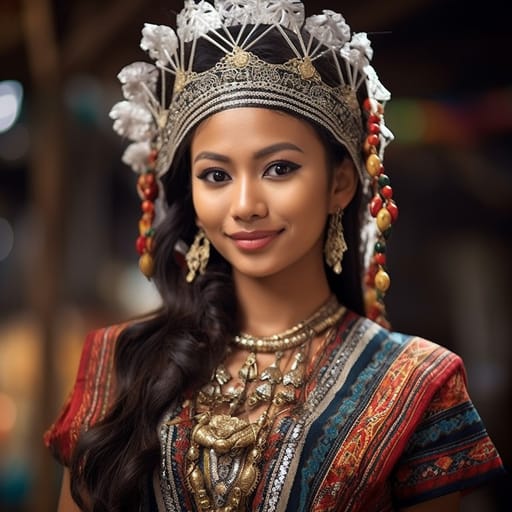
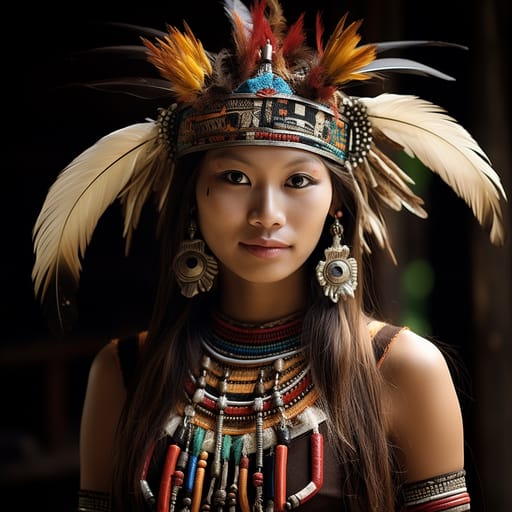
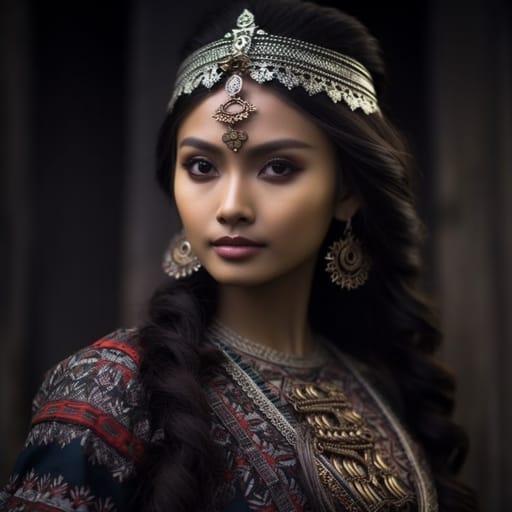
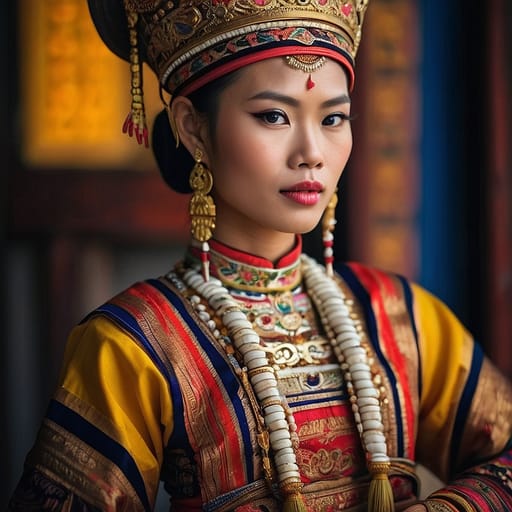
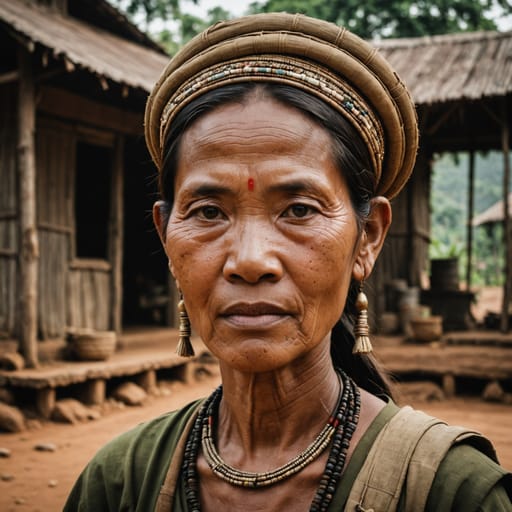
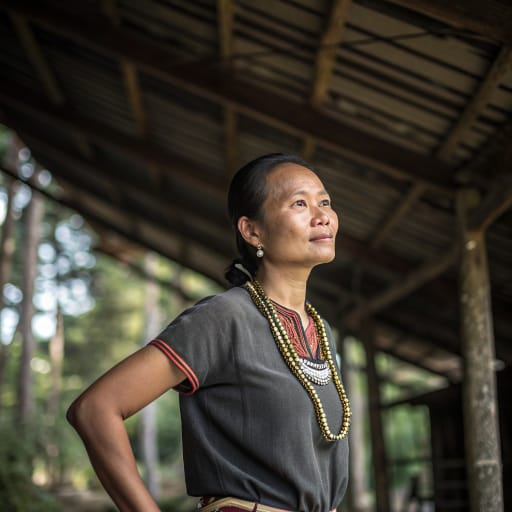

Typical Lun Bawang Phenotypes
Reference for AI generation: hair, eyes, skin, facial structure, build
Lun Bawang Body & Anatomy Reference
Southeast Asian Austronesian / Austroasiatic phenotype: anatomy reference for AI nude generation
Lun Bawang Boobs & Breasts
The typical Lun Bawang bust is small-to-medium cup, modest projection, in line with the wider Southeast Asian Austronesian / Austroasiatic pattern. Areolas usually fall in the 26-38mm range, with medium-brown to dark-brown areolar pigmentation against the tan-to-medium-brown skin tone. Compared with the fuller South Asian or Polynesian bust, Lun Bawang breasts sit forward and are generally firm, modest projection. A faithful AI render of Lun Bawang tits keeps that shape and areola size.
Lun Bawang Ass & Hips
Butt shape among Lun Bawang women: small-to-medium, modest projection, narrower hip profile, over narrow-to-medium iliac crests. This follows Southeast Asian Austronesian / Austroasiatic ancestry and looks quite unlike the fuller glutes of the Pacific Islander phenotype. An accurate Lun Bawang ass in adult AI imagery keeps both the silhouette and the overall build (ectomorph, petite frame) instead of a generic average.
Lun Bawang Vagina & Pussy
Vulvar anatomy among Lun Bawang women: medium-brown to dark-brown labial pigmentation. Pubic hair tends to be straight-to-wavy fine-to-medium texture, in the usual inverted-triangle pattern. Both follow Southeast Asian Austronesian / Austroasiatic pigmentation, which is why Lun Bawang pussy renders should not fall back on a pale, sparse Western template.
Lun Bawang Dicks & Penis
The Lun Bawang cock profile, from Southeast Asian Austronesian / Austroasiatic anthropometric data: regional mean ~11cm erect; moderate girth; medium-brown shaft pigmentation. Pubic hair has a straight-to-wavy fine-to-medium texture and forms the usual inverted-V pattern. Whether Lun Bawang men are circumcised follows religious and cultural practice rather than phenotype.
Lun Bawang Body, Curves & Build
Build and curves among Lun Bawang women follow the Southeast Asian Austronesian / Austroasiatic pattern: ectomorph, petite frame, mean adult female BMI 20-23. Proportions matter as much as skin tone, so Lun Bawang figures should keep their regional height and limb ratios.
Lun Bawang Skin Tone & Hair Texture
The Lun Bawang skin range is tan to medium-brown (Fitzpatrick III-V), and hair tends to be straight-to-wavy 1A-2A, dark-brown to black. That combination marks the Southeast Asian Austronesian / Austroasiatic phenotype, and skin tone is the trait AI generators most often get wrong for Lun Bawang women.
Explore phenotype categories
Structured taxonomy with peer-reviewed scales · 22 anatomical categories
Erotic Poses & Sex Positions
From the pose catalog: 219 named positions with reference skeletons
Frequently asked questions about Lun Bawang people
Where is the Lun Bawang homeland?
The Lun Bawang homeland is Highland interior of northern Borneo: Lawas, Limbang and Ba' Kelalan in Sarawak, Malaysia; Temburong, Brunei; the Sipitang interior of Sabah; and the Krayan highlands of North Kalimantan, Indonesia. in Southeast Asia.
What language do Lun Bawang people speak?
Lun Bawang people primarily speak Lun Bawang, also called Lundayeh (Austronesian, Malayo-Polynesian, Dayic or Apo Duat branch).
What religion do Lun Bawang people practice?
The predominant religion among Lun Bawang people is Overwhelmingly Christian, mostly Protestant, centered on the Sidang Injil Borneo church.






Make your own Lun Bawang images
Five a day, free, no credits to buy. The studio starts from this group's phenotype data, so you can set body type, pose and style and keep the traits accurate.
Start with Lun Bawang