Help us get this right
Does this portrait look right for Kwijau?
Nobody has judged this one yet. You would be the first.
Kwijau Erotic
The Keningau area of Sabah's interior, Malaysia (northern Borneo)
Kuijau (Austronesian, Dusunic branch); Malay widely used as a second language
Mostly Christian (Catholic and Protestant), with a Muslim minority and traces of traditional rice and ancestral spirit beliefs
A Dusunic-speaking subgroup of the Kadazan-Dusun peoples of Sabah, officially counted within the wider Kadazan-Dusun and Murut (KDM) communities
About Kwijau People
The Kwijau are one of the smaller peoples within Sabah's large Kadazan-Dusun family, and the clearest thing that sets them apart is their speech. Kuijau, as the language is usually written, belongs to the Dusunic branch of the Austronesian languages of northern Borneo. It shares a great deal with other Dusun varieties but is distinct enough to mark its speakers as a people of their own. Their home is the Keningau area in the interior of Malaysian Borneo, the upland plain between the Crocker Range and the Trus Madi highlands, well inland from the coast. It has always been shared country. Murut communities, whose languages form a separate branch, live across the same district, and Keningau town draws Chinese traders, Malay civil servants and migrants from all over the state. Malay is the language of school, government and most business, and like nearly every small language in Borneo, Kuijau has to compete with it at home. The Kwijau have lived through the same turns as the rest of interior Sabah: rule by the British North Borneo Chartered Company, Japanese occupation during the Second World War, and entry into Malaysia in 1963, which brought roads, schools and a steady pull toward wage work in town.
Most Kwijau today are Christians, split between Catholic and Protestant churches, alongside a Muslim minority. The older religious world has not vanished so much as settled into the calendar. Rice was once treated as a living thing with a spirit of its own, and Kaamatan, the harvest festival held across Sabah every May, carries that idea into the present in a form churchgoers can share: gongs, rice wine served from jars, dancing and thanks for the crop. Less known outside Sabah is sogit, the Kadazan-Dusun principle that a serious wrong, such as adultery or a grave insult, upsets the balance of the whole community. It has to be made good with a payment, traditionally an animal such as a pig or a buffalo, before ordinary life can resume. This is not folklore saved for festivals. Sabah still runs Native Courts that hear customary disputes, so adat can land in front of a native chief and carry real consequences. Day to day, many families still grow rice and work smallholdings on the plain, while others commute into Keningau or have moved to Kota Kinabalu. They keep their village ties alive through weddings, funerals and the May harvest season.
Related ethnic groups
Groups that share Kwijau's homeland, region, language, or religious tradition. These are likely candidates for comparative phenotype reference.
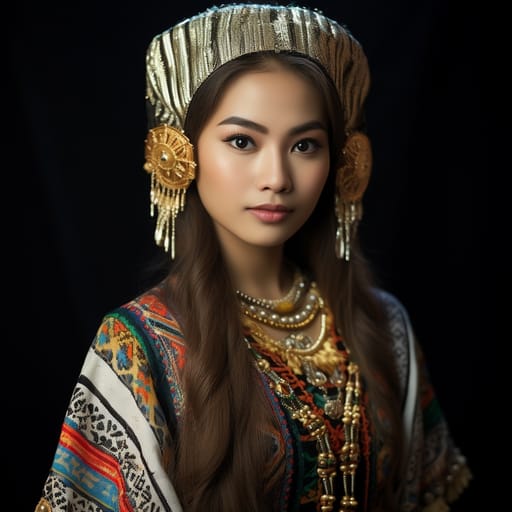
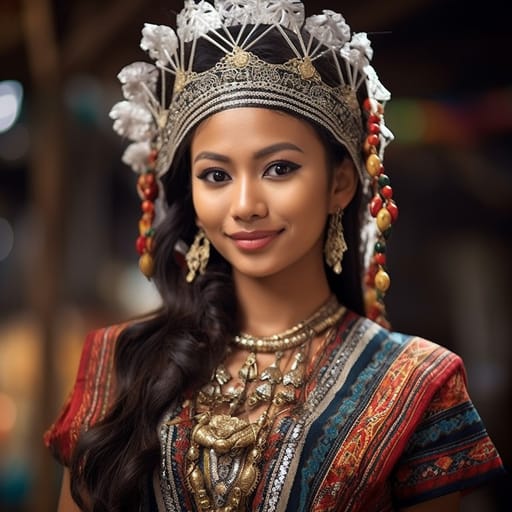
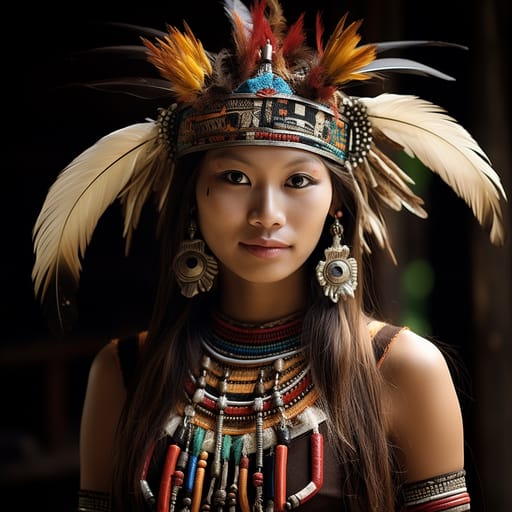
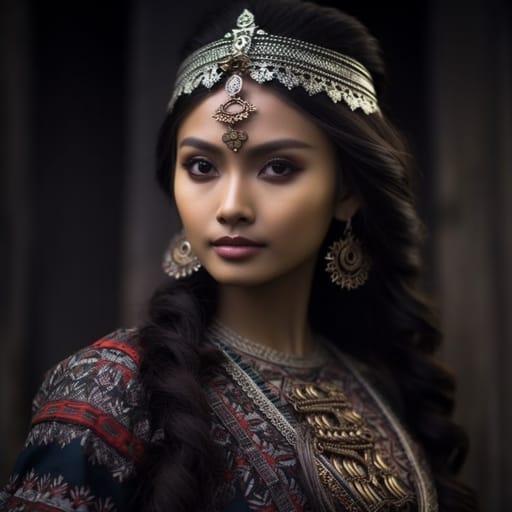
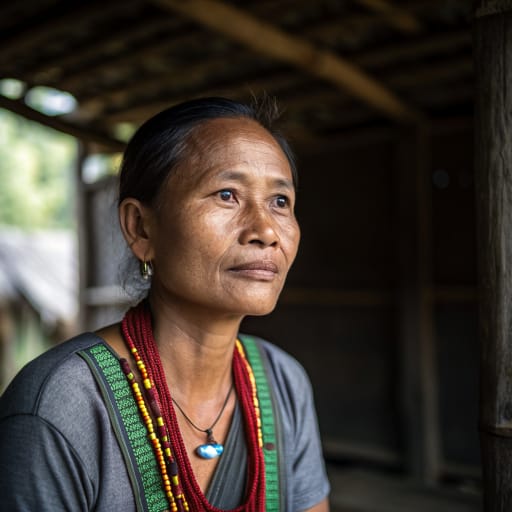
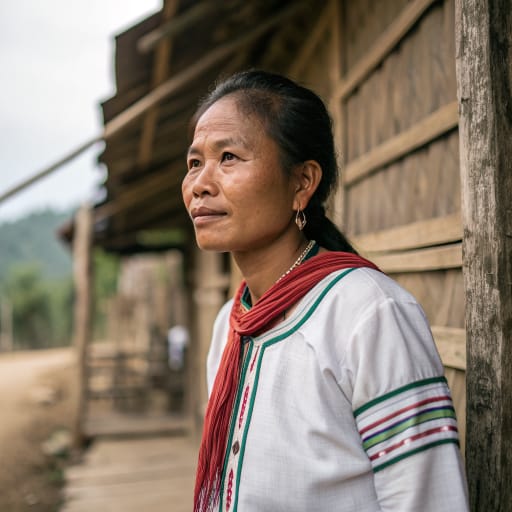
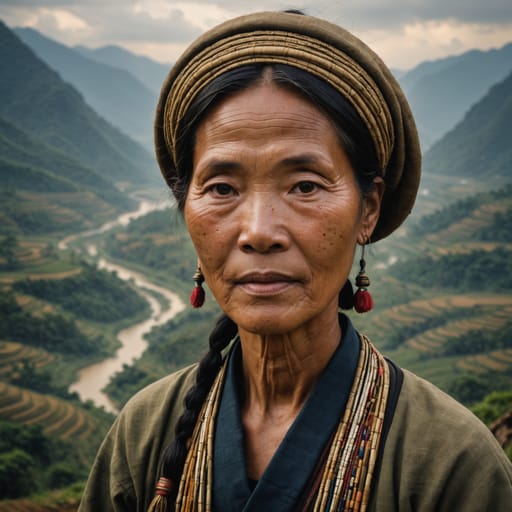
Typical Kwijau Phenotypes
Reference for AI generation: hair, eyes, skin, facial structure, build
Kwijau Body & Anatomy Reference
Per-feature anatomical profile for AI nude generation: Southeast Asian Austronesian / Austroasiatic phenotype
Kwijau Boobs & Breasts
The typical Kwijau bust is small-to-medium cup, modest projection, in line with the wider Southeast Asian Austronesian / Austroasiatic pattern. Areolas usually fall in the 26-38mm range, with medium-brown to dark-brown areolar pigmentation against the tan-to-medium-brown skin tone. Compared with the fuller South Asian or Polynesian bust, Kwijau breasts sit forward and are generally firm, modest projection. A faithful AI render of Kwijau tits keeps that shape and areola size.
Kwijau Ass & Hips
Butt shape among Kwijau women: small-to-medium, modest projection, narrower hip profile, over narrow-to-medium iliac crests. This follows Southeast Asian Austronesian / Austroasiatic ancestry and looks quite unlike the fuller glutes of the Pacific Islander phenotype. An accurate Kwijau ass in adult AI imagery keeps both the silhouette and the overall build (ectomorph, petite frame) instead of a generic average.
Kwijau Vagina & Pussy
Vulvar anatomy among Kwijau women: medium-brown to dark-brown labial pigmentation. Pubic hair tends to be straight-to-wavy fine-to-medium texture, in the usual inverted-triangle pattern. Both follow Southeast Asian Austronesian / Austroasiatic pigmentation, which is why Kwijau pussy renders should not fall back on a pale, sparse Western template.
Kwijau Dicks & Penis
The Kwijau cock profile, from Southeast Asian Austronesian / Austroasiatic anthropometric data: regional mean ~11cm erect; moderate girth; medium-brown shaft pigmentation. Pubic hair has a straight-to-wavy fine-to-medium texture and forms the usual inverted-V pattern. Whether Kwijau men are circumcised follows religious and cultural practice rather than phenotype.
Kwijau Body, Curves & Build
Build and curves among Kwijau women follow the Southeast Asian Austronesian / Austroasiatic pattern: ectomorph, petite frame, mean adult female BMI 20-23. Proportions matter as much as skin tone, so Kwijau figures should keep their regional height and limb ratios.
Kwijau Skin Tone & Hair Texture
The Kwijau skin range is tan to medium-brown (Fitzpatrick III-V), and hair tends to be straight-to-wavy 1A-2A, dark-brown to black. That combination marks the Southeast Asian Austronesian / Austroasiatic phenotype, and skin tone is the trait AI generators most often get wrong for Kwijau women.
Explore phenotype categories
Structured taxonomy with peer-reviewed scales · 22 anatomical categories
Erotic Poses & Sex Positions
From the pose catalog: 219 named positions with reference skeletons
Frequently asked questions about Kwijau people
Where is the Kwijau homeland?
The Kwijau homeland is The Keningau area of Sabah's interior, Malaysia (northern Borneo) in Southeast Asia.
What language do Kwijau people speak?
Kwijau people primarily speak Kuijau (Austronesian, Dusunic branch); Malay widely used as a second language.
What religion do Kwijau people practice?
The predominant religion among Kwijau people is Mostly Christian (Catholic and Protestant), with a Muslim minority and traces of traditional rice and ancestral spirit beliefs.






Make your own Kwijau images
Five a day, free, no credits to buy. The studio starts from this group's phenotype data, so you can set body type, pose and style and keep the traits accurate.
Start with Kwijau