Help us get this right
Does this portrait look right for Ilchamus?
Nobody has judged this one yet. You would be the first.
Ilchamus Erotic
Southern and southeastern shores and islands of Lake Baringo, Baringo County, Rift Valley, Kenya
Il Chamus (Camus), a Maa dialect closely related to Samburu (Eastern Nilotic, Nilo-Saharan); Swahili and English also widely used
Christianity, alongside traditional Maa belief in Enkai
Maa-speaking people of the Eastern Nilotic family, closely related to the Samburu and Maasai
About Ilchamus People
The Ilchamus are Maa speakers who did something most Maa speakers never did: they settled beside a lake and farmed. Their home is the hot, flat country along the southern and southeastern shores of Lake Baringo in Kenya's Rift Valley, including inhabited islands such as Ol Kokwe. Most of their nearest neighbors speak other languages. The Tugen, a Kalenjin people, hold the hills to the west, and the Pokot live to the north. The Ilchamus form a small Maa-speaking pocket between them. Their own speech, often written Camus, is close enough to Samburu that linguists commonly group the two together.
Their identity grew out of hard luck. Oral history and the colonial record describe a community built around farming settlements at Baringo. Maa herders who had lost their cattle to drought, disease or war kept joining it, including survivors of the nineteenth century wars that destroyed the Laikipiak. People without herds made a living from irrigated fields watered by the rivers that feed the lake. By the later 1800s these settlements, known to outsiders as Njemps, were a well known supply stop where Swahili trade caravans and European travelers such as Joseph Thomson bought grain. The name Njemps stayed on maps and in official papers long after that.
The irrigation did not last. Floods, shifting rivers and drought in the early twentieth century ruined the fields, and the Ilchamus turned more and more to cattle, goats and fishing. As a result, the community today looks far more like its pastoral cousins than it did a century and a half ago. Fishermen still work the lake from light rafts made of ambatch wood. Social life follows the wider Maa pattern of clans, circumcision and named age sets that carry young men through warriorhood into elderhood. Churches are well established around the lake, alongside older belief in Enkai, the Maa name for God.
Being few in number has shaped their politics. In 2006 the Ilchamus went to Kenya's High Court. They argued that they could never elect one of their own in a constituency dominated by a larger neighbor, and the court agreed that minority communities are owed real representation. The ruling became a reference point for minority rights in Kenya. Life on the shore brings its own pressures: cattle raiding along the frontier with the Pokot, invasive mesquite spreading across grazing land around Marigat, and a lake that has risen sharply over the past decade and more, flooding lakeside homes and schools.
Related ethnic groups
Groups that share Ilchamus's homeland, region, language, or religious tradition. These are likely candidates for comparative phenotype reference.
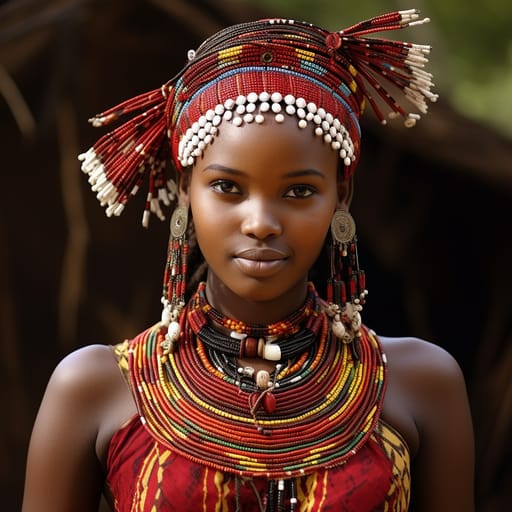
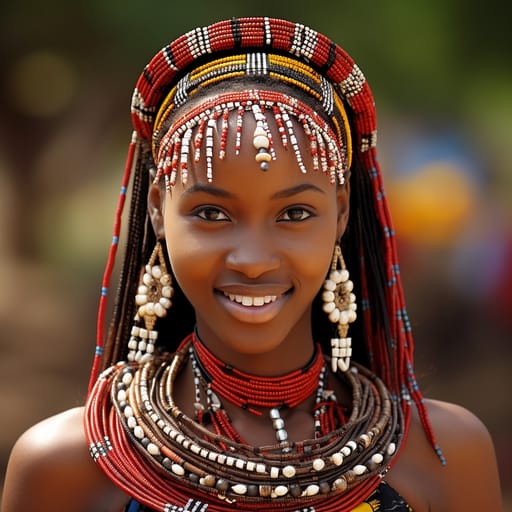
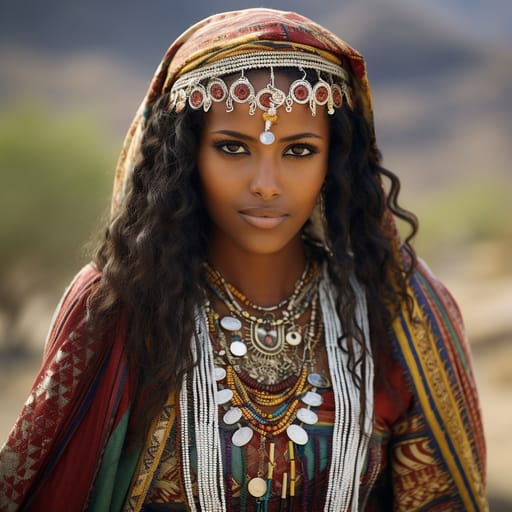
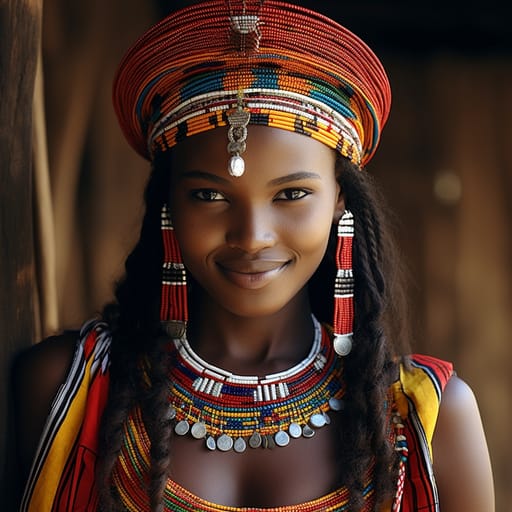
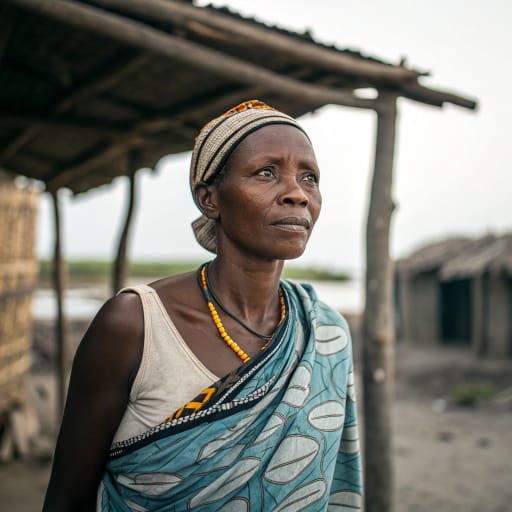
Typical Ilchamus Phenotypes
Reference for AI generation: hair, eyes, skin, facial structure, build
Ilchamus Body & Anatomy Reference
Anatomy by feature, Cushitic / Nilo-Cushitic East African phenotype
Ilchamus Boobs & Breasts
Ilchamus boobs follow the Cushitic / Nilo-Cushitic East African profile: small-to-medium-cup, high-set, conical. Areolar diameter is usually 28-38mm, and the coloring is moderate-to-high areolar pigmentation against the brown-to-deep-brown skin tone. Breast shape tracks body composition (lean ectomorph-to-mesomorph, mean adult female BMI 19-22), so Ilchamus breasts tend to be firmer and less projecting than the African-American or West African norm. Expect a forward-set shape, not the lateral spread of the West African phenotype.
Ilchamus Ass & Hips
Ilchamus ass and hip morphology presents as small-to-medium, high-set, rounded, distinctly different from the wide-set heavy-projection West African or African-American norm. The Ilchamus pelvic profile shows narrow-to-medium iliac crests, longer torso-to-leg ratio, anchored in the Cushitic / Nilo-Cushitic East African skeletal pattern. Ilchamus butt shots in adult AI imagery should render the small-to-medium, high-set, rounded silhouette with the overall build (lean ectomorph-to-mesomorph) and the fat distribution typical of the Cushitic / Nilo-Cushitic East African phenotype.
Ilchamus Vagina & Pussy
Ilchamus pussy anatomy typically shows brown-to-deep-brown labial pigmentation, narrow-to-medium labia minora projection. Pubic hair is usually tightly-coiled coarse texture, densely distributed. In AI-generated Ilchamus nudes, labial color should blend into the brown to deep brown skin with a gradual transition, and the hair should keep its tightly-coiled coarse texture.
Ilchamus Dicks & Penis
Penis reference for Ilchamus men: regional mean ~13.5cm erect, moderate girth, ~12cm circumference. Coloring: deeper-pigmented than the West African norm. An accurate Ilchamus cock in AI imagery matches the surrounding brown to deep brown skin rather than a generic porn default. Circumcision depends on religion and custom, not ancestry.
Ilchamus Body, Curves & Build
The Ilchamus figure is generally lean ectomorph-to-mesomorph, with mean adult female BMI 19-22, characteristic of Cushitic / Nilo-Cushitic East African ancestry. AI image tools tend to flatten regional body types into a few stock shapes; here the Ilchamus build is kept as its own reference.
Ilchamus Skin Tone & Hair Texture
Skin: brown to deep brown (Fitzpatrick V-VI). Hair: tight 4A-4C coil, often worn natural or in braided/twisted protective styles. Both are typical of Cushitic / Nilo-Cushitic East African ancestry. The most common mistake in AI nudes of Ilchamus women is a body rendered lighter than the face.
Explore phenotype categories
Structured taxonomy with peer-reviewed scales · 22 anatomical categories
Erotic Poses & Sex Positions
From the pose catalog: 219 named positions with reference skeletons
Frequently asked questions about Ilchamus people
Where is the Ilchamus homeland?
The Ilchamus homeland is Southern and southeastern shores and islands of Lake Baringo, Baringo County, Rift Valley, Kenya in Eastern Africa.
What language do Ilchamus people speak?
Ilchamus people primarily speak Il Chamus (Camus), a Maa dialect closely related to Samburu (Eastern Nilotic, Nilo-Saharan); Swahili and English also widely used.
What religion do Ilchamus people practice?
The predominant religion among Ilchamus people is Christianity, alongside traditional Maa belief in Enkai.






Make your own Ilchamus images
Five a day, free, no credits to buy. The studio starts from this group's phenotype data, so you can set body type, pose and style and keep the traits accurate.
Start with Ilchamus