Help us get this right
Does this portrait look right for Hidatsa?
One tap. It takes a second and it is recorded.
1 says it looks right, 0 say it looks off.
Hidatsa Erotic
The upper Missouri River valley in western North Dakota, United States, centered on the Fort Berthold Reservation
Hidatsa (Missouri River Siouan), closely related to Crow; English is dominant today
Christianity, mainly Congregational and Catholic, alongside continuing sacred bundle traditions and ceremonies such as the naxpike
Three village divisions: Awatixa, Awaxawi and Hidatsa proper; part of the Missouri River Siouan family with the Crow; federally organized with the Mandan and Arikara as the MHA Nation
About Hidatsa People
The Hidatsa are earthlodge people of the upper Missouri, and that is less a historical footnote than the organizing fact of who they are. Before the reservation era they lived in fortified villages of domed earth-and-timber lodges near the mouth of the Knife River, in what is now western North Dakota, farming the rich river bottoms and going out onto the plains for buffalo in season. The fields were women's property, worked and inherited through matrilineal clans, and the corn, beans, squash and sunflowers they raised made the villages one of the great trading crossroads of the continent. Assiniboine, Cree, Cheyenne and later European traders came in to deal, and the Hidatsa and their Mandan neighbors sat at the center as brokers of corn, tobacco, horses and guns. They were three village divisions rather than one: the Awatixa, the Awaxawi and the Hidatsa proper, each with its own origin account. Their language belongs to the Missouri River branch of Siouan and has exactly one close relative, Crow, whose speakers Hidatsa tradition remembers as a group that broke away and went west to hunt full time.
The nineteenth century was brutal in a specific way. Smallpox in 1837 tore through the Knife River towns and gutted the Mandan; the survivors of both peoples consolidated at Like-a-Fishhook Village in 1845, later joined by the Arikara, and the three have been politically bound together ever since as the MHA Nation on the Fort Berthold Reservation. The second blow came in 1953, when the Garrison Dam flooded more than 150,000 acres of the reservation's bottomland under Lake Sakakawea, drowning the farms and timber and cutting the remaining land into separated segments. Families were moved uphill onto dry prairie and told to start over. Much of what outsiders know about pre-reservation Hidatsa life comes from Maxidiwiac, Buffalo Bird Woman, whose dictated account of gardening, seed selection and lodge building is the most detailed first-person record of Indigenous agriculture in North America. Sakakawea, the Lemhi Shoshone woman taken captive and raised among the Hidatsa, carries her Hidatsa name on the lake that covers their old fields. Today most enrolled members are Christian, sacred bundles and the naxpike ceremony persist alongside that, the language is severely endangered and taught hard in schools, and Bakken oil under the reservation has brought both revenue and a great deal of argument about what it costs.
Related ethnic groups
Groups that share Hidatsa's homeland, region, language, or religious tradition. These are likely candidates for comparative phenotype reference.
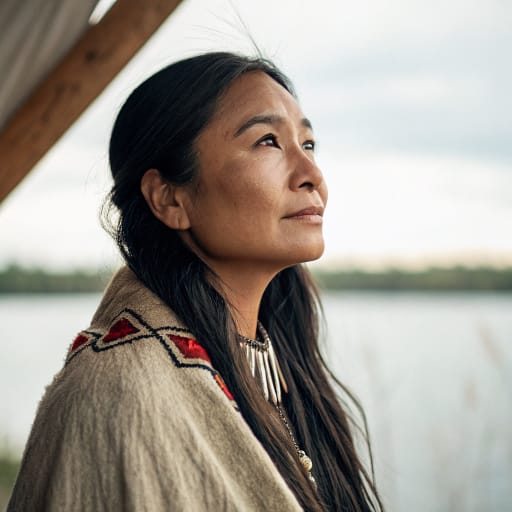
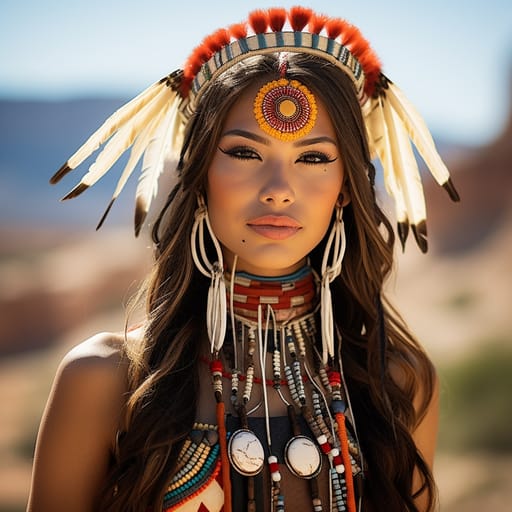
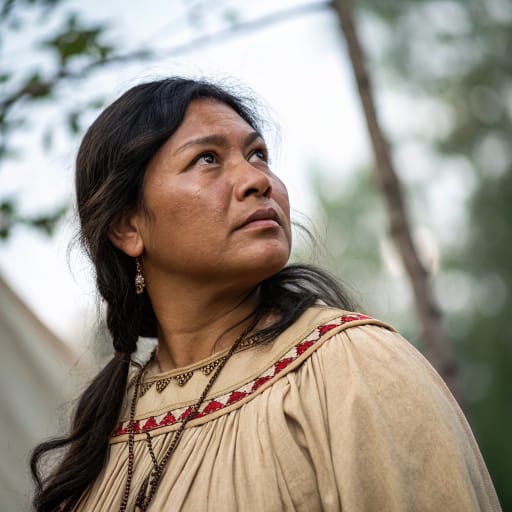
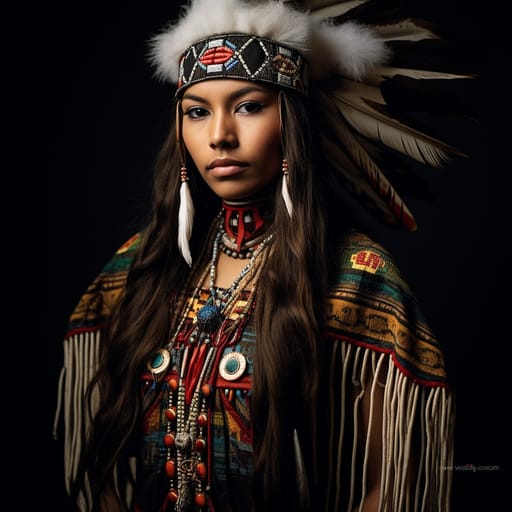

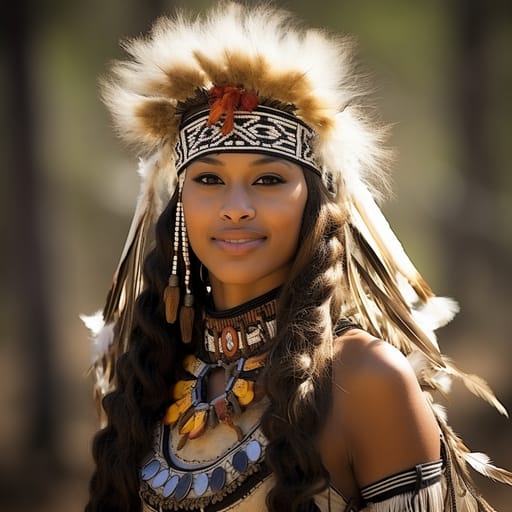
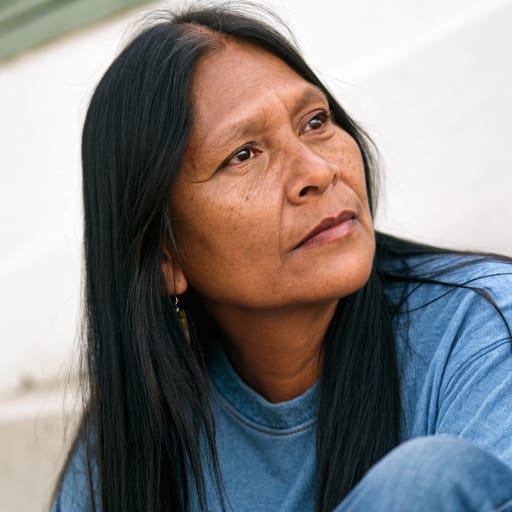
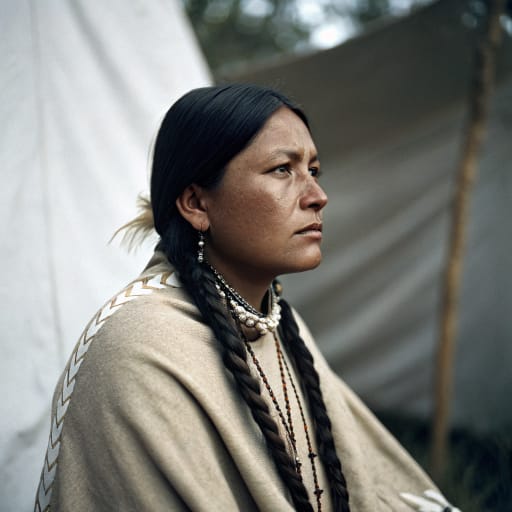
Typical Hidatsa Phenotypes
Reference for AI generation: hair, eyes, skin, facial structure, build
Hidatsa Body & Anatomy Reference
Per-feature anatomical profile for AI nude generation: Indigenous Northern American / Algonquian-Iroquoian phenotype
Hidatsa Boobs & Breasts
Hidatsa tits and boobs run medium cup, moderate projection, the classic Indigenous Northern American / Algonquian-Iroquoian bust profile. Hidatsa nipples and areolas show medium-brown areolar pigmentation against the copper-to-medium-brown skin tone, with areolar diameter typically in the 30-44mm range and forward-set positioning rather than the smaller East Asian bust. Hidatsa breasts trend full and moderate projection, a function of the mesomorph, broader frame in northern Indigenous populations body habitus and the mean adult female BMI 25-28. For anatomically accurate AI-generated Hidatsa nudes the render preserves the medium cup, moderate projection shape, 30-44mm areolas with medium-brown pigmentation, and the torso proportions of the Indigenous Northern American / Algonquian-Iroquoian phenotype.
Hidatsa Ass & Hips
Hidatsa hips and butt usually read as medium, moderate-to-full projection. The skeletal base is medium iliac crests, the Indigenous Northern American / Algonquian-Iroquoian pattern. Set against the slim East Asian narrow-hip profile, the difference is easy to see, and the hip-to-waist ratio is often what identifies Hidatsa women in photos.
Hidatsa Vagina & Pussy
Expect medium-brown labial pigmentation on Hidatsa women, in keeping with Indigenous Northern American / Algonquian-Iroquoian ancestry. The pubic hair is straight medium-coarse texture. Coloring should run evenly from the copper to medium-brown skin of the thighs to the labia, and Hidatsa nude imagery should keep the hair's straight medium-coarse texture.
Hidatsa Dicks & Penis
Hidatsa dick and penile anatomy in adult AI generation should anchor on the regional reference data: regional mean ~13cm erect, moderate girth, and medium-brown shaft pigmentation. The Hidatsa cock profile reflects the Indigenous Northern American / Algonquian-Iroquoian population's anthropometric measurements. The shaft pigmentation should track the surrounding copper to medium-brown skin tone, and the pubic hair should keep its straight medium-coarse texture in the typical inverted-V escutcheon.
Hidatsa Body, Curves & Build
Hidatsa body type: mesomorph, broader frame in northern Indigenous populations, with mean adult female BMI 25-28. This is the typical Indigenous Northern American / Algonquian-Iroquoian build. Height range, shoulder-to-hip ratio and fat distribution all follow from it, which is what an accurate Hidatsa nude body should show.
Hidatsa Skin Tone & Hair Texture
Hidatsa skin tone falls in the copper to medium-brown (Fitzpatrick III-V) band, the surface signal most often miscalibrated by generic AI nude generators. Hidatsa hair texture is typically straight 1A, dark-brown to black, often thick and dense, characteristic of the Indigenous Northern American / Algonquian-Iroquoian phenotype. In Hidatsa nude renders the skin should hold that band consistently across the body.
Explore phenotype categories
Structured taxonomy with peer-reviewed scales · 22 anatomical categories
Erotic Poses & Sex Positions
From the pose catalog: 219 named positions with reference skeletons
Frequently asked questions about Hidatsa people
Where is the Hidatsa homeland?
The Hidatsa homeland is The upper Missouri River valley in western North Dakota, United States, centered on the Fort Berthold Reservation in North America.
What language do Hidatsa people speak?
Hidatsa people primarily speak Hidatsa (Missouri River Siouan), closely related to Crow; English is dominant today.
What religion do Hidatsa people practice?
The predominant religion among Hidatsa people is Christianity, mainly Congregational and Catholic, alongside continuing sacred bundle traditions and ceremonies such as the naxpike.






Make your own Hidatsa images
Five a day, free, no credits to buy. The studio starts from this group's phenotype data, so you can set body type, pose and style and keep the traits accurate.
Start with Hidatsa