Help us get this right
Does this portrait look right for Heiltsuk?
Nobody has judged this one yet. You would be the first.
Heiltsuk Erotic
The central coast of British Columbia, Canada, centered on Bella Bella (Waglisla) on Campbell Island, with territory spanning Milbanke Sound, Seaforth Channel and the surrounding islands, inlets and mainland fjords.
Haíɫzaqvḷa, or Heiltsuk (Northern Wakashan branch of the Wakashan family); English is now dominant in daily use.
Christianity, largely United Church of Canada from the Methodist mission period, held alongside revived potlatch and winter ceremonial practice.
Northern Wakashan peoples; five historic tribal groups amalgamated at Bella Bella; closely related to the Haisla, Wuikinuxv and Kwakwaka'wakw, and paired with the Wuikinuxv in the Heiltsuk-Oowekyala language grouping.
About Heiltsuk People
The Heiltsuk hold the middle of the British Columbia coast: a maze of islands, fjords and tidal narrows that outsiders now market as the Great Bear Rainforest. The main town is Bella Bella, Waglisla, on Campbell Island, reached by ferry, float plane, or your own boat. In their own language they are Haíɫzaqv, a name usually glossed as speaking or acting correctly, which is a fair shorthand for how the house system works: inherited names and rank, obligations settled in public, witnesses fed and paid to remember what they saw. Their language, Haíɫzaqvḷa, is Northern Wakashan, close kin to Haisla, Wuikinuxv and Kwak'wala and completely unrelated to the Tsimshian and Haida spoken by neighbors a day's travel north. Nineteenth century ethnographers filed the Heiltsuk under the heading Northern Kwakiutl, a label the nation has spent a century shrugging off. Fluent first language speakers are now few, and immersion teaching runs against that clock.
Five tribal groups consolidated at Bella Bella during the 1800s, drawn first to the Hudson's Bay Company post at Fort McLoughlin and then pushed together by the smallpox that emptied the coast in 1862. Methodist missionaries and the federal potlatch ban drove the winter ceremonials, including the Hamatsa that the Kwakwaka'wakw are said to have received from the Heiltsuk, into private houses for decades. In 2019 the nation opened Gvakva'aus Haíɫzaqv, its first big house in more than a hundred years. Two more recent things define them as much as any of that. In 1996 the Supreme Court of Canada ruled in R. v. Gladstone that the Heiltsuk hold a commercial right to harvest and sell herring spawn on kelp, the spring roe that has been food, wealth and trade good for as long as anyone can account for. And in 2017 archaeologists dated a settlement at Triquet Island, in Heiltsuk territory, to roughly 14,000 years, confirming with carbon an oral history the Heiltsuk had been telling all along about shoreline that never went under ice. Herring, clams, salmon and eulachon still set the calendar. When a tug sank near Bella Bella in 2016 and put diesel into the clam beds at Gale Pass, the nation ran its own response and its own investigation, on the reasonable assumption that nobody else would.
Related ethnic groups
Groups that share Heiltsuk's homeland, region, language, or religious tradition. These are likely candidates for comparative phenotype reference.
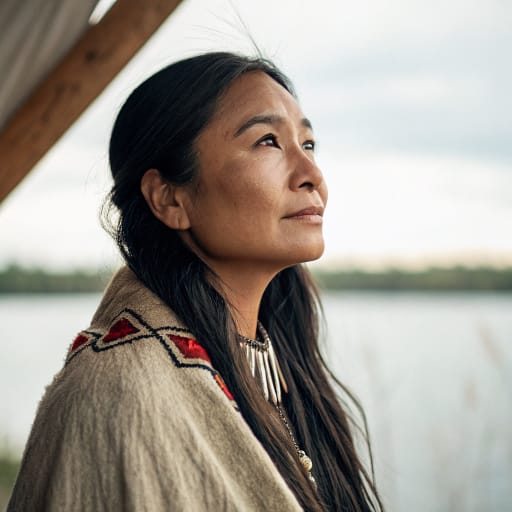
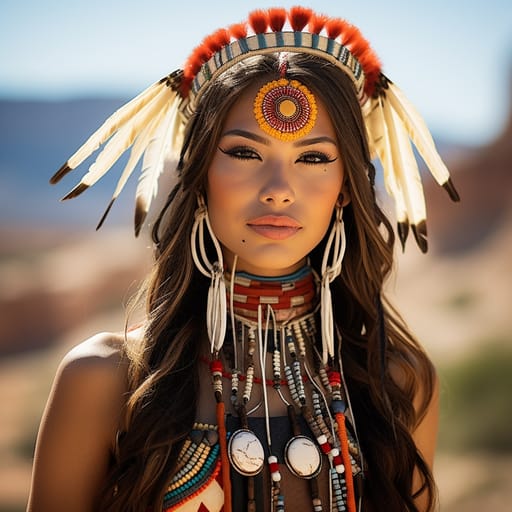
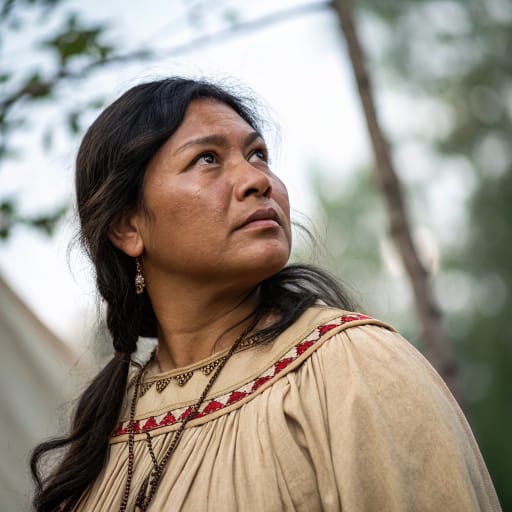
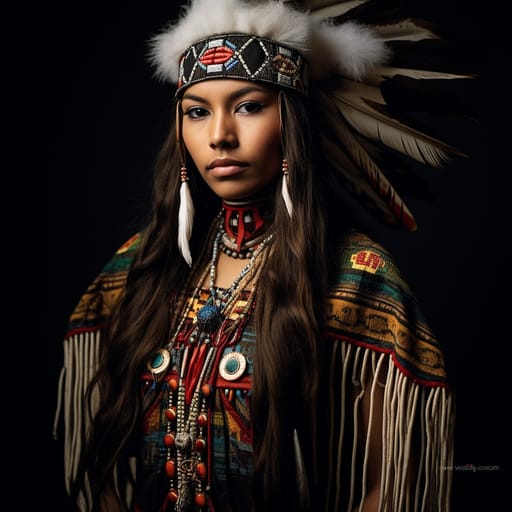
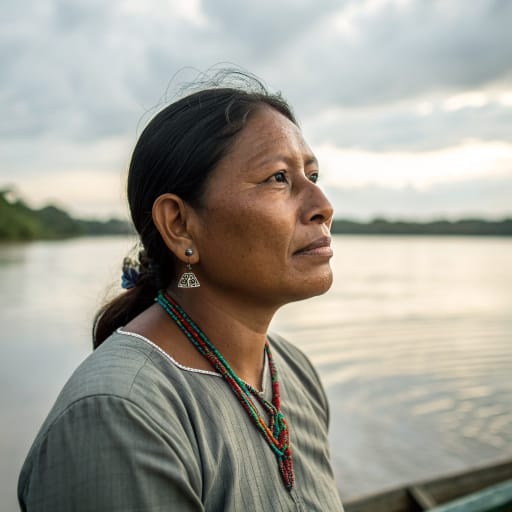
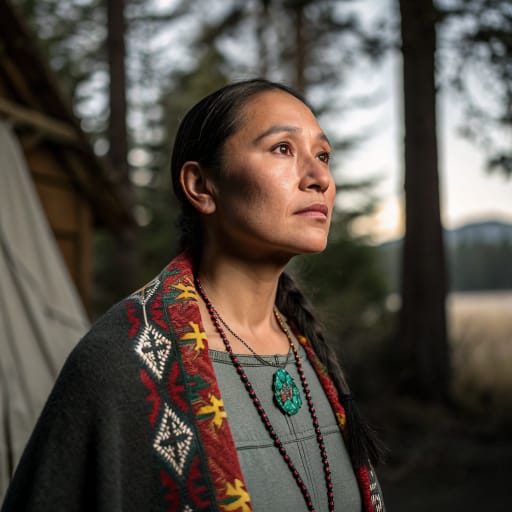
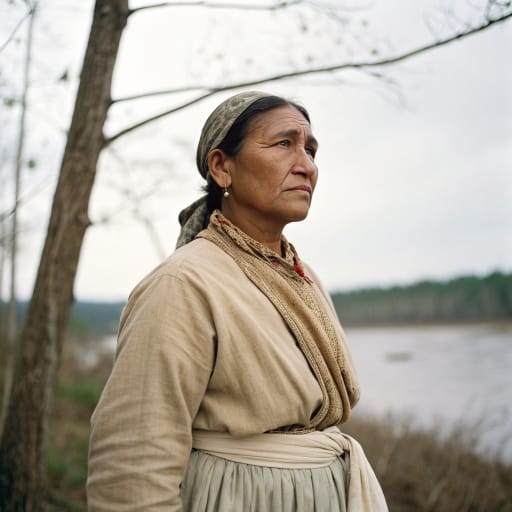
Typical Heiltsuk Phenotypes
Reference for AI generation: hair, eyes, skin, facial structure, build
Heiltsuk Body & Anatomy Reference
Per-feature anatomical profile for AI nude generation: Indigenous Northern American / Algonquian-Iroquoian phenotype
Heiltsuk Boobs & Breasts
The typical Heiltsuk bust is medium cup, moderate projection, in line with the wider Indigenous Northern American / Algonquian-Iroquoian pattern. Areolas usually fall in the 30-44mm range, with medium-brown areolar pigmentation against the copper-to-medium-brown skin tone. Compared with the smaller East Asian bust, Heiltsuk breasts sit forward and are generally full and moderate projection. A faithful AI render of Heiltsuk tits keeps that shape and areola size.
Heiltsuk Ass & Hips
Butt shape among Heiltsuk women: medium, moderate-to-full projection, over medium iliac crests. This follows Indigenous Northern American / Algonquian-Iroquoian ancestry and looks quite unlike the slim East Asian narrow-hip profile. An accurate Heiltsuk ass in adult AI imagery keeps both the silhouette and the overall build (mesomorph, broader frame in northern Indigenous populations) instead of a generic average.
Heiltsuk Vagina & Pussy
Vulvar anatomy among Heiltsuk women: medium-brown labial pigmentation. Pubic hair tends to be straight medium-coarse texture, in the usual inverted-triangle pattern. Both follow Indigenous Northern American / Algonquian-Iroquoian pigmentation, which is why Heiltsuk pussy renders should not fall back on a pale, sparse Western template.
Heiltsuk Dicks & Penis
The Heiltsuk cock profile, from Indigenous Northern American / Algonquian-Iroquoian anthropometric data: regional mean ~13cm erect; moderate girth; medium-brown shaft pigmentation. Pubic hair has a straight medium-coarse texture and forms the usual inverted-V pattern. Whether Heiltsuk men are circumcised follows religious and cultural practice rather than phenotype.
Heiltsuk Body, Curves & Build
Build and curves among Heiltsuk women follow the Indigenous Northern American / Algonquian-Iroquoian pattern: mesomorph, broader frame in northern Indigenous populations, mean adult female BMI 25-28. Proportions matter as much as skin tone, so Heiltsuk figures should keep their regional height and limb ratios.
Heiltsuk Skin Tone & Hair Texture
The Heiltsuk skin range is copper to medium-brown (Fitzpatrick III-V), and hair tends to be straight 1A, dark-brown to black, often thick and dense. That combination marks the Indigenous Northern American / Algonquian-Iroquoian phenotype, and skin tone is the trait AI generators most often get wrong for Heiltsuk women.
Explore phenotype categories
Structured taxonomy with peer-reviewed scales · 22 anatomical categories
Erotic Poses & Sex Positions
From the pose catalog: 219 named positions with reference skeletons
Frequently asked questions about Heiltsuk people
Where is the Heiltsuk homeland?
The Heiltsuk homeland is The central coast of British Columbia, Canada, centered on Bella Bella (Waglisla) on Campbell Island, with territory spanning Milbanke Sound, Seaforth Channel and the surrounding islands, inlets and mainland fjords. in North America.
What language do Heiltsuk people speak?
Heiltsuk people primarily speak Haíɫzaqvḷa, or Heiltsuk (Northern Wakashan branch of the Wakashan family); English is now dominant in daily use..
What religion do Heiltsuk people practice?
The predominant religion among Heiltsuk people is Christianity, largely United Church of Canada from the Methodist mission period, held alongside revived potlatch and winter ceremonial practice..






Make your own Heiltsuk images
Five a day, free, no credits to buy. The studio starts from this group's phenotype data, so you can set body type, pose and style and keep the traits accurate.
Start with Heiltsuk