Help us get this right
Does this portrait look right for Hadza?
One tap. It takes a second and it is recorded.
2 say it looks right, 1 says it looks off.
Hadza Erotic
Lake Eyasi basin, central Rift Valley, Singida and Arusha regions, Tanzania
Hadza (language isolate, click consonants)
Traditional animism
About Hadza People
The Hadza, or Hadzabe, are an indigenous people of north-central Tanzania who live around the shores of Lake Eyasi in the central Rift Valley and on the neighboring plateau. They are renowned as one of the last societies on Earth to sustain a largely hunting-and-gathering way of life, and their genetic lineages are among the most ancient and deeply rooted in the human family, making them a central focus of research into early human history.
Society and subsistence
The Hadza live in small, flexible camps whose membership shifts freely as people move across the landscape. There are no chiefs, headmen, or formal political offices, and the society is strongly egalitarian, with food shared widely and decisions reached by consensus. Men hunt with bows and poison-tipped arrows, taking game from birds to large antelope, and are celebrated for their skill in collecting wild honey, often guided to hives by the honeyguide bird. Women gather tubers, berries, and baobab fruit, which supply a large share of the daily diet. The Hadza keep no livestock and plant no crops, relying instead on a detailed knowledge of the seasonal bush.
Language and belief
The Hadza language is a linguistic isolate, unrelated to any other tongue, and is noted for its click consonants. It was once grouped with the so-called Khoisan languages of southern Africa, but that classification is no longer accepted, and Hadza is now regarded as standing on its own. Spiritual life is expressed through ceremonial dances, notably the sacred epeme dance performed on moonless nights, and through respect for the sun and the surrounding land rather than an organized religion.
Appearance and adornment
The Hadza are generally lean and of moderate to short stature, well adapted to long days of walking and foraging. Traditional dress is minimal and practical for the hot, dry environment: garments of animal hide, along with beaded necklaces, headbands, and bracelets, and ornaments fashioned from beads, shells, bone, and dried seeds. Their total population is commonly estimated in a range of about 1,000 to 1,500, of whom only a few hundred still live primarily by foraging as encroachment on their lands continues.
Related ethnic groups
Groups that share Hadza's homeland, region, language, or religious tradition. These are likely candidates for comparative phenotype reference.
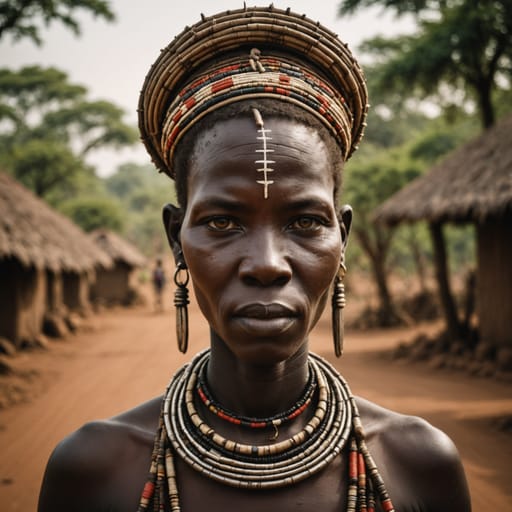
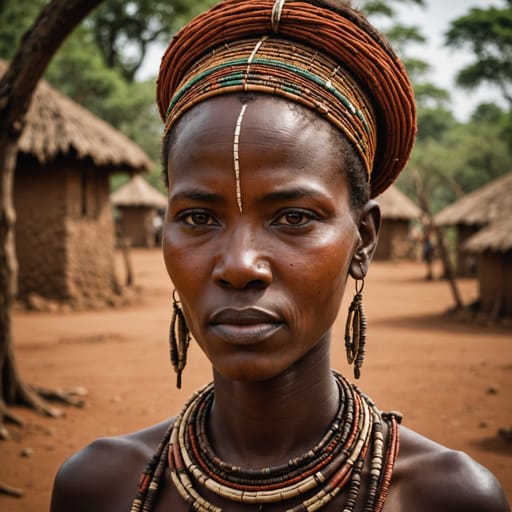
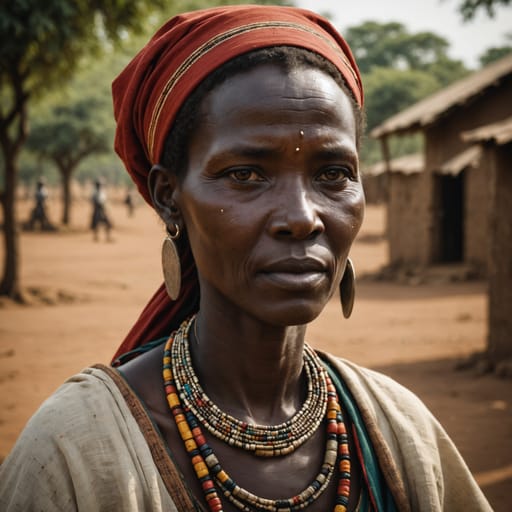
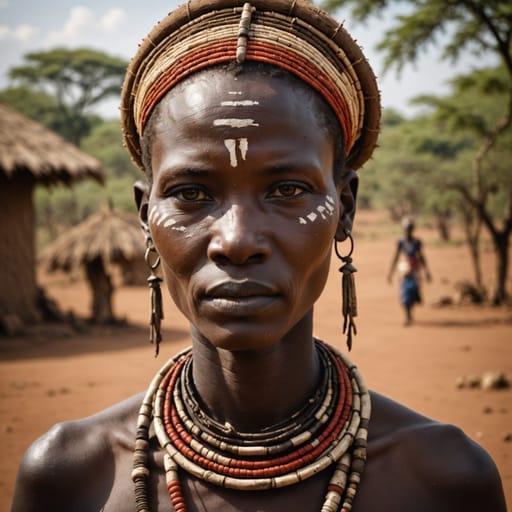
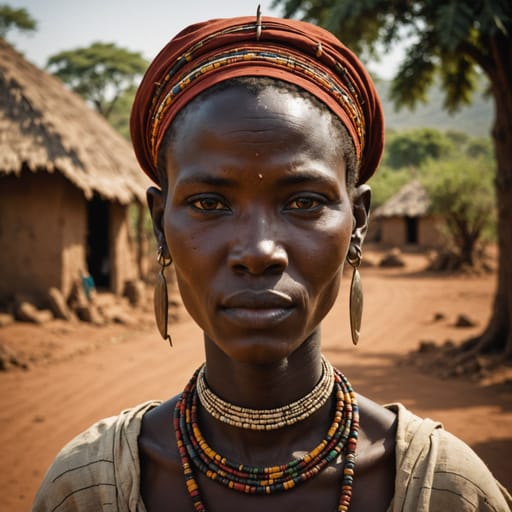
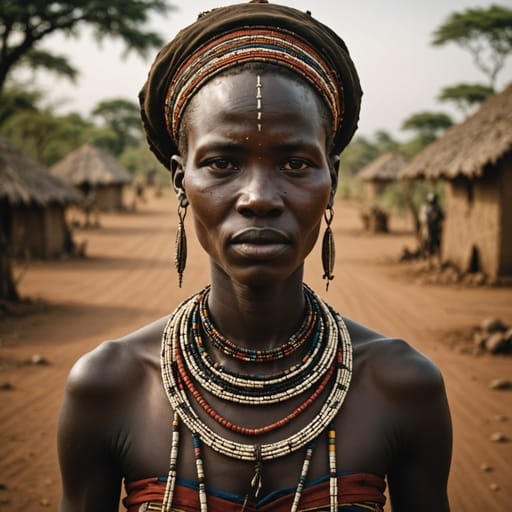
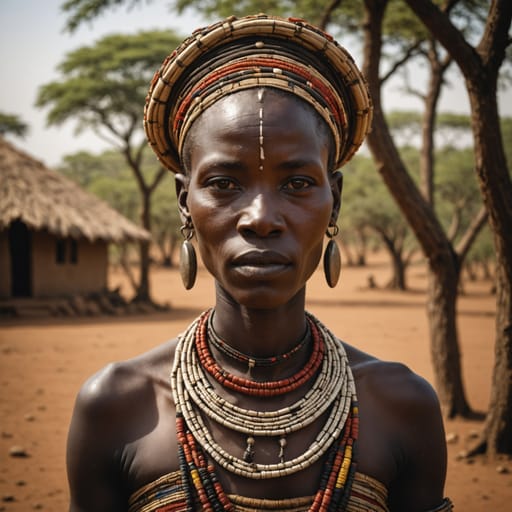
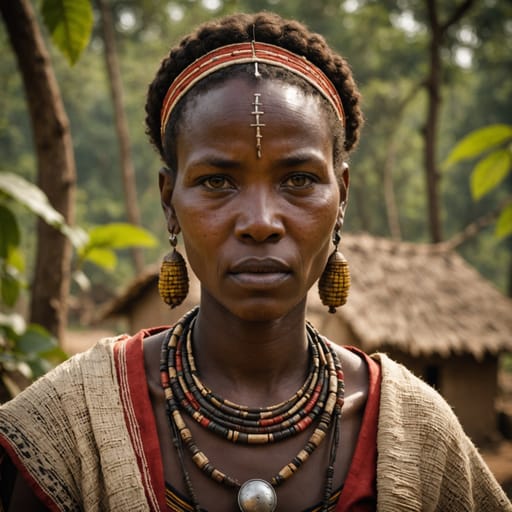
Typical Hadza Phenotypes
Reference for AI generation: hair, eyes, skin, facial structure, build
Hadza Body & Anatomy Reference
Per-feature anatomical profile for AI nude generation: Cushitic / Nilo-Cushitic East African phenotype
Hadza Boobs & Breasts
Hadza tits and boobs run small-to-medium-cup, high-set, conical, the classic Cushitic / Nilo-Cushitic East African bust profile. Hadza nipples and areolas show moderate-to-high areolar pigmentation against the brown-to-deep-brown skin tone, with areolar diameter typically in the 28-38mm range and forward-set positioning rather than the lateral spread of the West African phenotype. Hadza breasts trend firmer and less projecting than the African-American or West African norm, a function of the lean ectomorph-to-mesomorph body habitus and the mean adult female BMI 19-22. For anatomically accurate AI-generated Hadza nudes the render preserves the small-to-medium-cup, high-set, conical shape, 28-38mm areolas with moderate-to-high pigmentation, and the torso proportions of the Cushitic / Nilo-Cushitic East African phenotype.
Hadza Ass & Hips
Hadza hips and butt usually read as small-to-medium, high-set, rounded. The skeletal base is narrow-to-medium iliac crests, longer torso-to-leg ratio, the Cushitic / Nilo-Cushitic East African pattern. Set against the wide-set heavy-projection West African or African-American norm, the difference is easy to see, and the hip-to-waist ratio is often what identifies Hadza women in photos.
Hadza Vagina & Pussy
Expect brown-to-deep-brown labial pigmentation, narrow-to-medium labia minora projection on Hadza women, in keeping with Cushitic / Nilo-Cushitic East African ancestry. The pubic hair is tightly-coiled coarse texture, densely distributed. Coloring should run evenly from the brown to deep brown skin of the thighs to the labia, and Hadza nude imagery should keep the hair's tightly-coiled coarse texture.
Hadza Dicks & Penis
Hadza dick and penile anatomy in adult AI generation should anchor on the regional reference data: regional mean ~13.5cm erect, moderate girth, ~12cm circumference, and deeper-pigmented than the West African norm. The Hadza cock profile reflects the Cushitic / Nilo-Cushitic East African population's anthropometric measurements. The shaft pigmentation should track the surrounding brown to deep brown skin tone, and the pubic hair should keep its tightly-coiled coarse texture in the typical inverted-V escutcheon.
Hadza Body, Curves & Build
Hadza body type: lean ectomorph-to-mesomorph, with mean adult female BMI 19-22. This is the typical Cushitic / Nilo-Cushitic East African build. Height range, shoulder-to-hip ratio and fat distribution all follow from it, which is what an accurate Hadza nude body should show.
Hadza Skin Tone & Hair Texture
Hadza skin tone falls in the brown to deep brown (Fitzpatrick V-VI) band, the surface signal most often miscalibrated by generic AI nude generators. Hadza hair texture is typically tight 4A-4C coil, often worn natural or in braided/twisted protective styles, characteristic of the Cushitic / Nilo-Cushitic East African phenotype. In Hadza nude renders the skin should hold that band consistently across the body.
Explore phenotype categories
Structured taxonomy with peer-reviewed scales · 22 anatomical categories
Erotic Poses & Sex Positions
From the pose catalog: 219 named positions with reference skeletons
Frequently asked questions about Hadza people
Where is the Hadza homeland?
The Hadza homeland is Lake Eyasi basin, central Rift Valley, Singida and Arusha regions, Tanzania in Eastern Africa.
What language do Hadza people speak?
Hadza people primarily speak Hadza (language isolate, click consonants).
What religion do Hadza people practice?
The predominant religion among Hadza people is Traditional animism.
What does a typical Hadza woman look like?
Hadza women are generally lean and of moderate to short stature, suited to a foraging life. Traditional dress is minimal animal hide worn with beaded necklaces, headbands and bracelets of glass beads, shell, bone and dried seeds.






Make your own Hadza images
Five a day, free, no credits to buy. The studio starts from this group's phenotype data, so you can set body type, pose and style and keep the traits accurate.
Start with Hadza