Help us get this right
Does this portrait look right for Hadendoa?
One tap. It takes a second and it is recorded.
0 say it looks right, 1 says it looks off.
Hadendoa Erotic
Red Sea Hills, eastern Sudan (extending toward Eritrea)
Beja / Bedawiyet (North Cushitic, Afroasiatic); Arabic widely spoken
Sunni Islam
About Hadendoa People
The Hadendoa (also spelled Hadendowa) are a nomadic pastoralist people of the Red Sea Hills, forming one of the principal divisions of the wider Beja nation. Their territory stretches across eastern Sudan between the Nile and the Red Sea, extending toward the borders of Eritrea, a rugged land of dry hills and seasonal watercourses. For centuries the Hadendoa have herded camels, cattle, sheep, and goats across this arid country, and they occupy a storied place in the history of the region.
Society and subsistence
Hadendoa society is built on patrilineal clans and lineages, led by clan chiefs and elders, with camels serving as the central measure of wealth and prestige as well as a means of transport across long desert distances. Alongside herding, some Hadendoa cultivate sorghum in seasonal watercourses and engage in trade at Red Sea ports such as Suakin. They became widely known in the nineteenth century for their role in the Mahdist War against Anglo-Egyptian forces, when their warriors' reputation for courage earned them the nickname Fuzzy-Wuzzy from British soldiers, a term derived from their striking hairstyle.
Language and belief
The Hadendoa speak Beja, known to its speakers as Bedawiyet or To Bedawie, a Cushitic language of the Afroasiatic family. Many are also fluent in Arabic, which is used for religious life. They are Sunni Muslims, and Islam is deeply woven into their social and legal customs, with Sufi orders historically influential across the Red Sea Hills.
Appearance and adornment
The Hadendoa are typically slender and of medium to tall build, with the sharp features common to Cushitic peoples of the region. Their most famous mark of identity is the tiffa, a thick mass of curly hair grown out and dressed with butter into a high, bushy style that inspired the Fuzzy-Wuzzy name. Men traditionally wear loose cotton wraps and carry a straight cross-hilted sword (the kaskara) and small shield, while women wear draped cloth and gold or silver jewelry. Estimates of the Hadendoa population range broadly, on the order of several hundred thousand to around a million people.
Related ethnic groups
Groups that share Hadendoa's homeland, region, language, or religious tradition. These are likely candidates for comparative phenotype reference.
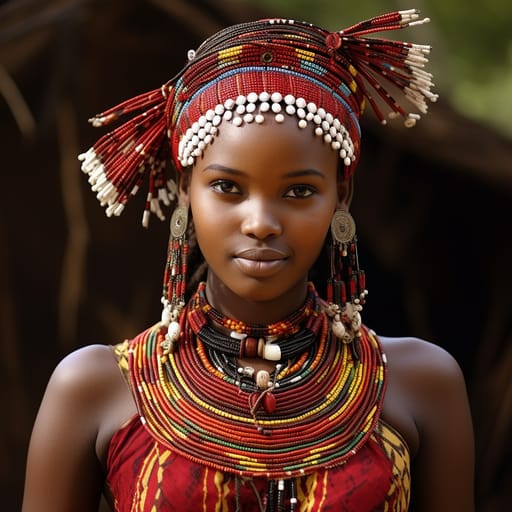
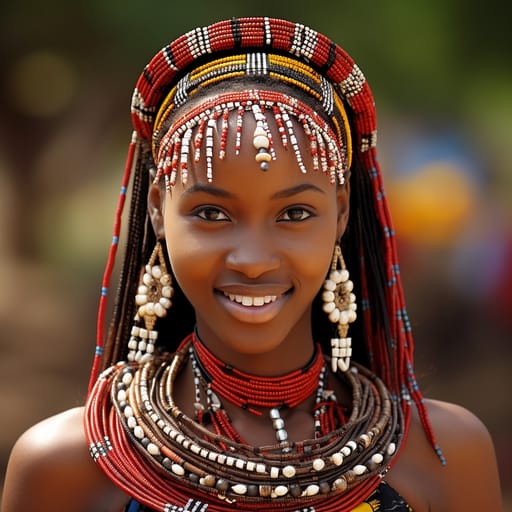
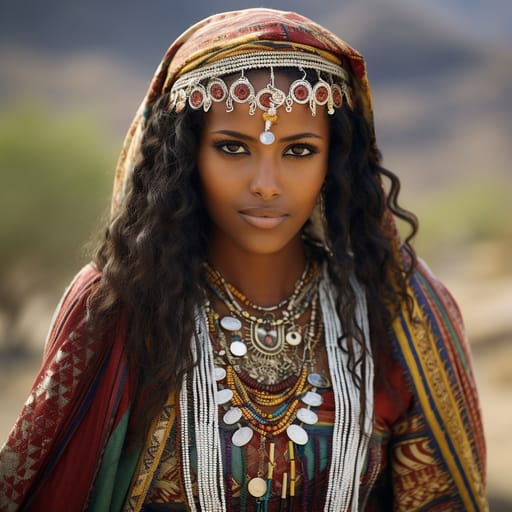
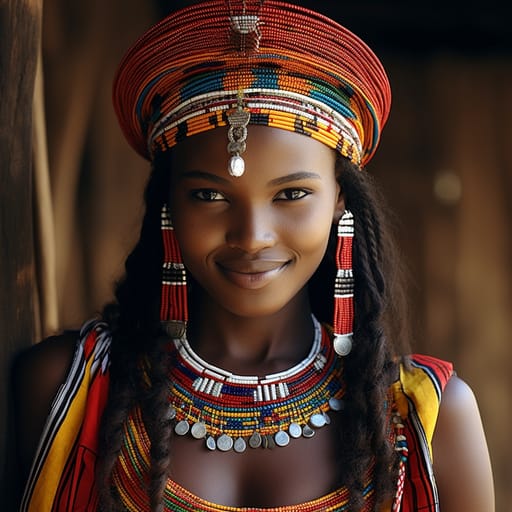
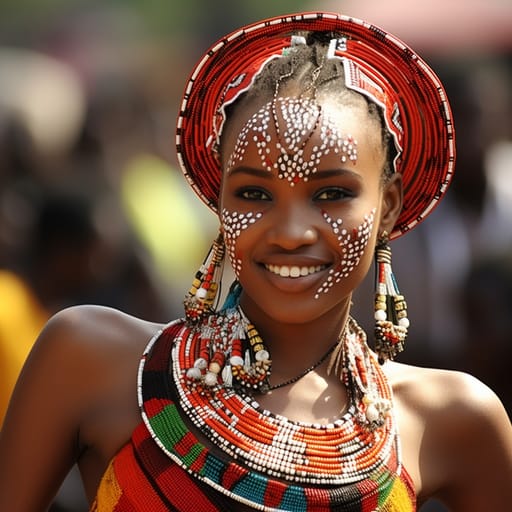
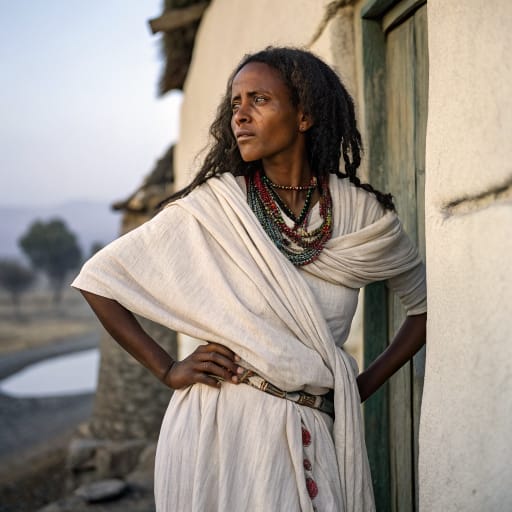
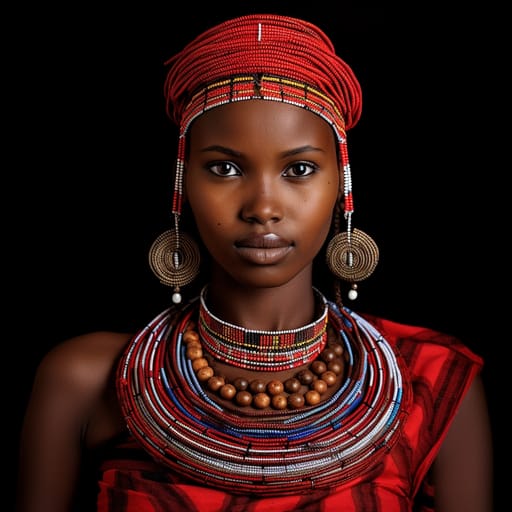
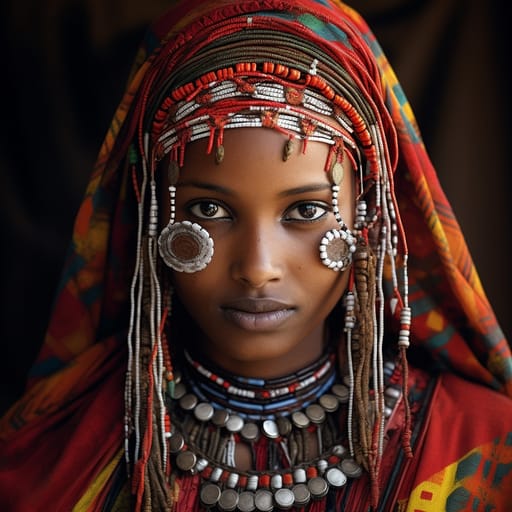
Typical Hadendoa Phenotypes
Reference for AI generation: hair, eyes, skin, facial structure, build
Hadendoa Body & Anatomy Reference
Anatomy by feature, Cushitic / Nilo-Cushitic East African phenotype
Hadendoa Boobs & Breasts
Hadendoa tits and boobs run small-to-medium-cup, high-set, conical, the classic Cushitic / Nilo-Cushitic East African bust profile. Hadendoa nipples and areolas show moderate-to-high areolar pigmentation against the brown-to-deep-brown skin tone, with areolar diameter typically in the 28-38mm range and forward-set positioning rather than the lateral spread of the West African phenotype. Hadendoa breasts trend firmer and less projecting than the African-American or West African norm, a function of the lean ectomorph-to-mesomorph body habitus and the mean adult female BMI 19-22. For anatomically accurate AI-generated Hadendoa nudes the render preserves the small-to-medium-cup, high-set, conical shape, 28-38mm areolas with moderate-to-high pigmentation, and the torso proportions of the Cushitic / Nilo-Cushitic East African phenotype.
Hadendoa Ass & Hips
Hadendoa hips and butt usually read as small-to-medium, high-set, rounded. The skeletal base is narrow-to-medium iliac crests, longer torso-to-leg ratio, the Cushitic / Nilo-Cushitic East African pattern. Set against the wide-set heavy-projection West African or African-American norm, the difference is easy to see, and the hip-to-waist ratio is often what identifies Hadendoa women in photos.
Hadendoa Vagina & Pussy
Expect brown-to-deep-brown labial pigmentation, narrow-to-medium labia minora projection on Hadendoa women, in keeping with Cushitic / Nilo-Cushitic East African ancestry. The pubic hair is tightly-coiled coarse texture, densely distributed. Coloring should run evenly from the brown to deep brown skin of the thighs to the labia, and Hadendoa nude imagery should keep the hair's tightly-coiled coarse texture.
Hadendoa Dicks & Penis
Hadendoa dick and penile anatomy in adult AI generation should anchor on the regional reference data: regional mean ~13.5cm erect, moderate girth, ~12cm circumference, and deeper-pigmented than the West African norm. The Hadendoa cock profile reflects the Cushitic / Nilo-Cushitic East African population's anthropometric measurements. The shaft pigmentation should track the surrounding brown to deep brown skin tone, and the pubic hair should keep its tightly-coiled coarse texture in the typical inverted-V escutcheon.
Hadendoa Body, Curves & Build
Hadendoa body type: lean ectomorph-to-mesomorph, with mean adult female BMI 19-22. This is the typical Cushitic / Nilo-Cushitic East African build. Height range, shoulder-to-hip ratio and fat distribution all follow from it, which is what an accurate Hadendoa nude body should show.
Hadendoa Skin Tone & Hair Texture
Hadendoa skin tone falls in the brown to deep brown (Fitzpatrick V-VI) band, the surface signal most often miscalibrated by generic AI nude generators. Hadendoa hair texture is typically tight 4A-4C coil, often worn natural or in braided/twisted protective styles, characteristic of the Cushitic / Nilo-Cushitic East African phenotype. In Hadendoa nude renders the skin should hold that band consistently across the body.
Explore phenotype categories
Structured taxonomy with peer-reviewed scales · 22 anatomical categories
Erotic Poses & Sex Positions
From the pose catalog: 219 named positions with reference skeletons
Frequently asked questions about Hadendoa people
Where is the Hadendoa homeland?
The Hadendoa homeland is Red Sea Hills, eastern Sudan (extending toward Eritrea) in Eastern Africa.
What language do Hadendoa people speak?
Hadendoa people primarily speak Beja / Bedawiyet (North Cushitic, Afroasiatic); Arabic widely spoken.
What religion do Hadendoa people practice?
The predominant religion among Hadendoa people is Sunni Islam.






Make your own Hadendoa images
Five a day, free, no credits to buy. The studio starts from this group's phenotype data, so you can set body type, pose and style and keep the traits accurate.
Start with Hadendoa