No portrait yet
Vidiri Erotic
Western Bahr el Ghazal, around Wau, in northwestern South Sudan
Vidiri, a Banda variety (Ubangian, Niger Congo family); Arabic widely used as a second language
Largely Christian, shaped by the Catholic missions based in Wau
One of the Banda peoples; locally counted among the Fertit groups of Western Bahr el Ghazal
About Vidiri People
The Vidiri are a small Banda people of northwestern South Sudan. They live in Western Bahr el Ghazal, around the town of Wau. Being Banda there shapes a lot about them. Most Banda speakers live far to the west, in the Central African Republic, so the Vidiri are at the eastern edge of their own language world. Their closest relatives in speech live a long way off, while the people they live beside and trade with speak other languages entirely. Vidiri is part of the Banda group of Ubangian languages, which is usually placed within the broad Niger Congo family. Around Wau it shares ground with Dinka and with the Luo speech of the Jur Chol, both Nilotic languages. It also sits beside smaller Ubangian and Central Sudanic languages, and beside Arabic, the long established language of markets and town business. Using two or three languages in one day is normal here. Locally the Vidiri are counted among the Fertit, the regional name for the smaller peoples of Western Bahr el Ghazal who are neither Dinka nor Luo. The Ndogo, Bviri, Kresh and Golo are among them. The name started as a label used by outsiders. It comes from Dar Fertit, the land that traders and states to the north raided for captives. Since then it has become a political identity of its own.
Those raids left the deepest scar on the region's history. In the nineteenth century, ivory and slave traders working from fortified stations hunted across Bahr el Ghazal. They attacked its small peoples, scattered them and pushed them into new land. Banda communities across the wider border region were uprooted in the same period. Wau has stayed a place people fight over through South Sudan's wars. In the 2010s, tension between Fertit communities and government forces widely seen as Dinka dominated turned into open fighting in and around the town, and many families lost their homes. Christianity is the main faith. Much of it goes back to the Catholic missions that have worked out of Wau since the early colonial era, and church life sets a good part of the weekly routine. Beyond that, little has been written about the Vidiri. Outside writing tends to treat them as a footnote to the Banda or a single entry in a list of Fertit groups. Most of the community's own story is still passed down in family memory and oral tradition rather than in print.
Related ethnic groups
Groups that share Vidiri's homeland, region, language, or religious tradition. These are likely candidates for comparative phenotype reference.





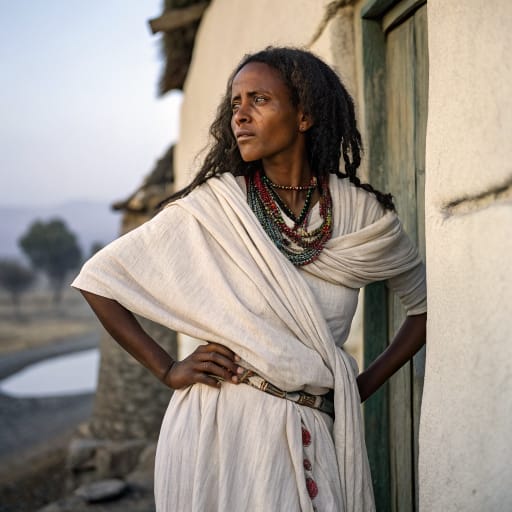

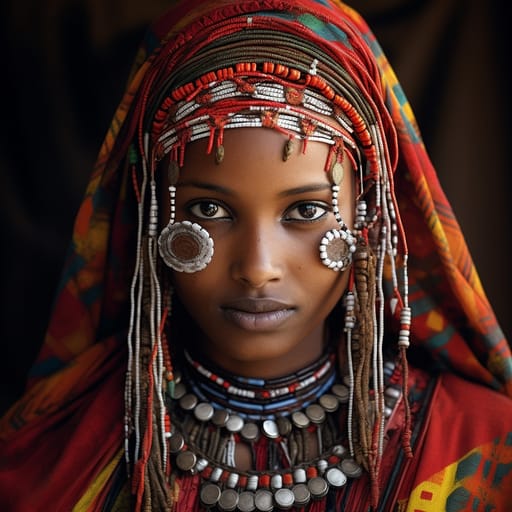
Typical Vidiri Phenotypes
Reference for AI generation: hair, eyes, skin, facial structure, build
Explore phenotype categories
Structured taxonomy with peer-reviewed scales · 22 anatomical categories
Erotic Poses & Sex Positions
From the pose catalog: 219 named positions with reference skeletons
Frequently asked questions about Vidiri people
Where is the Vidiri homeland?
The Vidiri homeland is Western Bahr el Ghazal, around Wau, in northwestern South Sudan in Eastern Africa.
What language do Vidiri people speak?
Vidiri people primarily speak Vidiri, a Banda variety (Ubangian, Niger Congo family); Arabic widely used as a second language.
What religion do Vidiri people practice?
The predominant religion among Vidiri people is Largely Christian, shaped by the Catholic missions based in Wau.






Make your own Vidiri images
Five a day, free, no credits to buy. The studio starts from this group's phenotype data, so you can set body type, pose and style and keep the traits accurate.
Start with Vidiri