Help us get this right
Does this portrait look right for Vazimba?
One tap. It takes a second and it is recorded.
1 says it looks right, 0 say it looks off.
Vazimba Erotic
The central highlands of Madagascar, chiefly Imerina around present-day Antananarivo, with associated communities along the western river valleys.
Undocumented. No separate Vazimba tongue is recorded; the language of their homeland is Malagasy (Austronesian).
Nothing is recorded of their own practice. Their tombs and spirits are venerated today within Malagasy ancestral religion, with offerings and prohibitions attached.
Pre-Merina inhabitants of Imerina in Malagasy tradition, ancestral to the Merina royal line through the queens Rafohy and Rangita; river communities in western Madagascar still carry the name.
About Vazimba People
The Vazimba were Madagascar's first people as the Malagasy themselves tell it: the population that held the central highlands before the ancestors of the Merina arrived, pushed out or absorbed by roughly the sixteenth and seventeenth centuries, and remembered now less as a nation than as a presence in the ground. Almost everything known about them comes from oral tradition, above all the Merina royal histories, which were set down in writing only in the 1800s. No inscription, no chronicle written at the time, no securely identified settlement. Historians still argue about who they actually were: an earlier wave of Austronesian settlers who never built states, a population with roots on the African mainland, or a label later Malagasy applied backward to whoever had been there first.
The tradition itself is specific in ways the history is not. It places them around the lakes and marshes of Imerina, near what is now Antananarivo, living by fishing, foraging and hunting rather than the terraced rice that later defined the highlands. It gives them queens, Rafohy and Rangita, whose names sit at the base of the Merina royal genealogy, which is a strange thing to find in a story about outsiders being expelled. And it gives them a defeat: King Andriamanelo drove them from Imerina, the story goes, because his people had iron spears and the Vazimba had only clay. Whether or not it happened that way, the account is doing work, marking the moment the highlands became Merina.
What outlasted the expulsion was religion. Vazimba tombs, often simple stone piles rather than the built family vaults of later highland practice, are still places people go with requests: for a child, for rain, for the end of a quarrel. Honey is left, and rum. Fady, prohibitions, attach to the sites and to the spirits, who are held to be easily offended and able to make a person sick. Vazimba spirits also speak through mediums in Malagasy possession practice. Along the western rivers, notably the Manambolo, communities carry the name today, fishing people who count themselves among those pushed west rather than absorbed. So the Vazimba are gone in the sense that no one speaks their language or lives under their kings, and not gone at all in the sense that matters most: they are underfoot, addressed, and owed something.
Related ethnic groups
Groups that share Vazimba's homeland, region, language, or religious tradition. These are likely candidates for comparative phenotype reference.
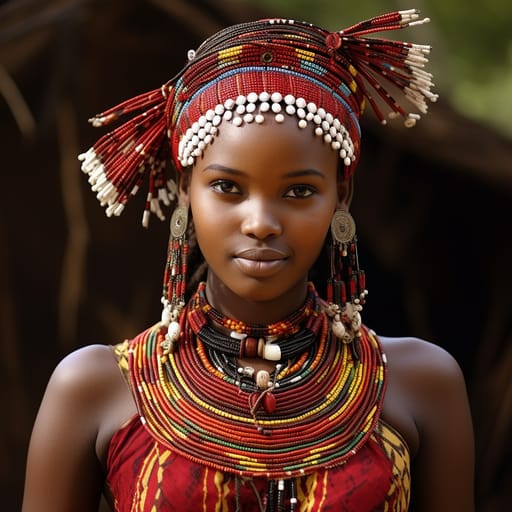
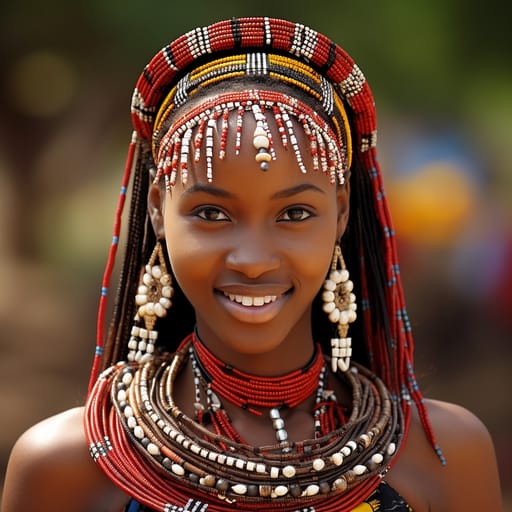
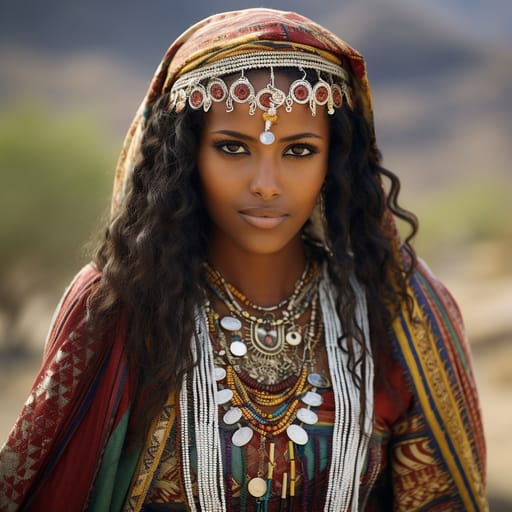
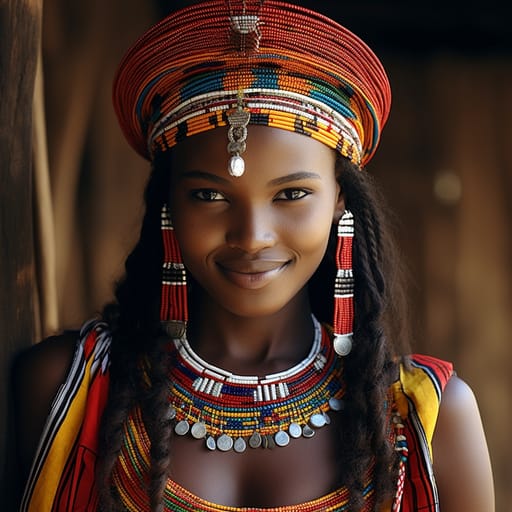
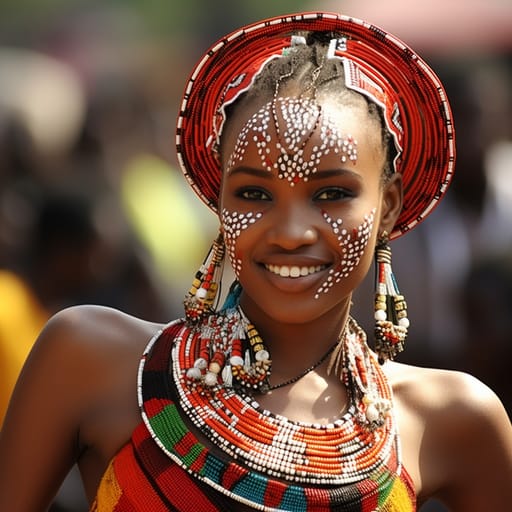
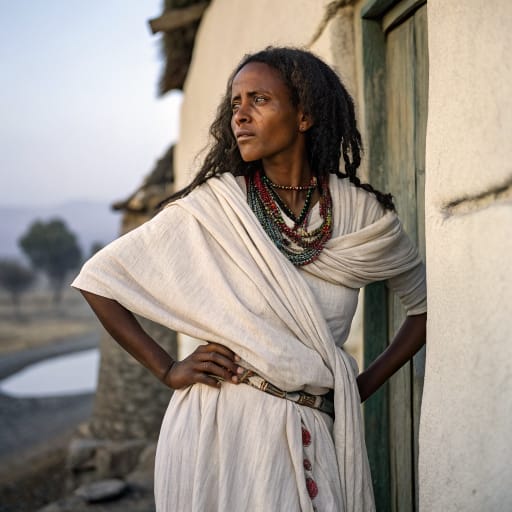
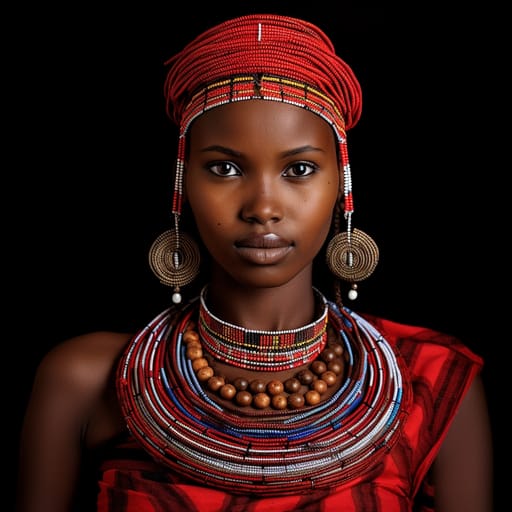
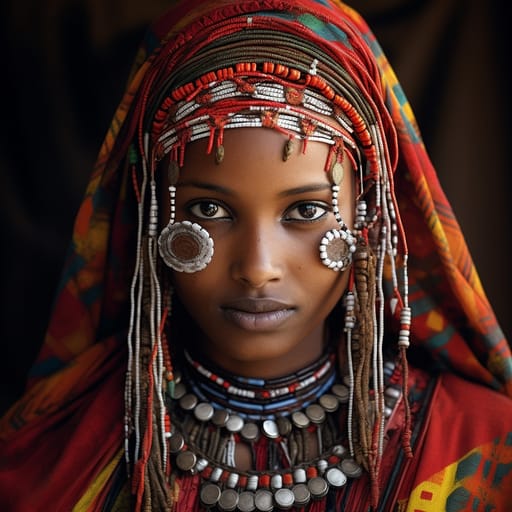
Typical Vazimba Phenotypes
Reference for AI generation: hair, eyes, skin, facial structure, build
Vazimba Body & Anatomy Reference
Cushitic / Nilo-Cushitic East African phenotype: anatomy reference for AI nude generation
Vazimba Boobs & Breasts
Vazimba boobs follow the Cushitic / Nilo-Cushitic East African profile: small-to-medium-cup, high-set, conical. Areolar diameter is usually 28-38mm, and the coloring is moderate-to-high areolar pigmentation against the brown-to-deep-brown skin tone. Breast shape tracks body composition (lean ectomorph-to-mesomorph, mean adult female BMI 19-22), so Vazimba breasts tend to be firmer and less projecting than the African-American or West African norm. Expect a forward-set shape, not the lateral spread of the West African phenotype.
Vazimba Ass & Hips
Vazimba ass and hip morphology presents as small-to-medium, high-set, rounded, distinctly different from the wide-set heavy-projection West African or African-American norm. The Vazimba pelvic profile shows narrow-to-medium iliac crests, longer torso-to-leg ratio, anchored in the Cushitic / Nilo-Cushitic East African skeletal pattern. Vazimba butt shots in adult AI imagery should render the small-to-medium, high-set, rounded silhouette with the overall build (lean ectomorph-to-mesomorph) and the fat distribution typical of the Cushitic / Nilo-Cushitic East African phenotype.
Vazimba Vagina & Pussy
Vazimba pussy anatomy typically shows brown-to-deep-brown labial pigmentation, narrow-to-medium labia minora projection. Pubic hair is usually tightly-coiled coarse texture, densely distributed. In AI-generated Vazimba nudes, labial color should blend into the brown to deep brown skin with a gradual transition, and the hair should keep its tightly-coiled coarse texture.
Vazimba Dicks & Penis
Penis reference for Vazimba men: regional mean ~13.5cm erect, moderate girth, ~12cm circumference. Coloring: deeper-pigmented than the West African norm. An accurate Vazimba cock in AI imagery matches the surrounding brown to deep brown skin rather than a generic porn default. Circumcision depends on religion and custom, not ancestry.
Vazimba Body, Curves & Build
The Vazimba figure is generally lean ectomorph-to-mesomorph, with mean adult female BMI 19-22, characteristic of Cushitic / Nilo-Cushitic East African ancestry. AI image tools tend to flatten regional body types into a few stock shapes; here the Vazimba build is kept as its own reference.
Vazimba Skin Tone & Hair Texture
Skin: brown to deep brown (Fitzpatrick V-VI). Hair: tight 4A-4C coil, often worn natural or in braided/twisted protective styles. Both are typical of Cushitic / Nilo-Cushitic East African ancestry. The most common mistake in AI nudes of Vazimba women is a body rendered lighter than the face.
Explore phenotype categories
Structured taxonomy with peer-reviewed scales · 22 anatomical categories
Erotic Poses & Sex Positions
From the pose catalog: 219 named positions with reference skeletons
Frequently asked questions about Vazimba people
Where is the Vazimba homeland?
The Vazimba homeland is The central highlands of Madagascar, chiefly Imerina around present-day Antananarivo, with associated communities along the western river valleys. in Eastern Africa.
What language do Vazimba people speak?
Vazimba people primarily speak Undocumented. No separate Vazimba tongue is recorded; the language of their homeland is Malagasy (Austronesian)..
What religion do Vazimba people practice?
The predominant religion among Vazimba people is Nothing is recorded of their own practice. Their tombs and spirits are venerated today within Malagasy ancestral religion, with offerings and prohibitions attached..






Make your own Vazimba images
Five a day, free, no credits to buy. The studio starts from this group's phenotype data, so you can set body type, pose and style and keep the traits accurate.
Start with Vazimba