Help us get this right
Does this portrait look right for Chugach?
Nobody has judged this one yet. You would be the first.
Chugach Erotic
Prince William Sound and the outer Kenai Peninsula coast, southcentral Alaska, United States; villages include Tatitlek, Chenega Bay, Nanwalek and Port Graham
Chugach Alutiiq, or Sugt'stun (Eskimo-Aleut, Yupik branch); English
Predominantly Russian Orthodox Christian
Eastern regional division of the Sugpiaq (Alutiiq) people, alongside the Koniag of Kodiak Island and the Alaska Peninsula
About Chugach People
The Chugach are the Sugpiaq people of Prince William Sound and the outer Kenai Peninsula coast in southcentral Alaska. They form the eastern edge of a sea-based culture that also includes the Alutiiq of Kodiak Island and the Alaska Peninsula. Water shapes almost everything about them. Their country is a maze of fjords, tidewater glaciers and spruce-covered islands, and for thousands of years life has depended on boats. Hunters once went out in skin kayaks and now go out in aluminum skiffs, after seals, sea lions, salmon, herring and shellfish. Sugpiaq means roughly real person. Many elders grew up calling themselves Aleut, a name Russian traders spread along the coast, and people still use it today.
Their language is the Chugach dialect of Alutiiq, which its speakers call Sugt'stun. It belongs to the Yupik branch of the Eskimo-Aleut family, and that put the Chugach on a sharp language border. To the east lived the Eyak, whose language is a distant relative of the Athabaskan languages, and past them the Tlingit. Inland and around Cook Inlet lived Athabaskan-speaking peoples, the Ahtna and the Dena'ina. Relations with these neighbors ranged from trade to raiding. Most fluent speakers today are elders, and village programs are working to pass the language on.
Outsiders arrived early, and the damage was heavy. James Cook sailed into the sound in 1778. Russian fur traders followed, built a post at Nuchek on Hinchinbrook Island and pulled Chugach hunters into the sea otter trade. Epidemics, including smallpox in the late 1830s, sharply reduced the population. Russian Orthodoxy has lasted long after the Russians left. Orthodox churches are still at the center of village life in Tatitlek, Nanwalek and Port Graham, and Orthodox Christmas in January brings starring, when people carry a spinning star from house to house and sing carols.
The twentieth century brought two more disasters. The 1964 Good Friday earthquake sent a wave through the village of Chenega that killed about a third of its people and destroyed the settlement. Survivors waited twenty years before rebuilding at Chenega Bay. In 1989 the Exxon Valdez hit Bligh Reef, not far from Tatitlek, and spilled oil onto the shores and waters Chugach families rely on for food. Chugach Alaska Corporation, created under the 1971 Alaska Native Claims Settlement Act, now holds regional land alongside village corporations and tribal councils. Chugach people live in their home villages and in Cordova, Valdez, Seward and Anchorage, and many still put up salmon, seal oil and berries every year.
Related ethnic groups
Groups that share Chugach's homeland, region, language, or religious tradition. These are likely candidates for comparative phenotype reference.
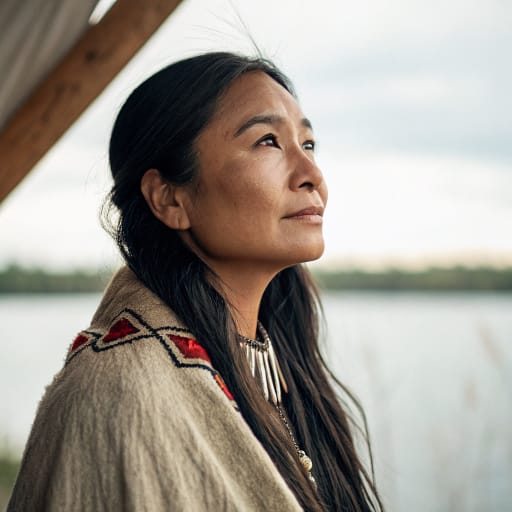
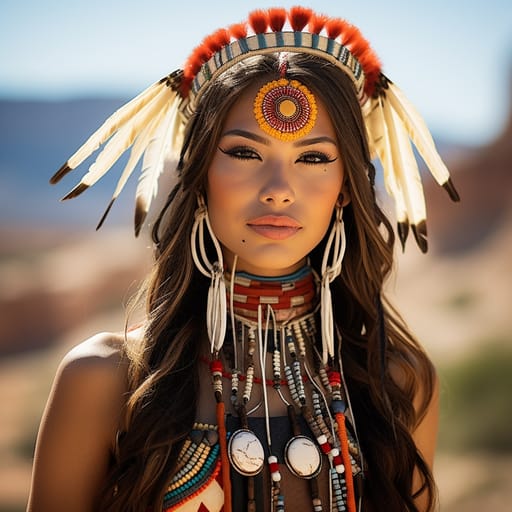
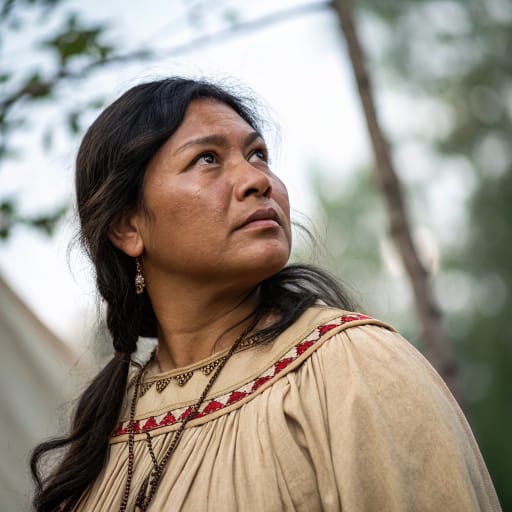
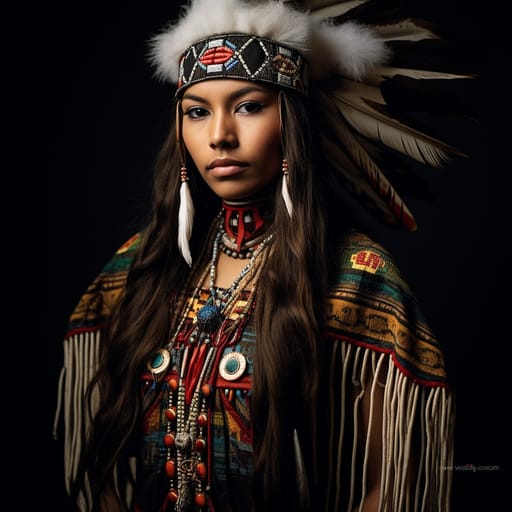
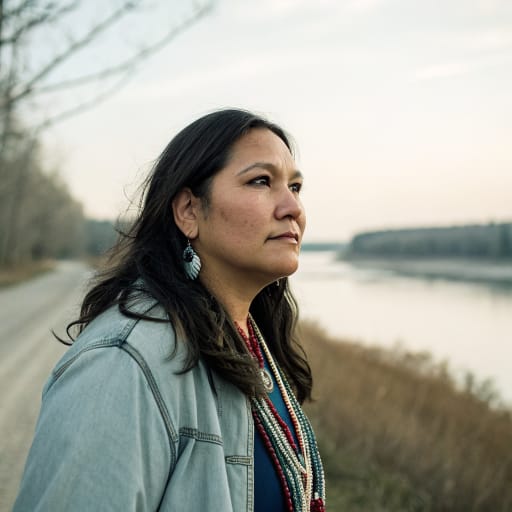
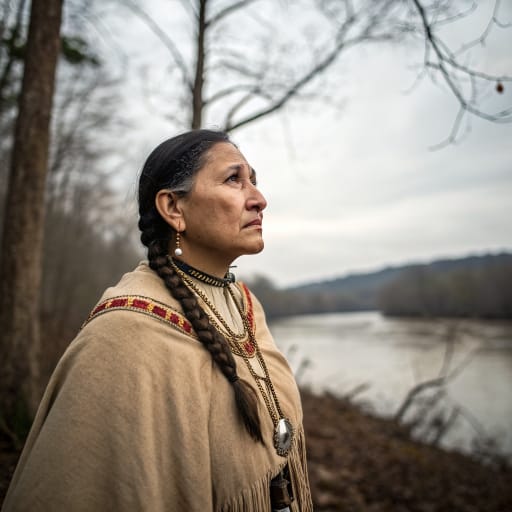
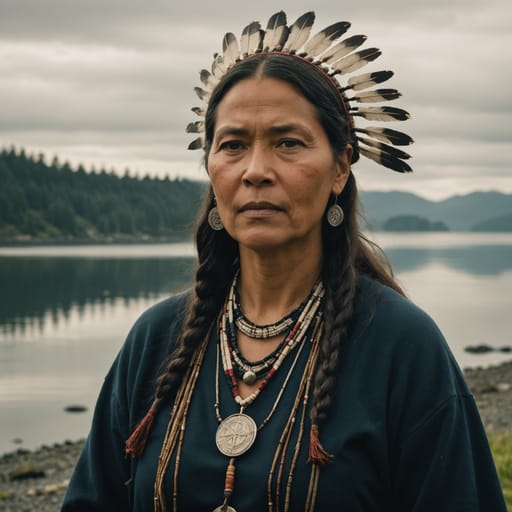
Typical Chugach Phenotypes
Reference for AI generation: hair, eyes, skin, facial structure, build
Chugach Body & Anatomy Reference
Indigenous Northern American / Algonquian-Iroquoian phenotype: anatomy reference for AI nude generation
Chugach Boobs & Breasts
The typical Chugach bust is medium cup, moderate projection, in line with the wider Indigenous Northern American / Algonquian-Iroquoian pattern. Areolas usually fall in the 30-44mm range, with medium-brown areolar pigmentation against the copper-to-medium-brown skin tone. Compared with the smaller East Asian bust, Chugach breasts sit forward and are generally full and moderate projection. A faithful AI render of Chugach tits keeps that shape and areola size.
Chugach Ass & Hips
Butt shape among Chugach women: medium, moderate-to-full projection, over medium iliac crests. This follows Indigenous Northern American / Algonquian-Iroquoian ancestry and looks quite unlike the slim East Asian narrow-hip profile. An accurate Chugach ass in adult AI imagery keeps both the silhouette and the overall build (mesomorph, broader frame in northern Indigenous populations) instead of a generic average.
Chugach Vagina & Pussy
Vulvar anatomy among Chugach women: medium-brown labial pigmentation. Pubic hair tends to be straight medium-coarse texture, in the usual inverted-triangle pattern. Both follow Indigenous Northern American / Algonquian-Iroquoian pigmentation, which is why Chugach pussy renders should not fall back on a pale, sparse Western template.
Chugach Dicks & Penis
The Chugach cock profile, from Indigenous Northern American / Algonquian-Iroquoian anthropometric data: regional mean ~13cm erect; moderate girth; medium-brown shaft pigmentation. Pubic hair has a straight medium-coarse texture and forms the usual inverted-V pattern. Whether Chugach men are circumcised follows religious and cultural practice rather than phenotype.
Chugach Body, Curves & Build
Build and curves among Chugach women follow the Indigenous Northern American / Algonquian-Iroquoian pattern: mesomorph, broader frame in northern Indigenous populations, mean adult female BMI 25-28. Proportions matter as much as skin tone, so Chugach figures should keep their regional height and limb ratios.
Chugach Skin Tone & Hair Texture
The Chugach skin range is copper to medium-brown (Fitzpatrick III-V), and hair tends to be straight 1A, dark-brown to black, often thick and dense. That combination marks the Indigenous Northern American / Algonquian-Iroquoian phenotype, and skin tone is the trait AI generators most often get wrong for Chugach women.
Explore phenotype categories
Structured taxonomy with peer-reviewed scales · 22 anatomical categories
Erotic Poses & Sex Positions
From the pose catalog: 219 named positions with reference skeletons
Frequently asked questions about Chugach people
Where is the Chugach homeland?
The Chugach homeland is Prince William Sound and the outer Kenai Peninsula coast, southcentral Alaska, United States; villages include Tatitlek, Chenega Bay, Nanwalek and Port Graham in North America.
What language do Chugach people speak?
Chugach people primarily speak Chugach Alutiiq, or Sugt'stun (Eskimo-Aleut, Yupik branch); English.
What religion do Chugach people practice?
The predominant religion among Chugach people is Predominantly Russian Orthodox Christian.






Make your own Chugach images
Five a day, free, no credits to buy. The studio starts from this group's phenotype data, so you can set body type, pose and style and keep the traits accurate.
Start with Chugach