Help us get this right
Does this portrait look right for Chickahominy?
Nobody has judged this one yet. You would be the first.
Chickahominy Erotic
Tidewater Virginia, United States: historically the Chickahominy River valley, today mainly Charles City County and New Kent County
English (Indo-European); historically Powhatan, or Virginia Algonquian (Algonquian), no longer spoken
Mostly Christian, predominantly Baptist; historically Powhatan-area Algonquian traditional religion
Chickahominy Indian Tribe (Charles City County) and Chickahominy Indians Eastern Division (New Kent County), both federally recognized; Virginia Algonquian peoples, historically independent of the Powhatan chiefdom
About Chickahominy People
The Chickahominy are an Algonquian people of Tidewater Virginia, and their name is usually translated as coarse-ground corn people. That fits how the English first met them in 1607: farmers along the river that still bears their name, with grain to trade when Jamestown was going hungry. What sets them apart among Virginia's tribes is a stubborn streak of independence. While the Powhatan paramount chiefdom held most of the coastal plain, the Chickahominy stayed outside its control. They ran their affairs through a council of elders and priests rather than a single hereditary ruler.
That independence set the terms of their first deal with the colony. In 1614 they signed a treaty that made them allies of the English, pledged to supply warriors and corn, in exchange for keeping their own leaders. It bought time, not safety. Over the next century, war, land cessions and settler pressure pushed them away from their river towns. By the early 1700s families had regrouped in the ridge country of present-day Charles City County, between the Chickahominy and James rivers. A second community in neighboring New Kent County later organized on its own as the Chickahominy Indians Eastern Division.
Their ancestors spoke Powhatan, a Virginia language in the Algonquian family, whose relatives once ran the length of the Atlantic seaboard. It went silent long ago and survives mostly in place names and in word lists that colonists wrote down. The community has spoken English for generations. Christianity, overwhelmingly Baptist, sits at the center of daily life, and the tribe's own churches have long served as its civic backbone as much as its places of worship.
For the Chickahominy, the twentieth century was a fight to stay on paper. Virginia's 1924 Racial Integrity Act, enforced with zeal by state registrar Walter Plecker, pushed officials to reclassify Native people as "colored" and strip the word Indian from birth and marriage records. Chickahominy families kept their identity alive through kinship, church and decades of petitioning. Virginia recognized both tribes in 1983. In 2018 an act of Congress gave both federal recognition, along with four other Virginia tribes. Today the tribal grounds in Charles City County host a yearly fall festival and powwow, where dancers in regalia draw members home from across the region and beyond.
Related ethnic groups
Groups that share Chickahominy's homeland, region, language, or religious tradition. These are likely candidates for comparative phenotype reference.
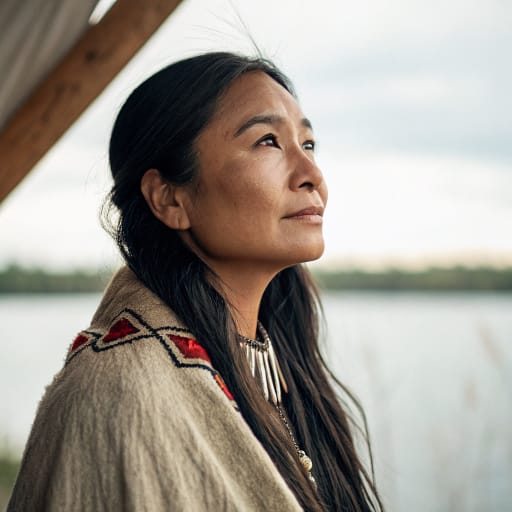
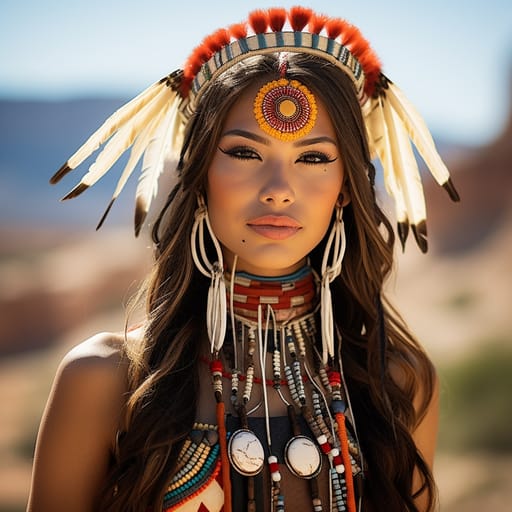
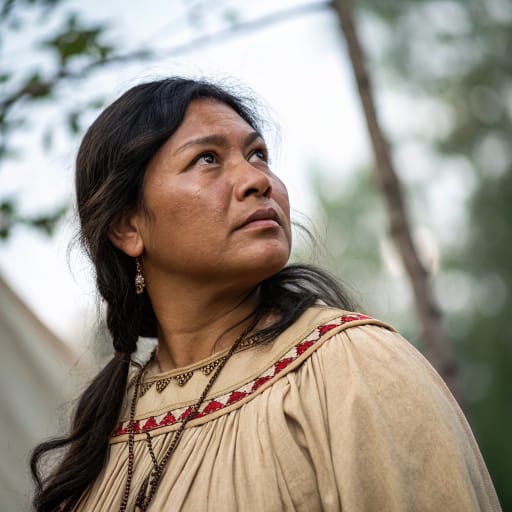
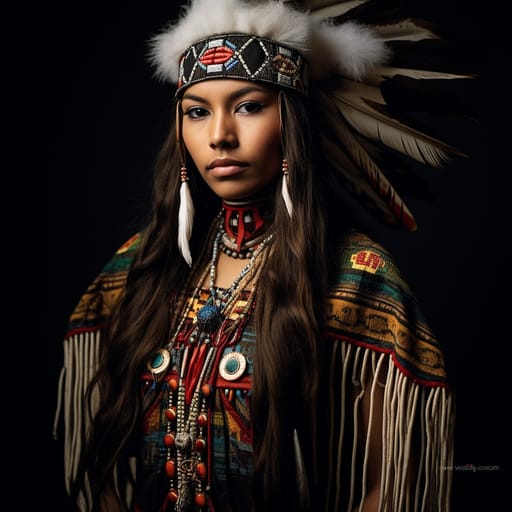
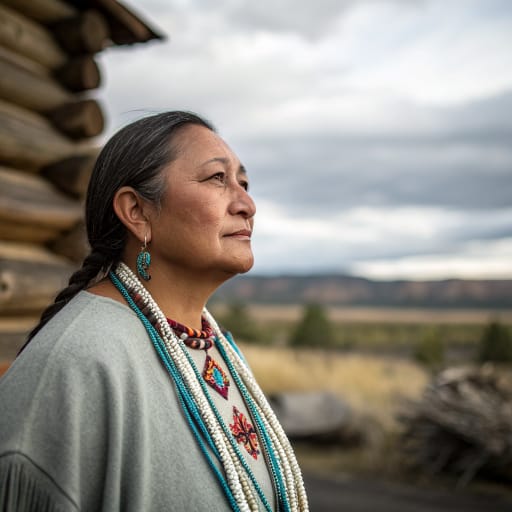
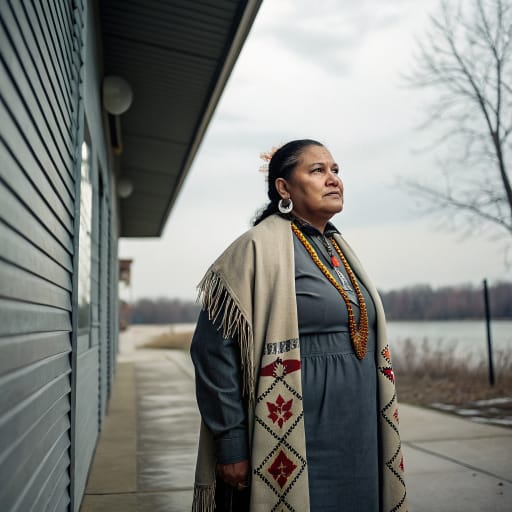
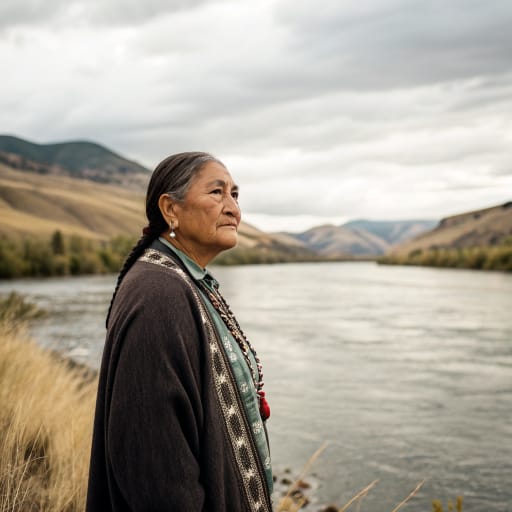
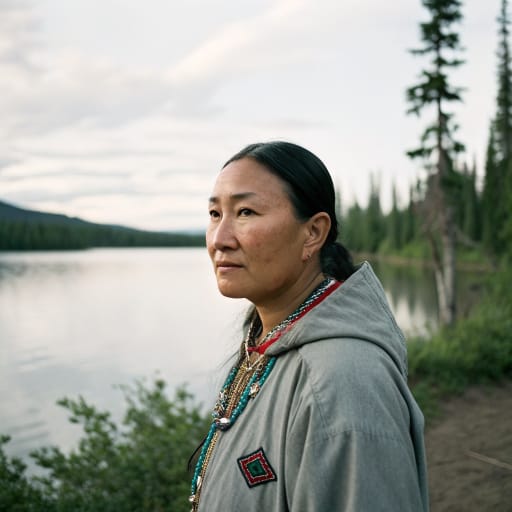
Typical Chickahominy Phenotypes
Reference for AI generation: hair, eyes, skin, facial structure, build
Chickahominy Body & Anatomy Reference
Anatomy by feature, Indigenous Northern American / Algonquian-Iroquoian phenotype
Chickahominy Boobs & Breasts
Bust reference for Chickahominy women: medium cup, moderate projection, which is typical of Indigenous Northern American / Algonquian-Iroquoian ancestry. Areolas measure about 30-44mm across, with medium-brown pigmentation. Body type (mesomorph, broader frame in northern Indigenous populations) shapes the bust as well, so Chickahominy tits are usually full and moderate projection. In AI imagery, keep the forward-set shape rather than drifting toward the smaller East Asian bust.
Chickahominy Ass & Hips
The Chickahominy ass is typically medium, moderate-to-full projection, which sets it apart from the slim East Asian narrow-hip profile. Underneath, the pelvis shows medium iliac crests, part of the Indigenous Northern American / Algonquian-Iroquoian skeletal pattern. For Chickahominy butt pics and AI renders, match that silhouette and the overall build (mesomorph, broader frame in northern Indigenous populations).
Chickahominy Vagina & Pussy
Chickahominy pussy and vulvar anatomy presents medium-brown labial pigmentation, consistent with the Indigenous Northern American / Algonquian-Iroquoian phenotype's pigmentation pattern. Chickahominy pubic hair is typically straight medium-coarse texture, in the inverted-triangle pattern. For anatomically accurate Chickahominy pussy renders the labial coloration should match the surrounding copper to medium-brown skin tone with a continuous gradient, and the hair should keep its straight medium-coarse texture.
Chickahominy Dicks & Penis
Chickahominy dicks follow the Indigenous Northern American / Algonquian-Iroquoian reference data: regional mean ~13cm erect; moderate girth; medium-brown shaft pigmentation. Shaft color should track the copper to medium-brown skin tone with a smooth change toward the glans, and Chickahominy pubic hair keeps its straight medium-coarse texture.
Chickahominy Body, Curves & Build
Chickahominy body type and overall build presents as mesomorph, broader frame in northern Indigenous populations, with mean adult female BMI 25-28: the characteristic Indigenous Northern American / Algonquian-Iroquoian habitus. Chickahominy curves and proportions should keep the regional skeletal frame (height, shoulder-to-hip ratio, limb proportions) rather than a generic mesomorph default.
Chickahominy Skin Tone & Hair Texture
Chickahominy skin sits in the copper to medium-brown (Fitzpatrick III-V) band. Hair is typically straight 1A, dark-brown to black, often thick and dense, in keeping with the Indigenous Northern American / Algonquian-Iroquoian phenotype. In nude renders the skin should stay one even tone from face to body, and body, pubic and head hair should match.
Explore phenotype categories
Structured taxonomy with peer-reviewed scales · 22 anatomical categories
Erotic Poses & Sex Positions
From the pose catalog: 219 named positions with reference skeletons
Frequently asked questions about Chickahominy people
Where is the Chickahominy homeland?
The Chickahominy homeland is Tidewater Virginia, United States: historically the Chickahominy River valley, today mainly Charles City County and New Kent County in North America.
What language do Chickahominy people speak?
Chickahominy people primarily speak English (Indo-European); historically Powhatan, or Virginia Algonquian (Algonquian), no longer spoken.
What religion do Chickahominy people practice?
The predominant religion among Chickahominy people is Mostly Christian, predominantly Baptist; historically Powhatan-area Algonquian traditional religion.






Make your own Chickahominy images
Five a day, free, no credits to buy. The studio starts from this group's phenotype data, so you can set body type, pose and style and keep the traits accurate.
Start with Chickahominy