Help us get this right
Does this portrait look right for Babine?
Nobody has judged this one yet. You would be the first.
Babine Erotic
Babine Lake, the Babine River and the Takla Lake area in the central interior of British Columbia, Canada; main communities at Woyenne (Burns Lake), Tachet and Fort Babine.
Babine-Witsuwit'en, Nedut'en dialect (Northern Athabaskan, Na-Dene); English is now the everyday language.
Predominantly Roman Catholic since the Oblate missions of the 19th century, alongside the balhats feast system and older spiritual practice.
Often classed as Northern Carrier within the wider Dakelh grouping; closest kin are the Wet'suwet'en. Bands include Lake Babine Nation and Takla Lake First Nation. Four matrilineal clans: Bear, Caribou, Frog, Beaver.
About Babine People
The Babine carry a fur trade nickname that stuck. French-speaking traders who reached their lake in the early 1800s saw high-ranking women wearing labrets, wooden plugs set in the lower lip, and called the people babine, a word for a hanging lip. Their own name is Nedut'en, also written Nadot'en, and they are the people of Babine Lake, the longest natural lake in British Columbia, set in the central interior and draining by the Babine River into the Skeena.
Outsiders have long filed them under Carrier, and older sources call them Northern Carrier, but the label fits poorly. Their language, Babine-Witsuwit'en, is a Northern Athabaskan tongue shared with the Wet'suwet'en of the Bulkley valley and is distinct from the Dakelh spoken around Stuart Lake. Fluent speakers today are mostly elders, and the nation runs programs to bring it back. Culturally the Babine face west as much as south. Generations of trade and marriage with the Gitxsan on the Skeena tied them into a shared world of matrilineal clans (Bear, Caribou, Frog and Beaver), hereditary chief names and crests, and above all the balhats, the feast hall system through which names are passed, debts paid, deaths marked and territory witnessed in public. Lake Babine people describe the balhats as their law, not as a ceremony.
Salmon is the other constant. The sockeye run into Babine Lake is the largest in the Skeena system, and for centuries the Babine took it with weirs built across the river. Between 1904 and 1906 federal fisheries officers, pushed by coastal canneries, tore the weirs out. The Babine resisted, chiefs traveled to Ottawa, and the settlement known as the Barricade Agreement traded the weirs for nets and promises of farmland and tools. It is still a live grievance and a reference point in every later negotiation over fish.
The Hudson's Bay Company built a post on the lake in 1822. Oblate priests followed and tried to suppress the feasts. Most Babine are Catholic today, and the balhats goes on regardless. Many children were sent to the Lejac residential school at Fraser Lake. In the mid twentieth century families moved off the lake toward wage work in the sawmills, and the largest community is now Woyenne, beside the town of Burns Lake, with Tachet and Fort Babine (Wit'at) still lived in on the lake itself. Lake Babine Nation is one of the larger First Nations in British Columbia, and in 2020 it signed a Foundation Agreement with the provincial and federal governments meant to return land, forestry and fisheries decisions to the nation in stages.
Related ethnic groups
Groups that share Babine's homeland, region, language, or religious tradition. These are likely candidates for comparative phenotype reference.
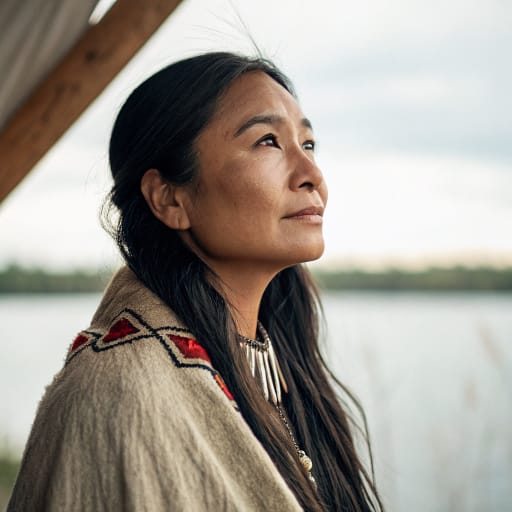
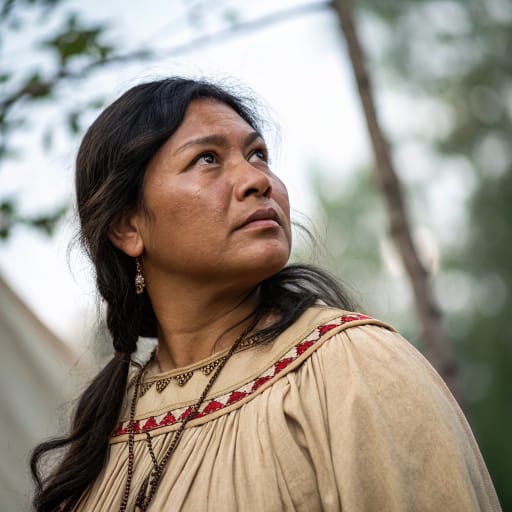
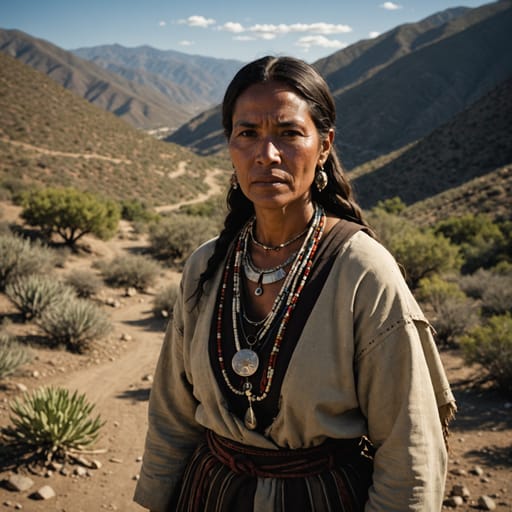
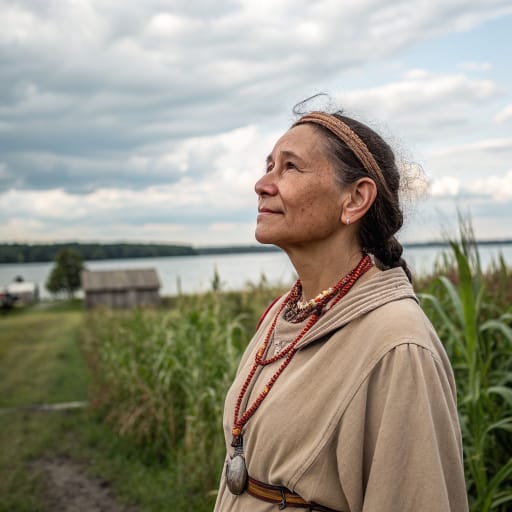
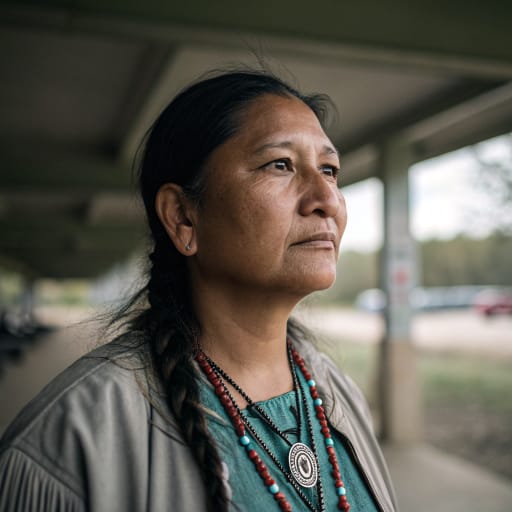
Typical Babine Phenotypes
Reference for AI generation: hair, eyes, skin, facial structure, build
Babine Body & Anatomy Reference
Anatomy by feature, Indigenous Northern American / Algonquian-Iroquoian phenotype
Babine Boobs & Breasts
Bust reference for Babine women: medium cup, moderate projection, which is typical of Indigenous Northern American / Algonquian-Iroquoian ancestry. Areolas measure about 30-44mm across, with medium-brown pigmentation. Body type (mesomorph, broader frame in northern Indigenous populations) shapes the bust as well, so Babine tits are usually full and moderate projection. In AI imagery, keep the forward-set shape rather than drifting toward the smaller East Asian bust.
Babine Ass & Hips
The Babine ass is typically medium, moderate-to-full projection, which sets it apart from the slim East Asian narrow-hip profile. Underneath, the pelvis shows medium iliac crests, part of the Indigenous Northern American / Algonquian-Iroquoian skeletal pattern. For Babine butt pics and AI renders, match that silhouette and the overall build (mesomorph, broader frame in northern Indigenous populations).
Babine Vagina & Pussy
Babine pussy and vulvar anatomy presents medium-brown labial pigmentation, consistent with the Indigenous Northern American / Algonquian-Iroquoian phenotype's pigmentation pattern. Babine pubic hair is typically straight medium-coarse texture, in the inverted-triangle pattern. For anatomically accurate Babine pussy renders the labial coloration should match the surrounding copper to medium-brown skin tone with a continuous gradient, and the hair should keep its straight medium-coarse texture.
Babine Dicks & Penis
Babine dicks follow the Indigenous Northern American / Algonquian-Iroquoian reference data: regional mean ~13cm erect; moderate girth; medium-brown shaft pigmentation. Shaft color should track the copper to medium-brown skin tone with a smooth change toward the glans, and Babine pubic hair keeps its straight medium-coarse texture.
Babine Body, Curves & Build
Babine body type and overall build presents as mesomorph, broader frame in northern Indigenous populations, with mean adult female BMI 25-28: the characteristic Indigenous Northern American / Algonquian-Iroquoian habitus. Babine curves and proportions should keep the regional skeletal frame (height, shoulder-to-hip ratio, limb proportions) rather than a generic mesomorph default.
Babine Skin Tone & Hair Texture
Babine skin sits in the copper to medium-brown (Fitzpatrick III-V) band. Hair is typically straight 1A, dark-brown to black, often thick and dense, in keeping with the Indigenous Northern American / Algonquian-Iroquoian phenotype. In nude renders the skin should stay one even tone from face to body, and body, pubic and head hair should match.
Explore phenotype categories
Structured taxonomy with peer-reviewed scales · 22 anatomical categories
Erotic Poses & Sex Positions
From the pose catalog: 219 named positions with reference skeletons
Frequently asked questions about Babine people
Where is the Babine homeland?
The Babine homeland is Babine Lake, the Babine River and the Takla Lake area in the central interior of British Columbia, Canada; main communities at Woyenne (Burns Lake), Tachet and Fort Babine. in North America.
What language do Babine people speak?
Babine people primarily speak Babine-Witsuwit'en, Nedut'en dialect (Northern Athabaskan, Na-Dene); English is now the everyday language..
What religion do Babine people practice?
The predominant religion among Babine people is Predominantly Roman Catholic since the Oblate missions of the 19th century, alongside the balhats feast system and older spiritual practice..






Make your own Babine images
Five a day, free, no credits to buy. The studio starts from this group's phenotype data, so you can set body type, pose and style and keep the traits accurate.
Start with Babine