Help us get this right
Does this portrait look right for Cedis?
Nobody has judged this one yet. You would be the first.
Cedis Erotic
South of the Yamuna River in north-central India, roughly the Bundelkhand region of present-day Madhya Pradesh and Uttar Pradesh, India
Old Indo-Aryan close to Vedic Sanskrit, later Middle Indo-Aryan Prakrits (Indo-European, Indo-Aryan)
Historical Vedic religion centered on Brahmin-led sacrifice, with an early Buddhist presence in the region
One of the Indo-Aryan peoples of ancient India; counted among the sixteen mahajanapadas of early Buddhist texts
About Cedis People
The Cedis, often spelled Chedi, were an Indo-Aryan people of ancient India. They held the country south of the Yamuna River, roughly today's Bundelkhand, from the Vedic age into the era of the great early kingdoms, until the growing power of Magadha drew the northern realms into larger empires. No separate Cedi community survives, but the name outlived the people as the name of a region. What set them apart was staying power. The Cedis turn up in nearly every layer of early Indian literature, from hymn to epic to Buddhist story. In each one they are a known realm with its own kings and its own reputation.
They first appear in the Rigveda, where a poet praises a Cedi king named Kashu for his generous gifts. Early Buddhist texts later drew up a list of sixteen mahajanapadas, the great territorial states of the north. Ceti, the Pali form of the name, was on that list, with its capital at Sotthivati, the Shuktimati of Sanskrit sources. The Cedis spoke Old Indo-Aryan speech close to Vedic Sanskrit, which later gave way to the Prakrits of the north. Religious life centered on Vedic sacrifice and the Brahmin priests who performed it. Buddhist scripture also places the monk Anuruddha among the Cetis, so the new teaching reached their country early.
The Mahabharata gives the Cedis their most famous ruler, Shishupala. He was Krishna's cousin, his bitter rival and an ally of Jarasandha of Magadha. At Yudhishthira's royal consecration he heaped insults on Krishna and was killed for it. His son Dhrishtaketu then fought on the Pandava side at Kurukshetra. The epic also remembers an earlier king of Cedi, Uparichara Vasu, who sank into the earth for speaking falsely. A Buddhist birth story tells a strikingly similar tale about a Ceti king, Upacara, who was swallowed by the ground after telling what the story calls the first lie in the world. So the Brahmanical and Buddhist traditions each tie the same warning about kings and truth to Cedi soil.
The name kept its prestige long after the kingdom was gone. Kharavela of Kalinga's Hathigumpha inscription is often read as claiming descent from the Cedi royal line. Centuries later, the Kalachuri kings of Tripuri ruled a territory called Chedi. A calendar era counted from the middle of the 3rd century CE carries both names: the Kalachuri or Chedi era.
Related ethnic groups
Groups that share Cedis's homeland, region, language, or religious tradition. These are likely candidates for comparative phenotype reference.

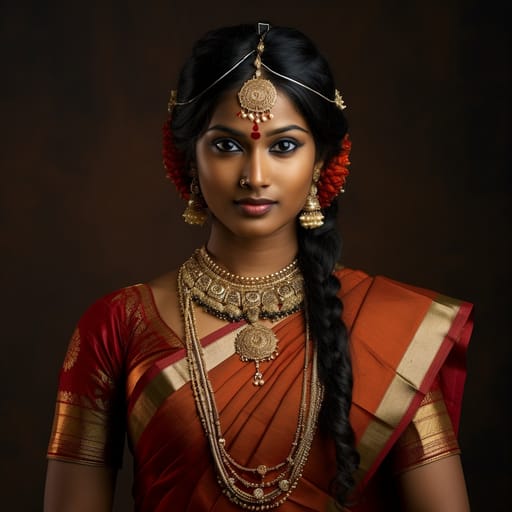
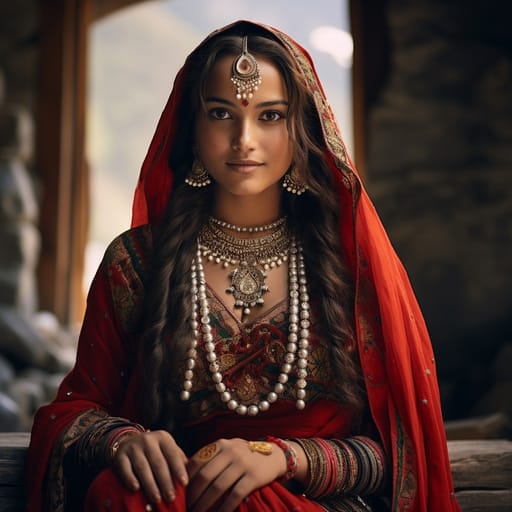
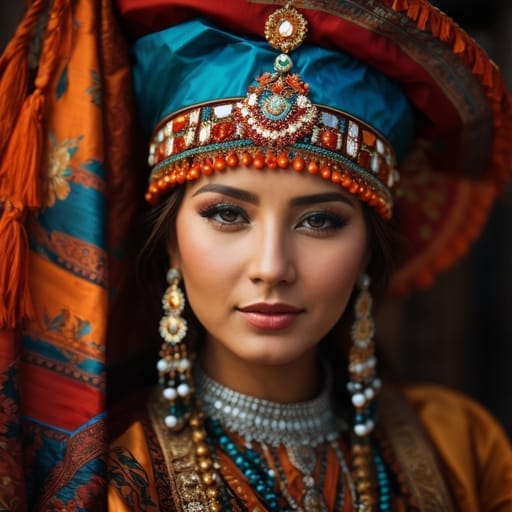
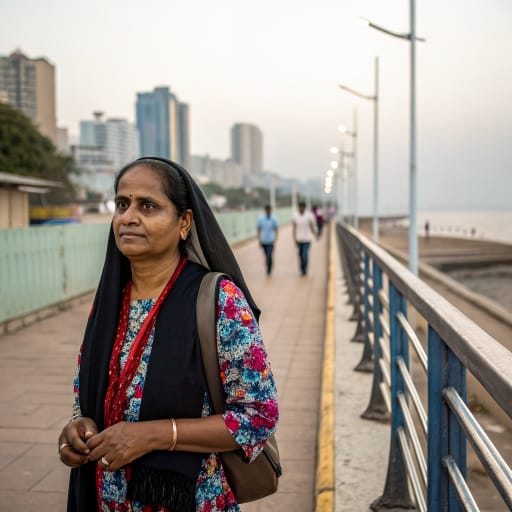
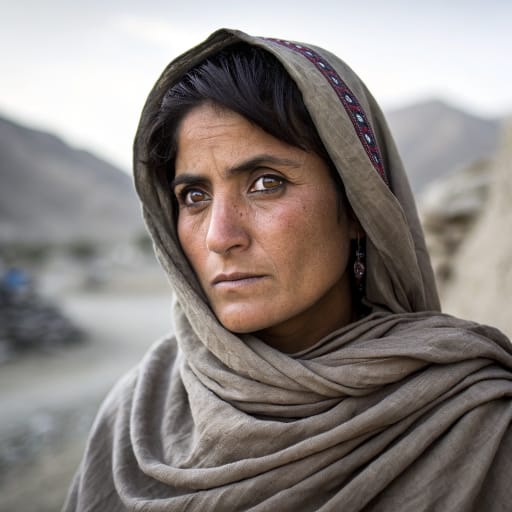
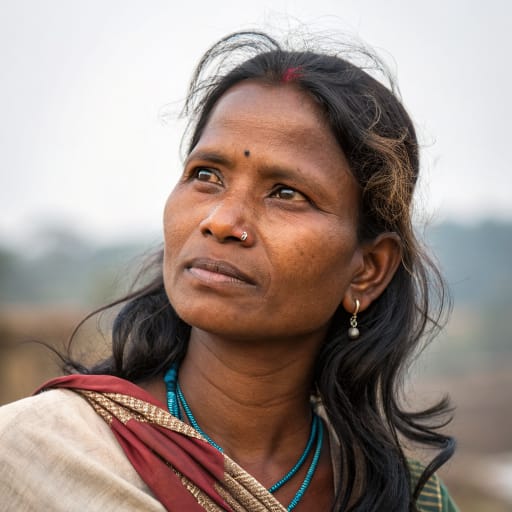
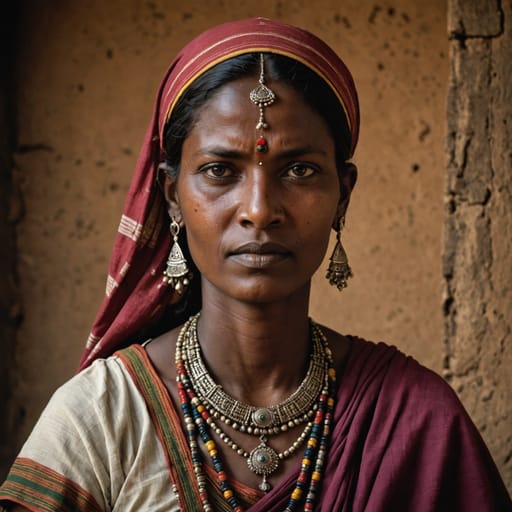
Typical Cedis Phenotypes
Reference for AI generation: hair, eyes, skin, facial structure, build
Cedis Body & Anatomy Reference
Per-feature anatomical profile for AI nude generation: Indo-Aryan / Dravidian South Asian phenotype
Cedis Boobs & Breasts
Cedis tits and boobs run medium-to-large cup, moderate-to-full projection, the classic Indo-Aryan / Dravidian South Asian bust profile. Cedis nipples and areolas show medium-brown to dark-brown areolar pigmentation against the wheatish-to-brown skin tone, with areolar diameter typically in the 32-46mm range and forward-set positioning rather than the smaller East Asian bust profile. Cedis breasts trend full and soft, generally fuller than the East Asian norm, a function of the endomorph-to-mesomorph with fuller hip deposition body habitus and the mean adult female BMI 22-25. For anatomically accurate AI-generated Cedis nudes the render preserves the medium-to-large cup, moderate-to-full projection shape, 32-46mm areolas with medium-brown to dark-brown pigmentation, and the torso proportions of the Indo-Aryan / Dravidian South Asian phenotype.
Cedis Ass & Hips
Cedis hips and butt usually read as medium-to-full, moderate-to-high projection, classic curvy hip profile. The skeletal base is medium-to-wide iliac crests, full gluteal-femoral fat distribution, the Indo-Aryan / Dravidian South Asian pattern. Set against the slim hip profile of East Asian women, the difference is easy to see, and the hip-to-waist ratio is often what identifies Cedis women in photos.
Cedis Vagina & Pussy
Expect medium-brown to dark-brown labial pigmentation, fuller labia minora projection on Cedis women, in keeping with Indo-Aryan / Dravidian South Asian ancestry. The pubic hair is straight-to-wavy coarse texture, dense distribution. Coloring should run evenly from the wheatish to brown skin of the thighs to the labia, and Cedis nude imagery should keep the hair's straight-to-wavy coarse texture.
Cedis Dicks & Penis
Cedis dick and penile anatomy in adult AI generation should anchor on the regional reference data: regional mean ~13cm erect, moderate girth, and medium-brown shaft pigmentation. The Cedis cock profile reflects the Indo-Aryan / Dravidian South Asian population's anthropometric measurements. The shaft pigmentation should track the surrounding wheatish to brown skin tone, and the pubic hair should keep its straight-to-wavy coarse texture in the typical inverted-V escutcheon.
Cedis Body, Curves & Build
Cedis body type: endomorph-to-mesomorph with fuller hip deposition, with mean adult female BMI 22-25. This is the typical Indo-Aryan / Dravidian South Asian build. Height range, shoulder-to-hip ratio and fat distribution all follow from it, which is what an accurate Cedis nude body should show.
Cedis Skin Tone & Hair Texture
Cedis skin tone falls in the wheatish to brown (Fitzpatrick III-V) band, the surface signal most often miscalibrated by generic AI nude generators. Cedis hair texture is typically straight-to-wavy 1A-2B, dense, dark-brown to black, characteristic of the Indo-Aryan / Dravidian South Asian phenotype. In Cedis nude renders the skin should hold that band consistently across the body.
Explore phenotype categories
Structured taxonomy with peer-reviewed scales · 22 anatomical categories
Erotic Poses & Sex Positions
From the pose catalog: 219 named positions with reference skeletons
Frequently asked questions about Cedis people
Where is the Cedis homeland?
The Cedis homeland is South of the Yamuna River in north-central India, roughly the Bundelkhand region of present-day Madhya Pradesh and Uttar Pradesh, India in Southern Asia.
What language do Cedis people speak?
Cedis people primarily speak Old Indo-Aryan close to Vedic Sanskrit, later Middle Indo-Aryan Prakrits (Indo-European, Indo-Aryan).
What religion do Cedis people practice?
The predominant religion among Cedis people is Historical Vedic religion centered on Brahmin-led sacrifice, with an early Buddhist presence in the region.






Make your own Cedis images
Five a day, free, no credits to buy. The studio starts from this group's phenotype data, so you can set body type, pose and style and keep the traits accurate.
Start with Cedis