Help us get this right
Does this portrait look right for Birifor?
Nobody has judged this one yet. You would be the first.
Birifor Erotic
Savanna along the Black Volta: northwestern Ghana (around Sawla, Tuna and Bole), southwestern Burkina Faso and the Bouna area of northeastern Côte d'Ivoire
Birifor, in Northern (Malba) and Southern varieties (Niger-Congo, Gur, Mabia), closely related to Dagaare
Largely African traditional religion (ancestors, earth shrines, divination), with growing Christian and smaller Muslim minorities
Northern or Malba Birifor (Burkina Faso) and Southern Birifor (Ghana, Côte d'Ivoire); Mabia-speaking, closely linked to the Dagaaba and Lobi
About Birifor People
The Birifor are a people of the middle ground. Their language is a close relative of Dagaare, spoken by the Dagaaba to their north. Yet much of their daily life, from the shape of a homestead to the rhythm of ritual, follows the ways of their Lobi neighbors. French colonial writers filed them under a loose Lobi grouping, but the Birifor have always seen themselves as a people of their own. They farm the dry savanna along the Black Volta, where Ghana, Burkina Faso and Côte d'Ivoire meet. For many families the river has been less a border than a route, crossed generation after generation in search of new land. Northern Birifor, also called Malba, live in southwestern Burkina Faso. Southern Birifor live across northwestern Ghana, around Sawla, Tuna and Bole, and into the Bouna area of Côte d'Ivoire. Their language belongs to the Mabia branch of Gur, along with Dagaare, Waale and Dagbani. Many Ghanaian Birifor settled in the territory of the old Gonja kingdom, and Gonja comes from a different branch of Niger-Congo entirely. The difference goes deeper than language: Gonja had chiefs and a court, while Birifor society grew up without kings. Authority rests with lineage elders, household heads and the keepers of earth shrines.
Most Birifor still follow the older religion, which deals with ancestors, the earth and a range of spirits through shrines, sacrifice and diviners. It is a practical faith rather than a creed: people go to a diviner when a child falls sick or a harvest fails. Christian churches have grown steadily and a minority is Muslim. Still, the biggest public occasions are funerals, and at their center is the gyil, a wooden xylophone with gourd resonators hung beneath it. The Birifor are among the peoples most closely tied to the instrument. Funeral music is its own serious repertoire, kept separate from the pieces played for dancing and pleasure. Homesteads have a look of their own too: thick-walled earthen compounds with flat roofs that double as terraces for drying grain. They sit apart from one another across the fields instead of being packed into villages. Farming underpins it all, with sorghum, millet, yams, maize and groundnuts in the fields and shea trees left standing among them.
Related ethnic groups
Groups that share Birifor's homeland, region, language, or religious tradition. These are likely candidates for comparative phenotype reference.
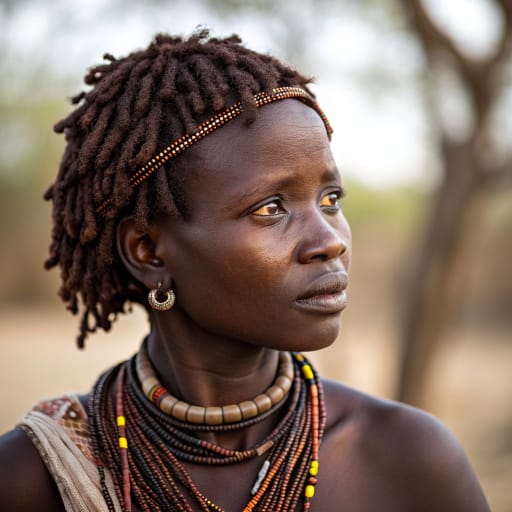
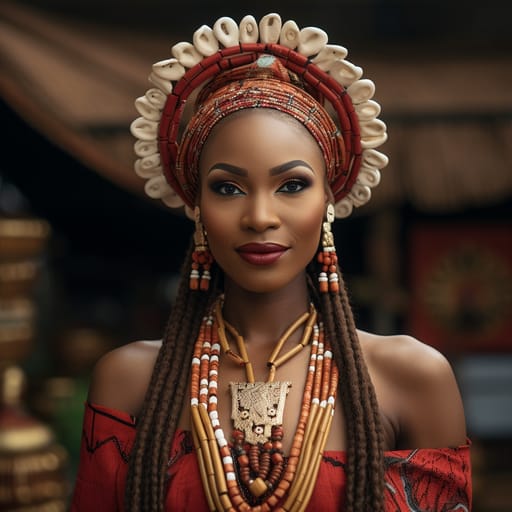
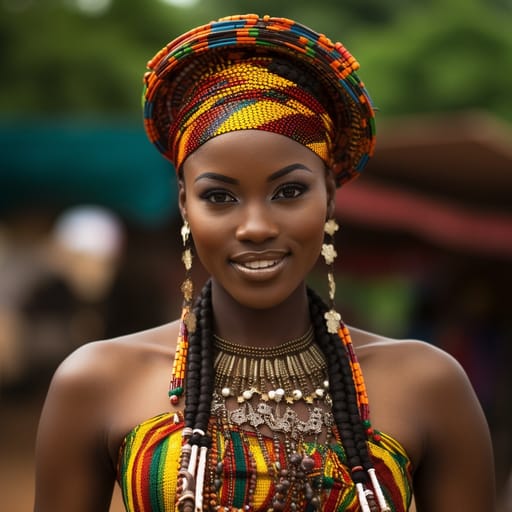
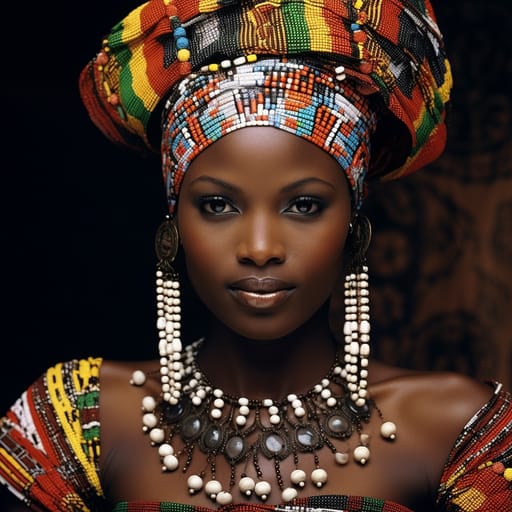
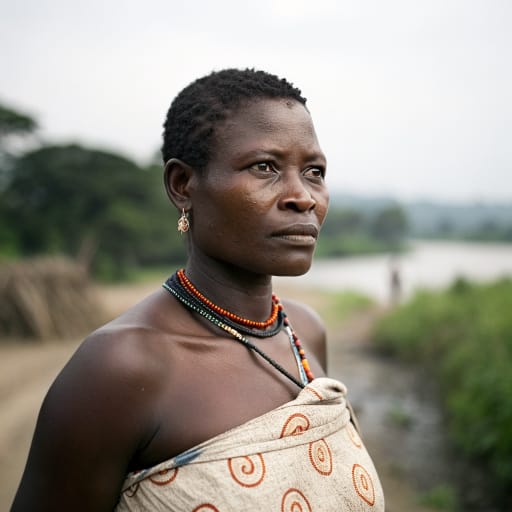
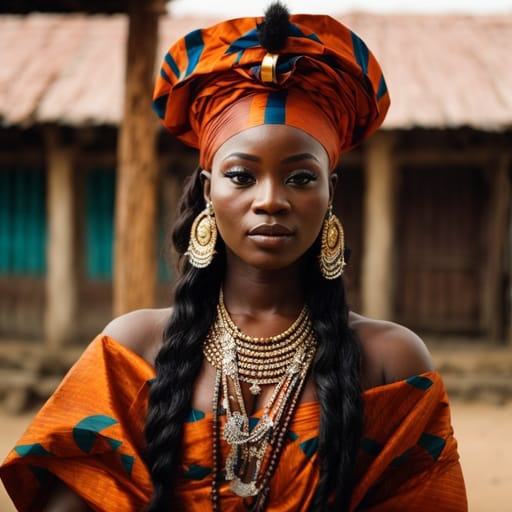
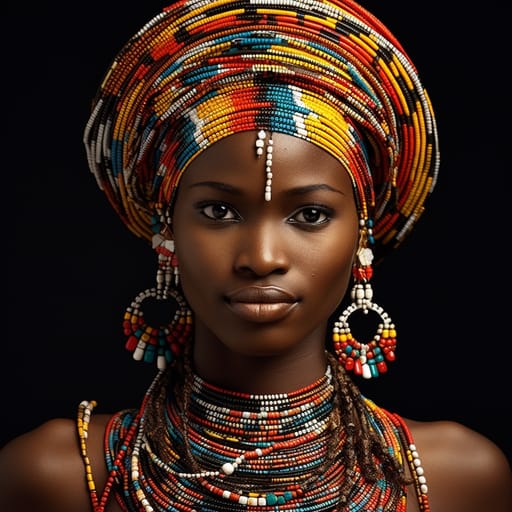
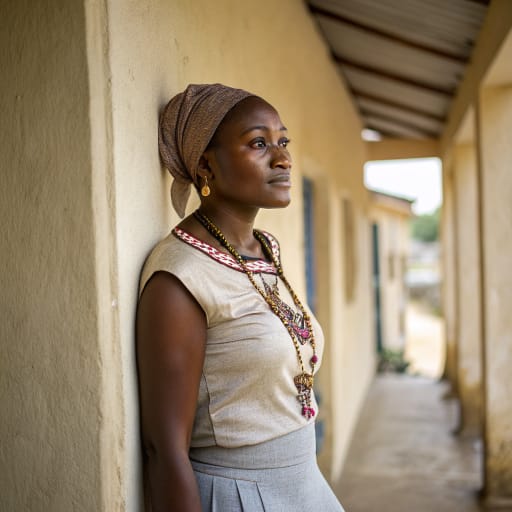
Typical Birifor Phenotypes
Reference for AI generation: hair, eyes, skin, facial structure, build
Birifor Body & Anatomy Reference
West African Niger-Congo phenotype: anatomy reference for AI nude generation
Birifor Boobs & Breasts
Bust reference for Birifor women: medium-to-large cup, full, projecting, which is typical of West African Niger-Congo ancestry. Areolas measure about 35-50mm across, with deep-brown to near-black pigmentation. Body type (mesomorph with strong gluteal-femoral fat distribution) shapes the bust as well, so Birifor tits are usually fuller and more projecting than the East African norm. In AI imagery, keep the forward-set shape rather than drifting toward the smaller conical Cushitic East African profile.
Birifor Ass & Hips
The Birifor ass is typically wide-set, full, heavily projected glutes, which sets it apart from the slim narrow-hip Cushitic East African profile. Underneath, the pelvis shows wide iliac crests, broad gynoid pelvic pattern, high glute-to-waist ratio, part of the West African Niger-Congo skeletal pattern. For Birifor butt pics and AI renders, match that silhouette and the overall build (mesomorph with strong gluteal-femoral fat distribution).
Birifor Vagina & Pussy
Birifor pussy and vulvar anatomy presents deep-brown to near-black labial pigmentation, fuller labia minora, consistent with the West African Niger-Congo phenotype's pigmentation pattern. Birifor pubic hair is typically tightly-coiled coarse texture, densely distributed, in the inverted-triangle pattern. For anatomically accurate Birifor pussy renders the labial coloration should match the surrounding medium-brown to deep-brown skin tone with a continuous gradient, and the hair should keep its tightly-coiled coarse texture.
Birifor Dicks & Penis
Birifor dicks follow the West African Niger-Congo reference data: regional mean ~14-15cm erect; above-average girth, ~13cm circumference; deep-brown-to-near-black shaft pigmentation. Shaft color should track the medium-brown to deep-brown skin tone with a smooth change toward the glans, and Birifor pubic hair keeps its tightly-coiled coarse texture.
Birifor Body, Curves & Build
Birifor body type and overall build presents as mesomorph with strong gluteal-femoral fat distribution, with mean adult female BMI 24-27: the characteristic West African Niger-Congo habitus. Birifor curves and proportions should keep the regional skeletal frame (height, shoulder-to-hip ratio, limb proportions) rather than a generic mesomorph default.
Birifor Skin Tone & Hair Texture
Birifor skin sits in the medium-brown to deep-brown (Fitzpatrick V-VI) band. Hair is typically tight 4A-4C coil, often worn natural, braided, or relaxed, in keeping with the West African Niger-Congo phenotype. In nude renders the skin should stay one even tone from face to body, and body, pubic and head hair should match.
Explore phenotype categories
Structured taxonomy with peer-reviewed scales · 22 anatomical categories
Erotic Poses & Sex Positions
From the pose catalog: 219 named positions with reference skeletons
Frequently asked questions about Birifor people
Where is the Birifor homeland?
The Birifor homeland is Savanna along the Black Volta: northwestern Ghana (around Sawla, Tuna and Bole), southwestern Burkina Faso and the Bouna area of northeastern Côte d'Ivoire in Western Africa.
What language do Birifor people speak?
Birifor people primarily speak Birifor, in Northern (Malba) and Southern varieties (Niger-Congo, Gur, Mabia), closely related to Dagaare.
What religion do Birifor people practice?
The predominant religion among Birifor people is Largely African traditional religion (ancestors, earth shrines, divination), with growing Christian and smaller Muslim minorities.






Make your own Birifor images
Five a day, free, no credits to buy. The studio starts from this group's phenotype data, so you can set body type, pose and style and keep the traits accurate.
Start with Birifor