Help us get this right
Does this portrait look right for Bakweri?
Nobody has judged this one yet. You would be the first.
Bakweri Erotic
Slopes of Mount Cameroon and the nearby coast in Fako Division, Southwest Region, Cameroon, around Buea, Limbe and Tiko
Mokpwe, also called Bakweri (Niger-Congo, Bantu, Duala group); Cameroonian Pidgin English and English widely spoken
Mostly Christian (Baptist, Presbyterian, Catholic), with traditional beliefs in mountain and water spirits still present
Coastal Bantu (Sawa) peoples of Cameroon; closely related to the Duala, Isubu, Wovea and Mboko
About Bakweri People
The Bakweri are the people of Mount Cameroon. Their villages climb the southern and eastern sides of the active volcano, from the coast around Limbe and Tiko up past Buea. Much of what holds them together as a people comes back to that mountain: its dark volcanic soil, its fog, its eruptions, and Epasa Moto, the spirit believed to rule its heights. Before the yearly Race of Hope sends runners to the summit, Bakweri notables still perform rites to keep the mountain at peace. Their language is Mokpwe, and Kpwe, also written Kwe, is the root of the Bakweri name.
Mokpwe belongs to the Duala group of coastal Bantu languages. Its close relatives are spoken by the Duala, Isubu, Wovea and Mboko, neighbors who share a good deal of custom with the Bakweri as well as words. The homeland lies in Cameroon's English-speaking Southwest Region, so everyday talk moves between Mokpwe, Cameroonian Pidgin and English. Most Bakweri today are Christian, mainly Baptist, Presbyterian and Catholic, the result of missions that reached this coast in the nineteenth century.
Colonial rule hit the Bakweri especially hard. In 1891 Kuva Likenye, chief of Buea, drove back a German column and its commander was killed. The Germans returned in 1894 and took Buea. They then turned the best land on the mountain into cocoa, rubber and oil palm plantations and moved villages onto reserves. The estates brought in laborers from across Cameroon and beyond, which left the Bakweri a minority in their own homeland. After the Second World War, the British gave the old German estates to the Cameroon Development Corporation instead of returning them. Bakweri land committees have pressed their claim ever since, starting with petitions to the United Nations in the 1940s. Buea served as a German colonial capital and later as the capital of West Cameroon. A Bakweri physician, E. M. L. Endeley, became the first premier of Southern Cameroons.
Older beliefs still live alongside church life. The anthropologist Edwin Ardener, who worked among the Bakweri in the mid-twentieth century, described two of them. In liengu, water spirits claim a young woman, and an initiation brings her back. Nyongo is a form of witchcraft in which victims are thought to be sold after death to work for others. Fear of nyongo rose and fell with the plantation economy, and anyone who got rich suddenly could become the subject of whispers.
Related ethnic groups
Groups that share Bakweri's homeland, region, language, or religious tradition. These are likely candidates for comparative phenotype reference.
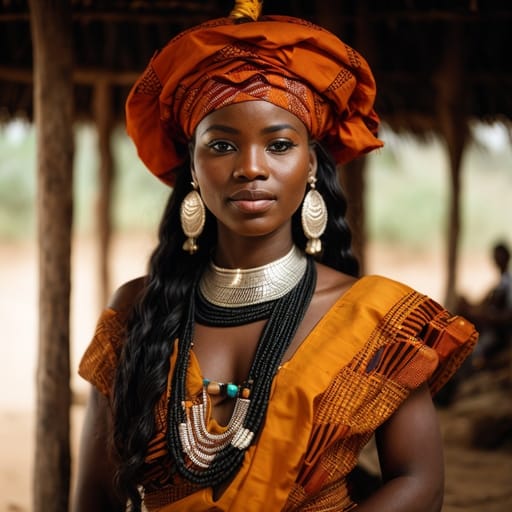
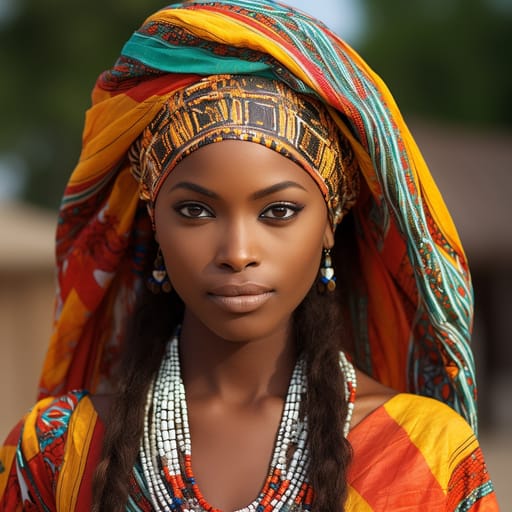
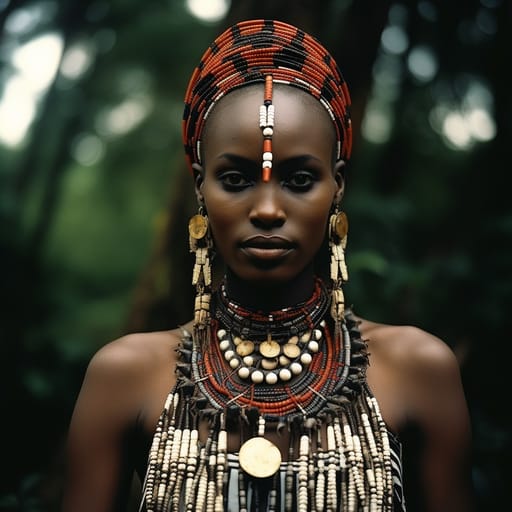
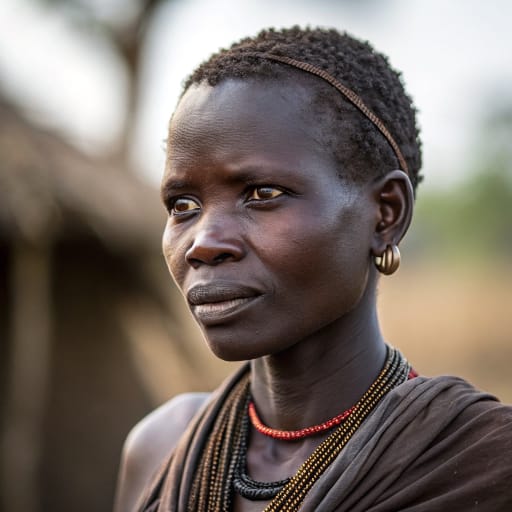
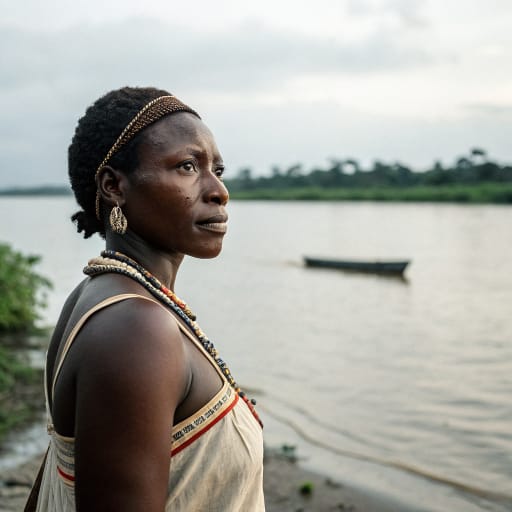
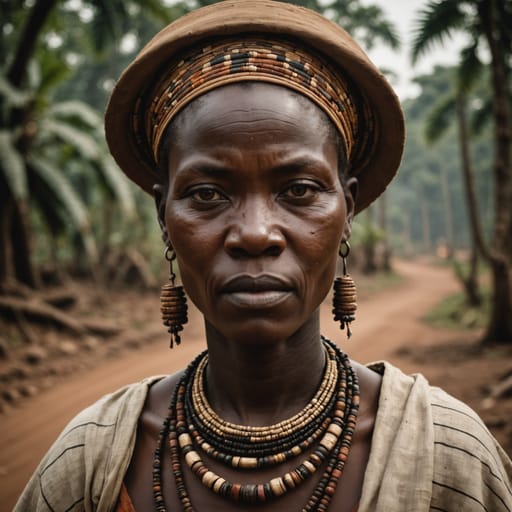
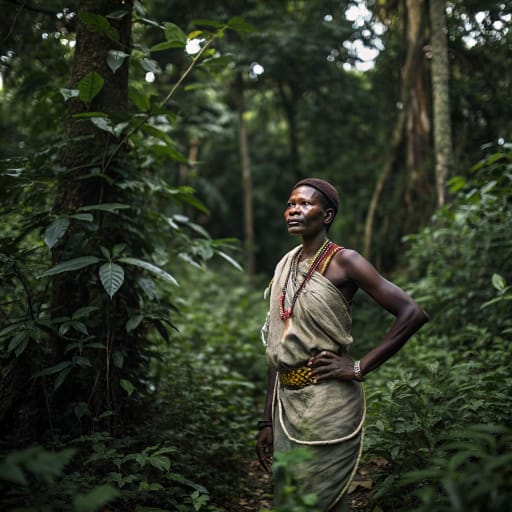
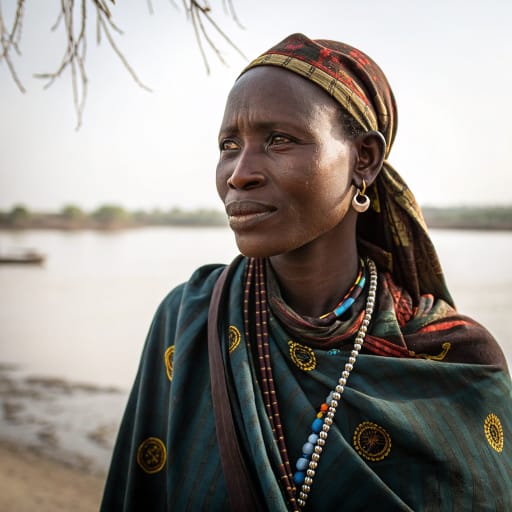
Typical Bakweri Phenotypes
Reference for AI generation: hair, eyes, skin, facial structure, build
Bakweri Body & Anatomy Reference
Anatomy by feature, Bantu / Central African Niger-Congo phenotype
Bakweri Boobs & Breasts
Bust reference for Bakweri women: medium-to-large cup, full, projecting, which is typical of Bantu / Central African Niger-Congo ancestry. Areolas measure about 32-48mm across, with deep-brown pigmentation. Body type (mesomorph with strong gluteal-femoral fat deposition) shapes the bust as well, so Bakweri tits are usually fuller projection than East African; comparable to West African norm. In AI imagery, keep the forward-set shape rather than drifting toward the smaller East African conical profile.
Bakweri Ass & Hips
The Bakweri ass is typically full, projected, wide-set glutes, which sets it apart from the slim narrow-hip Cushitic East African profile. Underneath, the pelvis shows broad iliac crests, gynoid pelvic pattern, part of the Bantu / Central African Niger-Congo skeletal pattern. For Bakweri butt pics and AI renders, match that silhouette and the overall build (mesomorph with strong gluteal-femoral fat deposition).
Bakweri Vagina & Pussy
Bakweri pussy and vulvar anatomy presents deep-brown labial pigmentation, fuller labia minora, consistent with the Bantu / Central African Niger-Congo phenotype's pigmentation pattern. Bakweri pubic hair is typically tightly-coiled coarse texture, dense distribution, in the inverted-triangle pattern. For anatomically accurate Bakweri pussy renders the labial coloration should match the surrounding deep-brown skin tone with a continuous gradient, and the hair should keep its tightly-coiled coarse texture.
Bakweri Dicks & Penis
Bakweri dicks follow the Bantu / Central African Niger-Congo reference data: regional mean ~14cm erect; above-average girth; deep-brown shaft pigmentation. Shaft color should track the deep-brown skin tone with a smooth change toward the glans, and Bakweri pubic hair keeps its tightly-coiled coarse texture.
Bakweri Body, Curves & Build
Bakweri body type and overall build presents as mesomorph with strong gluteal-femoral fat deposition, with mean adult female BMI 23-26: the characteristic Bantu / Central African Niger-Congo habitus. Bakweri curves and proportions should keep the regional skeletal frame (height, shoulder-to-hip ratio, limb proportions) rather than a generic mesomorph default.
Bakweri Skin Tone & Hair Texture
Bakweri skin sits in the deep-brown (Fitzpatrick VI) band. Hair is typically tight 4A-4C coil, in keeping with the Bantu / Central African Niger-Congo phenotype. In nude renders the skin should stay one even tone from face to body, and body, pubic and head hair should match.
Explore phenotype categories
Structured taxonomy with peer-reviewed scales · 22 anatomical categories
Erotic Poses & Sex Positions
From the pose catalog: 219 named positions with reference skeletons
Frequently asked questions about Bakweri people
Where is the Bakweri homeland?
The Bakweri homeland is Slopes of Mount Cameroon and the nearby coast in Fako Division, Southwest Region, Cameroon, around Buea, Limbe and Tiko in Central Africa.
What language do Bakweri people speak?
Bakweri people primarily speak Mokpwe, also called Bakweri (Niger-Congo, Bantu, Duala group); Cameroonian Pidgin English and English widely spoken.
What religion do Bakweri people practice?
The predominant religion among Bakweri people is Mostly Christian (Baptist, Presbyterian, Catholic), with traditional beliefs in mountain and water spirits still present.






Make your own Bakweri images
Five a day, free, no credits to buy. The studio starts from this group's phenotype data, so you can set body type, pose and style and keep the traits accurate.
Start with Bakweri