Butt shape by ethnicity: what an MRI study found and what our database records
September 20, 2026
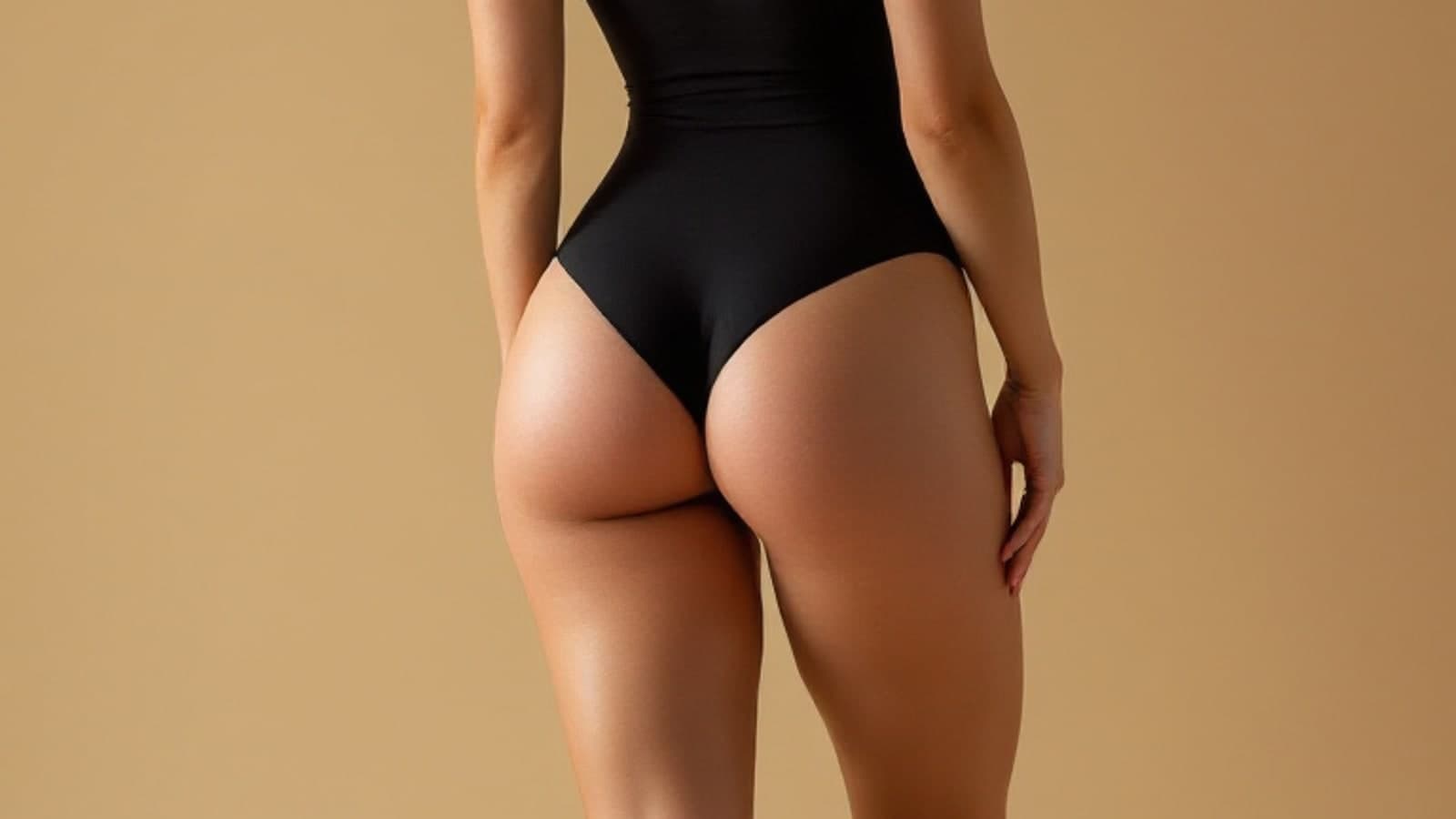
Ask what makes one butt look different from another and almost everyone gives the same answer: fat. More of it or less of it, in one place. A 2022 imaging study out of the University of Chile tested that assumption directly and found it wrong, at least for the women it measured.
This article sets that study next to what our own ethnic database records about butts, region by region. The two turn out to describe the same anatomy in the same terms, and the places where they disagree are the interesting part. As with every trait on the site, the database records modal tendencies for populations and not predictions about individuals. See reading the phenotype catalog.
The study
Danilla and colleagues at the Hospital Clinico Universidad de Chile ran a case-control comparison between women working as buttocks models, taken as the aesthetic reference group, and women with what the paper calls normal buttocks. Rather than relying on photographs alone, which is the usual method in this literature, they combined three instruments: magnetic resonance imaging, direct anthropometric measurement, and photography. MRI is what makes the study worth reading, because it separates structures that a photograph fuses into one silhouette. Bone, muscle, and subcutaneous fat all contribute to the outline, and only imaging can say how much each one contributed.
The finding that matters: the fat was the same
The headline result is a negative one. The amount of subcutaneous fat was equal in the models and the controls.
What differed was everything underneath it. Compared with controls, the models had a narrower waist, a narrower iliac crest, wider hips, a wider C point, and a larger and thicker gluteus maximus. The study attributes the projection of the buttock to that muscle directly: a bigger gluteus maximus adds more projection at the C point, the landmark of maximum projection used in the gluteal aesthetic literature. The paper places that point of maximum projection in lateral view 2.7 cm above the pubic bone.
So the difference between the two groups was skeletal frame and muscle bulk, not fat volume. The paper's own conclusion is a four-component model: an aesthetically ideal buttock is the conjunction of adequate bony shape, muscle development, a subcutaneous fat layer, and tight skin. Read carefully, fat is necessary to the result without being the variable that separated the groups. That is a more interesting claim than either "it is all fat" or "fat does not matter," and it is the one the data supports.
The practical implication is unflattering to a large industry. Fat grafting adds the one component that was already equivalent between the groups, and cannot change iliac crest width, waist width, or muscle mass. That is consistent with the common criticism that volume added without regard to the underlying frame reads as bulk rather than shape.
What our ethnic database records about butts
Every group page in the catalog carries an Ass & Hips block, and each one is built from two descriptors: a butt profile, covering size, set, and projection, and a pelvic profile, covering iliac crest width and how the hips carry fat. On the Igbo page the butt profile reads "wide-set, full, heavily projected glutes" over a pelvic profile of "wide iliac crests, broad gynoid pelvic pattern, high glute-to-waist ratio." The Butt section of the atlas collects the same descriptors for all 23 world regions on one page.
The range across the database is wide. A selection from fullest to leanest, quoted as recorded:
| Region | Butt profile | Pelvic profile | Groups carrying it |
|---|---|---|---|
| Western Africa | wide-set, full, heavily projected glutes | wide iliac crests, broad gynoid pelvic pattern, high glute-to-waist ratio | Igbo, Yoruba |
| Polynesia | very full, high projection, the famous Polynesian curvy hip profile | wide iliac crests, very full gluteal-femoral fat deposition | Samoans, Maori |
| South America | full, high projection, the famous Brazilian / Latina bunda profile | wide iliac crests, very full gluteal-femoral fat deposition | Afro-Brazilian, Pardo Brazilian |
| Caribbean | full, high projection, wide-set glutes | wide iliac crests, full gluteal-femoral fat deposition | Afro-Jamaican |
| Southern Africa | steatopygic profile in Khoisan-descended groups, broader gluteal projection in Bantu-speaking groups | wide iliac crests with notable lordosis in Khoisan-descended groups | Khoisan San, Nama, Zulu |
| Eastern Africa | small-to-medium, high-set, rounded | narrow-to-medium iliac crests, longer torso-to-leg ratio | Somalis, Maasai |
| East Asia | small-to-medium, modest projection, narrower hip profile | narrower iliac crests, less gluteal-femoral fat deposition | Han Chinese, Japanese, Koreans |
One thing to know before leaning on any single row. These are regional descriptors, written for an ancestral region and applied to every group inside it. The Igbo and Yoruba pages carry the same West African profile, and the Somali and Maasai pages carry the same Cushitic East African one. They are an editorial summary of the regional pattern, not a measurement taken group by group.
Where the study and the database agree
Look at how the database is structured and it is already making the study's argument. Each entry puts a butt profile on top of a pelvic profile, and the group pages say so in as many words: the butt sits "over" the iliac crests, or the pelvis is named as "the skeletal base." Frame first, then what sits on it. That is the four-component model from Santiago, arrived at from the other direction.
The sharpest contrast in the table is a frame contrast. The Maasai and Somali profile is "small-to-medium, high-set, rounded" over "narrow-to-medium iliac crests" and a long torso. The Igbo and Yoruba profile is "wide-set, full, heavily projected" over "wide iliac crests" and a broad gynoid pelvis. Both are African populations with dark skin and tightly coiled hair, and their butts differ about as much as any two entries in the catalog. What separates them in the record is the pelvis and the build, which is exactly where the MRI study found the difference between its two groups.
Where they part ways
Two places, and both are worth being straight about.
The first is fat. The study found equal subcutaneous fat in its models and its controls. The database attributes the fullest profiles partly to "gluteal-femoral fat deposition," and the Southern Africa entry records the clearest case there is of a butt shape that is a fat pattern: steatopygia, the heavy deposit of subcutaneous fat over the buttocks and upper thighs long documented among Khoekhoe and San women, generally regarded as inherited, and recorded in the database together with notable lumbar lordosis. It appears on the Khoisan San and Nama pages. Krut and Singer analysed the fat tissue itself as far back as 1963.
These do not contradict each other. "The fat was the same" is a finding about what separated two groups of women inside one population in Santiago. Between populations, how and where the body stores fat is one of the real variables, and steatopygia is the proof. Inside a population, the study suggests, the differences people notice are more about frame and muscle than they assume.
The second is the pelvis. The study separates two widths the database folds into one. Its models had a narrower iliac crest and wider hips at the same time, and that taper from a narrow upper pelvis to a wide hip line is part of the look. The database uses a single pelvic descriptor and writes "wide iliac crests" for its fullest regions. Read that as overall pelvic breadth when comparing populations, not as the study's crest measurement. The database does not yet split crest width from hip width, and the study is a good argument that it should.
Why a photograph cannot tell you this
Alongside the regional descriptors, the Butt taxonomy defines seven dimensions for describing an individual image: buttock shape on the Mendieta four-class system, relative size, projection in lateral view, gluteal fold definition, lateral hip concavity, the buttock-to-hip silhouette, and left-right asymmetry. Every one of them is photo-assessable by design. That makes them observable at scale and applicable to ordinary photographs, which is why the taxonomy was drawn that way.
It also means the taxonomy describes the result and is structurally blind to the cause. Two women can be recorded identically as round shape, high projection, hourglass silhouette while arriving there by different routes: one through a wide bony frame and a large gluteus maximus, the other through fat distribution over a narrow frame. The silhouette is the same. The anatomy is not. No photo-based scale can separate them. This is the same caveat that governs the breast section, where volume, density, and tissue ratio are independent axes that a photograph collapses into one impression.
The hip dip has a skeletal explanation
One atlas dimension gets direct support from the study. Lateral hip concavity, catalogued under its clinical name, the trochanteric depression, and known popularly as the hip dip or violin hip, is the visible depression between the iliac crest and the greater trochanter. The atlas records it as a common skeletal-anatomy variant.
The imaging results back that framing. If iliac crest width and gluteus maximus bulk are the measurements that differentiate the reference group, then the depression between the crest and the trochanter is governed by the distance between those two bony landmarks and by how much muscle sits across the gap. It is a consequence of skeletal proportions, and it is not a fat deposit that can be reduced or a deficiency that can be trained away. Readers arriving at the atlas looking for the hip dip are usually asking whether it can be changed. The honest answer, and the one the anatomy supports, is that its presence is largely structural.
What the study does not establish
Two limits matter, and the second one matters more on this site than anywhere else.
The methodological limit is ordinary for the genre. The paper carries Level of Evidence III, the rating this journal assigns to case-control designs. The published abstract does not state the sample size and the full text sits behind a paywall, so the precision of the reported differences cannot be assessed from the public record.
The deeper limit is in the design itself. The case group was defined as buttocks models, which means the aesthetic judgment was made before any measurement was taken. The study therefore measures the anatomy of a professional aesthetic convention, at one center, in one country, at one time. It is a description of what a particular beauty standard is made of, not evidence that the standard is universal or a target anyone should adopt. The title asks what makes a beautiful buttock beautiful, and the design can only answer what the women already called beautiful have in common.
That distinction is load-bearing for a catalog like this one. The table above runs from the Polynesian and West African profiles to the East Asian and East African ones, and nothing in the Santiago study ranks them. A clinical ideal derived from one reference group is not a scale that other populations can be scored against.
Reading the two together
For anyone rendering or describing a butt accurately, the combined lesson is to start with the frame. Take the pelvic profile for the group's region first: crest width, hip breadth, torso length. Put the gluteus maximus on it. Then add fat in the pattern the region actually shows, which is heavy over the buttocks and upper thighs in the steatopygic profile, full through hip and thigh in the West African, Caribbean, and Brazilian ones, and light in the East Asian and East African ones. Generators that treat the whole region as a single volume control reliably produce a shape without a frame, which is what makes the output read as wrong even when no individual element is obviously off.
References
- Danilla S, Troncoso E, Jara R, Dominguez C, Albornoz C, Erazo C, Sepulveda S, Nielsen J, Serra S, Yamada N. What Makes a Beautiful Buttock Beautiful? A Case-Control Study Comparing Buttocks Models versus Normal Women by Magnetic Resonance Imaging, Photography and Anthropometry. Aesthetic Plastic Surgery 47(5):1896-1904, 2023. doi:10.1007/s00266-022-03222-w. PMID 36542093.
- Krut LH, Singer R. Steatopygia: the fatty acid composition of subcutaneous adipose tissue in the Hottentot. American Journal of Physical Anthropology 21(2):181-187, 1963. PMID 14110694. The title is given as published; the people it refers to are the Khoekhoe.
- Mendieta CG. Classification system for gluteal evaluation. Clinics in Plastic Surgery 33(3):333-346, 2006. PMID 16818092.
- Cuenca-Guerra R, Quezada J. What makes buttocks beautiful? A review and classification of the determinants of gluteal beauty and the surgical techniques to achieve them. Aesthetic Plastic Surgery 28(5):340-347, 2004.
- Roberts TL 3rd, Weinfeld AB, Bruner TW, Nguyen K. "Universal" and ethnic ideals of beautiful buttocks are best obtained by autologous micro fat grafting and liposuction. Clinics in Plastic Surgery 33(3):371-394, 2006. PMID 16818095.
Where to start
- The Butt section of the phenotype atlas has the regional Ass & Hips profiles for all 23 regions and the seven-dimension taxonomy.
- For the two ends of the range, compare the Igbo and Japanese pages, then the Khoisan San page for the steatopygic profile.
- For the frame the butt sits on, see body shape, weight, and body composition and somatotype.
- For which of the catalog's scales are clinical and which are descriptive, see peer-reviewed classification scales.
Topics
More articles
San peoples of the Kalahari: the Khomani, Ju|'hoan, Taa, and their forager kin
Jul 9, 2026
Breast morphology — what clinical anthropometry actually documents
May 10, 2026
The Wodaabe and the Gerewol: male beauty, the yaake dance, and the Fulani pastoral world
Jul 9, 2026
The peoples of the Lower Omo Valley: Mursi, Suri, Karo, Hamar, and their neighbors
Jul 9, 2026