San peoples of the Kalahari: the Khomani, Ju|'hoan, Taa, and their forager kin
July 9, 2026
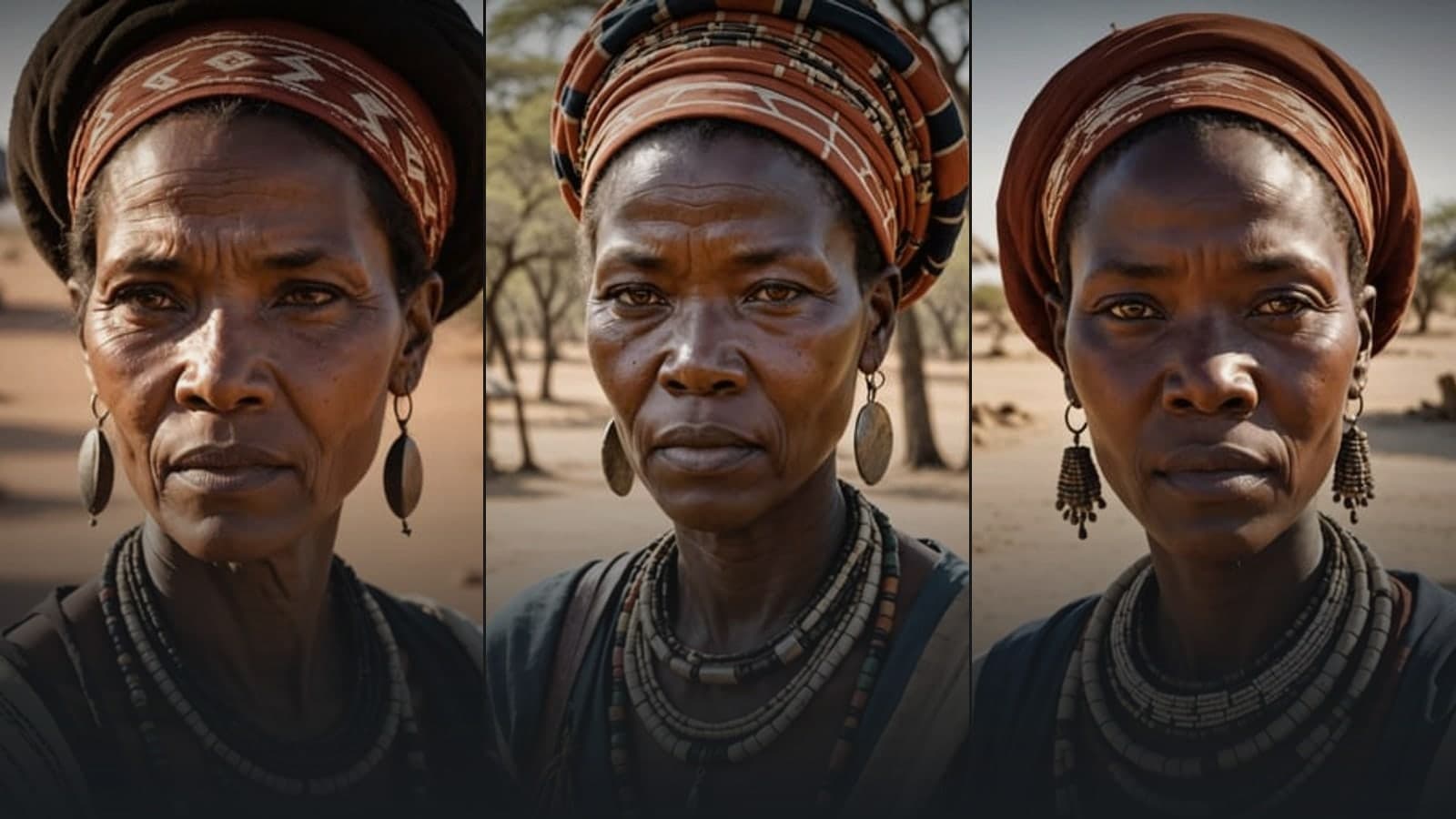
The San, historically and sometimes still called Bushmen, are the indigenous foraging peoples of southern Africa, and they hold a special place in the study of human diversity. Genetic research over the last two decades has repeatedly found that San populations carry some of the deepest-rooting lineages in the human family tree, meaning their ancestors branched early from the line leading to other modern populations. They are not a single tribe but a set of distinct peoples speaking mutually unintelligible languages across the Kalahari basin. This article introduces the San groups the phenotype atlas catalogs, along with the East African forager peoples often grouped with them.
The profiles here are modal descriptions, and one point deserves emphasis up front: several traits historically attributed to the San were exaggerated and racialized in early European accounts. The catalog reports characteristic patterns in neutral terms and treats these as living peoples with contemporary histories. See reading the phenotype catalog and the site's ethics page.
Not one people, but many
"San" is an umbrella term covering peoples who differ in language, homeland, and history. The catalog treats each as its own entry rather than collapsing them:
- The Khomani San (N|u speakers) of the southern Kalahari in South Africa, whose land claim in the Kgalagadi region was one of the landmark post-apartheid restitution cases.
- The Khwe (Kxoe) of the Caprivi and Okavango region, a distinct San people whose recent history was shaped heavily by the colonial and apartheid-era military conflicts of the Angola-Namibia borderlands.
- The Haiom (Hai||om) of north-central Namibia around Etosha, historically dispossessed of the Etosha National Park lands.
- The Taa (|Xoo) of Botswana and Namibia, whose language is famous among linguists for having one of the largest sound inventories of any language on earth, with dozens of click consonants.
The best-known San in the ethnographic literature, the Ju|'hoansi (!Kung) of the Nyae Nyae region, were the subject of the long-running Harvard Kalahari Research Group led by Richard Borshay Lee and Irven DeVore, whose fieldwork made the Ju|'hoansi one of the most thoroughly documented foraging societies in anthropology.
Two East African forager peoples often linked to the San
Two peoples of the East African Rift are commonly discussed alongside the San because they, too, are click-language foragers, though the relationship is cultural and typological rather than a close genetic one:
- The Hadza of the Lake Eyasi basin in Tanzania, one of the last full-time hunter-gatherer societies on earth, whose language is a click language usually treated as an isolate. The Hadza have become central to research on the ecology and diet of foraging societies.
- The Sandawe of central Tanzania, a click-speaking people who combine foraging with herding and cultivation and who show a deeper genetic link to southern African populations than most of their neighbors.
Because the atlas spans regions, these two sit under the Eastern Africa hub while the Kalahari San proper sit under Southern Africa; the article links them so the forager thread can be followed across the continent.
Society: the foraging model that reshaped anthropology
The San matter to anthropology out of proportion to their numbers because the Ju|'hoansi became the model case for how foraging societies work. The Harvard fieldwork documented a society with no chiefs and no formal hierarchy, in which decisions were reached by discussion and social pressure, meat from a large kill was distributed according to strict sharing rules regardless of who made the shot, and status-seeking was actively deflated through ritualized insulting of a hunter's catch. Long-distance gift-exchange partnerships, hxaro among the Ju|'hoansi, spread material and social ties across wide territories and functioned as insurance against local shortage. This portrait of an egalitarian, sharing-based, relatively leisured forager economy became a reference point in debates about human social evolution, even as later researchers argued about how representative or how historically recent it really was.
That scholarly prominence sits alongside a hard contemporary reality. Across the twentieth century the San were dispossessed of much of their land: the Haiom from what became Etosha National Park, the Khomani from the southern Kalahari, and many Ju|'hoansi and Khwe from ranch and conservation land or through militarization of the Namibia-Angola border. Foraging as a full-time livelihood has become impossible for most, and San communities today navigate wage labor, tourism, small-scale herding, and land-claim politics. The catalog documents them as contemporary peoples living these histories, not as a window onto a vanished past.
Phenotype: what the record shows, and what it distorted
In terms of the skin atlas, San populations are notably lighter than most of their Bantu-speaking neighbors, modal Fitzpatrick IV to V with a characteristic yellow-brown or tawny tone, which early observers frequently remarked on. Stature is short on average, and the body-shape atlas records the tendency toward steatopygia, a concentration of adipose tissue on the buttocks and thighs, that is more common among San women than in most world populations. Epicanthic eye folds occur at moderate frequency, a trait the San share with several other populations for reasons unrelated to any East Asian ancestry.
Each of these traits was, in the colonial period, seized upon and sensationalized, most infamously in the exhibition and post-mortem display of Sara Baartman in nineteenth-century Europe. That history is exactly why a modern reference has to report these traits plainly and in proportion rather than either sensationalizing or suppressing them. The phenotype atlas records steatopygia as one characteristic among many, at its actual frequency, with no more emphasis than any other trait.
Why the San are documented the way they are
Public interest in the San is enormous and long-standing, driven by their role in human-origins research, by popular film, and by decades of documentary coverage of Kalahari hunter-gatherer life. Yet that interest is served almost entirely by academic and popular-science sources that treat "the Bushmen" as a single undifferentiated subject. The catalog's contribution is to disaggregate: to give the Khomani, Khwe, Haiom, and Taa separate entries with their own homelands and histories, and to link them to the East African Hadza and Sandawe so the wider forager pattern is visible.
Where to start
- Begin with the Khomani San for the southern Kalahari and the restitution story, then read the Taa for the linguistic dimension.
- For the East African forager thread, read the Hadza and Sandawe entries together.
- The Kalahari cluster sits under Southern Africa; the Rift foragers under Eastern Africa.
Topics
More articles

Butt shape by ethnicity: what an MRI study found and what our database records
Sep 20, 2026
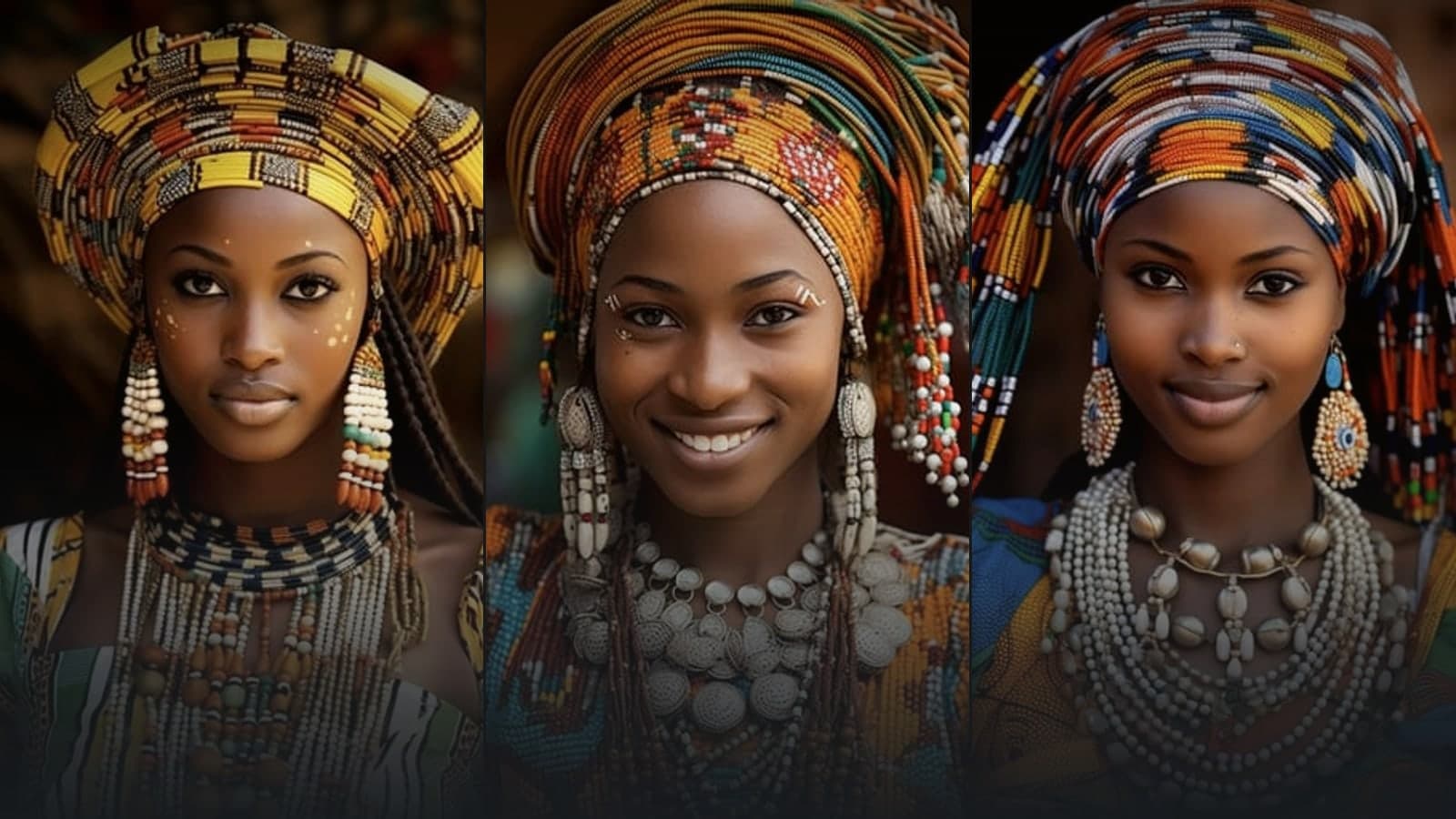
The Wodaabe and the Gerewol: male beauty, the yaake dance, and the Fulani pastoral world
Jul 9, 2026
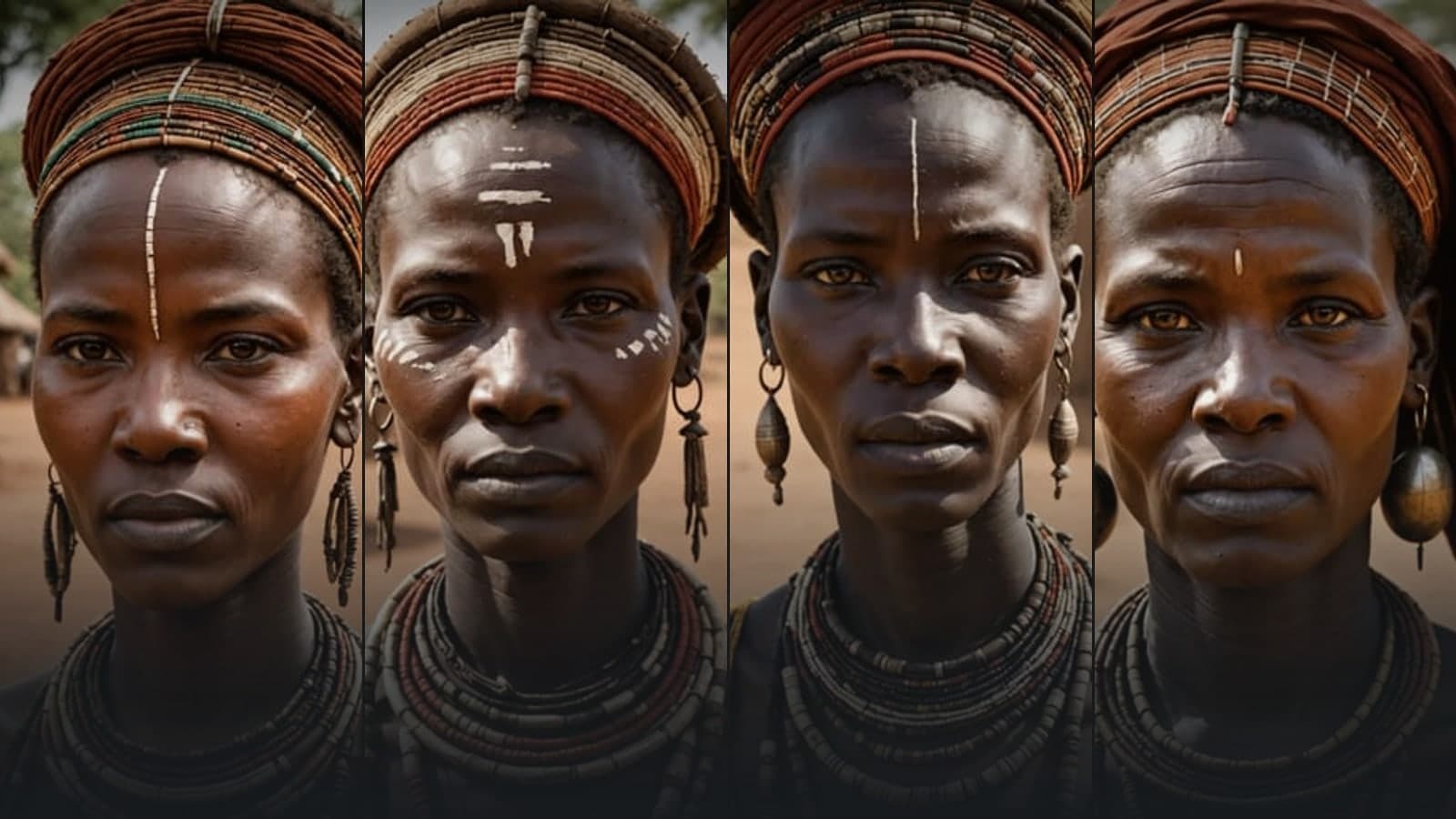
The peoples of the Lower Omo Valley: Mursi, Suri, Karo, Hamar, and their neighbors
Jul 9, 2026
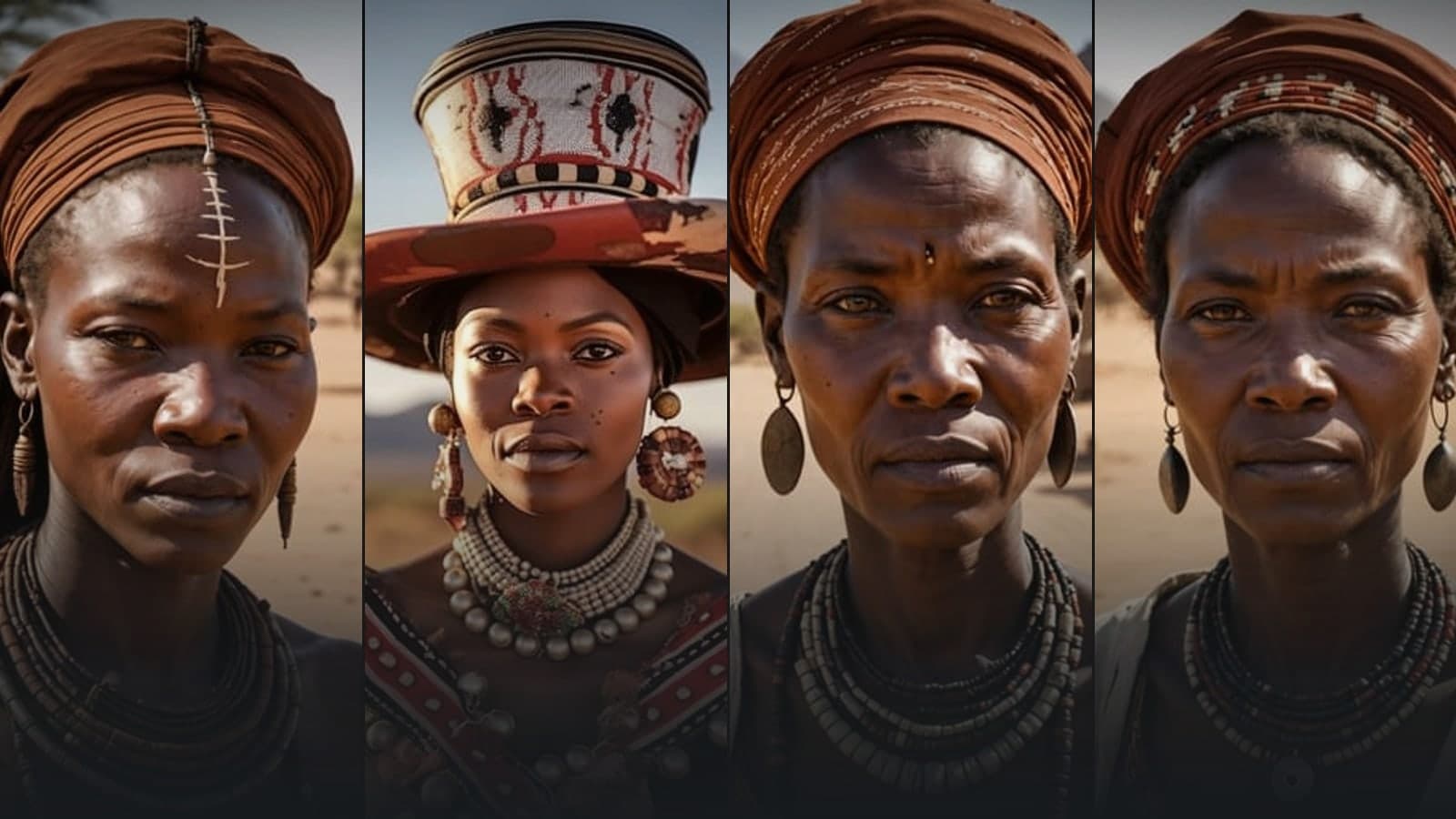
The Himba and the Herero-kin of the Kaokoveld and southwest Angola
Jul 9, 2026