How skin tone is classified: the Fitzpatrick scale, ITA°, and what they actually measure
May 10, 2026
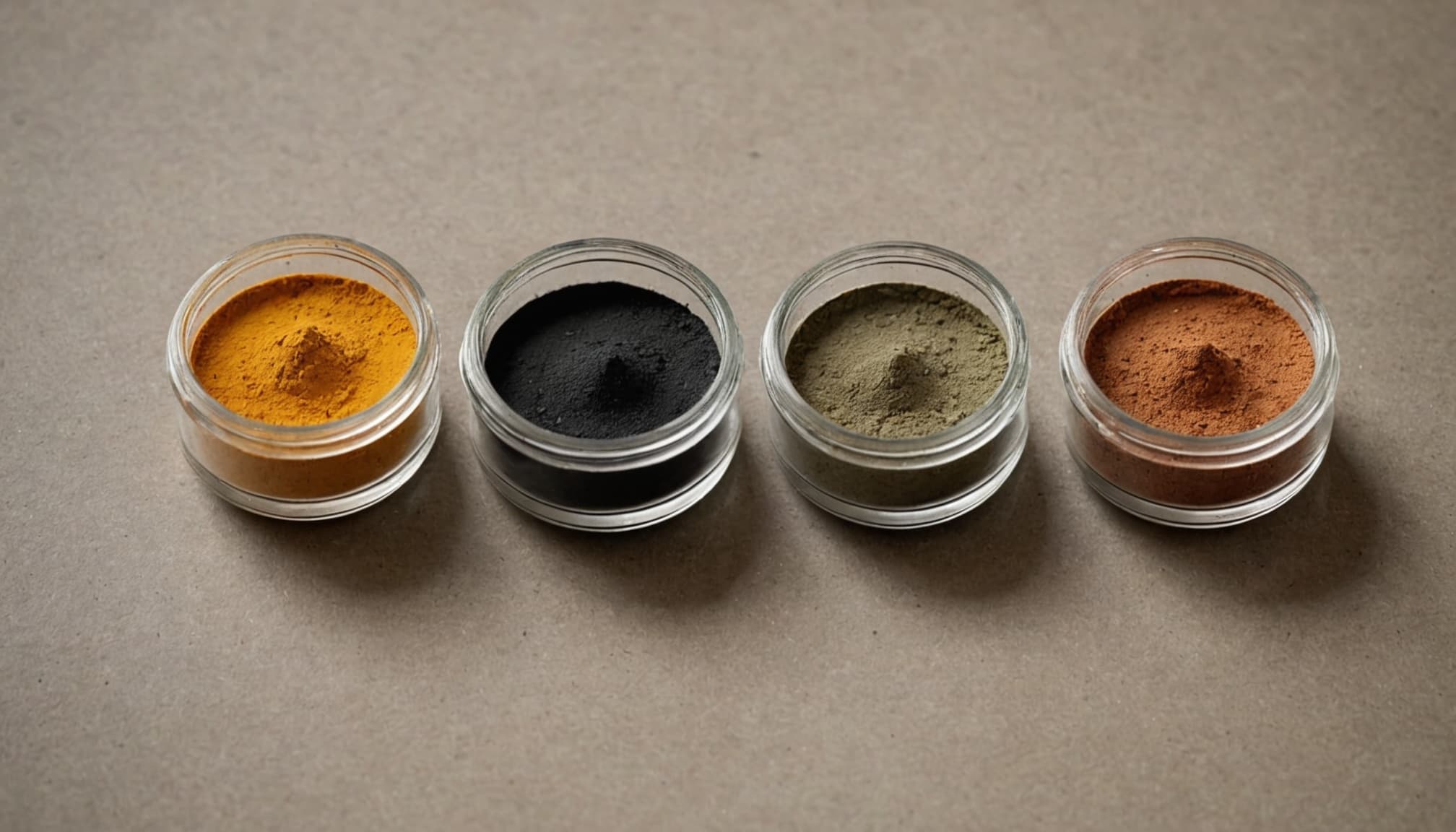
Skin tone variation is one of the most visible markers of human population ancestry. Most people have heard of "Fitzpatrick types" but the scale is poorly understood: it was designed in 1975 to predict UV erythema, not as a general descriptor of human skin color. This article describes the four classification systems researchers actually use, what each measures, and how the phenotype atlas applies them.
The Fitzpatrick scale: what it really classifies
Thomas Fitzpatrick proposed the original scale in 1975 at Massachusetts General Hospital to predict how patients' skin would react to PUVA phototherapy. The scale was refined and published in its modern six-type form in 1988 (Fitzpatrick TB, Archives of Dermatology 124:869). The six types are:
| Type | Reaction | Tone descriptor |
|---|---|---|
| I | Always burns, never tans | Pale white |
| II | Burns easily, tans minimally | Fair |
| III | Burns sometimes, tans evenly | Light brown / olive |
| IV | Burns minimally, tans easily | Olive / light brown |
| V | Rarely burns, tans deeply | Brown |
| VI | Never burns | Dark brown / black |
Two important things are widely missed about Fitzpatrick:
- It is a UV-reactivity scale, not a color scale. Fitzpatrick himself said the scale was a "constitutive measurement of cutaneous response to UV radiation" — what your skin does in sunlight, not how dark it appears. A heavily-tanned Type II skin can look as dark as untanned Type IV skin.
- The original scale was developed on white populations only. Types V and VI were added later (1988) to accommodate non-European skin. Most dermatologic literature applying Fitzpatrick to populations of African, South Asian, and East Asian descent uses post-1988 conventions, but the underlying validation work remains thinnest at Types V-VI (Pichon et al. 2010, Journal of the American Academy of Dermatology 62:5, p. 854).
For ethnographic work, Fitzpatrick remains the most-cited classification because it's portable, requires no instruments, and produces categories that researchers can compare across studies. The phenotype atlas uses it as the primary skin-tone descriptor.
Examples across the atlas:
- Icelanders cluster predominantly at Fitzpatrick I-II (modal II) — Northern European latitude with strong Norse-Celtic ancestry, low UV-melanin selective pressure
- Maltese cluster at Fitzpatrick III with substantial range from II-IV — Mediterranean substrate with documented Phoenician, Roman, Arab, and Sicilian admixture per Capelli et al. 2009
- Punjabi populations cluster at Fitzpatrick IV with V at the southern range — South Asian substrate
- Maasai cluster at Fitzpatrick VI — East African Nilotic source population
ITA° — the colorimetric alternative
The Individual Typology Angle (ITA°) was proposed by Del Bino and Bernerd (2013, British Journal of Dermatology 169:33–40) and is the standard objective alternative to Fitzpatrick when researchers have access to a chromameter. It is computed from CIELAB color-space measurements of the skin:
ITA° = arctan((L* − 50) / b*) × 180 / πWhere L* is lightness (0–100) and b* is the yellow-blue axis. The output is an angle in degrees, typically ranging from −60° (very dark) to +90° (very pale). Del Bino and Bernerd defined six ITA° categories:
| ITA° range | Category |
|---|---|
| > 55° | Very Light |
| 41° to 55° | Light |
| 28° to 41° | Intermediate |
| 10° to 28° | Tan |
| −30° to 10° | Brown |
| < −30° | Dark |
ITA° advantages over Fitzpatrick:
- Objective — measured with an instrument, not self-reported
- Continuous — produces a scalar value, not a six-bin classification
- Reproducible — same skin measured twice gives the same value (within instrumental noise)
ITA° disadvantages:
- Requires a chromameter (~$2,000+ instrument)
- Sensitive to skin moisture, temperature, recent sun exposure
- Doesn't capture undertone (warm/cool/neutral) which matters for editorial and design work
Most large-scale ethnographic studies prefer Fitzpatrick for portability; specialized dermatologic and cosmetics-industry studies prefer ITA° for accuracy.
The Halls system — undertone classification
Halls proposed a complementary system that captures undertone, which neither Fitzpatrick nor ITA° measures (Halls 2018, Color Analysis: A Practical Guide, ISBN 978-0-9994-0431-2). Halls categorizes skin into:
- Cool undertone — pinkish, bluish, or rosy underlying color (more visible blood vessels)
- Neutral undertone — balanced
- Warm undertone — yellowish, peachy, or olive underlying color (more carotenoid)
Halls is widely used in cosmetics industry color matching but underused in academic ethnographic work. The phenotype atlas combines Fitzpatrick (depth) and Halls (undertone) for a two-dimensional skin descriptor — this matches contemporary clinical-research practice (Wilkes et al. 2015, Skin Research and Technology 21:478–484).
Two ethnic groups can share Fitzpatrick III but differ markedly in Halls undertone:
- Han Chinese populations cluster at Fitzpatrick III but with characteristic warm-yellow undertone (Halls warm)
- Mexican and broader Mestizo populations cluster at Fitzpatrick III-IV with warm-olive undertone reflecting the Indigenous-Spanish admixture (per Wang et al. 2008 study of admixture in Mexican populations, PNAS 105:11498)
- Maltese cluster at Fitzpatrick III with neutral-to-cool Mediterranean undertone
The von Luschan scale — historical, not current
Felix von Luschan proposed a 36-tile color-tile classification system in 1897. It was widely used in 20th-century anthropometric work. It is no longer recommended — the tiles drift in color over time, observer agreement is poor, and the scale conflates lightness with hue. Some legacy ethnographic literature still references "von Luschan tiles 17-21" or similar; treat this as a historical descriptor, not current methodology.
How EE uses these scales in the phenotype atlas
The phenotype atlas categorizes skin along two primary dimensions:
- Fitzpatrick I-VI — depth/UV-reactivity descriptor with documented population modal values
- Halls cool/neutral/warm — undertone descriptor
Each ethnic group page documents its modal Fitzpatrick value plus the typical population range (e.g., "Italians: Fitzpatrick III modal, range II-IV"). Where peer-reviewed studies of the population's skin reflectance exist, ITA° values are cross-referenced.
The classifications are descriptive of population averages, not deterministic for individuals — within any ethnic group, individual skin tone varies substantially due to admixture, environmental UV exposure, and genetic variation in melanin synthesis genes (MC1R, OCA2, SLC24A5, TYR, and others; the canonical reference is Sturm 2009, Human Molecular Genetics 18:R9–R17).
Selection bias in dermatologic literature
A consistent caveat in this literature: published Fitzpatrick studies skew toward populations of European ancestry (Type I-IV) due to historical research-funding biases. Lighter-skin populations have substantially more published validation data than darker-skin populations. Pichon et al. 2010 documented a 4:1 imbalance in published Fitzpatrick validation studies (Type I-III vs Type IV-VI), and the gap has only partially closed since.
This doesn't mean dark-skin populations are misclassified — it means the rigor of the underlying data varies by skin type. The phenotype atlas notes this caveat on each Fitzpatrick V-VI ethnic-group page where the underlying validation literature is thin.
How to use this article
If you arrived here from a specific ethnic-group page, you can return to it and read the Fitzpatrick + Halls assignment in the Phenotype Profile section with the context above.
If you're starting from this article, the phenotype atlas lets you browse population skin-tone distributions across all 1,500+ ethnic groups and 200+ countries.
References
- Fitzpatrick TB. The validity and practicality of sun-reactive skin types I through VI. Archives of Dermatology 124(6):869–871, 1988.
- Del Bino S, Bernerd F. Variations in skin colour and the biological consequences of inter-individual differences. British Journal of Dermatology 169 Suppl 3:33–40, 2013.
- Pichon LC, Landrine H, Corral I, Hao Y, Mayer JA, Hoerster KD. Measuring skin cancer risk in African Americans: Is the Fitzpatrick Skin Type Classification Scale culturally sensitive? Journal of the American Academy of Dermatology 62(5):854–855, 2010.
- Wilkes M, Wright CY, du Plessis JL, Reeder A. Fitzpatrick Skin Type, Individual Typology Angle, and Melanin Index in an African Population: Steps Toward Universally Applicable Skin Photosensitivity Assessments. JAMA Dermatology 151(8):902–903, 2015.
- Sturm RA. Molecular genetics of human pigmentation diversity. Human Molecular Genetics 18(R1):R9–R17, 2009.
- Capelli C, Onofri V, Brisighelli F, Boschi I, Scarnicci F, et al. Moors and Saracens in Europe: estimating the medieval North African male legacy in southern Europe. European Journal of Human Genetics 17:848–852, 2009.
- Wang S, Ray N, Rojas W, Parra MV, Bedoya G, et al. Geographic patterns of genome admixture in Latin American Mestizos. PLoS Genetics 4(3):e1000037, 2008.
Topics
More articles
Butt shape by ethnicity: what an MRI study found and what our database records
Sep 20, 2026
The Wodaabe and the Gerewol: male beauty, the yaake dance, and the Fulani pastoral world
Jul 9, 2026
San peoples of the Kalahari: the Khomani, Ju|'hoan, Taa, and their forager kin
Jul 9, 2026
The peoples of the Lower Omo Valley: Mursi, Suri, Karo, Hamar, and their neighbors
Jul 9, 2026