How to read the phenotype catalog: a guide for first-time visitors
May 10, 2026
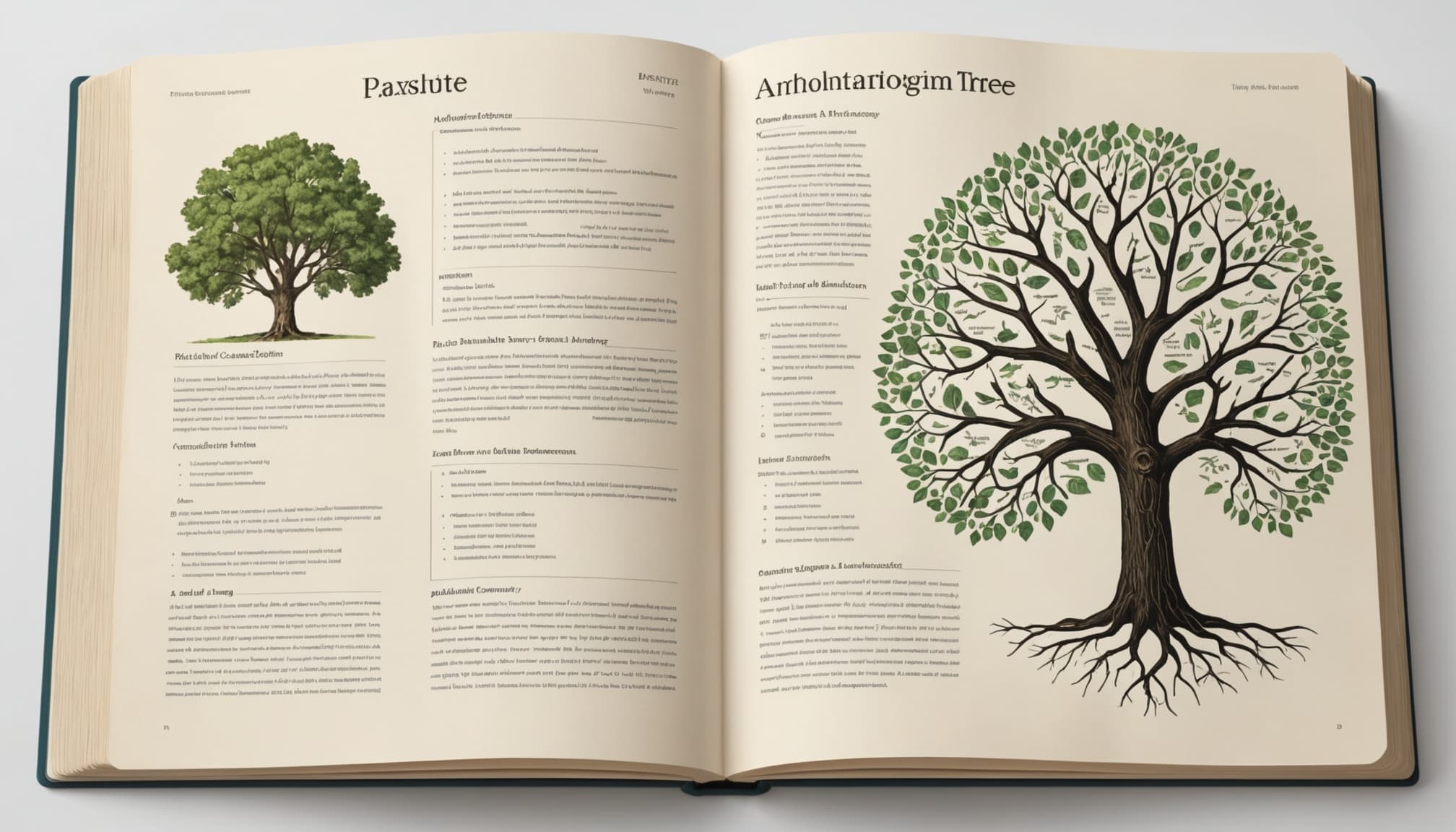
The catalog has 1,500+ ethnic-group pages, 200+ country pages, and 22 atlas categories. If you arrived here looking for a specific group or specific question, this guide explains how the data is structured, what the page sections mean, and how to interpret the descriptions correctly.
The two main page types
Ethnic-group pages (/ethnic/{slug}): Each documents one ethnic group's homeland, language, religion, sub-groups, and phenotype profile. The page includes a description of the group's history and ancestral origins, a typical phenotype profile (skin tone, hair, eyes, facial features, build), and a list of countries where the group is documented as a constituent population.
Country pages (/country/{slug}): Each documents one country's demographic composition (which ethnic groups make up the population, weighted by census data), a country-aggregate phenotype profile (synthesized across the constituent groups), and methodology notes.
The two types are linked bidirectionally: every ethnic-group page lists the countries the group is found in, and every country page lists the ethnic groups in its composition. You can navigate either direction.
Reading an ethnic-group page
A typical ethnic-group page like /ethnic/maasai has these sections:
Hero — the quick facts
The header shows: ethnic group name, homeland (the geographic area associated with the group), language, religion, sub-groups (if documented), region (the broader regional cluster the group is part of). These are the overview facts.
Description — about the people
A 200-2,000 word description of the group's history, ethnogenesis (how the group emerged), language family, cultural identity, and notable historical context. Most descriptions cite primary sources where claims are non-trivial — peer-reviewed genome-wide ancestry studies, national census reports, ethnographic monographs.
Phenotype Profile — the descriptive trait reference
A section describing the population modal phenotype across categories like skin tone (Fitzpatrick), hair (Andre Walker), eyes (color and morphology), facial features, body composition, and stature.
This is descriptive of population means, not deterministic for individuals. Within any ethnic group, individual phenotype variation is substantial. The profile says "the modal Maasai man has Fitzpatrick V-VI skin and Andre Walker 4B-4C hair" — that doesn't mean every Maasai person looks identical. Population averages are a starting point, not a complete description.
Geographic Distribution — the diaspora list
A table showing every country whose population includes this ethnic group, ranked by share of country composition. Each country links back to its country page. For pan-regional groups (Fulani in 12+ countries, Yoruba across Nigeria/Benin/Togo/diaspora), this table is substantial.
Notable People
A list of notable individuals from this ethnic group. The names link out to Wikipedia articles where possible. This is sourced editorial — not exhaustive.
Sibling Ethnic Groups
A sidebar showing other ethnic groups in the same broader region — useful for browsing related groups or comparing across a regional family.
External Links
Wikipedia, Ethnologue, peer-reviewed source links where the editorial researched the page.
Reading a country page
A country page like /country/japan has:
Hero — country basics
Country name, ISO code, region, brief description.
Phenotype Profile
The aggregate phenotype distribution across the country's constituent ethnic groups, weighted by demographic composition. For Japan this is dominated by the modal Japanese / Yamato phenotype with smaller weighted contributions from Ryukyuan, Ainu, Korean-Japanese, and Brazilian-Japanese populations.
Demographic Composition
A table listing every ethnic group in the country's composition with weight (percentage), source citation, and a link back to the ethnic-group page. The source-citation column is dense — each row cites a national census or peer-reviewed demographic study.
Methodology Notes
Per-country notes on data quality, census recency, sampling methodology, and any caveats. Mauritania's methodology notes flag that ethnic-disaggregated census data is not officially published; Lebanon's flag the absence of any comprehensive census since 1932; etc.
Primary Sources
5+ peer-reviewed citations supporting the page's claims. Includes national census reports, genome-wide ancestry studies, and ethnographic monographs.
Reading an atlas page
An atlas-category page like /atlas/Skin covers one anatomical category across populations. It summarizes:
- The peer-reviewed scales used to classify the category (Fitzpatrick + ITA° + Halls for skin, Andre Walker for hair, Heath-Carter for body composition, etc.)
- Population modal distributions across the major regional groupings
- Notable variation patterns
- How the catalog applies the classification
If you're studying one trait across populations, atlas pages are the entry point. If you're studying one population's full profile, ethnic-group pages are the entry point.
What "modal" and "range" mean
Most phenotype-profile sections use language like "Fitzpatrick V modal, range IV-VI." This means:
- Modal: the most common value in the population
- Range: the typical span across the population (typically 80-90% of individuals fall in this range)
Outliers exist on both sides. A Maasai person with Fitzpatrick III skin (lighter than modal) is uncommon but not impossible — population variation is continuous. Reading "Fitzpatrick V-VI" as "everyone in this population has Fitzpatrick V or VI" is a misreading.
What the data is NOT
A few caveats that prevent common misuses:
1. Not predictive of individuals. The catalog describes population averages. Individuals within any group span substantial phenotype range. Using a population profile to "predict" what a specific person looks like, or to assess whether a specific person belongs to a group, is misuse.
2. Not racial classification. The catalog organizes by ethnic group (a geographic-cultural-genetic identity, often self-defined), not race (a problematic 19th-century framework). Race-based pseudo-science misuses ethnic-group data; the catalog deliberately avoids that framing. See the About / Ethics page for the explicit policy.
3. Not static. Phenotype distributions shift over time due to admixture, secular nutrition trends, and migration. The catalog notes era of source data where relevant — a 1968 Maasai stature sample is not directly comparable to a 2020 sample.
4. Not exhaustive. Of the documented 6,000+ ethnic groups globally, the catalog covers ~1,500. Many smaller or less-documented groups don't have peer-reviewed phenotype literature available — those groups are absent from the catalog rather than misrepresented.
Where to start
If you're researching a specific ethnic group: search the group name or use the world atlas to navigate by region.
If you're researching a country: use the country index to browse the 200+ country profiles.
If you're researching a specific phenotype trait: use the atlas to start with that anatomical category and find populations documented along that dimension.
Related: how the catalog was built
The methodology page describes the catalog construction pipeline: source images from Wikipedia, vision-LLM annotation via AWS Bedrock, deterministic per-group aggregation, and the controlled-vocabulary system across 22 anatomical categories.
The glossary page defines every classification scale used in the catalog: Fitzpatrick I-VI, Andre Walker 1-4C, Heath-Carter somatotype, Hamilton-Norwood baldness scale, Andre Walker hair texture, Manning 2D:4D ratio, and the rest.
The ethics page documents intended uses (descriptive ethnography, AI generation reference) and out-of-scope uses (individual classification, surveillance, race-based ranking).
If you have suggestions for groups not yet covered or sources we missed, the editorial mailing list is where you can let us know.
Topics
More articles
Butt shape by ethnicity: what an MRI study found and what our database records
Sep 20, 2026
The Wodaabe and the Gerewol: male beauty, the yaake dance, and the Fulani pastoral world
Jul 9, 2026
San peoples of the Kalahari: the Khomani, Ju|'hoan, Taa, and their forager kin
Jul 9, 2026
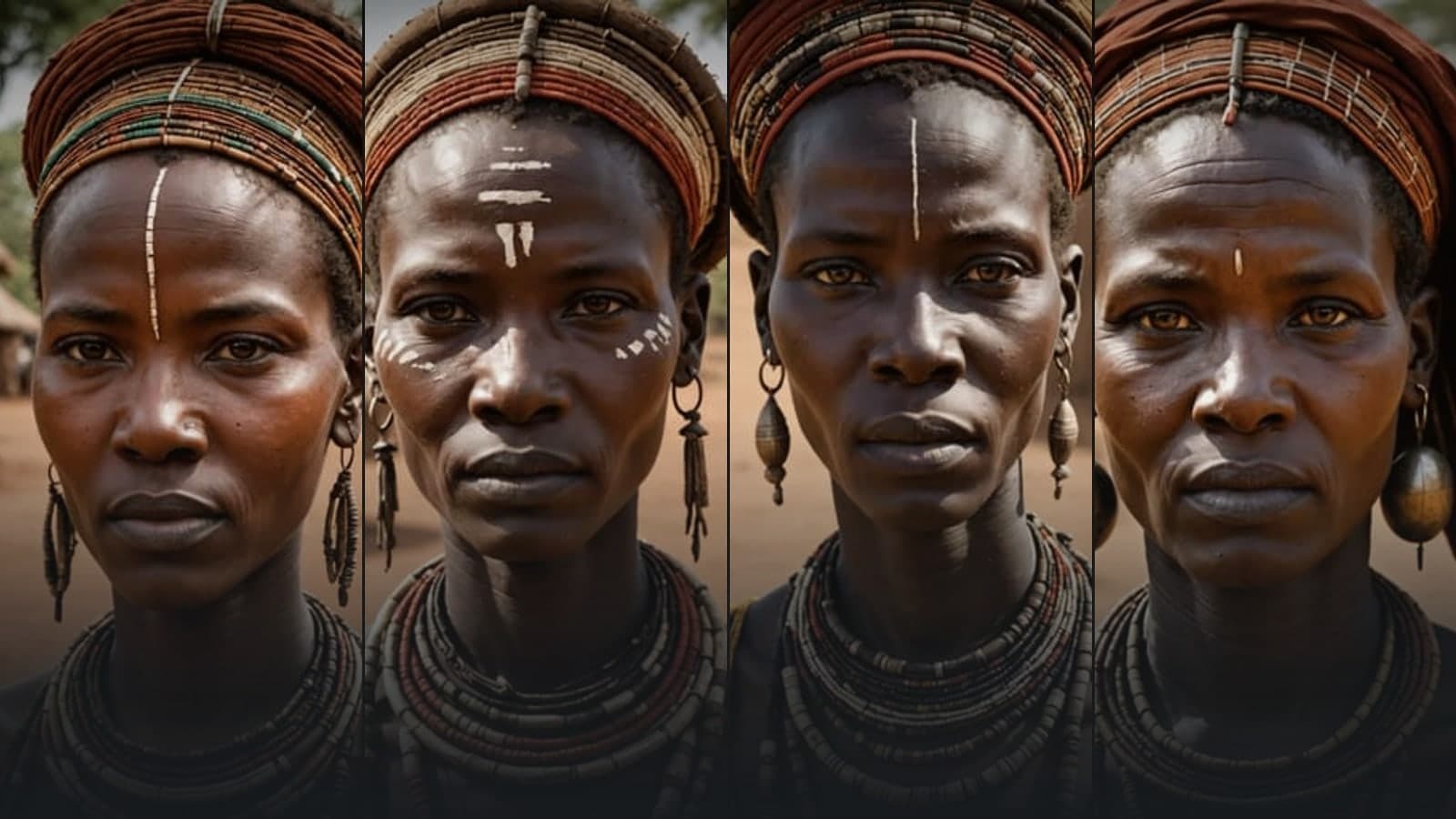
The peoples of the Lower Omo Valley: Mursi, Suri, Karo, Hamar, and their neighbors
Jul 9, 2026