Help us get this right
Does this portrait look right for Zuni?
Nobody has judged this one yet. You would be the first.
Zuni Erotic
Zuni River valley, western New Mexico, United States, with trust lands in Catron County, New Mexico and Apache County, Arizona
Zuni, Shiwi'ma (language isolate); English
Traditional Zuni religion (kachina society, rain priesthoods, medicine societies); a minority Catholic or Protestant
One of the Western Pueblo peoples alongside Hopi, Acoma and Laguna; internally organized by matrilineal clans and six kiva groups; communities at Zuni Pueblo, Black Rock, Ojo Caliente, Pescado and Nutria
About Zuni People
The Zuni call themselves A:shiwi, and what marks them off from every neighbor is the language. Shiwi'ma is an isolate: not Keresan like Acoma, not Tanoan like the Rio Grande pueblos, not Uto-Aztecan like Hopi, not Athabaskan like the Navajo next door. Nobody has convincingly tied it to anything else, and unlike most Native languages in the United States it is still largely passed to children at home. Roughly ten thousand Zuni live in and around the Pueblo of Zuni in western New Mexico, one town on the Zuni River that they call Halona Idiwan'a, the Middle Place, the spot their emergence story says they searched for after climbing out of the underworlds. Summer farming villages at Ojo Caliente, Pescado and Nutria, plus trust lands across the Arizona line, round out the homeland.
Contact came early and badly. Hawikuh, one of six or seven Zuni towns then, is where Estevanico died in 1539 and where Coronado attacked in 1540 chasing the rumor of Cíbola. During the Pueblo Revolt of 1680 the Zuni withdrew onto Dowa Yalanne, the mesa over the valley, and afterward consolidated into the single pueblo that exists today. Distance from Santa Fe spared them the tighter Spanish grip that reshaped the eastern pueblos, and the result is a religious life outsiders still see only at the edges. Society is matrilineal, with houses and clan membership passing through women, while the ceremonial year runs through six kiva groups, rain priesthoods, medicine societies and a kachina society into which every boy is initiated. It peaks at Shalako in late November or early December, when towering beaked figures enter the village at dusk to bless newly built houses, escorted by the Koyemshi clowns. No photographs, no sketches, no recordings: the tribe enforces this.
Some things outsiders rarely know. The Zuni forced museums to return carved Ahayu:da war god figures from 1978 onward, years before federal repatriation law existed, and they run the country's first tribal eagle aviary for ceremonial feathers. The pueblo is a town of artists: turquoise inlay and needlepoint jewelry, and the small carved stone animals that grew out of hunting medicine, are a main source of income for most households. Zuni Salt Lake to the south, home of the Salt Mother, was long neutral ground where rival peoples gathered salt in peace, and the tribe spent a decade fighting off a coal mine they feared would drain it. And the lhamana, a recognized role for men who lived and worked as women, had its most famous holder in We'wha, the weaver who went to Washington in 1886 and was received by President Cleveland.
Related ethnic groups
Groups that share Zuni's homeland, region, language, or religious tradition. These are likely candidates for comparative phenotype reference.
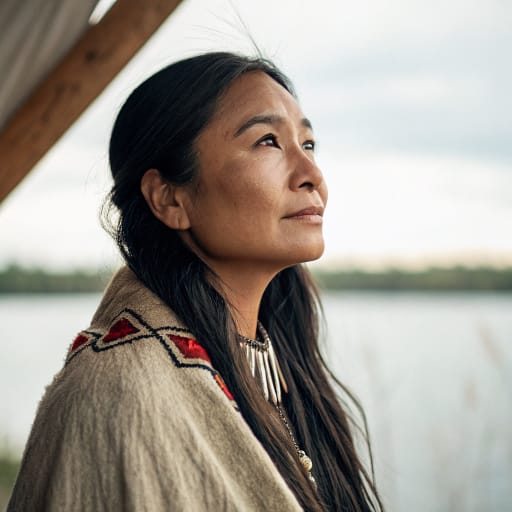
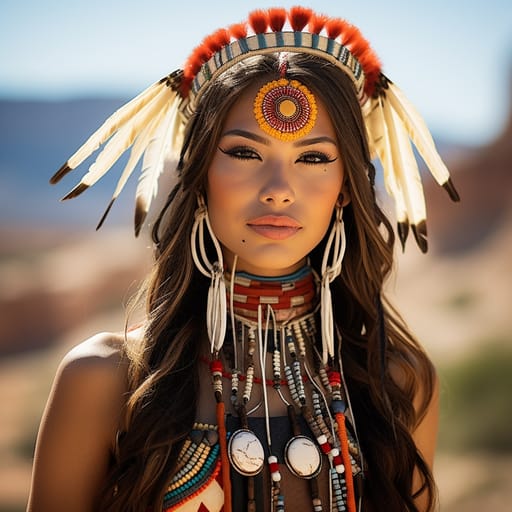
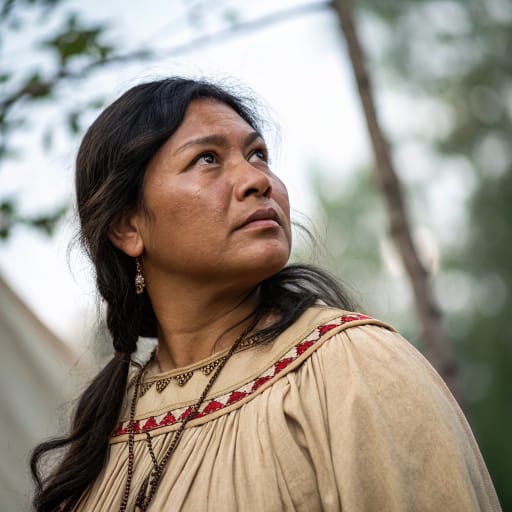
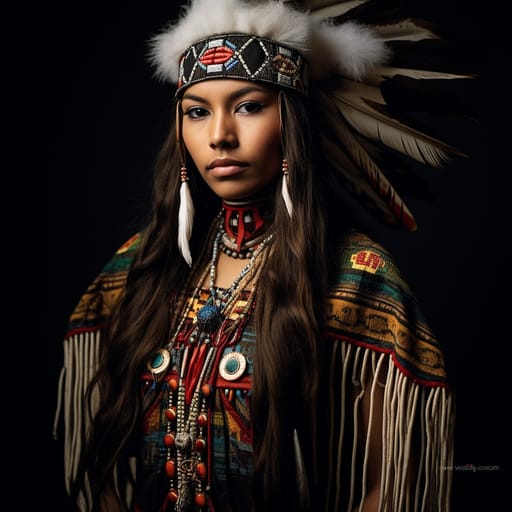

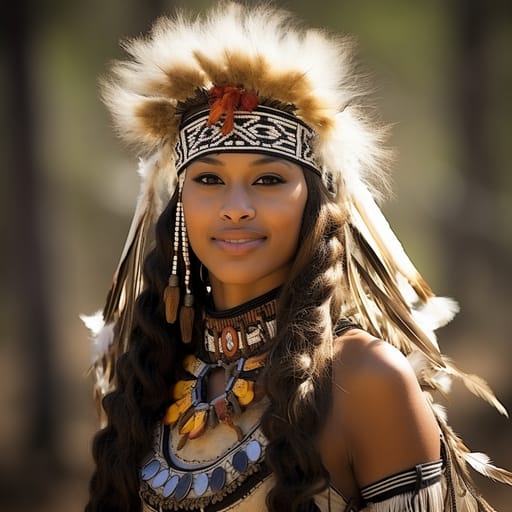
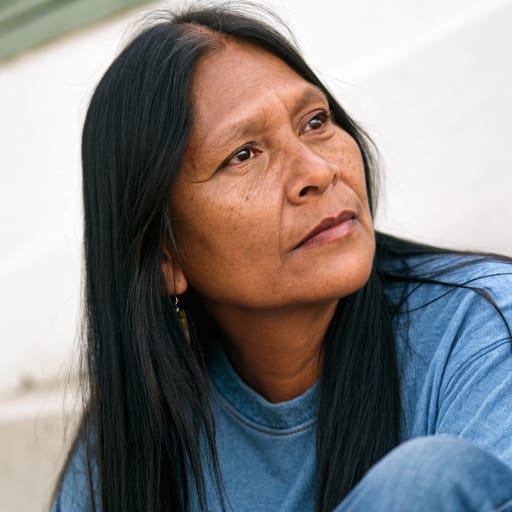
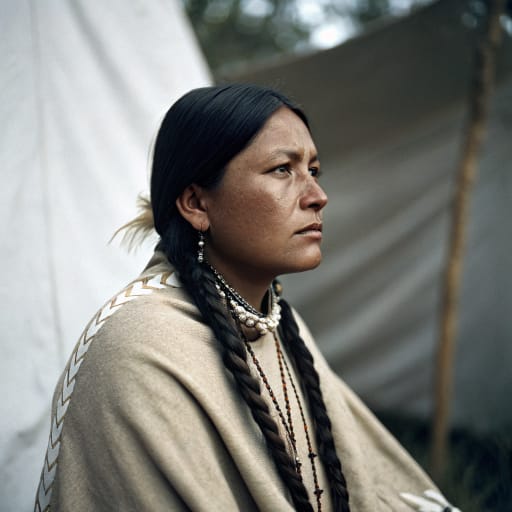
Typical Zuni Phenotypes
Reference for AI generation: hair, eyes, skin, facial structure, build
Zuni Body & Anatomy Reference
Anatomy by feature, Indigenous Northern American / Algonquian-Iroquoian phenotype
Zuni Boobs & Breasts
Zuni boobs follow the Indigenous Northern American / Algonquian-Iroquoian profile: medium cup, moderate projection. Areolar diameter is usually 30-44mm, and the coloring is medium-brown areolar pigmentation against the copper-to-medium-brown skin tone. Breast shape tracks body composition (mesomorph, broader frame in northern Indigenous populations, mean adult female BMI 25-28), so Zuni breasts tend to be full and moderate projection. Expect a forward-set shape, not the smaller East Asian bust.
Zuni Ass & Hips
Zuni ass and hip morphology presents as medium, moderate-to-full projection, distinctly different from the slim East Asian narrow-hip profile. The Zuni pelvic profile shows medium iliac crests, anchored in the Indigenous Northern American / Algonquian-Iroquoian skeletal pattern. Zuni butt shots in adult AI imagery should render the medium, moderate-to-full projection silhouette with the overall build (mesomorph, broader frame in northern Indigenous populations) and the fat distribution typical of the Indigenous Northern American / Algonquian-Iroquoian phenotype.
Zuni Vagina & Pussy
Zuni pussy anatomy typically shows medium-brown labial pigmentation. Pubic hair is usually straight medium-coarse texture. In AI-generated Zuni nudes, labial color should blend into the copper to medium-brown skin with a gradual transition, and the hair should keep its straight medium-coarse texture.
Zuni Dicks & Penis
Penis reference for Zuni men: regional mean ~13cm erect, moderate girth. Coloring: medium-brown shaft pigmentation. An accurate Zuni cock in AI imagery matches the surrounding copper to medium-brown skin rather than a generic porn default. Circumcision depends on religion and custom, not ancestry.
Zuni Body, Curves & Build
The Zuni figure is generally mesomorph, broader frame in northern Indigenous populations, with mean adult female BMI 25-28, characteristic of Indigenous Northern American / Algonquian-Iroquoian ancestry. AI image tools tend to flatten regional body types into a few stock shapes; here the Zuni build is kept as its own reference.
Zuni Skin Tone & Hair Texture
Skin: copper to medium-brown (Fitzpatrick III-V). Hair: straight 1A, dark-brown to black, often thick and dense. Both are typical of Indigenous Northern American / Algonquian-Iroquoian ancestry. The most common mistake in AI nudes of Zuni women is a body rendered lighter than the face.
Explore phenotype categories
Structured taxonomy with peer-reviewed scales · 22 anatomical categories
Erotic Poses & Sex Positions
From the pose catalog: 219 named positions with reference skeletons
Frequently asked questions about Zuni people
Where is the Zuni homeland?
The Zuni homeland is Zuni River valley, western New Mexico, United States, with trust lands in Catron County, New Mexico and Apache County, Arizona in North America.
What language do Zuni people speak?
Zuni people primarily speak Zuni, Shiwi'ma (language isolate); English.
What religion do Zuni people practice?
The predominant religion among Zuni people is Traditional Zuni religion (kachina society, rain priesthoods, medicine societies); a minority Catholic or Protestant.






Make your own Zuni images
Five a day, free, no credits to buy. The studio starts from this group's phenotype data, so you can set body type, pose and style and keep the traits accurate.
Start with Zuni