No portrait yet
Tutelo Erotic
River valleys of the Virginia piedmont below the Blue Ridge, near present-day Roanoke; later the Carolina piedmont, then Cayuga country in New York and the Grand River in Ontario, Canada
Tutelo, also called Tutelo-Saponi or Yesan (Siouan, Ohio Valley branch, with Biloxi and Ofo); no longer spoken as a first language, with revival work underway
Indigenous ceremonial practice, later Longhouse religion among their Iroquois hosts; Anglican and other Christian affiliation among descendants
Virginia Siouan (Eastern Siouan), closely allied with the Saponi, Occaneechi, Monacan and Manahoac; adopted as a nation under the Cayuga within the Iroquois Confederacy
About Tutelo People
The Tutelo were a Siouan-speaking people of the Virginia piedmont, living in the valleys below the Blue Ridge near present-day Roanoke when English explorers reached them in 1671, and gone from that country within two generations. Tutelo is what the Iroquois called them and what the colonists wrote down; among themselves the word was closer to Yesan, which meant simply the people. They were one of a cluster of related Virginia Siouan groups, along with the Saponi, Occaneechi, Monacan and Manahoac, all speaking dialects near enough to be mutually intelligible and all caught in the same vise: Iroquois war parties from the north, English settlement from the east. Bacon's Rebellion in 1676 broke the Occaneechi trading monopoly on the Roanoke and scattered the survivors south into the Carolina piedmont. In 1714 Governor Spotswood gathered the remnant peoples at Fort Christanna in southern Virginia, where a schoolmaster taught their children and the colony collected a buffer against raids. That arrangement lasted only a few years. A 1722 treaty at Albany finally made peace with the Six Nations, and the Tutelo took the only door open to them: they moved north, first to the Susquehanna, and in 1753 were formally adopted by the Cayuga as a nation within the Iroquois Confederacy.
Their town at the head of Cayuga Lake, Coreorgonel, burned in 1779 when the Sullivan expedition swept through Iroquois country, and the survivors went with their hosts to the Grand River in Ontario. That is where the language outlived the homeland. In 1870 Horatio Hale sat down at Grand River with a man named Nikonha, then roughly 106 and the last fluent speaker, and took down what vocabulary he could; Nikonha died the following year. Tutelo was the easternmost Siouan language ever recorded, a relative of Biloxi and Ofo and a far cousin of Lakota, spoken in country otherwise ringed by Algonquian and Iroquoian tongues, and most of what is known of it comes from that visit and from later notes taken among Cayuga who still remembered fragments. The ceremonial life lasted longer than the speech. The Tutelo spirit adoption rite, a night-long observance in which the spirit of someone who has died is settled and a living relative is raised up in their place, was still performed in the Grand River longhouses when Frank Speck documented it in the 1930s and 1940s, sung in a language most participants no longer spoke. Descendants are counted today at Six Nations, and in Virginia and North Carolina the related Monacan and Occaneechi-Saponi communities have taken up Tutelo-Saponi in language revival work.
Related ethnic groups
Groups that share Tutelo's homeland, region, language, or religious tradition. These are likely candidates for comparative phenotype reference.
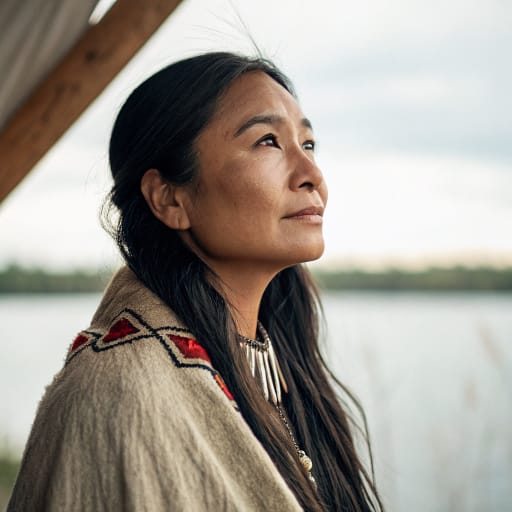
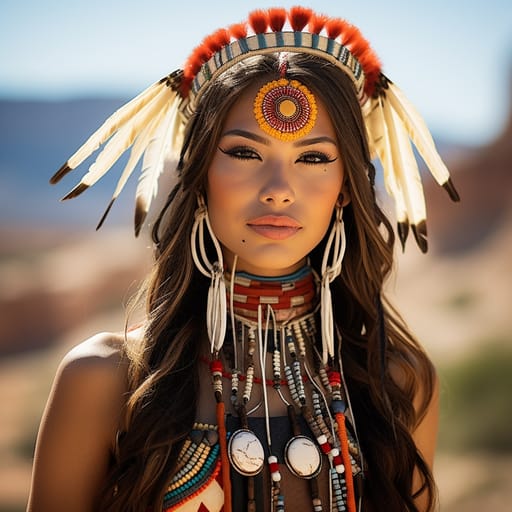
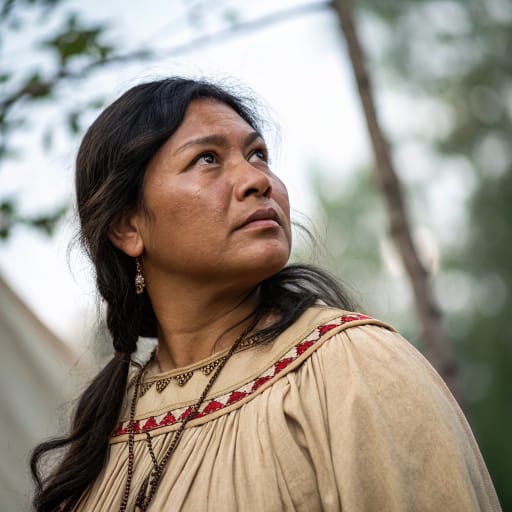
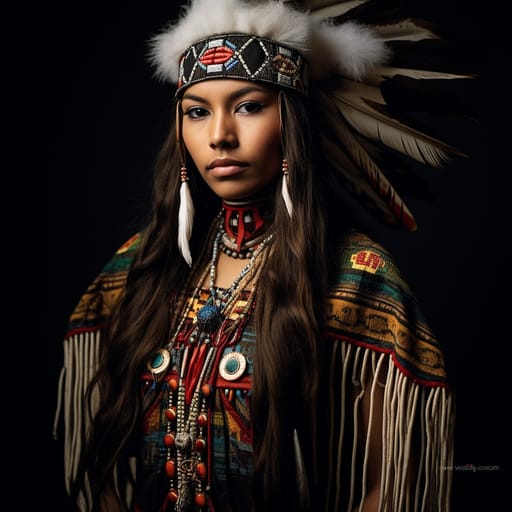

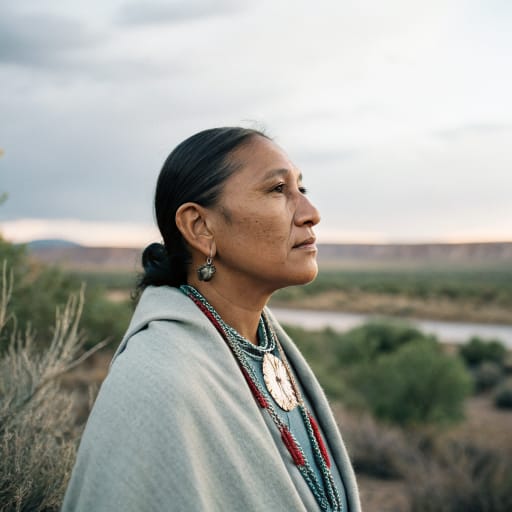
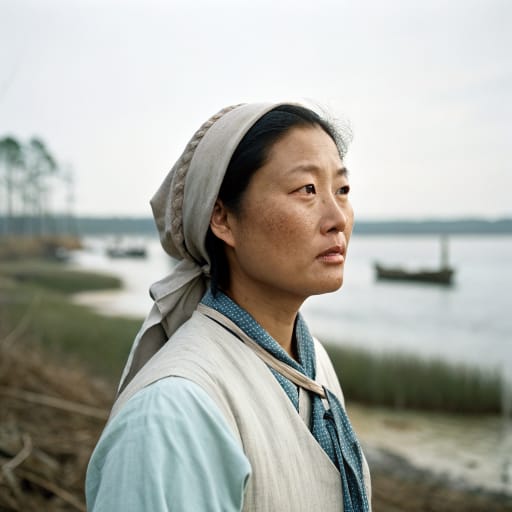
Typical Tutelo Phenotypes
Reference for AI generation: hair, eyes, skin, facial structure, build
Tutelo Body & Anatomy Reference
Per-feature anatomical profile for AI nude generation: Indigenous Northern American / Algonquian-Iroquoian phenotype
Tutelo Boobs & Breasts
Bust reference for Tutelo women: medium cup, moderate projection, which is typical of Indigenous Northern American / Algonquian-Iroquoian ancestry. Areolas measure about 30-44mm across, with medium-brown pigmentation. Body type (mesomorph, broader frame in northern Indigenous populations) shapes the bust as well, so Tutelo tits are usually full and moderate projection. In AI imagery, keep the forward-set shape rather than drifting toward the smaller East Asian bust.
Tutelo Ass & Hips
The Tutelo ass is typically medium, moderate-to-full projection, which sets it apart from the slim East Asian narrow-hip profile. Underneath, the pelvis shows medium iliac crests, part of the Indigenous Northern American / Algonquian-Iroquoian skeletal pattern. For Tutelo butt pics and AI renders, match that silhouette and the overall build (mesomorph, broader frame in northern Indigenous populations).
Tutelo Vagina & Pussy
Tutelo pussy and vulvar anatomy presents medium-brown labial pigmentation, consistent with the Indigenous Northern American / Algonquian-Iroquoian phenotype's pigmentation pattern. Tutelo pubic hair is typically straight medium-coarse texture, in the inverted-triangle pattern. For anatomically accurate Tutelo pussy renders the labial coloration should match the surrounding copper to medium-brown skin tone with a continuous gradient, and the hair should keep its straight medium-coarse texture.
Tutelo Dicks & Penis
Tutelo dicks follow the Indigenous Northern American / Algonquian-Iroquoian reference data: regional mean ~13cm erect; moderate girth; medium-brown shaft pigmentation. Shaft color should track the copper to medium-brown skin tone with a smooth change toward the glans, and Tutelo pubic hair keeps its straight medium-coarse texture.
Tutelo Body, Curves & Build
Tutelo body type and overall build presents as mesomorph, broader frame in northern Indigenous populations, with mean adult female BMI 25-28: the characteristic Indigenous Northern American / Algonquian-Iroquoian habitus. Tutelo curves and proportions should keep the regional skeletal frame (height, shoulder-to-hip ratio, limb proportions) rather than a generic mesomorph default.
Tutelo Skin Tone & Hair Texture
Tutelo skin sits in the copper to medium-brown (Fitzpatrick III-V) band. Hair is typically straight 1A, dark-brown to black, often thick and dense, in keeping with the Indigenous Northern American / Algonquian-Iroquoian phenotype. In nude renders the skin should stay one even tone from face to body, and body, pubic and head hair should match.
Explore phenotype categories
Structured taxonomy with peer-reviewed scales · 22 anatomical categories
Erotic Poses & Sex Positions
From the pose catalog: 219 named positions with reference skeletons
Frequently asked questions about Tutelo people
Where is the Tutelo homeland?
The Tutelo homeland is River valleys of the Virginia piedmont below the Blue Ridge, near present-day Roanoke; later the Carolina piedmont, then Cayuga country in New York and the Grand River in Ontario, Canada in North America.
What language do Tutelo people speak?
Tutelo people primarily speak Tutelo, also called Tutelo-Saponi or Yesan (Siouan, Ohio Valley branch, with Biloxi and Ofo); no longer spoken as a first language, with revival work underway.
What religion do Tutelo people practice?
The predominant religion among Tutelo people is Indigenous ceremonial practice, later Longhouse religion among their Iroquois hosts; Anglican and other Christian affiliation among descendants.






Make your own Tutelo images
Five a day, free, no credits to buy. The studio starts from this group's phenotype data, so you can set body type, pose and style and keep the traits accurate.
Start with Tutelo