Help us get this right
Does this portrait look right for Luiseño?
Nobody has judged this one yet. You would be the first.
Luiseño Erotic
Coastal and inland Southern California, chiefly northern San Diego County and southwestern Riverside County, from the coast near Oceanside inland through Temecula and Pala to Palomar Mountain, United States.
Luiseño (Uto-Aztecan, Takic, Cupan group), with English and Spanish in daily use.
Predominantly Catholic, layered over the traditional Chinigchinich religion, whose song and ceremonial practice continues.
Cupan branch of Takic Uto-Aztecan, alongside Cahuilla and Cupeño, and closely tied to the Acjachemen (Juaneño). Six federally recognized bands: Pechanga, Pala, Pauma, Rincon, La Jolla and Soboba.
About Luiseño People
The Luiseño call themselves Payómkawichum, the people of the west. The name everyone else uses is an administrative accident: they lived within reach of Mission San Luis Rey, founded in 1798 near present-day Oceanside, and so became the Indians of San Luis. Their country stacks three climates into about fifty miles, running from the Southern California coast up the San Luis Rey River drainage through oak canyons to the pines of Palomar Mountain, taking in Temecula, Pala and Rincon along the way. The language belongs to the Cupan group of Uto-Aztecan, which makes Cahuilla and Cupeño close cousins, the neighboring Acjachemen almost the same speech, and Nahuatl a distant relation: the linguistic pull is south and east, not north. Luiseño also holds an unusual place in the written record. In the 1830s a young man named Pablo Tac left the mission for Rome to train as a priest and wrote there, in his own hand, a grammar of his language and an account of what mission life was doing to his people. He died at nineteen. The manuscripts survive in Italy, and they remain among the earliest descriptions of a California language set down by someone who grew up speaking it.
Most Luiseño are Catholic, and have been for generations, but the church settled on top of the older Chinigchinich religion rather than clearing it away. That tradition turned on initiation: boys took toloache, a preparation of jimsonweed, under the eye of elders, and learned the shape of the world from ground paintings of colored sand that were swept away when the ceremony closed. Girls' initiations were marked afterward with painted designs on backcountry boulders, some of them still legible. Bird songs, a long cycle sung to gourd rattles that carries a migration story, are sung at gatherings today and shared with Cahuilla, Cupeño and Kumeyaay singers. The nineteenth century came at these people specifically and deliberately: Californio militia killed dozens of Luiseño near Temecula in 1847, and the survivors of that village were evicted by court order in 1875, moving onto the hillside that became Pechanga. Six federally recognized bands hold reservations now: Pechanga, Pala, Pauma, Rincon, La Jolla and Soboba. Casino revenue has paid for what earlier generations could not afford, including language classes, dictionaries, and a cohort of young speakers who learned Luiseño in a classroom and are now the ones teaching it.
Related ethnic groups
Groups that share Luiseño's homeland, region, language, or religious tradition. These are likely candidates for comparative phenotype reference.
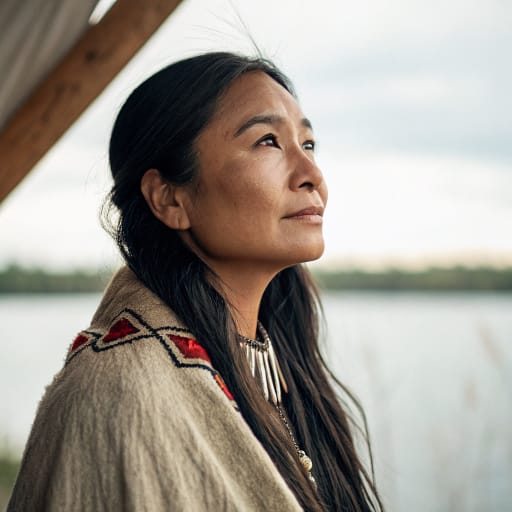
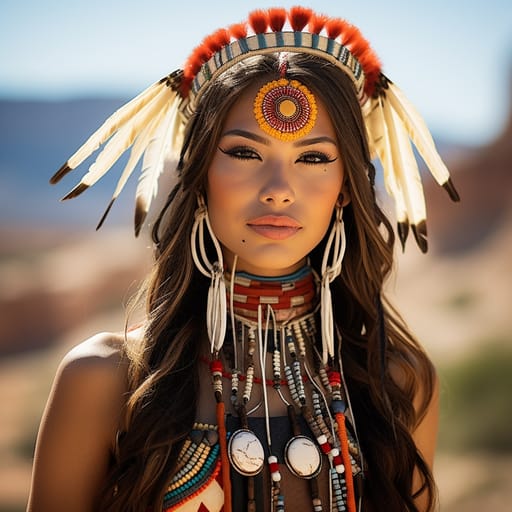
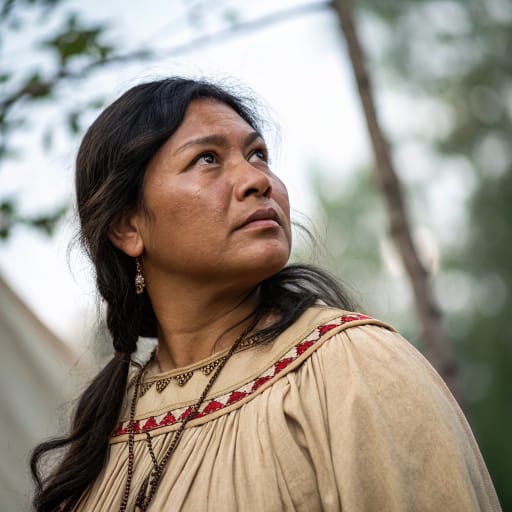
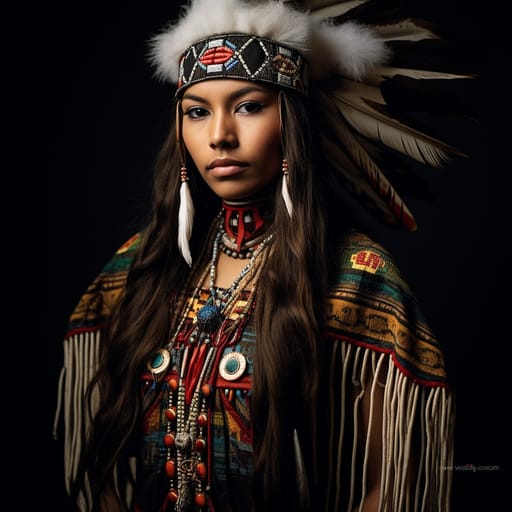
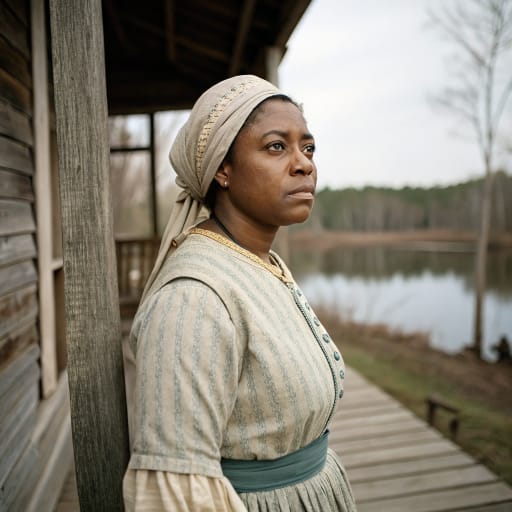
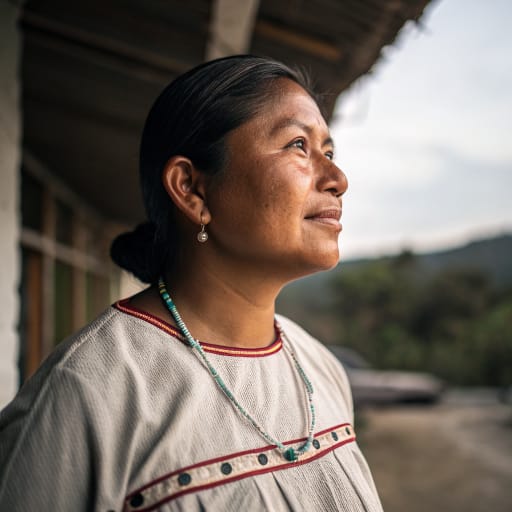

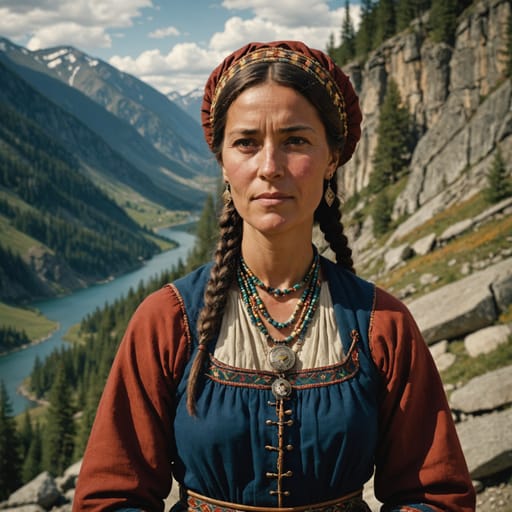
Typical Luiseño Phenotypes
Reference for AI generation: hair, eyes, skin, facial structure, build
Luiseño Body & Anatomy Reference
Indigenous Northern American / Algonquian-Iroquoian phenotype: anatomy reference for AI nude generation
Luiseño Boobs & Breasts
Luiseño boobs follow the Indigenous Northern American / Algonquian-Iroquoian profile: medium cup, moderate projection. Areolar diameter is usually 30-44mm, and the coloring is medium-brown areolar pigmentation against the copper-to-medium-brown skin tone. Breast shape tracks body composition (mesomorph, broader frame in northern Indigenous populations, mean adult female BMI 25-28), so Luiseño breasts tend to be full and moderate projection. Expect a forward-set shape, not the smaller East Asian bust.
Luiseño Ass & Hips
Luiseño ass and hip morphology presents as medium, moderate-to-full projection, distinctly different from the slim East Asian narrow-hip profile. The Luiseño pelvic profile shows medium iliac crests, anchored in the Indigenous Northern American / Algonquian-Iroquoian skeletal pattern. Luiseño butt shots in adult AI imagery should render the medium, moderate-to-full projection silhouette with the overall build (mesomorph, broader frame in northern Indigenous populations) and the fat distribution typical of the Indigenous Northern American / Algonquian-Iroquoian phenotype.
Luiseño Vagina & Pussy
Luiseño pussy anatomy typically shows medium-brown labial pigmentation. Pubic hair is usually straight medium-coarse texture. In AI-generated Luiseño nudes, labial color should blend into the copper to medium-brown skin with a gradual transition, and the hair should keep its straight medium-coarse texture.
Luiseño Dicks & Penis
Penis reference for Luiseño men: regional mean ~13cm erect, moderate girth. Coloring: medium-brown shaft pigmentation. An accurate Luiseño cock in AI imagery matches the surrounding copper to medium-brown skin rather than a generic porn default. Circumcision depends on religion and custom, not ancestry.
Luiseño Body, Curves & Build
The Luiseño figure is generally mesomorph, broader frame in northern Indigenous populations, with mean adult female BMI 25-28, characteristic of Indigenous Northern American / Algonquian-Iroquoian ancestry. AI image tools tend to flatten regional body types into a few stock shapes; here the Luiseño build is kept as its own reference.
Luiseño Skin Tone & Hair Texture
Skin: copper to medium-brown (Fitzpatrick III-V). Hair: straight 1A, dark-brown to black, often thick and dense. Both are typical of Indigenous Northern American / Algonquian-Iroquoian ancestry. The most common mistake in AI nudes of Luiseño women is a body rendered lighter than the face.
Explore phenotype categories
Structured taxonomy with peer-reviewed scales · 22 anatomical categories
Erotic Poses & Sex Positions
From the pose catalog: 219 named positions with reference skeletons
Frequently asked questions about Luiseño people
Where is the Luiseño homeland?
The Luiseño homeland is Coastal and inland Southern California, chiefly northern San Diego County and southwestern Riverside County, from the coast near Oceanside inland through Temecula and Pala to Palomar Mountain, United States. in North America.
What language do Luiseño people speak?
Luiseño people primarily speak Luiseño (Uto-Aztecan, Takic, Cupan group), with English and Spanish in daily use..
What religion do Luiseño people practice?
The predominant religion among Luiseño people is Predominantly Catholic, layered over the traditional Chinigchinich religion, whose song and ceremonial practice continues..






Make your own Luiseño images
Five a day, free, no credits to buy. The studio starts from this group's phenotype data, so you can set body type, pose and style and keep the traits accurate.
Start with Luiseño